
a commercial strawberry field operation in California
Harvest-Assist Robots Saved Up to 25% of Harvesting Time
See how predictive harvest-assist robots saved up to 25% of harvesting time by collecting full strawberry trays during a California field study.
- Up to 25%
- Harvesting time saved
- 100s of ft
- Tray-carrying walks avoided
- 2020
- Year of field deployment
Based on a documented real-world deployment. Figures are from public reporting; the organization is not named.
Productive picking time was being lost in transit
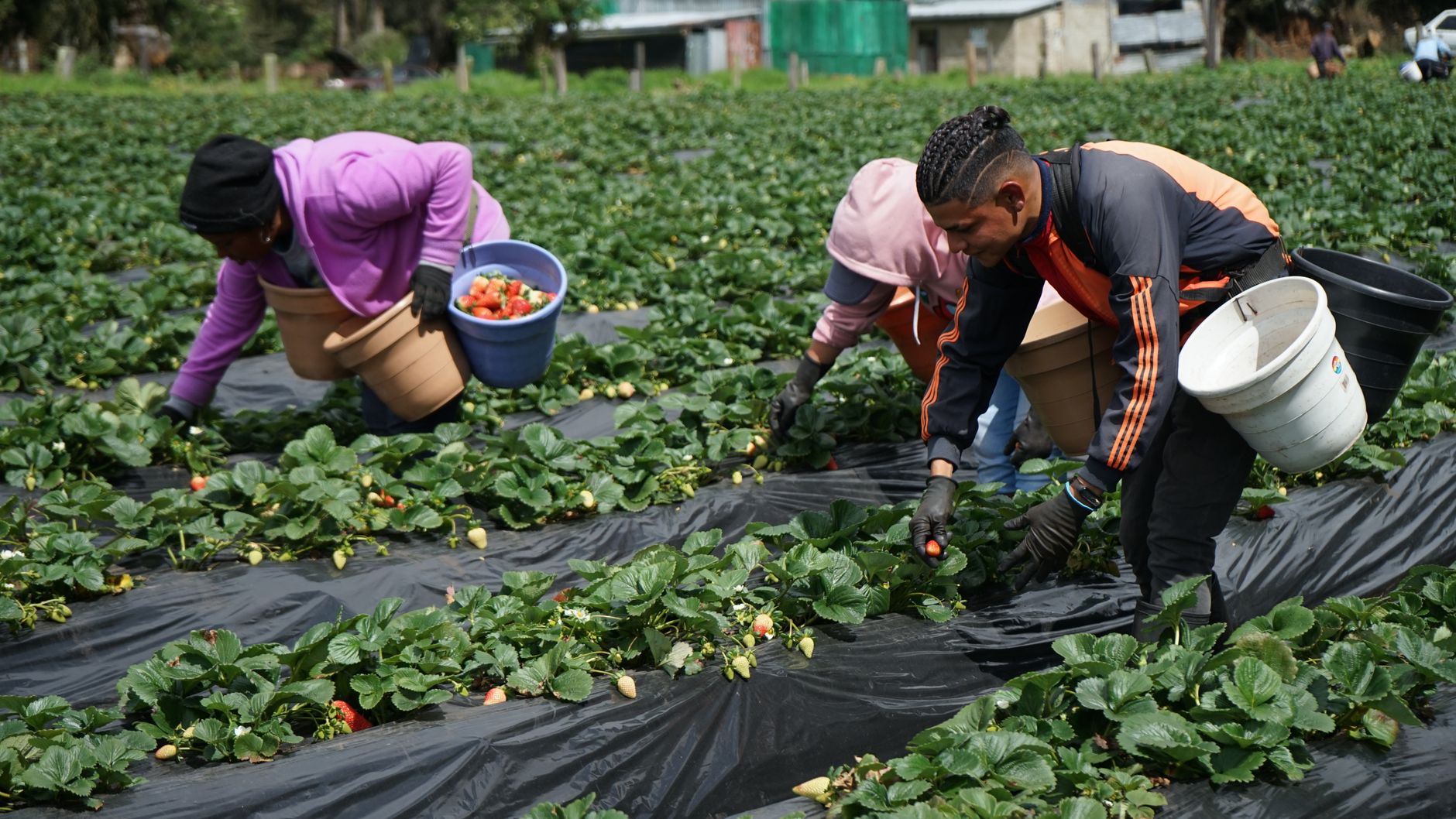
At a commercial strawberry field operation in California, harvesting involved more than locating ripe fruit and filling clamshells. Whenever a tray was full, a picker often had to carry it hundreds of feet to the collection station at the field edge, then return before picking could resume.
That recurring walk consumed productive harvesting time and interrupted the cadence of skilled manual work. The operation needed repetitive transport automation that could fit the field workflow without trying to replace the judgment and dexterity of experienced pickers.
Timing was the harder problem. A harvest-assist robot arriving late could leave a worker waiting, while one dispatched too early or unnecessarily would waste fleet capacity. The system had to anticipate demand across pickers whose harvesting pace changed throughout the work period.
- Reduce long tray-carrying walks without automating delicate berry picking
- Predict where and when each full tray would need collection
- Keep workers in control of their participation
- Coordinate a mobile fleet amid changing harvest and walking speeds
Predictive transport met pickers where the work happened
The research team selected a narrow, valuable assignment: carry completed trays to the collection station and return transport capacity to the field. Customized picking carts reported position and tray weight wirelessly, giving the scheduling system a live view of where each picker was working and how quickly the tray was filling.
The scheduler inferred harvesting and cart movement speeds, tested many possible service timings, and dispatched a nearby robot before the tray was expected to be full. This predictive method made the robot fleet part of the picking rhythm rather than a transport resource workers had to summon after stopping.
Development progressed from purpose-built hardware and software to field deployment in 2020. Workers could opt in or out with a button, and the system could withhold service when a picker was already near the collection point. That worker-controlled setup offers a useful pattern for a commercial robot pilot program and phased deployment no shutdown.
The published account says the robots were not deployed long term and does not describe a commercial maintenance program. Buyers evaluating an AMR lease should therefore establish robot maintenance service plan requirements, remote triage, on-site dispatch and go live support before moving beyond a commercial robot demo.
- Map picker routes, collection points and field operating conditions
- Instrument carts to report location and tray-fill data
- Pilot predictive dispatch with worker-controlled participation
- Observe waiting, unnecessary trips and tray handoffs before expanding the fleet
- Define service coverage and maintenance responsibilities for commercial operation

Field studies recovered up to a quarter of harvesting time
Initial field studies found that robot tray transport could save up to 25% of harvesting time. The gain came from removing repeated walks to and from the collection station, allowing pickers to spend more of the work period harvesting fruit.
Workers reportedly welcomed the assistance and felt relieved that they did not have to walk long distances as often. The system also preserved worker choice through opt-in and opt-out controls, an important detail in a workflow where pace, posture and individual preference vary.
The researchers identified greater picker pay and higher seasonal yield as potential consequences of recovered harvesting time, not reported measured outcomes. Likewise, the source does not establish long-term reliability, return on investment or a permanent production result. The defensible finding is precise: up to 25% of harvesting time saved in the initial studies.
From a promising field study to a supportable deployment

Service Robot Co. did not run this deployment, and a commercial strawberry field operation in California is presented here as a documented real-world example. Its lesson is highly practical: the best automation target may be the non-harvesting movement wrapped around skilled harvesting work.
Service Robot Co. is a full-service, OEM-neutral commercial robot integrator for US businesses. We assess the site, select suitable equipment across manufacturers, arrange commercial robot leasing, robot leasing for business or purchase pathways, and manage robot deployment and integration, training and ongoing care through a nationwide US engineer network.
For agricultural transport, that means validating terrain, routes, payload handling, worker interaction and fleet behavior before scale. A free site assessment and robot pilot program can establish fit, while RoboCare™ service options, remote triage and commercial robot repair service give the operating team a single accountable vendor across the lifecycle.