
The short answer
Autonomous forklift vs forklift operator in Oklahoma City depends on how repetitive your pallet moves are and how many shifts you struggle to fill. A robot makes sense for fixed routes that run long or overnight, while a forklift operator is still the better choice for irregular loads, tight yard work and anything that needs judgment at the dock. For most sites the practical answer is a robot working alongside fewer, better used operators, not a robot in place of the whole team.
See what a autonomous forklift costsRun the numbers in the ROI calculator
Key takeaways
- A robot fits repetitive, fixed-route pallet moves, while an operator fits irregular, judgment-heavy work.
- FRED puts Oklahoma City metro transportation, warehousing and utilities jobs at 31.5 thousand for 2024, down from 33.2 thousand in 2022.
- Warehouse turnover estimates range from about 26% to 49% a year, depending on whether quits only or total turnover is measured.
- Plan for a robot plus fewer, trained staff, never zero staff.
- Measure your own route counts, unfilled shifts and overtime before deciding, then request a lease quote after a free site assessment.
Autonomous forklift vs forklift operator in Oklahoma City: when does a robot make sense?
The short version for an Oklahoma City facility is that a robot makes sense when the same moves repeat on the same routes, especially on second and third shifts, and when you cannot reliably fill those shifts. It does not make sense when every load is unique, when yard work depends on judging trailers and dock conditions, or when volume is too low to keep a unit busy.
A forklift operator remains the better choice for irregular work: mixed loads, one-off moves, tight staging areas where people already negotiate with other traffic, and jobs where judgment about a damaged pallet or a shifting load matters more than speed. Most sites end up with a blend, with steady pallet runs suited to a robot and exception work kept with people.
- Repeat fixed-route moves
Autonomous Forklift
Runs the same route the same way on every shift
Forklift Operator
Adapts when a route changes without warning
- Night and weekend coverage
Autonomous Forklift
Runs without breaks or call-outs once scheduled and running
Forklift Operator
Needs scheduling, overtime or cover for gaps
- Irregular or damaged loads
Autonomous Forklift
Weak where loads shift or arrive damaged
Forklift Operator
Judges whether a load is safe to move
- Yard and dock work
Autonomous Forklift
Limited where trailers park at odd angles or floors are uneven
Forklift Operator
Reads the dock and yard and adjusts
- Exception handling
Autonomous Forklift
Stops and waits or alerts a person
Forklift Operator
Resolves the problem and keeps the flow moving
- Cost structure
Autonomous Forklift
Leased through financing, quoted after a free site assessment
Forklift Operator
Wages, benefits, training and the cost of turnover
What does a forklift operator actually do in a shift?
In a typical receiving or shipping shift, the operator moves pallets between trailers, staging lanes, racks and pick or production areas. Much of the time goes to travel, waiting for a dock door or staging lane to clear, and short hops, rather than to lifting itself. Operators also run the checks that keep the work safe, including the inspection before use, load capacity and blockage clearing.
Operators also absorb unplanned work: relabeling a pallet, moving a mispicked load, covering a dock door when a driver arrives early and helping with cycle counts. These tasks rarely appear in a staffing plan, but they fill the gaps between planned moves, and a sick call or unfilled shift hits hardest here.
The research for this page did not find verified per-task hour figures for this job in Oklahoma City, so the hour comparison below is a framework for your own time study, not a published average.

Median hourly wage, Laborers and Freight, Stock, and Material Movers, Hand
$4,079
Monthly cost of one full-time worker in Oklahoma City, OK, at the median wage plus payroll costs (an estimate, not a quote).
Which parts of the forklift work can a robot take, and which can it not?
Robots do best on the parts of the job that repeat: the same pickup and drop-off points, a fixed route, predictable timing, and loads that can be handled the same way each time. A unit does not call in sick, does not need a break and runs the same path late at night as it does at midday, which is where most of the value sits for sites that struggle with night coverage.
The robot is weaker where the job depends on reading the space. Loads that arrive mixed or damaged, trailers parked at odd angles, pallets that need turning and staging areas where people and carts move unpredictably all need a human decision.
A practical split is that the robot takes fixed transfers, such as trailer to staging or staging to rack runs along set lanes, while operators keep the dock, exceptions and any move that needs a judgment call.
What is the labor picture for forklift work in Oklahoma City?
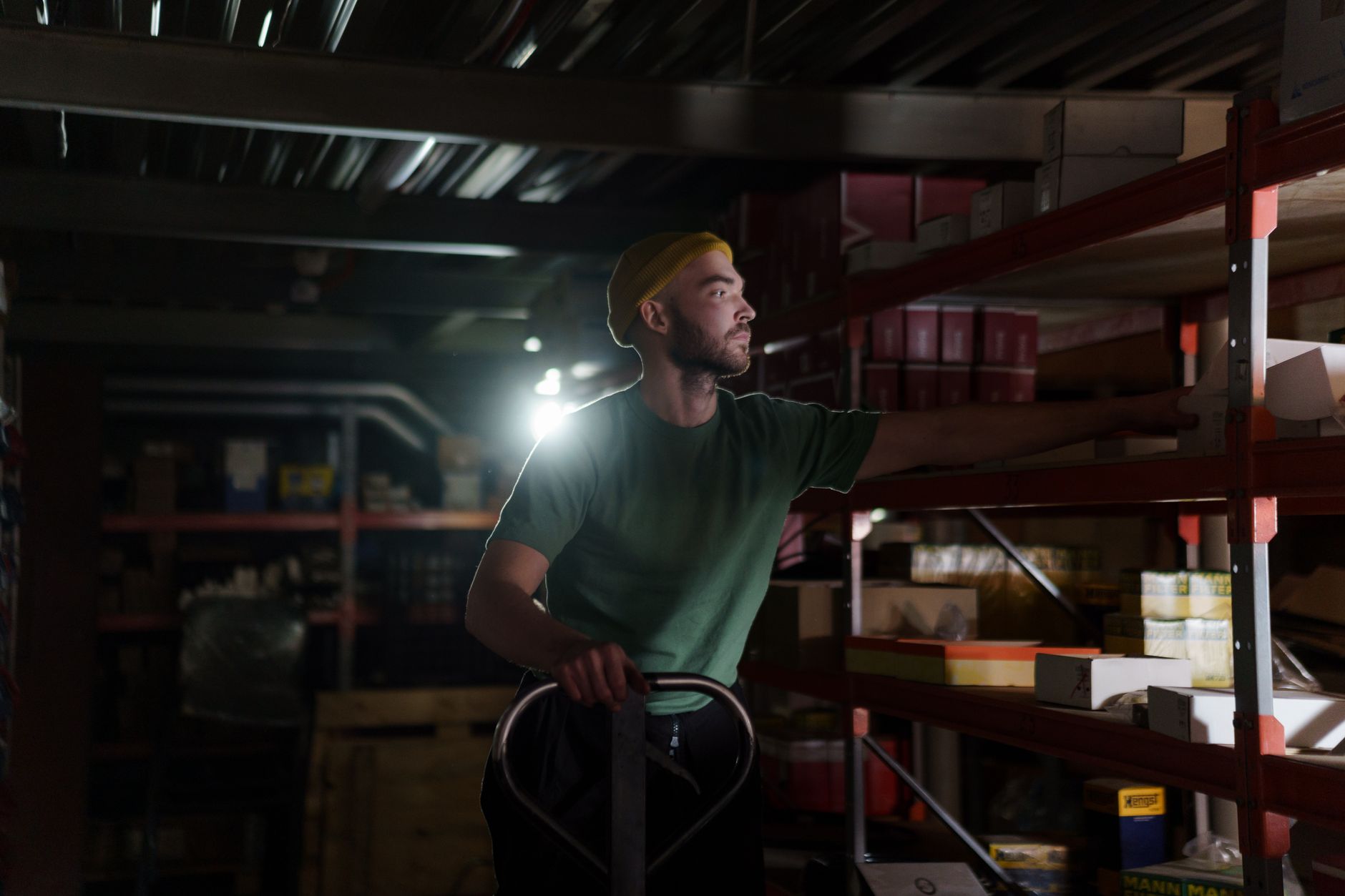
The transportation, warehousing and utilities job base in the Oklahoma City metro is large enough to matter. According to FRED, which uses BLS data and is not seasonally adjusted, that series was 32.4 thousand jobs in December 2025 and 30.9 thousand in October 2025, and it averaged 31.5 thousand for 2024, down from 33.2 thousand in 2022.
Growth came before that dip. According to the Kansas City Fed, Oklahoma City warehousing grew 16% a year from 2015 to 2019 and 21% a year from 2019 to 2022, though that data ends in early 2023. This research did not find a 2025 Oklahoma City figure for warehousing alone, so the most recent local trend is less clear than the growth years.
The government wage data on this page gives the local wage for this job from May 2024. Use it as the baseline for labor cost, but for most sites the bigger question is whether every shift can be staffed at all.
How much turnover, overtime and sick time should you expect?
Turnover is the hidden cost in this job. According to StealthAgents, a staffing cost research page that cites BLS JOLTS data secondhand, annual turnover in warehouse and fulfillment work runs 35% to 49%. A 49% figure is also widely repeated online, but the research could not trace it to a primary source, so treat the range as secondary rather than official.
A narrower measure gives a lower number. Fountain, using 2025 BLS data, reported that quits in transportation, warehousing and utilities averaged 2.2% a month, against 2.0% for total nonfarm. Twelve months at that pace implies 26.4% annual voluntary turnover, counting quits only. The gap between 26% and 49% comes from measuring separate things, so ask any vendor or staffing firm which one they quote.
On a shift, a site with turnover in that range is always training someone, and each new operator is slower on the dock than the one who left. Overtime and sick time break the schedule at night, when one unfilled shift is usually covered by a person working a double. This research did not find a verified overtime or sick day rate for Oklahoma City forklift work, so measure your own call-outs and overtime hours over a recent period before deciding.
How safe is forklift work, and what do the injury numbers say?
Forklifts are a serious hazard. According to NSC Injury Facts, which relays BLS data, forklifts were the source of 84 work-related deaths in 2024. NSC also reports 25,110 DART cases, meaning cases with days away, restricted or transferred, and 15,460 DAFW cases, meaning days away from work, across 2023 and 2024 combined. NSC notes that forklift describes the injury source, not the event, so a pedestrian struck by a truck and a tipping load both fall under the same label.
Sector rates vary by source. Voxel AI, a vendor summary, reported a total recordable case rate of 4.8 per 100 full time workers for warehousing and storage in 2024, with 261,500 total recordable cases. DC Velocity, citing Kuru analysis of 2023 figures, reported 4.5 injuries per 100 full time workers for transportation and warehousing. The two rates do not line up, so check the BLS tables before quoting either one to a safety committee.
The point for this decision is not that robots are safer than people in general. Fixed routes and fewer people walking through forklift lanes may reduce how often a person and a truck share the same space, which is where pedestrian incidents happen. Keep operators on the exception work near people and confirm with your safety team how the robot's zones are set.
How common is automation in warehouses, and what do the surveys say?
Adoption is growing, but most of the figures come from vendors and surveys. According to a BlueBiotics survey reported by SDCExec, over 70% of respondents have adopted or plan to adopt autonomous mobile robots or automated guided vehicles, and more than 70% plan to expand their fleets within two years. That is a survey of intent from a vendor-linked source, not a count of installed units, so read it as direction, not penetration.
The practical read is that automation is moving toward the repeat pallet and transfer work that fills much of a forklift operator's day. Whether that is the right move for your site depends on route repetition and shift coverage, not on what other facilities are doing.
How does a team work with a robot?
The right setup is a robot plus fewer, better used staff, not a robot in place of the whole team. A unit does not remove the need for people on the floor, because someone still plans routes, clears blockages, handles exceptions, manages charging and swapping units, and responds when something goes wrong. Plan for at least one trained person on every shift the robot runs, even when the robot covers most of the moves.
Service Robot Co. is a US commercial robot integrator. We pick the robot for the site, lease it through financing, deploy and integrate it into your existing flow, train your staff and service it nationwide. The lease is quoted after a free site assessment, so the fixed lease payment reflects your actual routes and shifts.
Staff roles shift toward supervision, exception handling and dock work. Operator training should cover how to hand off a load, how to stop and recover a unit and what to do when a robot waits in a lane.
What can a robot not do?
A robot cannot do everything an operator does, and a plan that assumes it can will fail on the first bad trailer. It cannot read a load that has shifted, decide that a damaged pallet is unsafe to move, or judge a trailer parked at an awkward angle. It also struggles where floors are uneven, lanes are blocked or staging is informal.
Uptime depends on the site as much as the unit. Floor condition, wireless coverage, lane marking and how often people cut through the robot's path all change how much the robot actually runs. A unit that stops every hour for an unclear lane is not saving labor.
Expect to keep some operator coverage for peak days, cover for a unit out for service and any move outside the mapped route. A backup plan matters more than the best-case throughput figure.
How do I get started?
Start by measuring what you have. Count moves per shift by route, note which shifts go unfilled and how often, and log overtime and call-outs for a recent period. For autonomous forklift vs forklift operator in Oklahoma City, those three measures decide most of the answer, and they are what a site assessment will ask for.
Then compare the route pattern against the work that repeats. If most moves follow a few fixed routes, a robot is worth modeling. If the day is mostly exceptions, a better operator schedule or dock layout may do more.
Service Robot Co. starts with a free site assessment, maps the routes, quotes a lease through financing and then deploys, integrates and trains. Starting with one unit on one route is often the right first step, with expansion only after that route runs on schedule. The local wage on this page is one input, not the whole answer.
Frequently asked questions
Put a robot to work in Oklahoma City.
We walk your site, learn the job, and recommend the unit that fits. Then we quote the lease, deploy it, and keep it serviced.
Sources
- US Bureau of Labor Statistics, Occupational Employment and Wage Statistics (OEWS May 2024)
- NSC Injury Facts, forklifts
- Voxel AI, distribution center safety statistics
- DC Velocity, most injury-prone industries report
- Fountain, warehouse turnover rate
- StealthAgents, warehouse and fulfillment staffing costs 2026
- FRED, Oklahoma City metro transportation, warehousing and utilities employment
- Kansas City Fed, Oklahoma's warehousing boom
- SDCExec, BlueBiotics survey on warehouse automation adoption