
The short answer
In the autonomous forklift vs yard forklift operator choice, a robot makes sense when the same loaded pallets travel the same fixed routes between yard stacks and trucks, and when the site can keep those routes clear and dry. A yard forklift operator still wins when moves are irregular, when rain, ice or mud change the ground through the day, or when a damaged load needs a judgment call. For most yards the practical answer is a robot plus fewer staff, not a robot in place of the crew.
Key takeaways
- A robot fits repeat, fixed-route pallet moves between stacks and trucks, not the whole yard job.
- Weather, ground condition and clutter decide more than rated capacity does.
- Forklift operators are among the hardest roles to staff, so a robot can protect shifts that are already thin.
- Pedestrian contact is the risk that matters most, so route design matters as much as the machine.
- The practical plan is a robot plus fewer staff, with a person on site at all times.
Autonomous forklift vs yard forklift operator: which makes sense at a lumber yard?
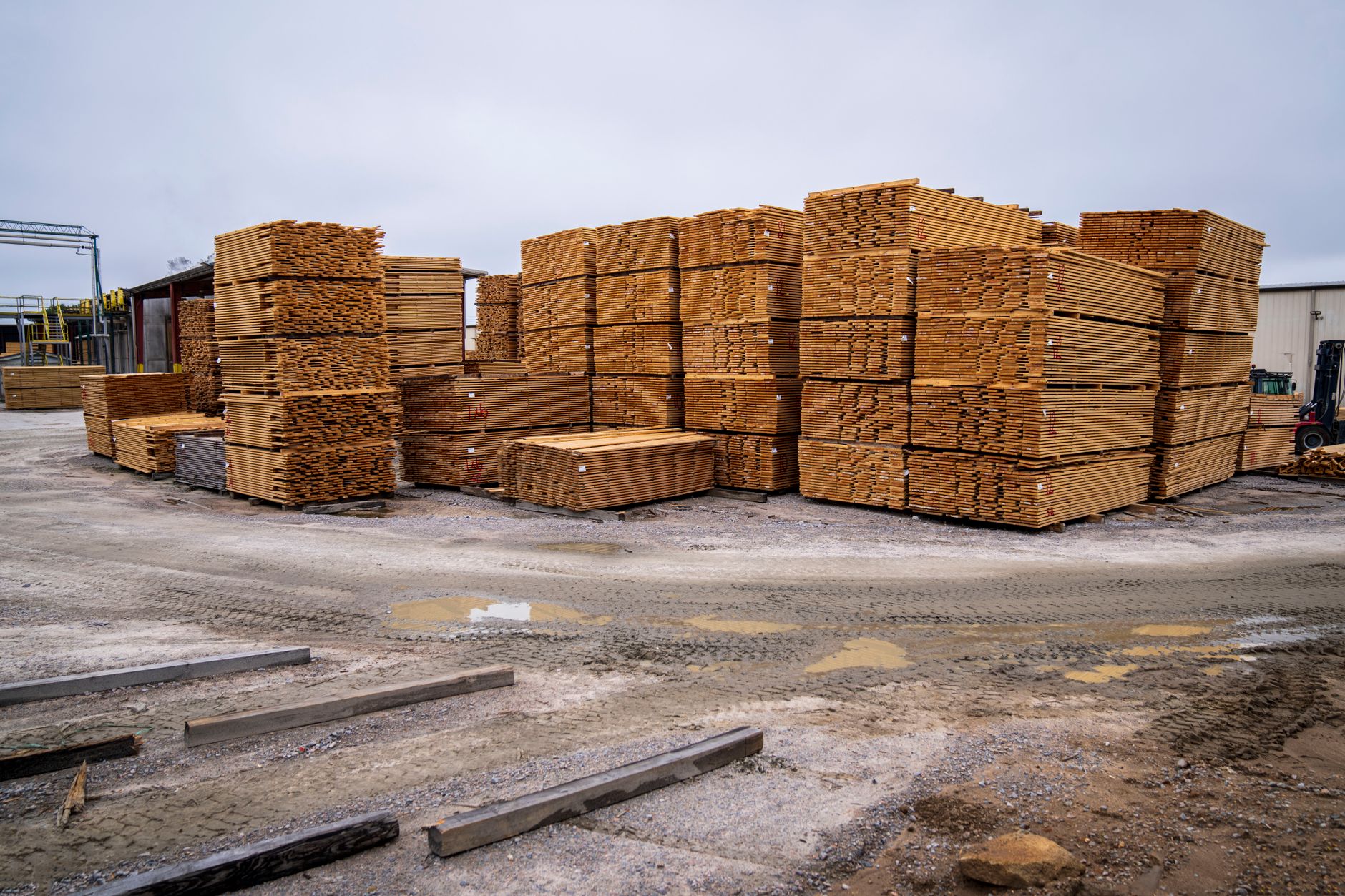
For most lumber yards, the autonomous forklift vs yard forklift operator question comes down to repetition. A robot earns its place on moves that look the same every time: a loaded pallet picked from a yard stack, driven along a fixed route, and set down at a truck or staging lane. A yard forklift operator earns the same moves when the route changes, when the load needs a second look, or when the ground has to be read before the truck can drive across it.
A robot makes sense when the yard has a steady flow of those repeat moves, a route that can stay clear of people and parked vehicles, and ground that does not change much through the day. It is a weaker fit when the yard runs many one-off moves, when loads arrive mixed and unlabeled, or when rain, ice or mud make the surface different from one hour to the next. Those yards can still automate the repeat moves at the margins, but a person has to stay the main operator.
The honest bottom line is a robot plus fewer staff, not a robot in place of the crew. The robot takes the repeat moves so the people on site can focus on loading, checking loads, and handling exceptions. A yard that cannot keep a person on site at all times should not plan around a robot running alone.
What does a yard forklift operator actually do in a shift?
Yard work is less about one long run and more about many short cycles. An operator picks pallets from outdoor storage, moves loaded pallets to trucks or staging lanes, and returns empty pallets and racks to where they belong. Much of the day is spent going back and forth between the same few stack rows and the same loading lanes.
Beyond the moves, the operator checks loads before they leave, notes damage, rearranges stacks when a truck is late or an order is wrong, and watches for people and trucks near the work. Weather changes every one of those tasks. A wet or frozen surface lengthens the drive and the stop, and a covered bay may be the only dry place to stage a load.
Because the yard is shared with delivery trucks, contractors and customers, the operator also manages the flow of traffic. That role is hard to hand to a machine, which is why the best fit for a robot is a bounded set of moves, not the whole job.
Which yard moves can an autonomous forklift take, and which can it not?
The split is clearer when you list moves than when you list job titles. A robot can take the moves that follow a mapped route on a surface it can read, with people kept out of its path. The moves it can take are these.
It cannot take the moves that need a decision. That covers inspecting a load for damage, deciding what to do with a shifted stack, handling a load that needs special lifting, and making an exception move when a stack has moved but the route map has not been updated. It also cannot cross a surface that is flooded, iced over or heavily cluttered until someone clears it.
In practice the share of moves a robot can take depends on how stable the stack layout is and how much of the day runs on fixed routes. A site assessment measures exactly that before any decision is made.
- Loaded pallets moved from outdoor stacks to a truck lane on a mapped route
- Staging moves between two fixed yard areas during set windows
- Empty pallets returned to a set collection point
- Repeat moves on a surface that stays clear, dry and separated from people
- Repeat pallet moves on a fixed route
Autonomous Forklift
Holds the same route all shift without changing its pace
Yard Forklift Operator
Fast and adaptable, but the same route wears on the operator
- Wet, icy or muddy ground
Autonomous Forklift
Slows or stops until the surface is safe, so a person covers the gap
Yard Forklift Operator
Reads the ground and adjusts the drive on the spot
- Damaged or shifted loads
Autonomous Forklift
Needs a person to inspect and decide
Yard Forklift Operator
Inspects, decides and resets the stack on the spot
- Changing stack layout
Autonomous Forklift
Needs the route map updated before it can run the changed area
Yard Forklift Operator
Adapts the route as the day goes
- Early and late windows
Autonomous Forklift
Runs scheduled windows with a person on site to supervise
Yard Forklift Operator
Covers the shift if the operator is available and willing
- Absence or sick day
Autonomous Forklift
Does not call in sick, but still needs someone to supervise and clear exceptions
Yard Forklift Operator
An absence leaves a gap that overtime or cover has to fill
- Cost to add capacity
Autonomous Forklift
Fixed robot lease payment, quoted after a site assessment
Yard Forklift Operator
Wages, overtime and recruiting, which rise when the labor market is tight
How hard is it to staff yard forklift operators at lumber yards?
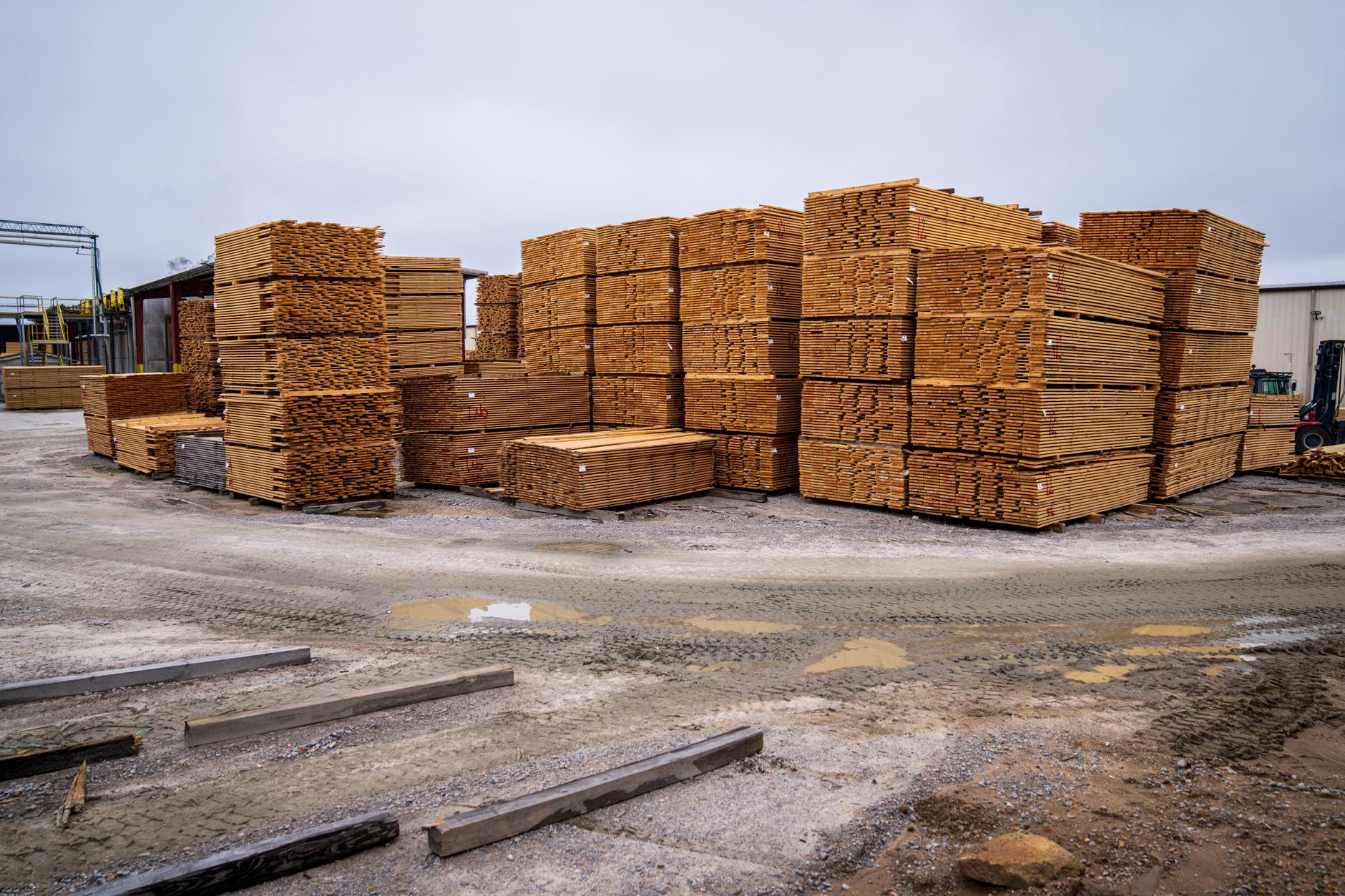
The Business Reference Guide Online lists 35,382 lumber and building material dealer establishments in the US, but it gives no year or census basis, so treat it as a rough scale of the sector rather than a precise count. The yards differ widely in size, so the forklift workload varies just as much from one site to the next.
Staffing pressure is real. In a 2025 survey of lumber dealers published as partner content in LBM Journal, 54 percent planned to expand, and an equal share named hiring as a major challenge. In a separate 2025 warehouse labor survey of 600 fulfillment-center managers, 52 percent ranked finding reliable, quality labor as their top challenge, and forklift operators were among the roles named hardest to staff. That is a close setting but not an identical one, so read it as a signal for yards, not a yard count.
The same warehouse survey found that 50 percent said staffing was easier in 2025 than in 2024, up from 38 percent. Read that as some sites getting relief, not as the operator shortage going away. A forklift supplier reporting on its customer fleets put annual operator turnover at 35 percent, 45 percent, or higher. That figure is vendor-reported and not independently verified, so use it as a planning warning rather than a benchmark.
We did not find verified public data on hours per shift, overtime, night shifts or sick days for yard forklift operators. The hours picture for a particular yard has to come from its own timesheets and absence records, which are worth pulling before any decision. Ask for the last year of overtime and absence records, broken out by shift.
What injury risk comes with yard forklifts, and where do people get hurt?
Injury data specific to yards is thin, but the pattern is consistent. A peer-reviewed study of OSHA data for wood-related industries from 2015 to 2019, according to the Penn State publication record, found 17 fatalities and 211 severe injuries. Building material dealers had the most injuries of any segment in that study, followed by a wood manufacturing segment. Those are wood-related industries, not lumber yards alone, so read them as the closest published picture rather than a yard-specific rate.
The same study literature covering pallet jacks from 2002 to 2016 counted 56 severe injuries, including 4 fatalities and 8 amputations. Pallet jacks are not forklifts, but they share the same floor and the same pedestrian exposure, which is why route design matters for both.
National totals give context for where fatal injuries sit across industries. According to BLS figures for 2024 as reported in press coverage, not on the BLS site, there were 5,070 fatal work injuries, down 4.0 percent from 5,283 in 2023. Transportation and material moving had 1,391 fatalities, down 7 percent from 1,495.
The case that best shows the yard specifically is a November 2021 OSHA citation, in which a worker walking across a lumber shipping yard was struck by a forklift. Pedestrian contact is the scenario to design against. Marked pedestrian lanes, separated routes and a clear rule for when people may cross a moving lane do more for safety than any single machine feature.
How does a team work with an autonomous forklift?
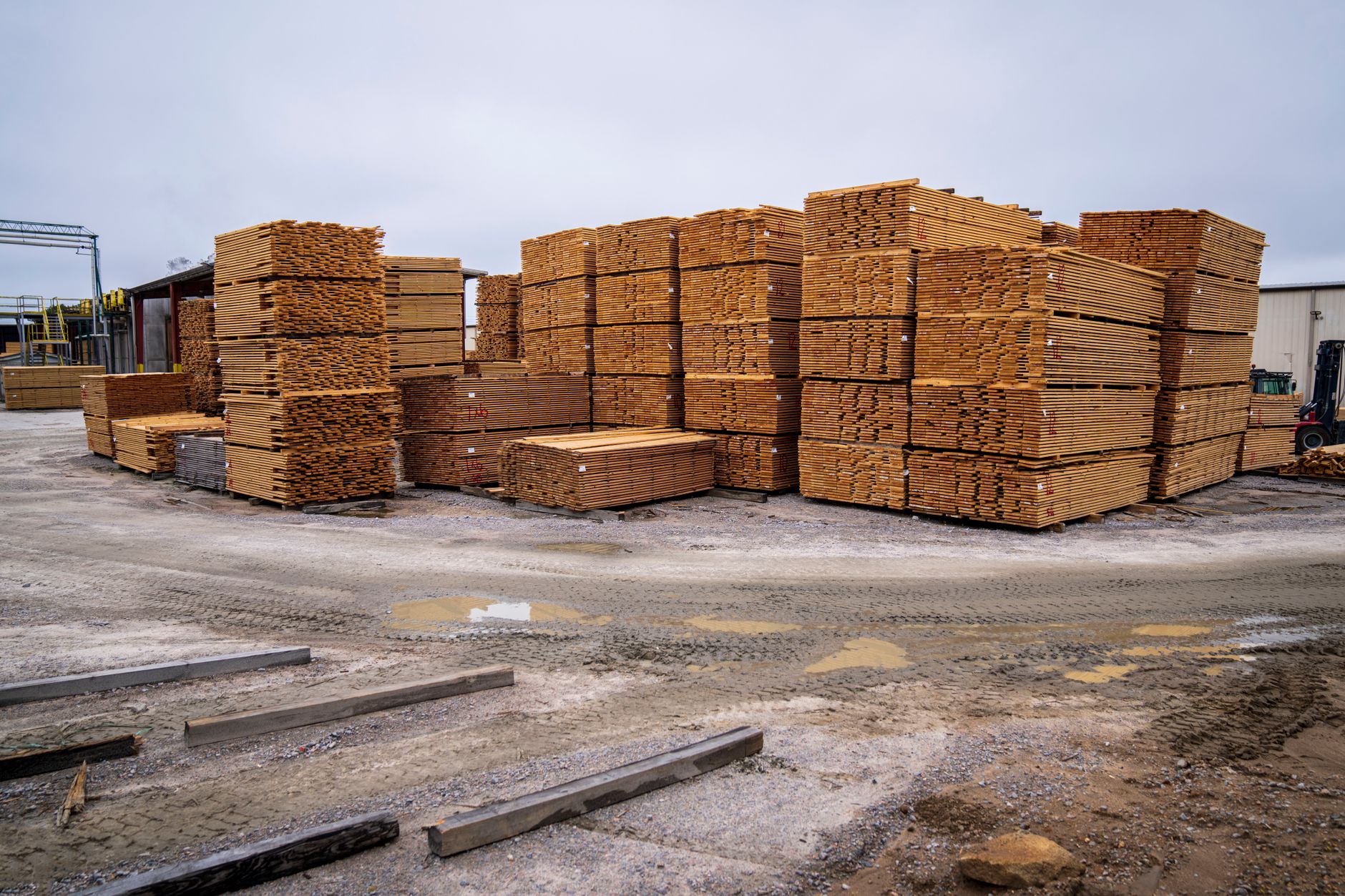
The working model is a robot plus fewer staff, and it should never be zero staff. The robot takes the repeat moves on the mapped routes. The people on site take over the loads that need inspection, the truck-side work, the stack changes, the exception moves, and the supervision of the unit itself. A yard that now runs two operators on a route may be able to move to one operator plus the robot, depending on the moves involved.
The shift changes in three places. At start, someone checks the route map, the battery, the sensors and the lane markings. During the day, someone handles exceptions and watches the flow near the trucks. At close, someone logs faults and sets the unit to charge. Those are the duties that keep a robot productive, and they are the reason staff stay in the plan.
We work on the robot side of this. We pick the right unit for the site, lease it through financing, deploy and integrate it with your yard, train your staff on the routine and the exceptions, and service it nationwide. The fixed robot lease payment is quoted after a free site assessment, so the number reflects your yard rather than a generic estimate.
When is a yard forklift operator still the better choice?
Some yards are better served by a person, and saying so early saves frustration. If the yard runs mostly one-off moves, a robot will sit idle waiting for routes to form. If loads arrive mixed, unlabeled and often damaged, inspection work returns to a person regardless. If rain, ice or mud are common, the unit will slow or stop until the surface is safe, which means a person has to cover the gap.
Layout matters too. Yards that rearrange stacks every day make a fixed route hard to hold, and every change needs the route map updated. Yards with heavy mixed traffic from delivery trucks, customers and contractors need marked separation before any automated move can run near them. Those yards are not failures. They simply need the staffing plan to stay with the people.
How do you get started with an autonomous forklift at a lumber yard?
Start with the moves, not the machine. For a few weeks, count the moves the yard makes by type, route and time window, and note which moves fail when the weather turns. That log is the honest baseline. It shows how many moves run on a fixed route and how many depend on judgment.
Then look at the ground. Check drainage, winter surface condition, lighting in covered bays, and where stacks move. A site assessment maps the route, the pedestrian lanes and the charging location, and it identifies the one repeat route worth testing first.
Most yards do well to begin with one leased unit on one route, with a clear plan for spare coverage while the unit is down for service. Deployment and integration come next, then training for the staff who will run the exceptions. Keep the staffing plan in place through the pilot period and review the moves log before adding a second unit.
What does the cost to lease an autonomous forklift really depend on?
The honest answer is the number of repeat moves, the hours of those moves that a person does today, and how much of that work is overtime or absence cover. A robot that takes repeat moves off a short-staffed shift usually does more to protect that shift than one sitting on a route that changes every day. The fixed robot lease payment is set in a quote after the site assessment, so you can compare it with the overtime, absence and turnover cost in your own records.
Payback is a question of the repeat-move share, not the headline. A yard with stable routes and a short-staffed shift has the clearest case. A yard with mixed loads, frequent weather stoppages and daily stack changes has a thin case, and the honest move there is to keep the staffing plan and revisit later. Ask for the quote and the assessment in writing, and confirm how service, spare coverage and emergency replacement are handled before you sign.
Frequently asked questions
Want an autonomous forklift at your lumber yard?
Tell us about your site. We will recommend the robot, quote the lease, and keep it serviced.
Sources
- Penn State study of OSHA data on forklift and pallet jack injuries in wood-related industries, 2015 to 2019
- 2025 State of Warehouse Labor report, survey of 600 fulfillment-center managers
- Supply Chain 247 coverage of the 2025 warehouse labor survey
- LBM Journal 2025 lumber dealer workforce partner content
- DC Velocity article on forklift operator turnover
- OHS Online article on a November 2021 OSHA citation at a lumber shipping yard
- Press coverage of BLS 2024 national fatal work injury totals
- Business Reference Guide Online, lumberyards and building material stores