
The short answer
For most Indianapolis sites, the autonomous mobile robot vs material handler question comes down to repeat moves. A robot makes sense when the same legs run on fixed routes across several shifts, while a material handler remains the better choice for mixed loads, irregular shapes and anything that needs judgment. Even where the robot fits, it works beside a reduced crew rather than in place of all staff, and a site assessment of your actual routes, loads and shift coverage is the only reliable way to tell which case applies.
Key takeaways
- Repeat legs on fixed routes are where a robot earns its place.
- Mixed loads, judgment calls and exceptions stay with people.
- Plan the crew around exceptions, never around zero staff.
- Your own trip counts, shift gaps and turnover outweigh national averages.
- Start with one route and one unit, then expand only on evidence.
Autonomous mobile robot vs material handler in Indianapolis: when does the robot make sense?
An autonomous mobile robot makes sense when the same moves repeat each shift, run between a few fixed points, and carry loads the robot can handle safely. It does not make sense when every shift is different, when loads change shape from day to day, or when the job depends on a person reading a situation and deciding what to do next. Most sites sit somewhere in between, which is why the decision starts with measurement rather than a general verdict.
Indianapolis offers a large logistics base to measure against. The Indiana Business Research Center's August 2025 outlook puts transportation and warehousing employment in the Indianapolis-Carmel metro at 89,600 jobs, up 2.9 percent, a 7.5 percent share of metro employment. A survey reported in a warehouse automation trade article found more than 70 percent of respondents had adopted or planned to adopt autonomous mobile robots or automated guided vehicles, with 21 percent using self-driving forklifts. The article did not show a publication date in our research, so treat that figure as directional.
What does a material handler actually do in a shift in Indianapolis?
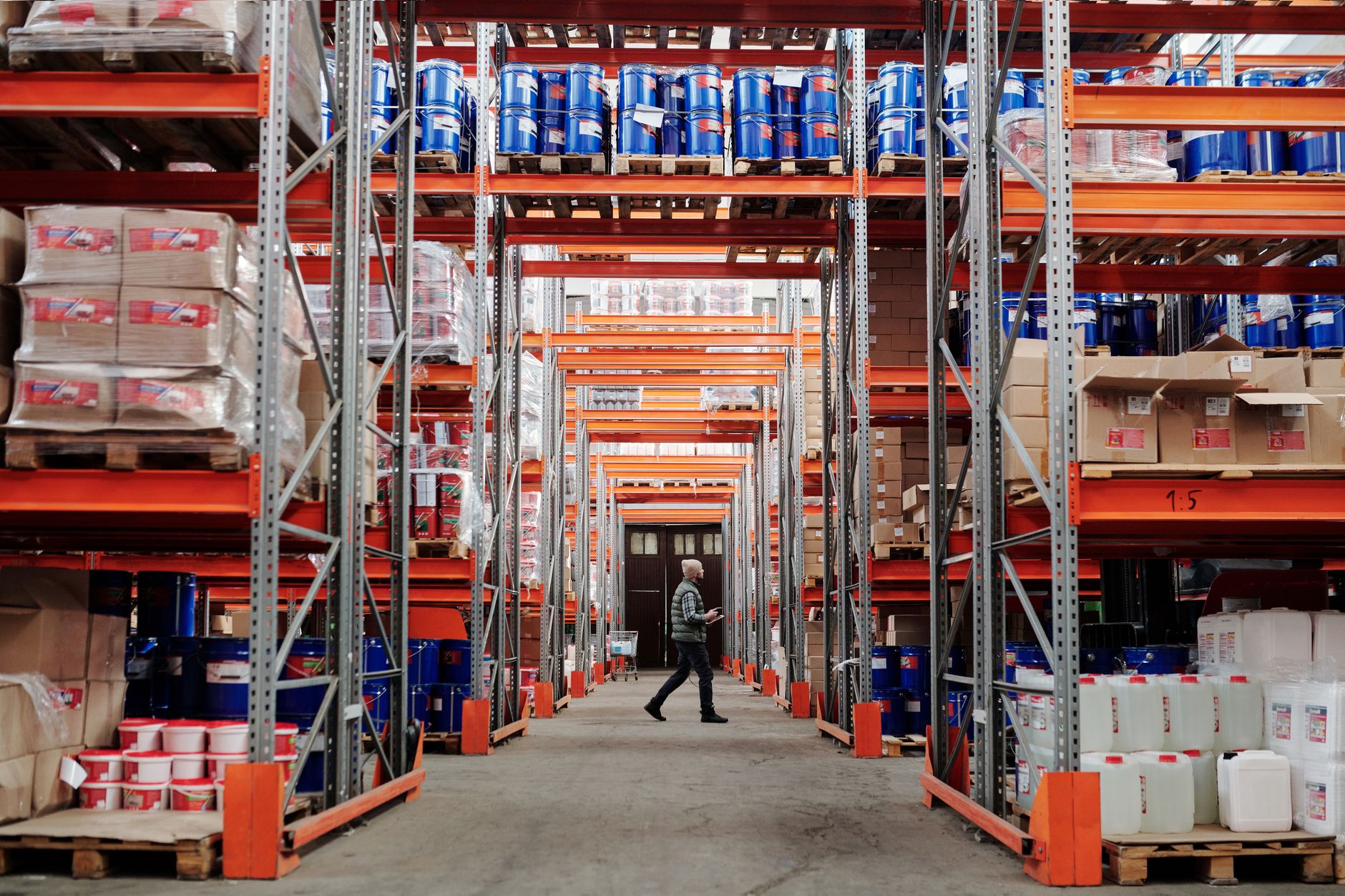
A material handler moves goods between receiving, storage, picking and shipping. A typical shift starts with staging inbound loads at the dock, then moving pallets and totes to pick zones, returning empties to receiving and staging outbound orders at the shipping doors. Much of the day is walking, and much of the rest is waiting for the next load to arrive or for a truck to be released from the yard.
The government data groups this work under laborers and freight, stock, and material movers, hand. The BLS Occupational Outlook Handbook counts 2,988,900 jobs in that occupation in 2024, within a broader group of hand laborers and material movers. BLS projects the broader group to grow 4 percent from 2024 to 2034, about as fast as average, with roughly 1,008,300 openings a year expected, mostly from workers transferring to other jobs or retiring. Replacing people is therefore a constant task for employers in this work, not an occasional one.
Measure your own shift before deciding. Count the trips, the distance covered per shift and the minutes spent waiting for loads, and note which moves repeat. Those figures tell you more than any national count does.
Median hourly wage, Laborers and Freight, Stock, and Material Movers, Hand
$4,689
Monthly cost of one full-time worker in Indianapolis, IN, at the median wage plus payroll costs (an estimate, not a quote).
Which parts of the work can a robot take, and which can it not?
The robot is strongest on the repeat legs. It carries standard pallets or totes along marked routes between a dock, a staging area and a pick zone, then returns to charge. It runs the same route at the same pace at 3 am as it does at 3 pm, and it does not skip a leg because it is tired or running late.
It cannot reliably take jobs that need hands or judgment. Stacking irregular cartons into a trailer, opening and inspecting damaged loads, clearing a blocked aisle, catching a wrong label and deciding whether to wait for a late truck all stay with people. Those exceptions decide whether a robot shift runs clean or stalls, so the material handler's judgment remains part of the operation even where the route is automated.
Sort the work into three groups before you talk to any vendor: repeat legs on fixed routes, standard loads that are presented the same way every time, and everything else. The first two groups are candidates for automation. The third stays with people.
- Repeat moves on fixed routes
Autonomous Mobile Robot
Runs the same leg at the same pace all shift
Material Handler
Gets the job done, but pace varies with breaks and fatigue
- Night and weekend coverage
Autonomous Mobile Robot
Can run overnight on a mapped route with someone monitoring alerts
Material Handler
Needs staffing, pay for the hours and hiring to fill the shift
- Mixed or irregular loads
Autonomous Mobile Robot
Limited to the load types it is set up for
Material Handler
Handles odd shapes, damaged loads and last minute changes
- Judgment and exceptions
Autonomous Mobile Robot
Stops and flags a problem but cannot decide it
Material Handler
Decides what to do about a blocked aisle or a wrong label
- Shared space with people
Autonomous Mobile Robot
Slows and stops around people, which needs layout and traffic rules
Material Handler
Moves through shared space naturally and can talk to coworkers
- Change when the building changes
Autonomous Mobile Robot
Needs remapping and a new route plan
Material Handler
Adapts on the spot
- Scaling up or down
Autonomous Mobile Robot
Adds units in phases after a site review
Material Handler
Hires and trains one person at a time, with turnover to manage
How big is the local labor pool, and what does the government wage data mean here?
BLS reports 46,530 people employed in this occupation in the Indianapolis metro in May 2024, with a location quotient of 2.19. A location quotient above 1 means the metro holds a larger share of these jobs than the country does, and 2.19 means roughly twice that share. Local hiring is not the bottleneck on paper, so the question is less about finding workers and more about keeping them on the shifts you need.
The government wage data on this page shows the local wage for this job, which sets the baseline cost of staffing one shift. Read that figure next to your own open roles, the offers you make and how many applicants accept them. The cost of filling a shift depends on how hard the shift is to fill, not only on the hourly rate in the data.
A large pool does not guarantee coverage at 3 am. The real questions are whether you can staff the overnight and weekend shifts you need, and whether the people you hire stay long enough to learn the floor. Those two questions decide the case more often than the size of the labor market does.
What do turnover, overtime, night shifts and sick days look like?
Turnover is where the labor math gets expensive. A 2025 State of Warehouse Labor report, written by a staffing vendor from its own survey, found most respondents reporting turnover below 10 percent, while a notable share cited rates of 20 percent or higher. The spread is wide, so your own annual figure matters more than any average.
Our research pass did not verify local overtime, night shift premium or sick day rates for this metro, so we do not put numbers on them here. Pull those figures from your own payroll and attendance records for the last twelve months, and split them by shift. Check which shifts carry the most overtime and the most open positions, since those routes are the most worth testing first.
Track absences as well as turnover. A sick call on a night shift forces a supervisor to reshuffle people, and that reshuffling is a cost you already pay even though it never appears as a single line item. A repeat route does not depend on one specific person showing up, although it still needs someone on the shift.
How much injury risk comes with this work?
BLS data for warehousing and storage (NAICS 493) lists a total recordable case rate of 4.8 per 100 full-time workers and a days-away-from-work rate of 1.5 per 100 full-time workers. The year is not clearly labeled on the version we reviewed, so confirm the period before quoting these rates in a board memo.
The GAO found that transportation and warehousing had the highest serious injury and illness rate of 19 sectors in 2022, at an estimated 3.8 cases per 100 workers. Those figures describe the industry, not any single building, but they are a good reason to plan routes, aisles and crew assignments carefully.
A robot can take some of the repeat walking and carrying off the floor, but it also adds moving equipment to shared aisles. Traffic rules, marked zones and clear stop behavior matter as much as the unit itself.
How does a team work with a robot on the same shift?
The robot works best as part of a smaller crew, not as a replacement for the whole team. A typical setup keeps one or more staff members for loading, exceptions, charging checks and the dock, while the robot takes the repeat legs. People handle everything the route cannot.
Plan the crew around exceptions. Each blocked route, failed pick or damaged load needs a person who knows the floor and can clear it quickly. If the crew is thin, exceptions pile up and the robot sits idle, which erases the savings the route was meant to produce.
Training is short for floor operators and longer for the supervisor who owns the route map and the exceptions log. Our deployment team trains your staff on site as part of integration, so the handoff happens while the building keeps running.
What can a robot not do, and where does it fall short?
The robot cannot make a judgment call. It cannot fix a load that was stacked wrong, spot a damaged pallet by eye, or decide to hold a route because a truck is late. A route that waits for a human stops until one arrives, and that stop is a planning issue, not a technical one.
The building sets limits too. Doors, lifts, uneven floors, tight turns, low clearances and busy traffic lanes all affect whether a route can run. A site assessment finds those limits before any unit is deployed, and some buildings need a layout change before automation makes sense.
Uptime depends on charging and service. A robot with a flat battery becomes an obstacle in an aisle, so plan for repair response and ask whether a backup unit can cover critical shifts. Our service includes on-site dispatch and remote triage, but the response time you need should be written into the lease quote, not assumed.
How is the lease quoted, and what drives the cost?
Robots are leased through financing. The lease quote comes in writing after a free site assessment, and it depends on the routes, the number of units, the lease term, the service level and the staff you keep on the shift. There is no single figure that fits every building, so treat any number offered before the assessment with caution.
Compare the lease against the labor it changes. Count the shifts you can actually fill, the overtime you pay to cover gaps, the cost of replacing people who leave and the cost of absences. Those inputs, measured on your own floor, decide whether the lease pays back, not a generic savings claim.
Ask what service is included, how fast a technician arrives and whether maintenance is covered during a repair. Get those answers in writing before you sign. A clear answer to those questions matters more than small differences in the headline terms.
How do you get started with a robot in Indianapolis?
Start with one route, not the whole building. Pick the repeat leg with the most trips, measure it for a full week of shifts, and record every exception. That gives you a defensible baseline before any lease quote, and it shows which crew assignments the robot actually needs.
Then request a free site assessment. We choose the robot for the site rather than the other way around, map the floor, check door, lift and traffic access, and return a lease quote with financing terms, service terms and a deployment plan. We deploy and integrate the robot, train your staff and service units nationwide, so one partner answers for the project from site review through go live support.
Phase the rollout so the shift keeps running. Begin with one unit on one route, then add units only when the route data and the exception log both hold up. A single well measured route gives you the evidence for the rest of the floor.
Frequently asked questions
Put a robot to work in Indianapolis.
We walk your site, learn the job, and recommend the unit that fits. Then we quote the lease, deploy it, and keep it serviced.
Sources
- US Bureau of Labor Statistics, Occupational Employment and Wage Statistics (OEWS May 2024)
- BLS Occupational Outlook Handbook, Hand Laborers and Material Movers
- BLS occupational employment and wages, Indianapolis metro release (May 2024 data)
- BLS industry data, warehousing and storage (NAICS 493)
- Indiana Business Research Center, Indianapolis-Carmel outlook (August 2025)
- 2025 State of Warehouse Labor Report (vendor-authored survey)
- GAO-24-106413, workplace injury and illness report
- Warehouse automation adoption survey (trade news report)