
The short answer
An autonomous mobile robot vs supply runner choice at a commercial printing plant usually favors the robot when paper and ink trips repeat on the same mapped route from storage to press lines every shift. It makes less sense when runs are irregular, the layout changes often, or the plant is too small to keep a unit busy. Service Robot Co. assesses the site before quoting a lease, so the answer rests on your own run counts and floor layout rather than a general claim.
Key takeaways
- A robot fits repeated, mapped paper and ink runs between storage and press lines, not irregular errands.
- A supply runner still handles judgment calls, such as spotting damaged stock, ink leaks and changed job tickets.
- Most printing establishments are small, so count your own runs before deciding.
- The Bureau of Labor Statistics reports a printing injury rate of 1.6 per 100 full-time workers, but your own incident records matter more for the decision.
- Turnover, overtime and night shift figures for printing were not verified here, so pull them from your own payroll first.
When does an autonomous mobile robot vs supply runner choice favor the robot at a printing plant?
Put plainly, the autonomous mobile robot vs supply runner question at a printing plant comes down to repetition. A robot makes sense when paper and ink leave a storage area on a set route and arrive at press lines again and again, every shift. It makes less sense when trips are irregular, when the plant runs many short jobs with changing material, or when the floor cannot hold a clear route. A supply runner stays the better choice for exceptions, judgment calls and any load that needs a person to look at it first.
Automation demand is rising, but the figures are industry-wide. According to A3, North American robot orders rose 6.6% in 2025, with general industries driving the growth. The research did not find an AMR-specific adoption figure in A3 public releases, so the decision for a printing plant has to rest on its own trip log, not on a national trend.
The real test is simple. Check whether most of your trips are predictable enough for a mapped route to carry them, and whether freeing press staff from those trips would change output or overtime. Service Robot Co. is a US commercial robot integrator. We assess the site, pick the robot that fits the floor, lease it through financing, deploy and integrate it, train staff and service it nationwide.
What does a supply runner actually do in a shift at a printing plant?
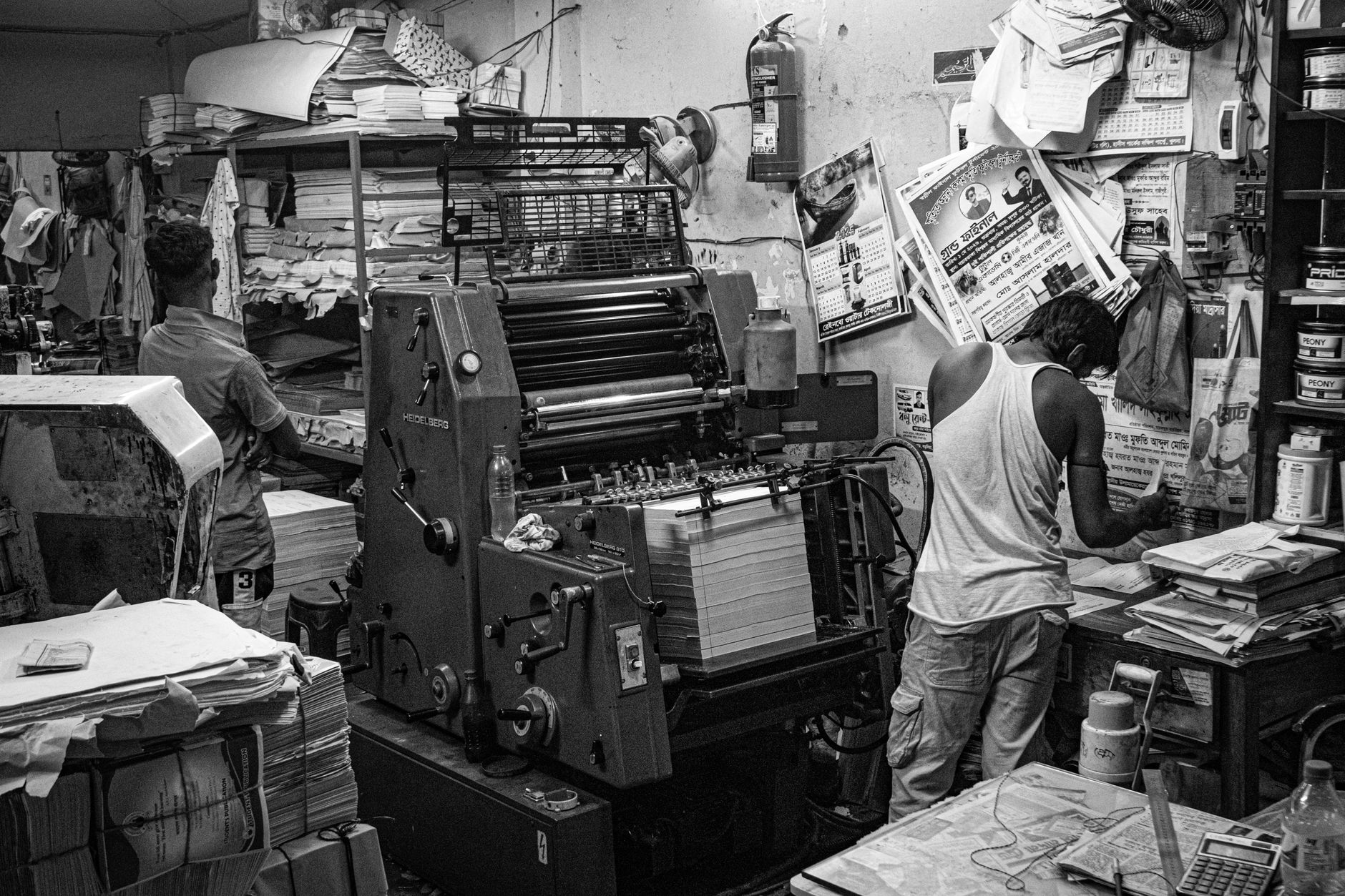
A supply runner at a printing plant works the gap between storage and production. They pull paper stock from a warehouse or staging area, load it onto a cart or pallet, move it to the feed end of a press line, and bring back empty cores, spent pallets or waste. Ink follows the same pattern, moving from a controlled storage room to the press units, with extra care for containers, labels and spill controls. Each trip is short, but the trips repeat, and each one pulls an operator or helper off the press for a few minutes.
The research pass did not find verified figures for trip counts, aisle lengths or floor area at printing plants. Those numbers vary sharply with plant layout and job mix, so this page does not offer a generic trip count. Log the runs yourself for a week instead: note the time, origin, destination, load type and whether the press waited. That log is the real input for the decision, and it is far more useful than an industry average.
Which parts of a paper and ink run can a robot take, and which can't it?
A robot can take the repeated, route-based part of the run. It can pick up a loaded cart or pallet from a defined staging point, travel a mapped path, and deliver to a defined drop point at a press line. It can also return empty carts and pallets along the same path, which removes a second trip that often gets forgotten. That return leg is where a surprising share of runner time goes.
A robot cannot make the calls a runner makes. It cannot read a job ticket and decide that the wrong stock arrived, or notice a damaged skid, a wet pallet or a leaking ink container. It cannot climb a dock plate, load a pallet that needs a hoist, or unjam a feed and decide that a press should wait. Those tasks stay with people, which is why the realistic model is a robot plus fewer staff, never zero staff.
- Repeat trips on a fixed route
Autonomous Mobile Robot
Strong. Same route and stop points on every run.
Supply Runner
Capable, but each trip pulls a person off the press.
- Night and off-shift coverage
Autonomous Mobile Robot
Can run a scheduled route when a shift is short, if the route is clear and a service response is set.
Supply Runner
Needs a scheduled shift, and an absence needs cover.
- Judging stock condition
Autonomous Mobile Robot
Weak. It moves what it is loaded with and cannot treat a damaged skid as a reason to stop.
Supply Runner
Strong. Checks stock, notices leaks and wet pallets.
- Changing jobs and staging points
Autonomous Mobile Robot
Needs a route change and a retest when the layout moves.
Supply Runner
Adapts on the spot to a new job or staging point.
- Jams, ink spills and exceptions
Autonomous Mobile Robot
Stops and waits for staff to clear the problem.
Supply Runner
Strong. Clears jams and handles spills under plant rules.
- Recovering from a stop
Autonomous Mobile Robot
Depends on the service plan and whether a backup unit exists.
Supply Runner
Immediate, if the person is already on the floor.
What do the verified printing figures say about plant size, staffing and injuries?
The printing sector is mostly small. According to WhatTheyThink, a trade publication that analyzes County Business Patterns data, there were about 21,354 establishments in NAICS 32311 (Printing) in 2022 data, down 21% since 2010. The same source reports that small shops with 1 to 9 employees make up about 71% of establishments. Many plants have a handful of people covering presses, prepress, finishing and shipping at once, so one pulled-away operator is a large share of the floor.
According to the Bureau of Labor Statistics, the printing industry (NAICS 323, Printing and Related Support Activities) had about 340,000 employees as of March 2026, seasonally adjusted. The same BLS industry profile gives a total recordable case rate of 1.6 per 100 full-time workers for printing, with 1.0 for cases with days away, job restriction, or transfer, and 0.6 for days-away cases alone. The profile does not state its reference year, so read those as published rates without a dated trend.
PRINTING United Alliance, the printing trade association, reports that the printing rate fell from 1.7 in 2023 to 1.6 in 2024. A 2.7 figure in one trade article appears to be the all-manufacturing number, so this page does not use it.
How much material handling labor is out there, and what about turnover and overtime?
Material movement is a large occupation across the country. According to the Bureau of Labor Statistics Occupational Outlook Handbook, hand laborers and material movers held about 6.9 million jobs in 2025, and projected growth of 4% from 2025 to 2035 adds about 288,900 jobs. That figure covers all industries, not printing, but it shows how much trip work employers still assign to people.
The turnover, overtime, night shift and sick day picture is the part this research could not verify. It did not find turnover or quit rates for press operators or printing material handlers, shift or overtime data for printing plants, or sick day figures. Any number on those topics here would be a guess. Pull them from your own payroll and scheduling records: hours runners worked past a scheduled shift, nights covered by one person, and days a trip went uncovered because someone called out.
Those internal records decide the case. A plant that pays overtime to cover runner gaps has a different picture than one that absorbs the gap as press idle time. The trip log from the earlier section shows how many runner hours go to repeat routes, and that is the number a robot can actually shift.
How does a robot plus fewer staff work together on a printing floor?
The working model at a printing plant is a robot plus fewer staff. The robot takes the repeated paper and ink trips on a mapped route, while the people who would have made those trips stay on the press floor, in prepress, or in finishing and shipping. Nobody is removed to zero. A plant with no one on the floor cannot clear a jam, reload a stock, or handle a damaged skid, and a unit that stops in an aisle needs someone to see it and react.
In practice the change is a redeployment, not a headcount cut for its own sake. Staff who used to walk paper to presses spend that time running presses and checking print quality, and the robot covers the trips while the runner would have been busy elsewhere. Schedule the robot to run the repeat trips first, then decide how many staff hours change only after your log shows the actual gap.
What can't the robot do at a printing plant?
A robot is not a substitute for judgment, and it does not handle every material. It cannot inspect stock for damage, read a job ticket that changed at the press, or decide that a skid needs to go back to receiving. It cannot manage a forklift handoff or load a pallet that needs a hoist. Ink and solvent storage follows plant rules that trained people apply, so those handoffs stay with staff.
Physical limits matter as much as judgment. A route needs clear, mapped floor, and several common conditions can stop a unit or slow it enough to erase the time saved:
A stopped unit in a main aisle blocks the next trip, so one obstacle can delay every run that follows. Layouts that move the staging area every job fit a robot poorly until the route is fixed and retested.
Breakdowns also happen. A stopped unit needs a repair path, and a plant with only one unit has no backup during an outage. Deployment planning should cover the service response and the plan for downtime, not just the route on day one.
- Doorway thresholds, ramps and floor drains
- Uneven concrete, loose cables and tight turns at press feeders
- Wet floors from ink or solvent spills
- Overflow staging areas that change position each week
Is an autonomous mobile robot worth it for a printing plant, and how do you judge the cost?
Payback depends on the trip log, the layout and the lease terms, and this page does not estimate any of them. A robot is leased through financing, and the fixed robot lease payment is quoted after a free site assessment, because the route, floor condition, number of units and service plan all change it. Treat any general cost figure you find online for this kind of work as a starting point to check against those inputs.
The comparison that counts is hours recovered against the full cost of running the robot. That includes the lease, the service plan, integration, training and the route changes that come with new jobs. Compare that with covering the same trips using overtime, a second runner, or press idle time. If repeat trips are a small share of runner hours, the case is weak. If they are most of the hours and overtime covers the gaps, a formal quote is worth requesting.
Check the lease terms closely. Ask whether maintenance is included, whether emergency dispatch is covered, what happens during an outage, and whether a backup unit is available. A lower-looking lease with thin service coverage can cost more over time than a higher one that keeps the route running.
How do you get started with an autonomous mobile robot at a printing plant?
Start with the trip log, then book a site assessment. The assessment maps the floor, measures aisle widths and thresholds, identifies storage and press drop points, and confirms the route the unit would travel. It is free, and it produces a lease quote built on your layout instead of a general estimate. Service Robot Co. then handles deployment and integration and trains your staff before go-live.
Phase the rollout. A pilot with one leased unit on the highest-volume paper and ink route shows whether the trip count and route hold up in real production. Once that route runs cleanly, add a second route or a backup unit. Go-live support covers the first runs, when the route still needs small changes.
Keep the presses running throughout. Schedule deployment around job starts and changeovers, not in the middle of a run, so no press waits on a route that is still being tuned. Service is handled nationwide, with on-site dispatch and remote triage. If your plant is a small shop, the trip log and site assessment come first, because most small printing establishments will need to confirm the volume before a unit makes sense.
Frequently asked questions
Want a warehouse robot at your commercial printing plant?
Tell us about your site. We will recommend the robot, quote the lease, and keep it serviced.