
The short answer
The cleaning robot vs floor scrubber operator choice at an airport terminal favors the robot for repetitive, open concourse scrubbing, especially in overnight or between-flight windows when the floor is mostly clear. It does not replace a person for spill response, restroom work, crowded hours, or any hazard that needs judgment. For most terminals the answer is a robot plus fewer staff, never zero, with the lease quoted after a free site assessment.
Key takeaways
- A floor cleaning robot fits repeat scrubbing on large, open, mapped terminal floors.
- Spills, restrooms, crowds and hazard calls stay with trained staff.
- Pilot coverage figures from airports help size the job, but your own floor plan decides it.
- Plan for a robot plus fewer staff, never zero, with the handover written down.
- Ask for a lease quote after a free site assessment, with maintenance and response terms included.
Cleaning robot vs floor scrubber operator at airport terminals: when does a robot make sense?
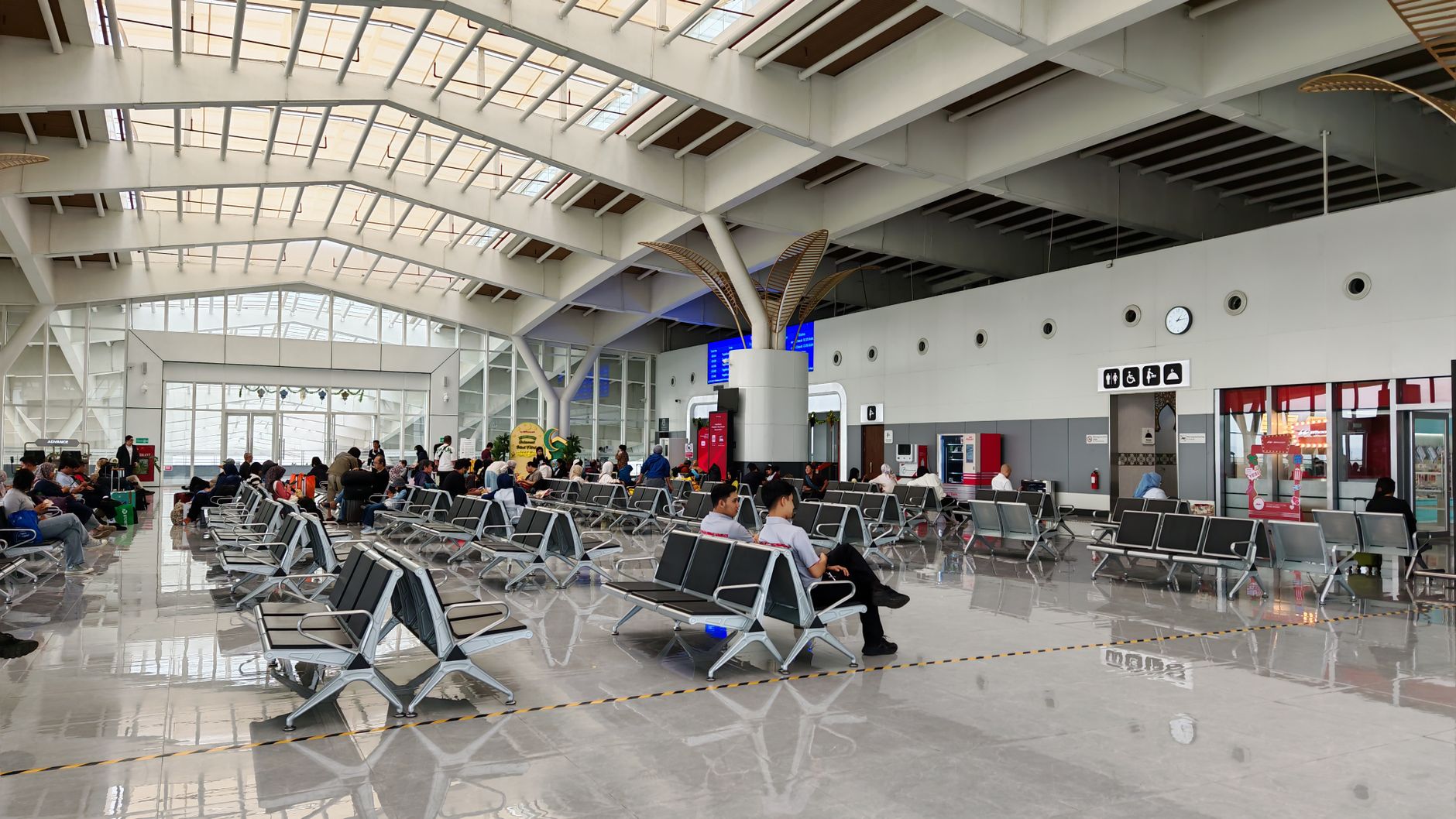
The short version is that a cleaning robot makes sense where the work is the same loop over and over: large open floors, a route that can be mapped, and a window of time when foot traffic is lighter. Concourse scrubbing fits that pattern better than most other parts of a terminal. The floor is wide, the path changes slowly, and the job is mostly coverage rather than judgment.
It makes less sense when the work is mostly reactive. Spill response, restroom turnarounds, lounge service, and the crowded stretch of a busy bank of flights all need a person who can stop, look, and decide. A robot can be told to avoid an area, but it cannot size up a hazard or speak to a passenger who is standing in the way.
The national setting is large. According to the AAAE summary of the FAA National Plan of Integrated Airport Systems report for 2021 to 2025, 3,310 public-use airports are listed, so this question comes up well beyond the largest hubs. The better question for any one of them is which part of the shift moves to the robot, and how many staff remain for everything else.
What does a floor scrubber operator actually do in a terminal shift?
A floor scrubber operator in a terminal usually runs a scrubber over a set route, applying cleaning fluid, scrubbing the floor, and pulling the dirty water into a recovery tank. The route covers the concourse, gate hold areas, and often the connecting corridors. Between passes the operator empties tanks, refills fluid, changes pads, and checks the machine for faults before going back out.
Much of the shift is not scrubbing at all. The operator sets out wet floor signs, stops for spills, answers questions from gate staff and passengers, and waits for carts, queues, and wheelchairs to clear. In a busy terminal the route is broken up constantly, so a pass that looks like a single block on a schedule can take longer on the floor than the plan suggests.
The operator also acts as the quality check. They look for streaks, missed patches, and sticky spots that a route plan will not catch, and they notice when a surface is wearing or a drain is backing up. That eye for the floor is part of the job's value, so write it down before deciding what the robot should take over.
Median hourly wage, Janitors and Building Cleaners
$4,041
Monthly cost of one full-time worker, at the median wage plus payroll costs (an estimate, not a quote).
Which parts of terminal floor care can a robot take over?
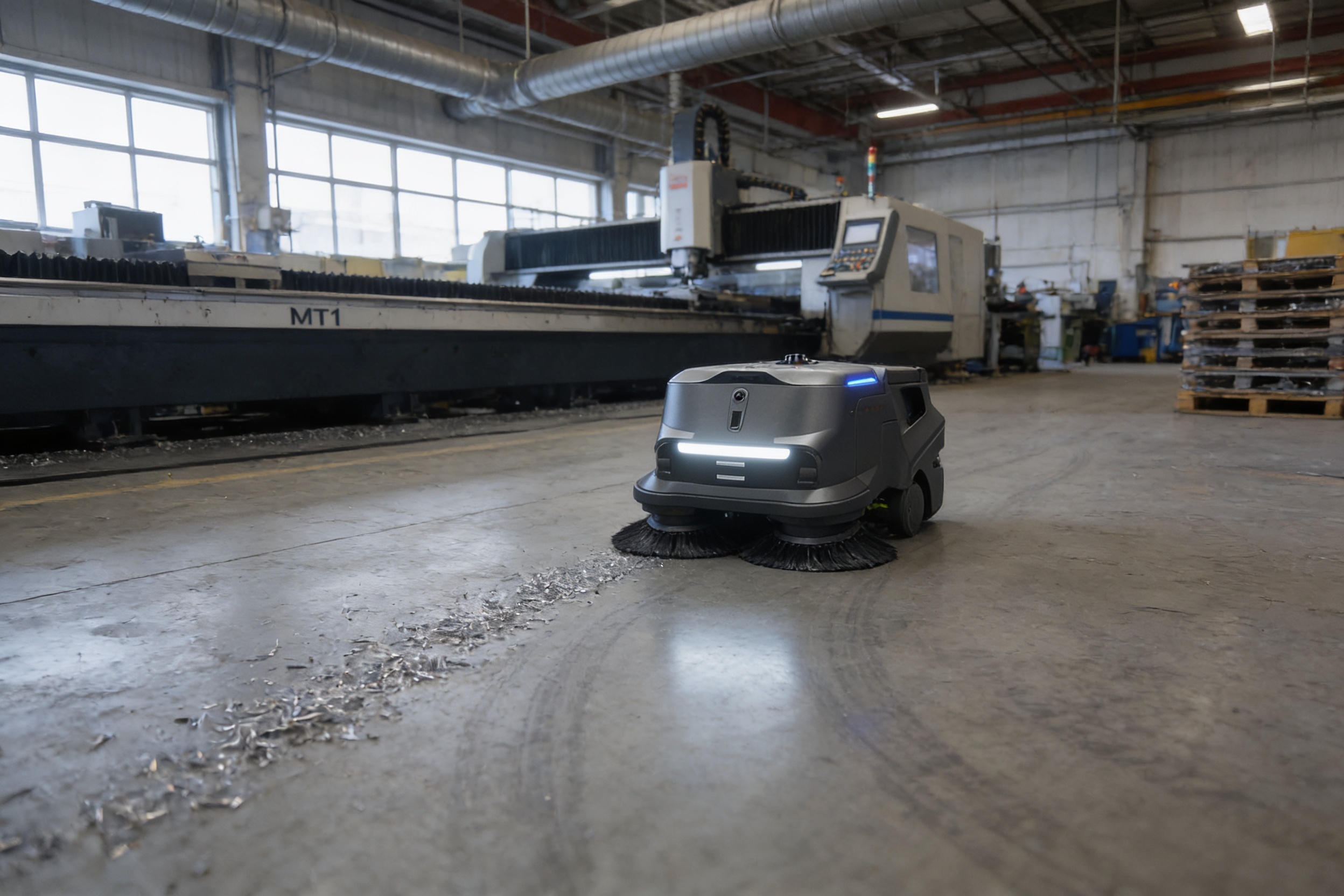
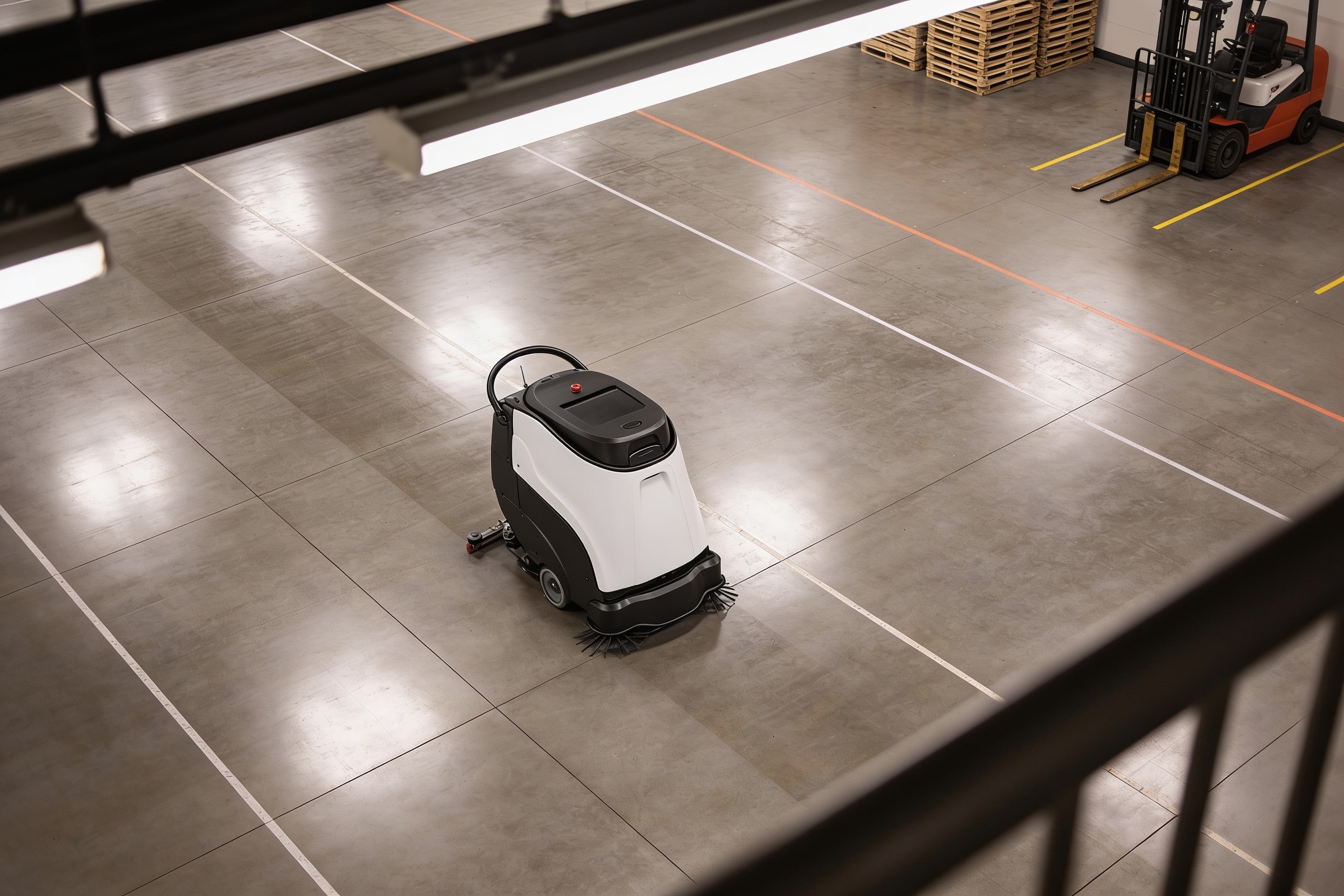
The best candidates are the repeat passes on open, mapped floor: the main concourse, wide corridors, and gate areas where the path is predictable. A cleaning robot can scrub the route it has learned and, depending on configuration, squeegee or vacuum the water it leaves behind. Coverage is measured in square feet, so you can check the math against your own floor plan.
Pilots show the scale involved. According to regional airport press coverage, one airport pilot averaged about 200,000 square feet of flooring cleaned per week. Separately, the International Federation of Robotics reported in its 2026 release that global shipments of professional service robots rose 24 percent to almost 250,000 units in 2025, though it cautions that its sample data is not projected to the whole industry.
What stays with people is the rest: spills and sticky spots that need a second look, restrooms, high-touch surfaces, the edges of queues, anything involving a passenger, and the judgment about whether a surface is clean enough. When a spill or a crowd appears on its route, the robot should stop and wait for a person, and that handoff is part of the plan.
- Repeat coverage on open floor
Cleaning Robot
Follows the same mapped route every pass, with the same coverage
Floor Scrubber Operator
Covers the route, but tires, varies from pass to pass, and needs breaks
- Night and off-peak windows
Cleaning Robot
Runs the window without a person on the floor, once set up
Floor Scrubber Operator
Needs a scheduled crew, shift cover, and a supervisor
- Spills and hazards
Cleaning Robot
Stops and reports an obstacle, but cannot judge a hazard
Floor Scrubber Operator
Assesses a spill, decides the response, and calls for help when needed
- Passenger interaction
Cleaning Robot
Limited, and it can be blocked or stopped by people
Floor Scrubber Operator
Answers questions, directs people, and handles situations calmly
- Quality check
Cleaning Robot
Logs routes and stops, but misses sticky spots it was not told to find
Floor Scrubber Operator
Spots streaks, missed areas and sticky patches by eye
- Restrooms and high-touch surfaces
Cleaning Robot
Not its work
Floor Scrubber Operator
Handles restrooms, wiping and detail work
How many hours does scrubbing take, and what does the labor picture look like?
The government data on this page covers the job of janitors and building cleaners, not airport operators as a separate group. According to the Bureau of Labor Statistics Occupational Outlook Handbook, about 2.45 million jobs existed in 2024, with projected growth of about 2 percent from 2024 to 2034, which is slower than average for all occupations. A labor pool that is not growing quickly means terminal shifts can be slow to fill.
Injury data matters for the same reason. According to the BLS injury snapshot for janitors and cleaners, excluding maids and housekeeping cleaners, the days-away-from-work rate for private industry was 191.6 per 10,000 full-time equivalent workers in 2020, up from 137.1 in 2018, and the 2020 figure reflects 21,100 cases. Sprains, strains and tears were the most common injury, and falls on the same level were the leading event. The same snapshot reports 42 fatalities in 2020, compared with 45 in 2019.
We have not verified a turnover, overtime, night shift, or sick-day figure for airport terminal crews, so this page does not state one. Ask the facilities or contracting team for their own turnover and overtime records, and use the wage figure for this job in the government wage data on this page when comparing staffing options. The hours a robot takes over should come from your own floor measurements and shift plan, which the site assessment produces.
What does a robot's overnight shift look like in a terminal?
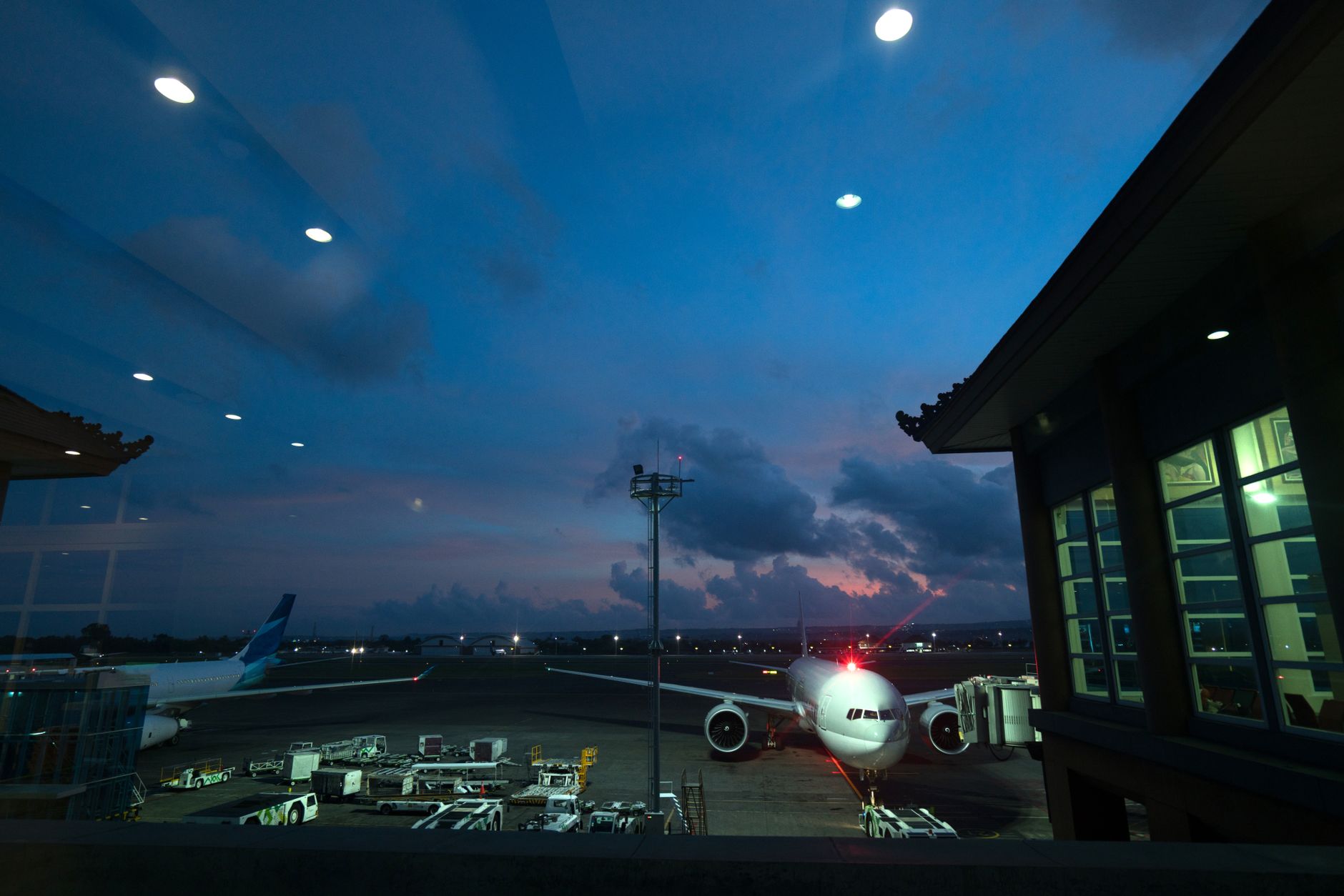
A typical plan starts after the last wave of departures has cleared the concourse. Staff set the window, the route, and the stop points before the robot starts, and they close off any area the robot should not enter, such as an active spill or a roped queue. Exact times depend on the terminal's traffic, which the site assessment measures before any plan is proposed.
During the run, a staff member stays reachable, though not necessarily on the floor. Alerts from the robot go to someone who can clear an obstacle, reroute the pass, or send a person to a spill. The hours that the robot is working become time that staff can give to the tasks that need hands and judgment, such as restrooms and passenger-facing work.
Before the shift ends, the robot returns to its charging point, and staff check the route, the water, and any stops the robot logged during the night. That short check is where most day-to-day problems are caught, so it belongs in the shift plan from the start rather than being added after the first problem.
How does a team work with a robot, and why is zero staff the wrong target?
The working model we recommend is a robot plus fewer staff, never zero. The robot takes the repeat coverage on open floor, and people shift toward the work that needs judgment: spills, restrooms, passenger-facing tasks, and the final quality check. Staff time moves rather than disappears, and the handover should say where it moved.
Zero staff is the wrong target for three reasons. Someone must respond when the robot stops or meets an obstacle, someone must handle what the robot cannot clean, and someone must keep the machine ready for the next window. Without them, a robot that stops at 2 am stays stopped until the morning crew arrives, and the coverage gap that was meant to close reopens.
Training matters here. The people who work alongside the robot need to read its status, clear a blocked route, stop it safely, and know when to call for service. We train the staff as part of the deployment, and the training should be written into the handover so that a new shift lead can run the routine without a call to a supervisor.
What can a floor cleaning robot not do in an airport terminal?
A robot cannot judge a hazard. It can detect an obstacle and stop, but it cannot decide whether a puddle is a slip risk, whether a spill needs a crew with protective equipment, or whether a person on the floor needs help. Those calls stay with trained staff, and any plan that assumes otherwise is not ready for a terminal.
It cannot do the parts of the job that are not floor coverage. Restroom cleaning, trash removal, high-touch wiping, glass, and the detail work around seating and fixtures remain with people. Crowded stretches of a busy bank of flights are usually off limits to the robot while the crowd is present, which means those windows still need staff.
Layout also limits it. Floors with heavy obstacles, frequent level changes, or unmapped sections need a survey before any plan is drawn up, and a robot may be the right tool for one concourse and the wrong tool for another. An honest site assessment says which portion of the terminal fits and which does not, and it should say so in writing.
How does robot leasing work, and what should I check before deciding?
We lease robots through financing, so the decision centers on a fixed lease payment you can plan around. The lease is quoted after a free site assessment, because floor area, route complexity, traffic pattern, and the shift window set the scope. Lease options, maintenance, and service commitments belong to the same quote, so compare complete packages rather than the unit alone.
The checklist below shows what changes the number. Check the open floor area, the obstacles on the route, the length of the overnight or between-flight window, the staff time the robot will take over, and the service response time at your location. Ask whether maintenance is included and what happens when a unit is down.
Ask for the service plan in writing, including on-site dispatch, remote triage, and whether a spare unit can cover a failure. Those answers matter more to a terminal than the headline lease figure, because a robot that sits idle while a window passes still leaves the floor uncovered. A written quote that holds up on those points is the one worth comparing.
How do I get started with a robot pilot at my terminal?
Start with a site assessment, not a machine. We map the floor, measure the open area, observe the scrubbing windows used today, and mark the points where a robot should not go. The output is a plan showing which part of the shift moves to the robot and which part stays with staff, along with the quote for the lease.
Many facilities begin with a pilot on one concourse before extending coverage. A phased start limits the change in the first weeks, lets the team learn the stop and restart routine, and gives you coverage numbers from your own floor. Pilot results are better evidence for the next decision than any published figure, including the ones on this page.
We lease, deploy and integrate the robot, train the staff who will work with it, and service it nationwide, so one partner handles installation, handover, and later repairs. Ask for a free site assessment and a written lease quote with service terms included, then compare that quote against the work your staff are doing now.
Frequently asked questions
Want a cleaning robot at your airport terminal?
Tell us about your site. We will recommend the robot, quote the lease, and keep it serviced.
Sources
- US Bureau of Labor Statistics, Occupational Employment and Wage Statistics (OEWS May 2024)
- AAAE summary of FAA National Plan of Integrated Airport Systems report
- BLS Occupational Outlook Handbook, janitors and building cleaners
- BLS injury snapshot, janitors and cleaners except maids and housekeeping cleaners
- IFR 2026 press release on professional service robots
- Regional airport press coverage of a floor cleaning robot pilot