

The short answer
A cobot vs manual packer decision at a frozen food plant comes down to one station. A cobot makes sense when the job is a repeated pick and place of finished packs into cartons at a fixed station, the line runs at a steady speed, and turnover or cold room lifting keeps that station hard to staff. It does not make sense when the line changes formats often, when packs need a person to judge them, or when the station cannot be mapped for a robot without stopping production. In most plants the answer is a cobot working beside fewer people, not a cobot replacing the whole packing crew.
Key takeaways
- A cobot fits a fixed, repeated carton packing station, not a line that changes formats all shift.
- Cold room lifting and turnover are the strongest reasons to look at a packing station, more than line speed alone.
- A cobot takes the repeated pick and place, while people keep exceptions, quality checks, carton loading and changeovers.
- Plan for a robot plus fewer staff, never zero staff, and name one owner for the robot.
- Run a site assessment and compare the lease quote against your own labor records before deciding.
Cobot vs manual packer at frozen food plants: which makes sense?
A cobot vs manual packer decision at a frozen food plant is really a decision about one station. Finished product reaches a packing point, gets placed into cartons, and the cartons move on to closing, labeling and palletizing. A cobot is a collaborative robot arm that can work at that same station beside a person, picking finished packs and setting them into a carton on a repeated program.
A cobot makes sense when the station runs one pack and carton format for long stretches, the line speed is steady, and the people who fill that station are hard to keep. It does not make sense when the line runs many items with frequent changeovers, when packs arrive in condition that needs a person to judge, or when the station cannot be mapped and fenced for a robot without stopping production.
What does a manual packer actually do in a shift?
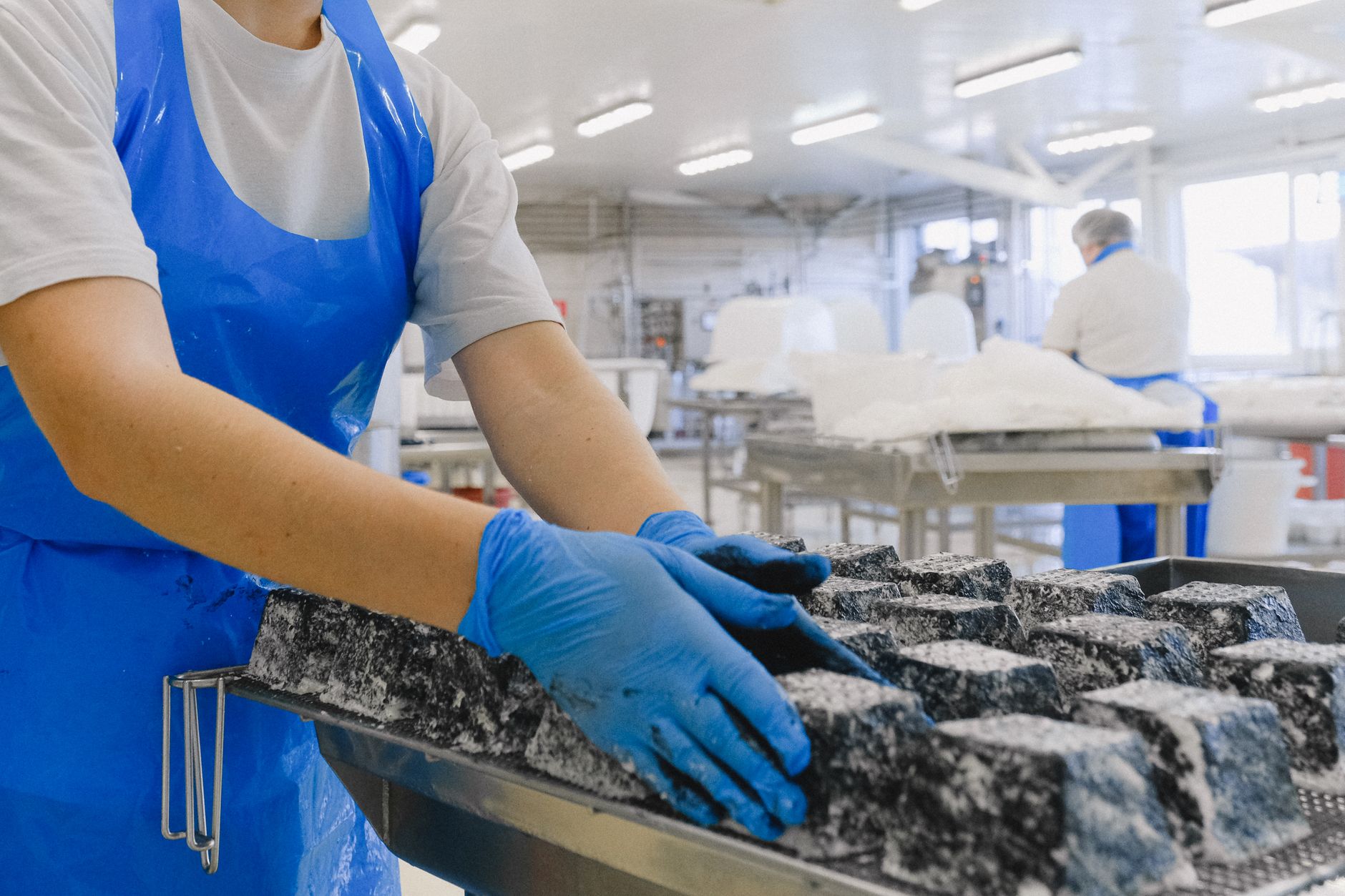
A manual packer at a frozen food station does more than place packs. Across a shift the person reaches into a tote or from a conveyor, lifts and turns packs, checks date codes and seal integrity, fills the carton, closes it, and passes it along. Much of this is standing and reaching, often in a cold room or a cold adjacent area where gloves, layered clothing and condensation slow the hands down.
The physical load builds over the shift rather than arriving in one heavy lift. The person also acts as the quality check. A cracked pack, a short fill or a mislabeled item gets caught by eye at the station. A cobot can repeat the motion all shift, but the checking and the decision about a bad pack still depend on someone standing close by.
Median hourly wage, Laborers and Freight, Stock, and Material Movers, Hand
$4,380
Monthly cost of one full-time worker, at the median wage plus payroll costs (an estimate, not a quote).
Which packing tasks can a cobot take, and which can it not?
A cobot is best suited to the middle of the job: the repeated pick and place of finished, uniform packs into a carton held in a fixture at a known position. The arm needs a defined pick point, a defined place point and a carton that does not shift much. With those in place, the same motion can run through a shift without the fatigue that comes from lifting and reaching.
The work around that motion is harder to automate. Opening and feeding cartons, changing the pattern when the product changes, clearing a jam, checking seal and date codes, pulling damaged packs, and moving full cartons to the next step usually stay with people. Those are the tasks where a cobot plus fewer people makes more sense than a cobot alone.
- Picking uniform finished packs from a defined infeed and setting them into a fixed carton pattern
- Repeating the same layer or count pattern through a long run
- Working at a station where the carton is held in a fixture
- Running one format across a production run
How many people work these lines, and how much do they turn over?
The national picture is a useful backdrop. According to the Bureau of Labor Statistics food manufacturing summary, packaging and filling machine operators and tenders in food manufacturing numbered 162,680 in 2024, and food batchmakers numbered 142,000. The same summary put total food manufacturing employment at about 1,781,200 in early 2026, seasonally adjusted, with the latest months marked preliminary.
Turnover is harder to pin down for frozen food specifically. A YCharts series built from BLS JOLTS data reports a quits rate of 1.60% for nondurable goods manufacturing in February 2026, against 1.20% the prior month and 1.30% a year earlier. That category is broader than food manufacturing, so it shows the direction of quitting across the sector, not the rate on your floor. Your own quit records by station are the number to trust.
Overtime, night shifts and sick days are where a plant feels this. A station that loses one person can push a shift into overtime or leave a carton line short. The cost that tends to get missed is the backfill: recruiting, training a new packer, and the shifts a station runs short while that happens. Put that beside any lease quote, not just the hourly labor line.
What do injury rates say about lifting in food packing work?
Injury data for food manufacturing points to real strain. According to Manufacturing Dive, citing BLS, food manufacturing recorded 61,400 injury and illness cases in 2023, a rate of 3.6 cases per 100 full-time workers, down from 4.6 in 2022. A secondary industry summary puts the 2024 food manufacturing rate at 3.3 cases per 100 full-time equivalent workers, according to Voxelai, though that figure was not checked against BLS directly.
Subsector differences matter too. According to Food Safety News, citing BLS, poultry recorded 2.6 cases per 100 full-time workers in 2023, against 3.6 for all food manufacturing. These rates do not isolate lifting, and no verified 2024 musculoskeletal rate for food manufacturing was found. Treat them as context, and measure lift and reach load at your own station with your safety team before you decide.
- Repeated pick and place at a fixed station
Cobot
Holds the same motion through a long run without fatigue
Manual Packer
Keeps pace, but slows across a shift and between breaks
- Cold room work
Cobot
Runs the motion without gloves, breaks or warm-up time
Manual Packer
Adapts to odd packs and can see a problem before it reaches the carton
- Quality checks
Cobot
Flags only what its sensors and program are set to detect
Manual Packer
Catches seal, date code and damage problems by eye and by feel
- Changeovers and new formats
Cobot
Needs reprogramming and fixture changes for each new format
Manual Packer
Adjusts quickly to a new pack with little setup
- Night shifts and coverage
Cobot
Covers an overnight run when staff are hard to find
Manual Packer
Fills the shift when the work needs judgment or a fast response
- Turnover and training
Cobot
Does not leave, though trained staff must run and watch it
Manual Packer
Takes time to train and can leave, which leaves the station short
When does a cobot make sense at a frozen food packing station?
Run these tests before you compare any lease quote. If most of them point the same way, a cobot at the packing station is worth a site assessment. If they split, a manual station with better lift aids, a layout change or a second person may be the better fit.
Also check how often the line changes over. Frequent changeovers multiply setup work, and that is often where the economics turn against a single cobot.
How does a team work with a cobot on the packing line?
A cobot works best as one part of a team, with fewer people on the station, never zero. In a typical setup one trained person keeps the infeed stocked, watches the arm, clears exceptions and checks product, while the arm does the repeated placing. The crew shrinks from several packers to fewer, and the people who remain do the work that needs judgment.
The team also needs a named owner for the robot. Someone must know the stop points, how to clear a fault and when to call for service. Training should cover operators, shift leads and maintenance staff. Plan a backup approach for the station so a fault does not leave the carton line empty.
What can a cobot not do on a frozen food line?
A cobot does not fit every packing line, and a plant should hear that before any sales conversation. It does not solve a product mix problem by itself. A line that changes formats many times a shift will spend much of its time being reprogrammed and refixtured. It will not judge a bad pack unless its sensors and program are set up for that, and the setup takes engineering time.
It also does not remove the need for people. Cartons still need loading, jams still happen, and someone has to decide what to do with product that looks wrong. Lift aids, layout changes and a second person may ease the strain better on a line that changes often. An honest assessment says so.
How should you weigh labor cost against a cobot lease?
Compare the station as it runs now with the station staffed by fewer people and a robot. The labor side includes hours on the shift, overtime when a packer is out, night coverage, and the backfill each time someone leaves. The government wage data on this page gives the local wage for this job, which is the starting point for that labor line.
The lease side cannot be read from a web page. The payment comes in a quote after a site assessment, which measures the station, the pick and place points, the carton flow and the staffing plan. Ask the quote to show the lease term, what service is included, how a fault is handled and what happens to the station during a repair. Then compare it with the labor line you built from your own records.
How do you start a cobot pilot at one packing station?
Start with one station, not the whole line. Pick the station with the highest turnover or the heaviest cold room lifting, and map the pick point, the carton position and the place where a person checks product. A site assessment turns that map into a layout, a fixture plan and a staffing plan.
Then run a pilot on that one station for a set period. Track faults, throughput and the time staff spend on exceptions, and compare those with the station's own records. If the results hold, the next step is a second station with the same format. Our integrator team handles selection, lease financing, deployment, staff training and nationwide service, so the plant deals with one partner. The robot takes the repeated placing, and the people keep the parts that need them.
Frequently asked questions
Want a cobot at your frozen food plant?
Tell us about your site. We will recommend the robot, quote the lease, and keep it serviced.
Sources
- US Bureau of Labor Statistics, Occupational Employment and Wage Statistics (OEWS May 2024)
- BLS Industries at a Glance: Food Manufacturing (NAICS 311)
- YCharts, BLS JOLTS quits rate for nondurable goods manufacturing
- Manufacturing Dive, citing BLS injury and illness data
- Voxelai industry insights, food manufacturing safety statistics
- Food Safety News, citing BLS poultry injury data
- BusinessWire, International Federation of Robotics press release