
The short answer
For most Omaha plants, the cobot vs palletizing worker question turns on pattern volume. A cobot makes sense when one stacking pattern runs most of a shift at a steady infeed rate and the main job is repetitive lifting. A person still wins when pallet builds change often, loads are heavy or unstable, or the line is too small for a fixed cell. Either way, the answer is a robot plus trained staff, never a robot alone.
Key takeaways
- A cobot fits one repeatable stacking pattern at steady volume, not a line that rebuilds pallets all day.
- Palletizing is mostly repetitive lifting, and the OSHA case on record ties the strain to heavy loads, bending and repetition.
- Transportation and material moving was 9.0 percent of Omaha employment in the BLS May 2024 release.
- Economy-wide quits are low, so an open shift is hard to fill. Count your own overtime and open shifts.
- Keep at least one trained person on every shift, because a stopped cell still needs a human.
Cobot vs palletizing worker in Omaha: when does a cobot make sense?
The cobot vs palletizing worker question in Omaha is mostly a question about the shape of the work, not the hourly wage. A collaborative robot arm fits when one stacking pattern repeats across most of a shift, cases arrive at a steady rate, and each pallet build follows the same layout. It is a weak fit when orders change several times a day, when loads are heavy or unstable, or when the floor has no room for a fixed cell at the end of the line.
We are a US commercial robot integrator, so we look at this decision from the floor outward. We pick the robot for the site, lease it through financing, deploy and integrate it, train the staff, and service it nationwide. The lease quote follows a free site assessment, because the infeed, pallet flow and pattern count decide the answer.
What does a palletizing worker actually do in a shift?
A palletizing worker takes cases from a conveyor or tote, places them in a set layer pattern on a pallet, and stacks layer after layer to the target height. The pallet then moves on to wrap, labeling and staging for a forklift. The stacking is the visible job, but it is often only part of what keeps the line running.
The physical load is why this job gets reviewed. In an OSHA news release from October 2024, the agency described a Nebraska farm cooperative where workers manually lifted boxes of up to 99 pounds from a conveyor onto floor-level pallets and stacked them up to nine high. The cooperative was cited under the general duty clause for ergonomic stressors. The Omaha area director said the injuries come from heavy lifting, bending, awkward postures and repetitive tasks.
Beyond the stack, a person in this job usually also handles the following.
- Fetching empty pallets and slip sheets
- Clearing jams at the infeed or conveyor transfer
- Pulling damaged or crushed cases off the line
- Checking labels against the pallet plan
- Handing finished pallets to the wrap station and the forklift driver
Median hourly wage, Laborers and Freight, Stock, and Material Movers, Hand
$4,525
Monthly cost of one full-time worker in Omaha, NE, at the median wage plus payroll costs (an estimate, not a quote).
Which parts of palletizing can a robot take, and which can it not?
A cobot does best at the repeated core of the job: picking cases from a steady infeed and placing them in a fixed pattern, layer after layer. It does not need breaks to do that, and a well-designed cell keeps placement consistent from the first pallet to the last. This is the work where the lifting, bending and repetition risks sit, so it is the part that gets removed first.
It cannot take over most of the surrounding work without extra equipment or people. Someone still has to load empty pallets and slip sheets unless a feeder is added, clear a jam, decide what to do with a damaged case, and move finished pallets to the forklift. A robot also cannot judge a crushed box the way a person can, so exceptions still come to a human.
Layout matters as much as the arm. NIOSH's 2024 health hazard evaluation of a logistics distribution center, as summarized by AIHA, found that equipment that could have eased lifting was unused or absent at some locations, and it flagged conveyor height. Infeed height and reach decide whether a cell helps, so check them before choosing an arm.
- Repeat pattern
Cobot
Holds one stacking pattern steadily across the shift once the cell is set
Palletizing Worker
Adjusts layout on the fly and handles a new pattern without a program change
- Heavy or irregular cases
Cobot
Limited to the loads and grippers designed for the site
Palletizing Worker
Can reposition and judge a crushed or odd case, though lifting adds injury risk
- Night and weekend coverage
Cobot
Runs when scheduled, but still needs one trained person on the cell
Palletizing Worker
Covers only when a person is rostered and available
- Sick days and absence
Cobot
Does not call in, but a stop needs a trained person to take over
Palletizing Worker
Absence leaves a gap that is filled by overtime or a short-handed line
- Pattern changes
Cobot
Needs a planned program change and a check on the first pallet
Palletizing Worker
Adapts quickly with no program change needed
- Lifting exposure
Cobot
Removes the repeated lift and placement at the cell
Palletizing Worker
Keeps the lift, bending and reach that the OSHA case describes
- Cost structure
Cobot
Fixed lease quote after a free site assessment, plus service
Palletizing Worker
The local wage for the job, overtime, turnover and training of replacements
What do Omaha labor numbers say about palletizing?
According to the BLS May 2024 OEWS release for the Omaha metro, transportation and material moving made up 9.0 percent of local employment, compared with 11.6 percent for office and administrative support and 9.6 percent for food preparation and serving. That release adopted new metro definitions based on the 2020 census, so earlier Omaha years are not directly comparable. The local wage for this job appears in the government wage data on this page.
We did not verify a May 2024 Omaha headcount for laborers and freight, stock, and material movers, hand, so pull the Omaha table from BLS before you model labor. Nationally, O*NET, using BLS projections, puts this occupation at about 2,988,900 jobs in 2024, rising to 3,033,100 in 2034, roughly 1.5 percent growth over the decade.
Slow national growth means the labor pool will not expand quickly. The cost of a hard-to-fill shift is worth counting honestly before you choose between a person and an arm.
How much turnover and overtime should you expect?
We did not verify a turnover rate for palletizing workers specifically, so use your own records for that. The closest verified signal is economy-wide. The BLS Job Openings and Labor Turnover Survey, January 2026 release, reports that annual quits fell by 1.3 million in 2025 and that the total separations rate was 3.3 percent, unchanged from 2024.
A FRED series for trade, transportation and utilities combines several sectors, so it is not a palletizing measure. Its quits rate ran between 2.2 and 2.6 percent from October 2025 to February 2026. Low quits mean people are staying in their jobs, so an open palletizing shift is harder to fill, and the gap tends to fall as overtime on the people already on the line.
We did not find verified national or Omaha figures for night shift coverage or sick-day rates for this job. Those are the numbers that change the case most, so count them over the last twelve months: open shifts, overtime hours, absences and any shift that ran short. A cell can run through a shift without a sick call, but the one trained person who watches it cannot be absent.
What are the injury risks in palletizing, and what does a robot change?
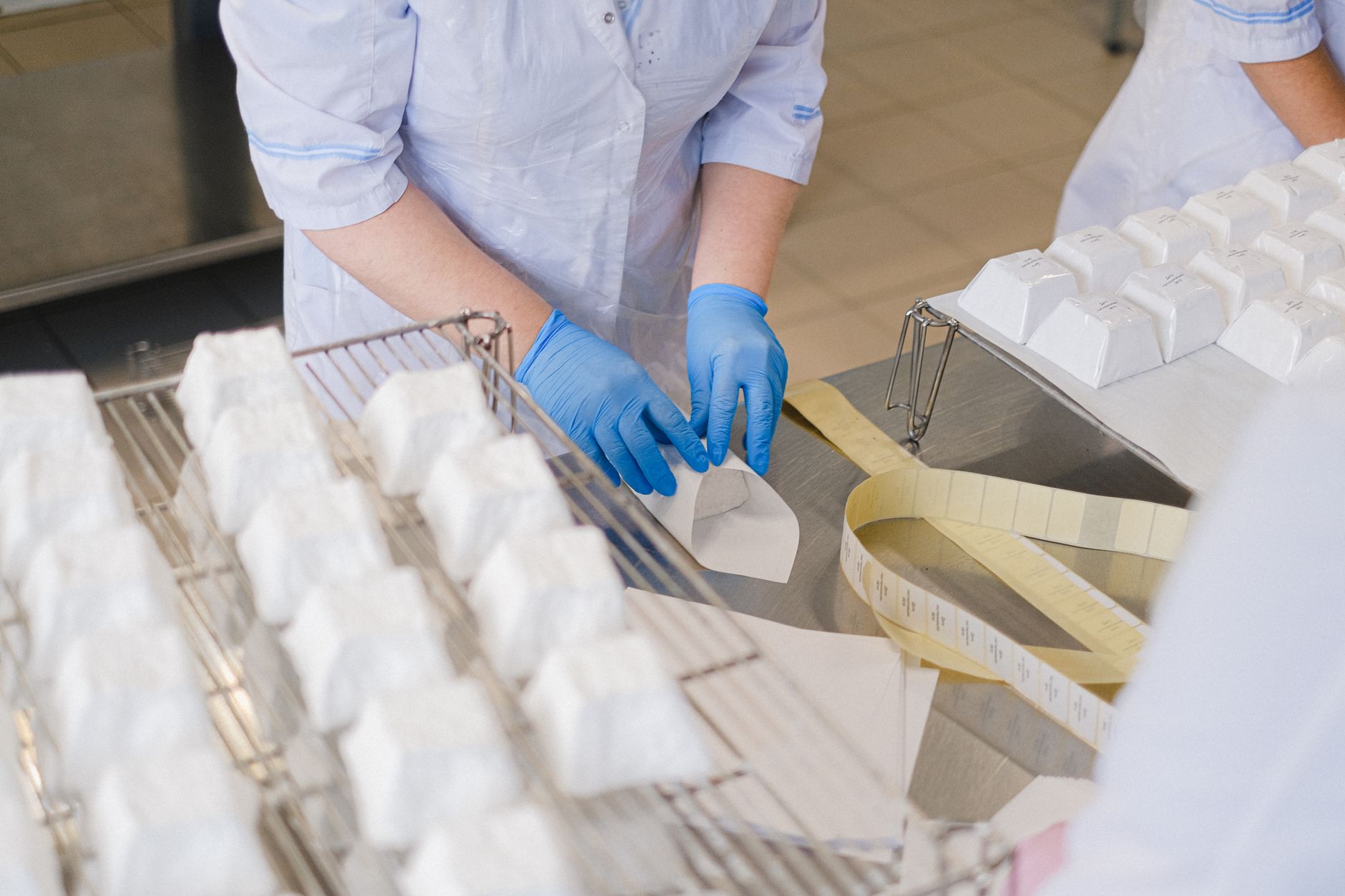
BLS reported 888,100 cases involving days away from work in private industry in 2024, with a median of 8 days away. That figure covers all industries, so treat it as a broad benchmark, not a palletizing rate.
The OSHA case is more specific. The lifting, bending and reaching in a manual stacking area match the risk factors the Omaha area director named: heavy lifting, bending, awkward postures and repetitive tasks. A cobot takes over the repeated lift and placement, which is where those factors concentrate.
It does not remove them from the whole job. Pallet handling and cell tending still involve lifting, and jams and damaged cases still need hands. Plan for the people still on the line to carry lighter, more varied tasks, and give those stations the same ergonomic review you would give any other station.
How does a team work with a robot on palletizing?
The working model is a robot plus fewer staff, never zero staff. The robot runs the stacking pattern through a shift. One person per shift, trained on the cell, loads pallets and slip sheets, watches the infeed and the wrap station, clears jams, and handles exceptions. The stacker's job shifts from lifting to tending.
Cross-training matters more than headcount. If the robot stops, a trained person must be able to take over by hand or the line stalls. Keep at least one person who can run the cell on every shift, including the person covering breaks and absences.
Some plants move the former stacker to the wrap or labeling station, where the work is steadier and the lift is lighter. Others move that person to quality checks on pallet builds. Either way, the staffing plan should be written down before go live, not after the first missed shift.
What can a cobot palletizer not do well?
A cobot is a poor choice when the order mix changes faster than the cell can be reprogrammed. That happens in job shops and co-packers handling many SKUs with frequent pattern changes. It also struggles with very heavy or irregular loads, unstable cases that need a person's judgment, and pallets that arrive in poor condition.
Low volume is a weaker case. If the line stacks only a few pallets a day, a fixed cell may sit idle much of the time, and a person may remain the simpler answer. The arm also needs floor space and a trained owner on site.
Do not assume a cobot removes the palletizing job. It removes the repetitive part and changes the tasks left behind. A plan that depends on zero people will fail at the first jam or the first sick day.
How do you get started with a palletizing cobot in Omaha?
Work through these steps before you talk about a lease.
We are a US commercial robot integrator. We pick the robot for the site, lease it through financing, deploy and integrate it, train the staff, and service it nationwide. Many plants start with one leased unit on a single pattern, which tests the cell before they decide on more. Ask for a backup or spare unit plan at the start, because a stopped cell with no spare is a stopped line.
- Pull the Omaha table from BLS for local headcount, and use the government wage data on this page for the local wage for this job.
- Record a month of pattern changes, shifts, overtime, open shifts and injury logs at the palletizing station.
- Book a free site assessment, where we map the infeed, pallet flow, floor space and pattern count.
- Review the lease quote that follows the site assessment, along with the financing options that go with it.
- Go live with installation, integration, staff training and go-live support, then service on site or through remote triage.
Frequently asked questions
Put a robot to work in Omaha.
We walk your site, learn the job, and recommend the unit that fits. Then we quote the lease, deploy it, and keep it serviced.
Sources
- US Bureau of Labor Statistics, Occupational Employment and Wage Statistics (OEWS May 2024)
- BLS Midwest Region, Omaha metro OEWS release, May 2024
- BLS Job Openings and Labor Turnover Survey, January 2026 release
- FRED, quits rate for trade, transportation and utilities
- BLS Survey of Occupational Injuries and Illnesses, latest numbers
- OSHA news release, October 8, 2024
- International Federation of Robotics, president's report
- O*NET OnLine, Laborers and Freight, Stock, and Material Movers, Hand (53-7062.00)
- AIHA summary of NIOSH ergonomic evaluation of warehousing tasks, 2024