

The short answer
Delivery robot vs food runner in Cincinnati is mostly a question of route, not wages. A delivery robot makes sense when the same kitchen to dining room trips repeat on a fixed path all shift and a person is free for the work a robot cannot do, such as tableside service, allergy checks and clearing tables. It does not make sense when the room layout changes often, when most runs are one-off requests, or when the plan is to cut the floor team to zero, because a robot works alongside staff and does not replace them.
Key takeaways
- The robot takes the repeated, fixed-path trips, not the whole runner job.
- Decide on runner hours measured on your own floor, not on a headline wage.
- Plan for a robot plus fewer staff, never zero staff.
- Turnover data is thin and often vendor-reported, so the labor case rests on your own records.
- The lease quote comes after a free site assessment, with your route data in hand.
Delivery robot vs food runner in Cincinnati: when does a robot make sense?
The decision starts with the route, not the robot. A robot earns its place on a repeated trip with a clear start and end point: the pass to a dining room, a bar station to a patio, or a far room back to the wash line. These trips are predictable, and they are where a runner spends much of a busy shift walking instead of serving.
A robot makes less sense in a room where the layout changes every night, where most requests are one-off, or where guests expect a person to bring every plate and check on every table. A small sit-down room with short kitchen distances may save too little runner time to justify a lease. Measure the route before you decide, and treat the robot as one tool on a staffed team.
What does a food runner actually do during a Cincinnati shift?
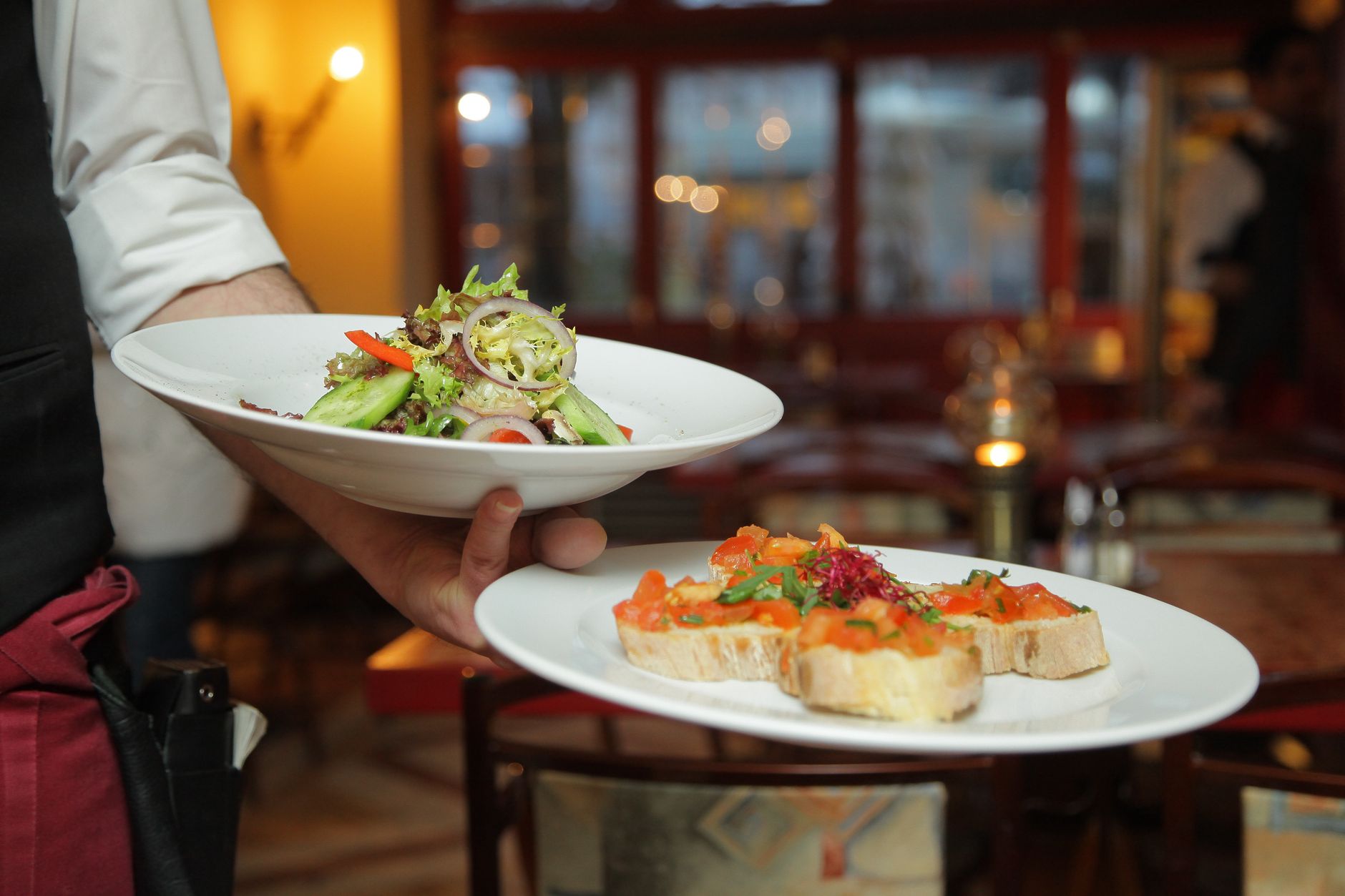
A food runner's shift is a series of short trips built around the rush. They take plates from the pass, match each dish to its table, carry drinks and sides, return empty plates and glasses, restock condiments and napkins, and reset the station between seatings. Most of the walking happens in the peak minutes around each seating, which is when a server most needs a second pair of hands.
The job also trains the floor team. In sit-down rooms runners often move up to server, and in quick-turn rooms they are often the first floor job a new hire takes. When a trained runner leaves, the cost is the training and the lost coverage, not only the hourly wage, so the role's turnover matters to the owner.
The national picture shows how many people work this kind of floor. The National Restaurant Association expected the industry to employ 15.9 million people by the end of 2025, a gain of about 200,000 jobs over the year, according to its February 2025 release. Many operators run the same kinds of floor routes, which makes the trip count the right unit to measure.
Median hourly wage, Waiters and Waitresses
$4,083
Monthly cost of one full-time worker in Cincinnati, OH, at the median wage plus payroll costs (an estimate, not a quote).
Which parts of the runner job can a robot take, and which can it not?
A robot can take the fixed-path carry. It moves plates and drinks from the pass to a set table zone, and it returns empty dishes to the wash line on the same route. It does not tire, does not stop to chat with the next group, and runs the route the same way at every peak. For a restaurant with a clear kitchen to dining room corridor, this is the part of the job with the most walking per task.
It cannot take the parts that depend on judgment and contact. It cannot check a dish against a guest's allergy, read a table's mood, take a new order, split a check, or clear a table with awkward items. It cannot clean a spill, pick up broken glass, or sort out a wrong order that comes back to the pass. Those tasks stay with the person on the floor.
- Fixed-path carry
Delivery Robot
Repeats the same kitchen to dining room route without breaks
Food Runner
Covers the route but tires and slows at peak
- Tableside service
Delivery Robot
Cannot take an order or talk with a guest
Food Runner
Takes orders, answers questions and handles small requests
- Allergy and ticket checks
Delivery Robot
Cannot check a dish against a guest's needs
Food Runner
Reads the ticket and confirms with the guest
- Spills and breakage
Delivery Robot
Cannot clean a spill or pick up glass
Food Runner
Handles cleanup and calls for help when needed
- Night and late coverage
Delivery Robot
Runs the route only when staff are on hand to clear and watch it
Food Runner
Can be scheduled to cover the room, but sick days and shift gaps still happen
- Layout changes
Delivery Robot
Needs a route set and checked on site after each change
Food Runner
Adapts to a room that changes overnight
- Training time
Delivery Robot
Staff learn the load, send and clear routine on site
Food Runner
Needs training on the room, the menu and the floor plan
What do Cincinnati labor numbers say about this work?
The most recent Bureau of Labor Statistics regional summary we pulled puts total employment in the Cincinnati area at 1,170.0 thousand in April 2025, up 13.7 thousand, or 1.2%, from April 2024. That is an all-industry figure, not a count of runners, so use it as context for the local labor market only.
The government wage data on this page gives the local wage for waiters and waitresses, the occupation closest to the food runner job. Read that figure alongside your own hours. A modest wage does not make a runner cheap if the route takes a large share of the shift, and a higher wage does not make a robot pay back if the route is short.
We did not verify a May 2024 headcount for waiters and waitresses in the Cincinnati metro, so this page does not give one. Occupational counts for the supporting roles in the metro were also not checked against government tables in this pass, so this page leaves them out rather than estimate them.
How much turnover, overtime and sick time should you expect?
Turnover is the weakest number in this decision, and the one most often quoted without a definition. Government separation counts include firings and seasonal exits, and vendor turnover rates use their own methods, so no single figure maps cleanly onto one room. Treat any headline turnover number as a prompt to check your own records.
The federal job openings survey shows the direction of quits, not the level for one room. As summarized from the Bureau of Labor Statistics JOLTS release, quits in accommodation and food services fell by about 140,000 in August 2025 and by about 136,000 in October 2025, then rose by about 208,000 in November 2025. These figures came from summaries of the release and were not checked against its tables, so use them to see the swings, not as a benchmark.
We did not verify national or local figures for overtime, night shift premiums or sick days in this role, and a guess here would mislead you. Pull the last twelve months of timecards for runner and server hours, count the overtime and the call-outs, and bring those to the site assessment. Those are the records that change the answer.
How many hours would a robot actually take over?
The honest answer depends on the route, and the route is the thing to measure. Start with the hours a runner spends on fixed-path trips in a typical week, then keep the time for serving, checking and clearing. A robot can take only the first group of hours, and only where the path is clear.
Do not assume a share of the shift without a record. Walk the floor at peak with a stopwatch on one shift and log each trip, its length and its purpose. Two or three peak shifts give a usable baseline for a site assessment, and the log shows where a robot would wait at doors, elevators or a crowded aisle.
Freed hours are not automatically cut hours. They go to tables, guests and the peak minutes where a person is needed. Write the schedule around that, and check the result after the first month.
| Task | Today | With a robot |
|---|---|---|
| Fixed-path plate and drink carry | Measure on a peak shift from the pass to each zone | Unit takes the trip; staff load and send it |
| Empty dish return to the wash line | Log the trips per shift from your own floor | Unit runs the return loop on set times |
| Tableside service and order taking | Stays with the server or runner | No change; a person still does this |
| Reset, clearing and spill cleanup | Log reset and cleanup time per shift | Person still does it; the unit is not involved |
These are not published averages. The research pass did not verify a national or Cincinnati figure for runner trip time, so each today entry is a blank to fill from your own shift log or the site assessment.
How does a team work with a delivery robot?
The working rule is a robot plus fewer staff, never zero staff. The robot carries the repeated trips, and people carry service, judgment and cleanup. A room with no floor team cannot clear a blocked route, handle a spill or serve a guest who needs help, so the robot stops being useful the first time something goes wrong.
Staff need a short, clear role change. Servers and runners should know how to load and send the robot, what to do when it stops in a doorway, and who calls for help. We train the staff and go live with them, so the first busy night is not the first time the team touches the robot. That training is where most rollouts succeed or stall.
Start with one leased unit on the busiest route, run it for several weeks, and keep a plan for the days it is down. Ask about spare unit coverage before you sign, so a failed unit does not leave a route uncovered.
What can a delivery robot not do in a restaurant?
It cannot serve a guest. It cannot take an order, answer a menu question, carry a hot tray through a tight turn on a crowded patio, or step in when a guest needs something. It also cannot be trusted to catch a wrong plate without a person checking the ticket.
The building sets limits too. Stairs, steep ramps, raised thresholds, gaps in patio floors, glass doors and some elevators all need a site check. Some rooms need a changed route or a different setup before the trip works. The site assessment is where those limits show up, which is why the lease quote follows it.
The robot also depends on the people around it. A unit that stops in a doorway until someone clears it will slow the room, so the plan needs a named person for clearing stops and a plan for the day the unit goes down.
How do injury rates compare for restaurant workers?
According to the Bureau of Labor Statistics 2024 injury release, the total recordable case rate across all private industry was 2.3 per 100 full-time equivalent workers, down from 2.4 in 2023. The illness rate was 13.9 per 10,000 workers, and the DART rate was 1.4.
A BLS factsheet on full-service restaurants, based on 2018 data, gives a dated but useful comparison. It reported 2.7 recordable cases per 100 full-time equivalent workers for that segment, against 2.8 for all private industry. Cuts and lacerations with days away from work ran at 19.8 per 10,000 workers in full-service restaurants, against 7.7 for all private industry.
The cut figure is the one a carry route may touch. Fewer hand-carried trips means fewer chances for the cut and drop injuries that drive that gap, although these statistics do not measure robots. Injury rates are a reason to look hard at how the work is set up, and to keep people on the hot, sharp and wet tasks.
How do we get started with a delivery robot lease in Cincinnati?
Start with the route, not the robot. Write down the trips, the peak hours, the floor layout and the people who will clear and watch the unit. Bring your timecards and the trip log, including overtime and call-outs, so the site assessment can answer the question with your numbers.
We pick the right robot for the site, lease it through financing, deploy and integrate it, train the staff and service it nationwide. Robots are only leased, and the lease quote comes after a free site assessment, so the fixed robot lease cost is set against your route and not a generic figure. Robot lease options depend on the route, the term and the service plan, and we walk through those on the first call.
Begin with one leased unit on one route and run a short pilot. Review the hours it actually took over before adding a second unit. Ask for one partner and one number for support, and ask how on-site dispatch and remote triage work in your area, so a failed run does not stall service.
Frequently asked questions
Put a robot to work in Cincinnati.
We walk your site, learn the job, and recommend the unit that fits. Then we quote the lease, deploy it, and keep it serviced.
Sources
- US Bureau of Labor Statistics, Occupational Employment and Wage Statistics (OEWS May 2024)
- Bureau of Labor Statistics regional summary, Cincinnati area
- Bureau of Labor Statistics JOLTS release
- National Restaurant Association, February 2025 employment release
- Bureau of Labor Statistics injury and illness release, 2024
- Bureau of Labor Statistics factsheet, full-service restaurants, 2018