
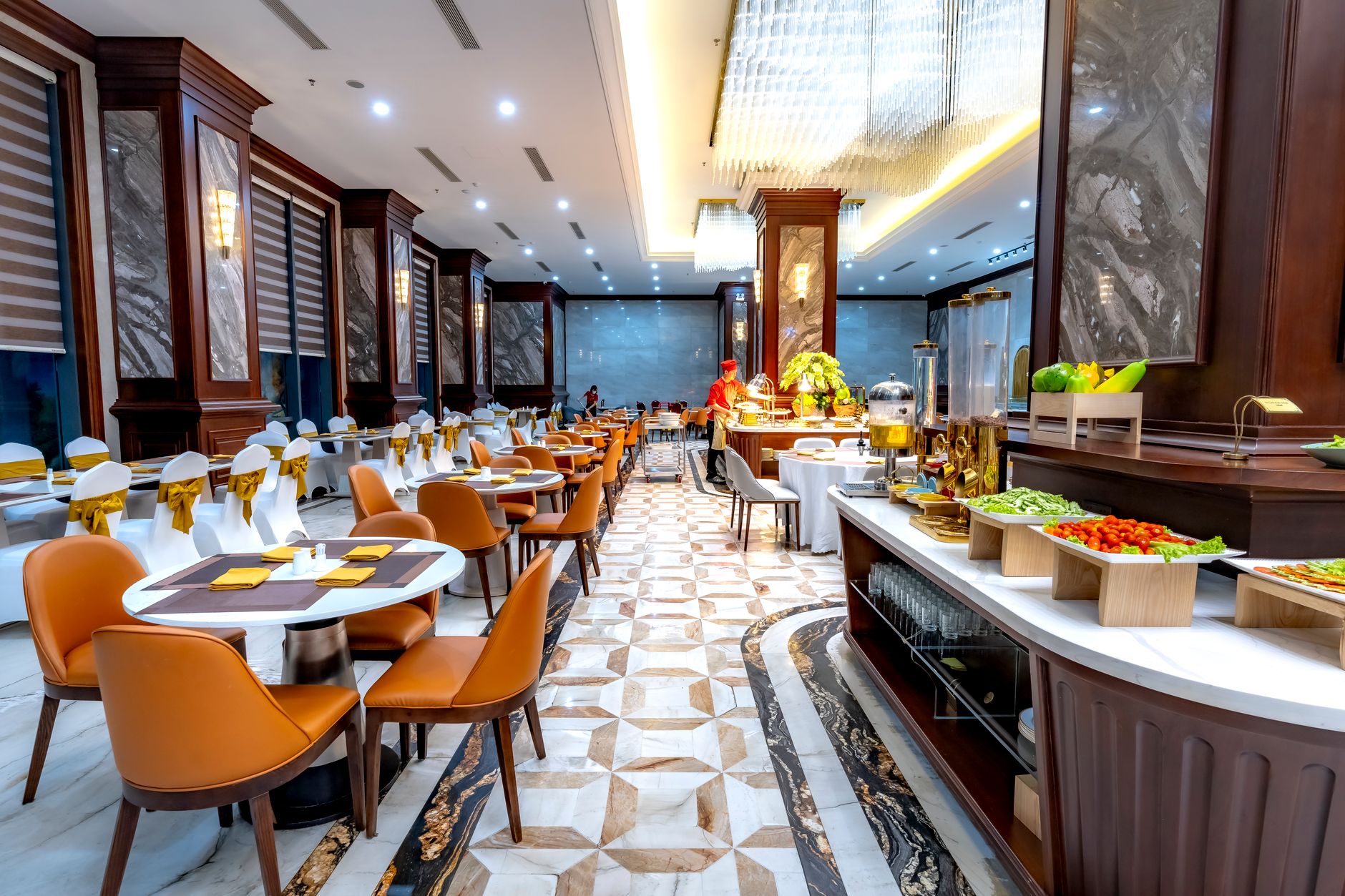
The short answer
For a delivery robot vs food runner in Denver decision, a robot makes sense when most of the runner's walking is a fixed, repeated route from kitchen to dining room, such as plates, trays and bus loads. It does not make sense for table-side service, unmapped or crowded areas, or any job that needs a judgment call. Most Denver sit-down restaurants that gain from a robot still keep staff on the floor, using the robot to cut walking hours rather than to replace the team.
Key takeaways
- A robot takes the repeat trips between the kitchen pass and the dining room, not table-side service.
- Count the runner's walking before you decide, because a lease only pays off where the route repeats.
- The government wage data on this page is the starting point for the labor math, not the whole answer.
- Plan for a robot plus fewer staff, never zero staff.
- Guest comfort and order accuracy matter as much as labor savings.
Delivery robot vs food runner in Denver: when a robot fits
Most Denver owners comparing a delivery robot vs food runner in Denver are really asking one question: how much of the runner's shift is walking the same loop? A robot fits where that loop is long, predictable and repeated through the night, such as the trip from a kitchen pass to a far dining room, or from a bar to a second floor. It fits poorly where the runner's real value is reading the table, fixing an order, or working a patio whose layout changes by the hour.
The decision is a labor and layout question before it is a technology question. Measure the walking, check the floor plan, then compare the cost of a leased robot with the hours you would otherwise fill. Leases are quoted as a fixed robot lease payment after a site assessment, so the floor is mapped before any number goes in writing. Our team runs that assessment for Denver rooms as the first step.
What does a food runner actually do in a Denver shift?
A food runner in a sit-down restaurant spends the shift moving between the kitchen pass, the dining room, the service station and the dish area. The work comes in waves. A rush of plates arrives when tickets fire together, then long gaps follow before the next turn. Most of the walking is hot plates and trays from the pass to tables, then empty plates and bus tubs back toward the dish area.
Runners also do the work that rarely appears in a job description. They check that expo items are complete, restock the service station, refill water and bread, reset tables between seatings, and tell the server when a dish is running slow. In a Denver room with a patio, a second level or a long hallway to the restrooms, the distance covered per shift grows quickly, even when the room looks small from the host stand.
Shift length shapes the work too. On a long dinner service a runner may cover the same route many times, and the last loops of the night are often run by someone who is tired. A robot does not tire on the loop, so its value is highest on the long, repetitive end of the day.
Median hourly wage, Waiters and Waitresses
$3,809
Monthly cost of one full-time worker in Denver, CO, at the median wage plus payroll costs (an estimate, not a quote).
Which parts of the runner's work can a robot take?
A delivery robot is built for repeat trips. It can carry plates, trays, drinks and bus loads between the kitchen pass and fixed points in the room, and it moves the same way every time. That matters when a dish sits under a heat lamp and the route itself is the problem. On a route it covers, the robot takes the walking that wears a runner down by the late part of the shift.
It works best where the destinations are known and the path is clear. A robot mapped to a dining room, a bar window and a dish area can run the same loop through every service. Integration can also cover a service door or an elevator, which turns a second-floor room into a route instead of a staffing gap. Each added stop, door or elevator adds setup work, so count them in the site assessment.
The robot takes the trips. The runner keeps the judgment calls, the table-side service and the recovery when something goes wrong.
- Repeat kitchen to dining room runs
Delivery Robot
Takes the same loop every time without a break
Food Runner
Does the loop well but tires on long loops late in the shift
- Table-side service and guest questions
Delivery Robot
Cannot take an order, describe a dish or answer a question
Food Runner
Reads the table, answers questions and fixes problems
- Late service coverage
Delivery Robot
Runs its set route at any hour once it is staffed and charged
Food Runner
Needs a schedule, breaks and overtime planning
- Sick days and turnover
Delivery Robot
Does not call out or quit, though it needs service visits
Food Runner
Can call out, quit or need retraining after turnover
- Crowded patio or changing layout
Delivery Robot
Struggles where the route keeps changing
Food Runner
Adapts to the crowd by eye and by feel
- Recovery when something goes wrong
Delivery Robot
Stops for an obstacle and waits for help
Food Runner
Makes the call, clears the spill and reroutes the order
What can a robot not do in a Denver restaurant?
A robot cannot serve a guest. It cannot describe a dish, take a food allergy as seriously as a trained server, read the mood at the bar, check identification, or notice a spill in a blind corner the way a runner does. Guests notice. A consumer survey reported by MediaPost found 71% of consumers uninterested in robots delivering food, with reliability and order accuracy as the main concerns. That coverage gives no survey date, so treat the figure as a sign of concern rather than a fixed rate.
Physical limits matter as much as guest attitudes. A robot needs a route it can map, doors it can open or be fitted for, and clear floors at the hours it runs. A crowded patio on a warm evening, a host stand that moves, a hallway full of guests waiting for the restrooms, and stairs with no elevator all break the simple loop. Expect human backup at those moments.
Maintenance also sets limits. A robot off for service during dinner needs a plan: a fallback runner, a spare unit or a manual route. Settle that before the first day, not after the first outage.
What does the labor data say about turnover, overtime and sick days?
The national picture for food service is high churn. The Bureau of Labor Statistics Job Openings and Labor Turnover Survey, in its releases for late 2025 and early 2026, reported quits in accommodation and food services down 140,000 in August 2025, down 136,000 in October 2025, and up 208,000 in November 2025. The overall quits rate was 1.9% in August 2025 and 2.0% in November 2025. The sector moves a lot from month to month even when the overall rate barely shifts.
These are national figures. This review did not pull a Denver breakdown of quits, so treat the national pattern as context and check your own payroll history for the local rate. Vendor turnover figures run far higher, but they are not verified against government data and often do not define what counts as turnover. Use the numbers that have a clear source.
The practical point is simpler. A runner who quits mid-season means retraining, shift gaps and overtime for the people who stay. Sick days follow the same logic. A runner who calls out on a Friday leaves the loop to someone already working the busiest station. A robot does not call out, which reduces emergency cover, though it does not remove the need for a schedule that holds when a person is out.
How risky is the runner's work?
Injury data shows why physical load matters. According to the Bureau of Labor Statistics fact sheet for 2018, full-service restaurants recorded 2.7 total recordable cases per 100 full-time equivalent workers, against 2.8 for all private industry. The days-away-from-work rate was 73.1 per 10,000 workers.
The 2019 figures, reported by the Bureau of Labor Statistics in The Economics Daily, show a sharper gap on one kind of injury. Full-service restaurants had a days-away rate of 88.3 per 10,000 full-time workers, against 86.9 for all private industry. Cuts and lacerations were 23.6 per 10,000 in full-service restaurants, against 7.1 for private industry. Much of that cut risk sits in the kitchen and dish area, which a robot does not remove, but fewer trips across a crowded room is a real safety gain.
Special food services show another pattern. According to The Economics Daily for 2017, caterers, food trucks and contractors had a days-away rate of 107.6 per 10,000 full-time workers, against 77.3 for restaurants and other eating places and 38.3 for drinking places. Banquet and catering work sits in the group with the highest rate, which is worth weighing for event runners.
Use these as context, not as a forecast for your room. Your own incident log and walk count are better inputs.
How does the local wage for this job change the math?
The government wage data on this page gives the local wage for this job in Denver. Start there, multiply by the hours you actually need to cover, and add the cost of the turnover you see in the labor data. Colorado's 2025 change lets localities set their own tipped wage, reported as signed June 3, 2025, so check the rule that applies to the address before you model wages. Do not substitute a national average or a vendor survey.
Keep the comparison honest. The saving is only real if the robot covers hours you would otherwise staff, and it covers repeat trips, not the whole shift. A robot covering a slow weeknight saves little, and a lease for a room with few runs saves very little. Run the numbers on your own schedule before you accept any quote.
Watch the overtime line too. Overtime is often where robots show value first, because they remove the late loops that push a runner past scheduled hours. Track overtime for the floor team in the months before a pilot so you have a baseline to compare against.
How does a team work with a robot?
The working pattern is a robot plus fewer staff, never zero staff. The robot takes the repeat loop, the runner keeps table-side service, a host or manager keeps the floor, and one person owns the robot's route, charging and daily check. In most rooms the runner count drops by part of a shift, not to zero, and the freed hours go to the table.
Training matters more than owners expect. Staff need to know how to clear the robot's path, what to do when it stops, and how to reset a route after a menu or layout change. Plan a few weeks of supervised runs with a fallback in place, then change the schedule only after the room runs clean at peak.
Hold the first changes small. A pilot route that covers one loop shows the real trip count, the guest response and the schedule that works. Widen the route only after the first loop runs cleanly through a full service.
How do I start a delivery robot vs food runner decision in Denver?
Start with a site assessment. We walk the room, map the runner routes, count peak trips and check the doors, elevators and stairs. The lease is then quoted through financing, as a fixed robot lease payment in writing. We deploy and integrate the robot, train your staff and provide service nationwide, with on-site dispatch when hands are needed and remote triage for fast checks.
Ask for a pilot on one route before a full room rollout. A pilot shows the real trip count, the guest response and the staff schedule that works. If the walking is short, the honest answer may be no robot yet, and a better schedule for the runner you already have.
Ask for maintenance included, the emergency response terms and loaner units in the written quote, so the plan holds on a busy Saturday.
Frequently asked questions
Put a robot to work in Denver.
We walk your site, learn the job, and recommend the unit that fits. Then we quote the lease, deploy it, and keep it serviced.
Sources
- US Bureau of Labor Statistics, Occupational Employment and Wage Statistics (OEWS May 2024)
- Bureau of Labor Statistics, Job Openings and Labor Turnover Survey release, September 30, 2025
- Bureau of Labor Statistics, Job Openings and Labor Turnover Survey release, January 7, 2026
- Bureau of Labor Statistics, full-service restaurants injury fact sheet, 2018
- Bureau of Labor Statistics, The Economics Daily, nonfatal injuries and illnesses in full-service restaurants in 2019
- Bureau of Labor Statistics, The Economics Daily, injury and illness rates in special food services, 2017
- MediaPost, consumer survey on robots delivering food
- Mondaq, analysis of Colorado tipped minimum wage and localities
- Bureau of Labor Statistics, Occupational Employment and Wage Statistics, waiters and waitresses