
The short answer
For delivery robot vs food runner in Memphis, a robot makes sense when the kitchen to table route is long, repeatable and clear, and when the restaurant keeps people on the floor for guests. It does not make sense when the room is small, the path is crowded at peak, or most of the work is tableside service, bussing and guest contact. Ask for a free site assessment to measure your own route before choosing.
Key takeaways
- A delivery robot takes route-bound transport, not guest contact, so it fits long, repeated runs on a clear path.
- The government data here projects a 1 percent decline for waiters and waitresses, so the staffing pressure is mostly replacing people who leave.
- No public hour figure for food running appears in the data reviewed, so time your own shifts before deciding.
- The working model is one robot plus fewer runner hours, never zero staff on the floor.
- Food service injury rates of 2.4 per 100 full-time workers make tray handling worth reviewing whatever you decide.
Delivery robot vs food runner in Memphis: when does a robot make sense?
Most operators comparing delivery robot vs food runner in Memphis are really asking one question: can a machine take part of the running without changing how the dining room works? A delivery robot can carry plates, drinks and bus tubs along a fixed route between the pass and the tables. It does not take orders, read a table, clear a plate by hand or settle a complaint, so the decision turns on how much of a runner's shift is pure transport.
A robot tends to make sense when the route is long and repeats every service, when the floor is open enough for the robot to wait without blocking guests, and when servers still carry the guest side of the room. It tends not to make sense in a small room with a tight kitchen door, in a bar where people stand in the path, or in a concept where the runner also restocks, cleans and greets. In those rooms a robot adds one more thing to manage instead of removing one.
Treat the answer as a screen, then test it on your own floor. The sections below explain what a food runner does, which tasks a robot can take, and what the labor picture means for the decision.
What does a food runner actually do on a Memphis shift?
A food runner in a sit-down room moves food from the pass to the table and often carries dirty dishes and drinks back. The work arrives in waves. It peaks when a meal period opens and again when tables turn, and it drops to almost nothing between seatings. A runner who also restocks, folds napkins or refills condiments spends part of every hour away from the route entirely.
According to the Bureau of Labor Statistics regional release for the area, the Memphis metro now covers nine counties across Tennessee, Mississippi and Arkansas. The government wage data on this page covers waiters and waitresses in the Memphis area, the job most closely tied to this work. The public results reviewed did not break out runners as a separate occupation, so treat the local wage for this job as the nearest reference, not a runner-only figure.
Start by splitting the shift into trips. Count the runs, the typical distance, and the plates, drinks and bus loads per run, then compare that with the minutes spent on everything else. That breakdown is the input a site assessment needs most.
Median hourly wage, Waiters and Waitresses
$2,787
Monthly cost of one full-time worker in Memphis, TN, at the median wage plus payroll costs (an estimate, not a quote).
Which parts of a food runner's job can a delivery robot take?
A delivery robot can take the repetitive, route-bound moves: pass to table, table back to the pass, and the dish return trip when the path is clear. It carries a tray, stops at a set point and waits for someone to unload it. Because it follows a mapped route, it runs the same path at the same pace each time, which suits a kitchen where two or three stations feed the same room.
It cannot take the parts of the job that carry the guest relationship or need judgment. It cannot notice a table that is ready to order, check a plate for a missing garnish, pick up a dropped fork, handle an allergy question or work around a server backing through a doorway. Those tasks stay with people, and they are often the moments guests remember.
The useful question is not whether a robot can do a runner's job. It is which minutes of the runner's shift are transport, and whether those minutes repeat often enough on one route to justify a unit.
- Route transport
Delivery Robot
Follows a mapped route the same way on every run
Food Runner
Adjusts to a crowded aisle, a dropped tray or a blocked door
- Guest contact
Delivery Robot
Cannot greet, read a table or answer a question
Food Runner
Greets guests, checks tables and fixes order problems
- Allergies and substitutions
Delivery Robot
Cannot take or check special requests
Food Runner
Handles allergies and substitutions on the spot
- Coverage of a scheduled block
Delivery Robot
Runs a set route for a scheduled block if charged and supervised
Food Runner
Covers a changing mix of tasks across the whole shift
- Side tasks
Delivery Robot
Carries bus tubs but does not stack, wipe or restock
Food Runner
Clears, resets, wipes and restocks between runs
- Cost basis
Delivery Robot
A financed lease, with the quote following a site assessment
Food Runner
Wages, payroll taxes and scheduling, benchmarked by the local wage for this job
What does the labor picture look like for Memphis restaurants?
The Bureau of Labor Statistics projects employment of waiters and waitresses nationally to decline 1 percent from 2024 to 2034, from 2,329,700 jobs in 2024. The same outlook expects about 456,700 openings a year, mostly because workers leave the occupation. Since the projected decline is small, the staffing problem is mainly replacing the people who leave.
The National Restaurant Association expected 15.9 million people to be employed in restaurants and foodservice in 2025. Its State of the Restaurant Industry 2025 Pocket Guide counts more than one million restaurant and foodservice locations across the US, a count that includes all foodservice locations and not only restaurants.
Injury risk is part of the labor picture for runners. The Bureau of Labor Statistics recorded about 173,500 nonfatal injury cases in food services and drinking places in 2024, a rate of 2.4 per 100 full-time workers, and a rate of 2.6 for accommodation and food services combined. Carrying loaded trays and bus tubs is a real part of that exposure.
Turnover is the figure most owners want, and the government series used here does not publish it for this job. Restaurant turnover numbers in circulation mostly come from vendor and industry estimates. Pull your own count of hires and departures by role for the past year, and treat any outside turnover figure as context, not proof.
How many hours does the runner's work take each shift?

The public data reviewed here does not give hours per shift for food running, so no hour figure on this page should be read as a benchmark for your room. What the data does show is the shape of the work, which clusters around meal peaks and thins out between them. The tasks a robot can take are mostly the transport minutes, not the whole shift.
To get your own figure, time several shifts of runner work and split the minutes into transport, guest contact, clearing, restocking and waiting. The transport column is the part a delivery robot could plausibly take. Everything else stays with staff, and that share decides whether the change saves enough time to matter.
Overtime, night shifts and sick days are the labor questions most owners ask first. The government data here does not measure them for this job, so pull them from your payroll records. A robot changes those numbers only if it covers a scheduled block a person would otherwise work, so compare the hours it would replace with the hours your team already logs.
How does a team work with a delivery robot in the dining room?
The pattern that works is one robot plus fewer runner hours, never zero staff. A person loads the robot, sends it to the table, watches it through the busiest service and handles any guest who stops it. The reduction is in time spent walking, not in the number of people on the floor.
Roles shift in a predictable way. The host keeps seating, the servers keep the guest relationship, and one runner or busser supervises the robot and takes the tasks it cannot. Training often decides how well this works, because the people who load the unit and keep the path clear determine whether the route runs smoothly on a busy Friday night.
Plan the handoffs before opening day. Agree who loads the robot, who clears a blocked path, who resets the route after a layout change, and who calls for service when a unit stops.
What can a delivery robot not do?
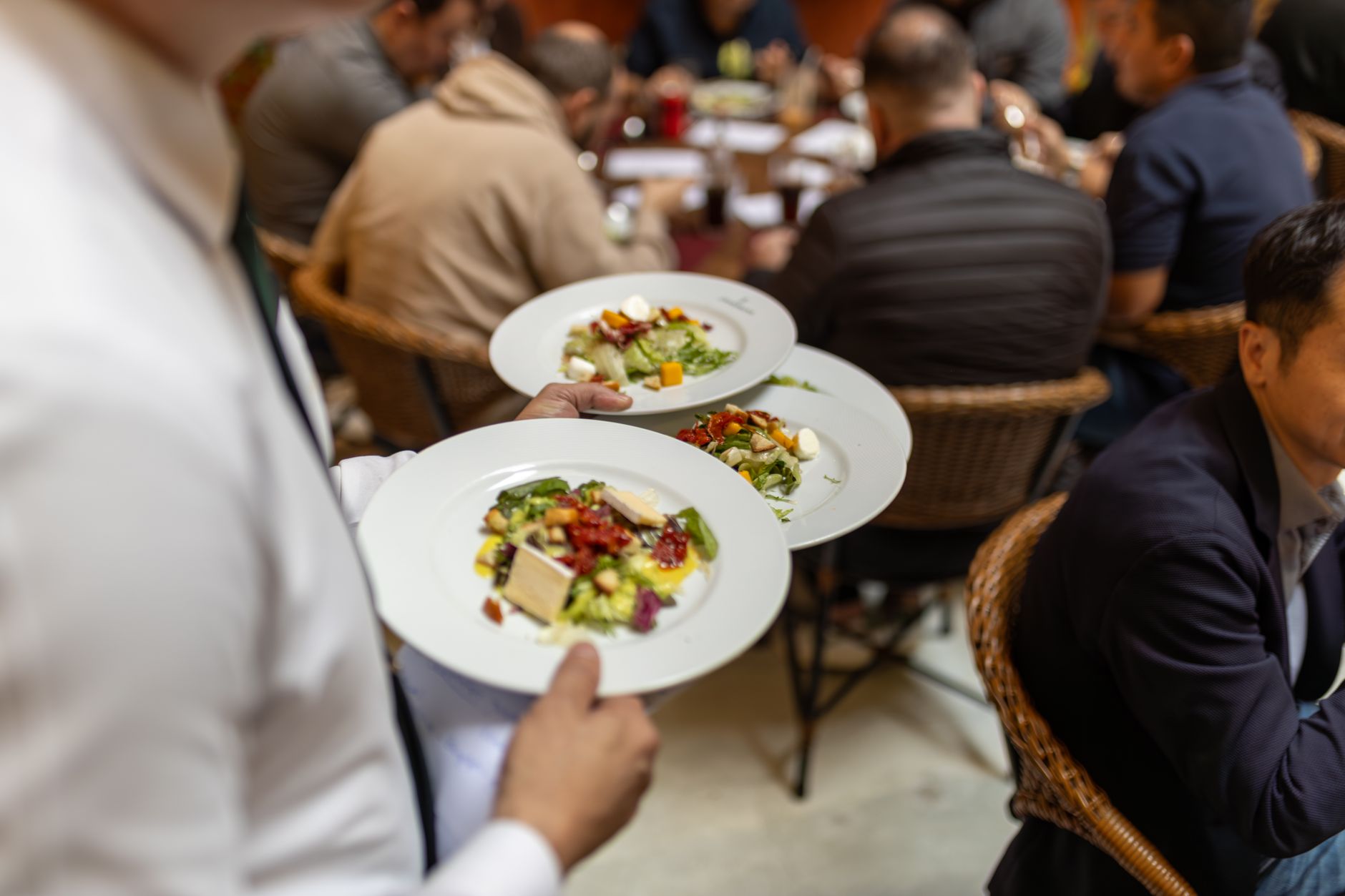
It cannot replace a server, a host or a runner who handles guest contact, and it should not be asked to. It is a poor fit for a crowded bar or a patio with uneven ground. Whether a unit can handle thresholds, ramps and outdoor surfaces depends on the model and the route, so those must be checked during the site assessment, not assumed.
It depends on a clean, mapped route. Moved furniture, a chair left in an aisle or a kitchen that changes layout for an event can stop it. Someone has to own the map and keep the path clear, and that is a staff task, not a set-and-forget one.
A robot also does not manage service quality. When a guest complains about a slow run or a cold plate, that complaint lands with the restaurant, and a manager still has to fix it.
What changes the answer for your restaurant?
A few inputs decide whether delivery robot vs food runner in Memphis comes out in favor of the robot. Measure them before you ask for a quote, because the lease quote follows a site assessment and that assessment uses the same facts.
How do you get started with a robot lease in Memphis?
Start with a free site assessment. Share your floor plan, service hours, peak times and runner count, and we map the route, check clearance and flag any thresholds, stairs or outdoor surfaces. We pick the unit that fits your floor, not the other way round.
Robots are leased through financing, and the lease payment comes in a quote after the site assessment, so the quote reflects your route and service needs. We deploy and integrate the robot, train your staff on loading, route upkeep and fault handling, and service it nationwide, with on-site dispatch and remote triage when something stops.
A common first step is a single-unit pilot on one service. Decide on more units only after your own shift counts confirm the change, so the decision rests on your hours and not on an estimate.
Frequently asked questions
Put a robot to work in Memphis.
We walk your site, learn the job, and recommend the unit that fits. Then we quote the lease, deploy it, and keep it serviced.
Sources
- US Bureau of Labor Statistics, Occupational Employment and Wage Statistics (OEWS May 2024)
- U.S. Bureau of Labor Statistics, Southeast regional release on Memphis occupational employment and wages (May 2024)
- U.S. Bureau of Labor Statistics, Occupational Outlook Handbook: Waiters and Waitresses
- U.S. Bureau of Labor Statistics, Number and rate of nonfatal work injuries by industry subsector
- National Restaurant Association, Restaurant industry poised for growth in 2025 (press release)
- National Restaurant Association, State of the Restaurant Industry 2025 Pocket Guide
- Restroworks, Restaurant turnover statistics (blog)
- WageDex, Dining room and cafeteria attendants and bartender helpers, Memphis metro