
The short answer
A delivery robot vs food runner in New York decision usually favors the robot only when a runner's walking follows a fixed, predictable route on one level, such as kitchen pass to dining room. It does not fit where the work is mostly table reading, special requests, clearing, or crowded peak-hour traffic. In most cases the right result is a robot plus fewer runner hours, with a person still at the pass and on the floor.
See what a delivery robot costsRun the numbers in the ROI calculator
Key takeaways
- A robot fits a food runner's job only where the walking follows a fixed, mapped route on one level.
- A robot cannot read tables, take orders, check allergies or work a crowded floor at peak.
- The workable model is a robot plus fewer runner hours, never zero staff.
- Public data does not isolate New York runner turnover, overtime or night shifts, so measure your own hours.
- Start with one route and a free site assessment before deciding on the whole room.
Delivery robot vs food runner in New York: when does a robot make sense?
A delivery robot makes sense in a New York restaurant when a runner spends a large, steady share of service walking the same fixed route, usually from the kitchen pass to a dining room on one level. It works best where the path is predictable, the aisles are wide enough for a robot to pass guests, and staff can load and unload at one spot. The route and the shift pattern matter more than the size of the restaurant.
It does not make sense when most of the runner's work is reading tables, handling special requests, clearing and resetting, or moving through packed rooms at peak hours. A robot takes walking off a person. It does not take over judgment, conversation or problem solving. The sound plan keeps people on the pass and the floor and uses a robot for the repeated legs of the route.
What does a food runner actually do in a New York shift?
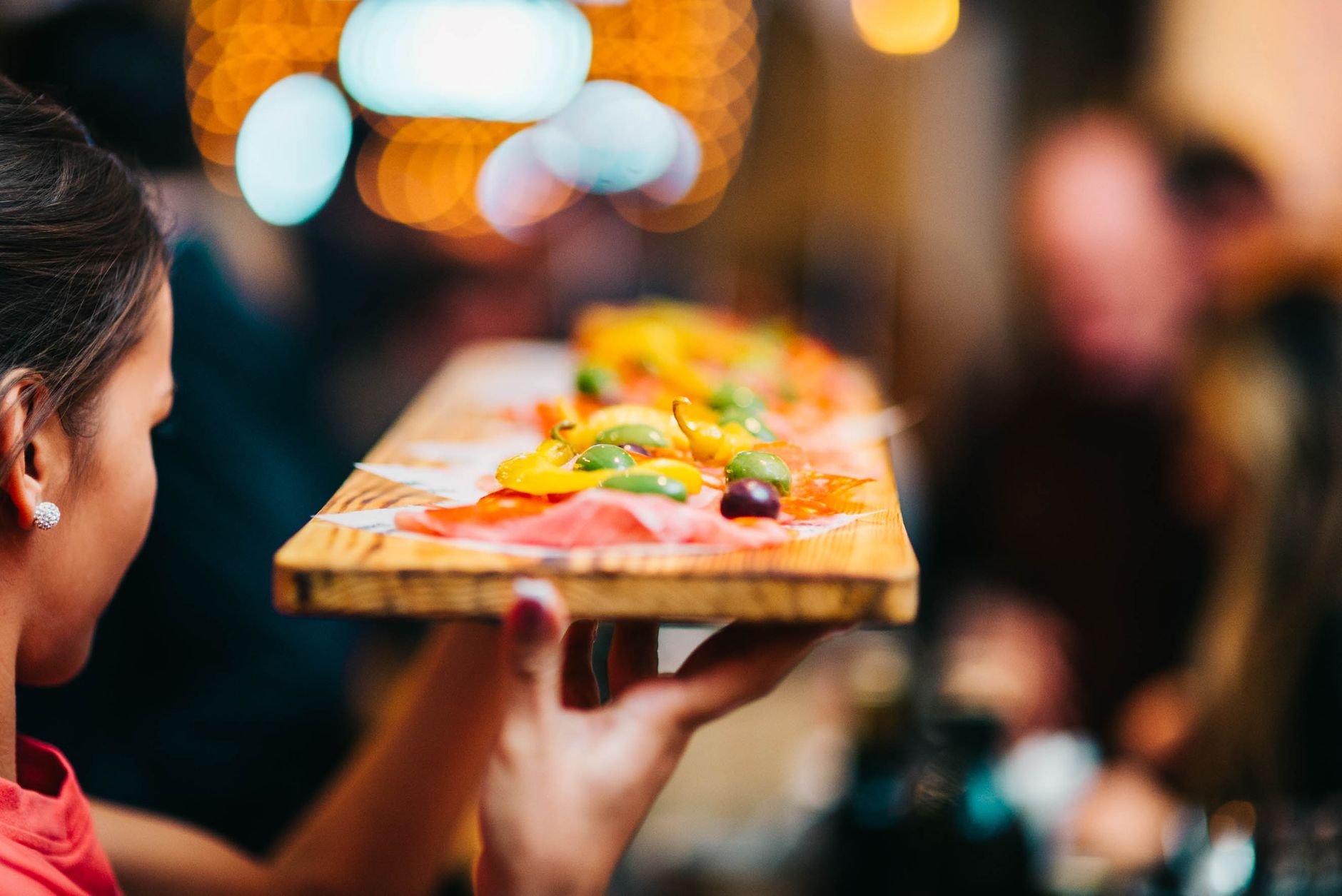
A food runner's job is a set of short trips that add up. The runner picks up finished plates at the pass, checks each ticket against the table, carries plates, bread, drinks and sides to the right seat, then returns with empty trays and any missing items from the kitchen. During a rush the runner also covers for servers, refills water, restocks side stations and deals with spills. Most of the physical work is repetition on the same few paths.
New York rooms vary more than a job description suggests. Basement kitchens, stairs to a second dining room, narrow gaps between tightly spaced tables, sidewalk seating and freight elevators all change how a runner moves. A robot route has to be mapped for the actual building, so the shape of the room drives the fit more than the menu does.
The city has a large restaurant workforce. According to BLS series published through FRED, restaurants and other eating places in New York City employed 265.7 thousand workers in December 2025, not seasonally adjusted. That number tells you the labor pool is deep, not how many runner hours your room needs. For that, the wage for this job sits in the government wage data on this page, and your own shift records have to supply the hours.
Median hourly wage, Waiters and Waitresses
$5,064
Monthly cost of one full-time worker in New York, NY, at the median wage plus payroll costs (an estimate, not a quote).
Which parts of a food runner's job can a delivery robot take?
A delivery robot is built for moving loads between fixed points. On a mapped route it can carry a tray or several plates from the kitchen pass to a dining area on the same level, return empty trays to the dish area, and run items between a service station and a table cluster that sits on its path. Each leg is the same trip repeated, which is exactly the work a robot handles well.
Fit depends on the route. Units generally need a clear path they can map, enough aisle width to pass a guest, and a point where staff can load, unload and confirm the order. A route through a stair, an unlit service corridor or a freight elevator is a separate project and may need extra integration work or another layout. Score each of those routes on its own in the site assessment.
Which parts of the job can a delivery robot not take?
A robot cannot read a table. It does not notice that a guest wants a refill, that a plate is wrong, that a child is near the path, or that a party is about to stand up. It cannot take an order, check an allergy, explain a dish or decide whether a special request is safe to make. Those judgments stay with the server and the runner.
It also cannot handle the untidy parts of service. Clearing plates, scraping, stacking trays for the dish room and dealing with a spill need hands and attention, and a robot needs a clean, known path before it can move at all. In a packed room at peak, a person can step around a chair and a bag in a way a robot may not.
- Repeated trips on a fixed route
Delivery Robot
Runs the same path at the same pace without tiring.
Food Runner
Can do it, but walking time adds up across a shift and across the team.
- Reading a table
Delivery Robot
Cannot tell that a guest is waiting or wants a refill.
Food Runner
Notices the empty glass, the raised hand and the table about to leave.
- Allergy or special request
Delivery Robot
Cannot check an allergy or change a dish.
Food Runner
Confirms with the kitchen and the guest before anything moves.
- Packed floor at peak
Delivery Robot
Can slow down and block traffic when guests stand in its path.
Food Runner
Steps around people, chairs and bags, and adjusts.
- Stairs and freight elevators
Delivery Robot
Needs a mapped route and integration work, often outside a first phase.
Food Runner
Walks it with no setup.
What do the labor numbers say about staffing a New York restaurant?
None of the public figures below isolates food runners in New York, so read them as context. According to the National Restaurant Association, New York had 672,500 eating and drinking place jobs statewide, out of 856,700 total restaurant and foodservice jobs. Those association figures are broader than BLS counts, so the two should not be compared directly.
Turnover runs high across the sector. According to Turnozo, a third-party analysis calculated from BLS data, accommodation and food services total separations averaged 5.59 percent each month from June 2025 to May 2026, against 3.27 percent for total nonfarm employment. According to BLS JOLTS data on FRED, the national separations rate for accommodation and food services was 6.1 in January 2026, seasonally adjusted.
Openings point the same way. The BLS JOLTS job openings rate for accommodation and food services was 6.4 in August 2025, seasonally adjusted, according to FRED. A team that rotates this often needs a route that trained staff can run on any shift. We did not verify New York-specific turnover, overtime, night-shift or sick-day figures for food runners, so those hours belong in your own records.
How does a team work with a robot?
The model that works is a robot plus fewer runner hours, never zero staff. A person stays at the pass to load, confirm and release the robot. Another person stays on the floor for guests, allergies and clearing. The robot takes the repeated legs, and the team keeps the judgment, the handoffs and the recovery when something goes wrong.
Service Robot Co. is a US commercial robot integrator. We choose the robot for the site, lease it through financing, deploy and integrate it, train the staff and service it nationwide. Training matters most at the handoff points: how a runner loads a tray, what the unit does when a path is blocked, and who calls for help.
Plan for the moments the robot cannot finish its trip. A tray that does not clear a doorway, an aisle blocked after a large party is seated, or a unit that stops and waits all need a person who knows what to do. That person should not be pulled off the pass to fix it in the middle of a rush.
What can go wrong with a delivery robot in a restaurant?
Speed and crowding are the most common problems. Indianapolis Business Journal reported that a national casual dining chain, not named here, piloted a robot server across 61 US restaurants and then halted it, because the robot moved too slowly and got in the way of human servers. That was a server robot, not a delivery unit, but the lesson carries over to any machine that shares a room with guests.
Safety belongs in the plan too. According to a 2019 Bureau of Labor Statistics note, the food service industry injury and illness rate was 2.8 cases per 100 full-time workers. According to Business Insurance, summarizing BLS data, the all private industry injury rate was 2.2 per 100 full-time equivalent workers in 2024, and the illness rate was 13.9 per 10,000. Those are not restaurant-specific 2024 figures, so pull your own incident log and ask your insurer.
A delivery unit adds a moving object to a busy floor. Aisle width, guest awareness and a clear stop plan matter more than any feature list, and they should be tested at the busiest hour, not at the quiet end of the afternoon.
What should you check before you decide?
Start with the hours you can measure today. Write down runner walking time by route, the number of trips per service, and the points where a person must still be present. Set those beside the government wage data on this page and the local labor picture from your own shift records. Those numbers decide whether a robot route is worth scoping at all.
The checklist below covers what changes the answer. It is the part of the decision you can work through before a site assessment, and it keeps the conversation about your room, not an average restaurant.
How do you get started with a delivery robot in New York?
Start with one route, not the whole room. A single leased unit on the busiest fixed path shows whether runner hours really move, what guests do and where staff stumble. A pilot on one route gives you measured results, which is more useful than a forecast.
The first step is a free site assessment. We map the route, check floors, aisles, doors and elevators, and talk through staffing and service hours. The lease is quoted after that assessment and comes through financing, so the number reflects your building rather than an average. Ask for the service terms, the response plan and the go-live steps in writing before you sign anything.
Measure the first route for a few weeks against your own runner hours before you scope a second. Record blocked paths, handoff delays and guest comments, not only trips completed.
Frequently asked questions
Put a robot to work in New York.
We walk your site, learn the job, and recommend the unit that fits. Then we quote the lease, deploy it, and keep it serviced.
Sources
- US Bureau of Labor Statistics, Occupational Employment and Wage Statistics (OEWS May 2024)
- FRED, BLS series for New York City restaurants and other eating places
- National Restaurant Association, New York State fact sheet
- FRED, BLS JOLTS job openings rate, accommodation and food services
- FRED, BLS JOLTS total separations rate, accommodation and food services
- Turnozo, employee turnover rate by industry (calculated from BLS data)
- BLS, injury and illness rates in food services (2019)
- Business Insurance, work injuries summary of BLS 2024 data
- Indianapolis Business Journal, robot server pilot report