
The short answer
Drone vs inspector at cooling towers comes down to the task. A drone makes sense for imaging the fan deck, fill and upper structure without a climb, but it cannot replace an inspector for touch checks, water sampling or work inside the tower, so the practical plan is a drone plus fewer climbs, not zero staff.
Key takeaways
- A drone is best used to image the fan deck, fill and upper structure without a climb.
- It cannot sample water, touch components or work inside the tower, so a trained person stays on the job.
- Falls cause a large share of construction fatalities, which makes fewer climbs a real safety gain.
- Drone detection accuracy against manual inspection has not been shown in the peer-reviewed work we found.
- Plan for a drone plus fewer climbs, and test the approach on one tower before committing.
Drone vs inspector at cooling towers: which makes sense?
For most cooling towers, a drone and an inspector do different jobs. The drone wins where the work is looking at parts that sit high up or are awkward to reach, such as the fan deck, the upper edge of the fill and the casing. The inspector wins wherever the work needs hands, judgment or access inside the structure.
The practical plan is a drone plus fewer climbs by people, not zero staff. A drone can cut the number of times someone has to go up, but treatment, sampling, repairs and sign-off still need a trained person on site. The research we reviewed does not support replacing the inspector.
Decide drone vs inspector task by task, not tower by tower. List what each part of this tower needs: a look, a touch, a sample or a measurement. Only the look is a clear drone job.
When does a drone make sense at a cooling tower, and when does it not?
A drone makes sense when the goal is a visual record of the upper structure. That covers the fan deck, fan guards, the top of the fill, the distribution deck and the outside casing. Vendor guides also describe flying the fill and basin, but those are marketing claims. One vendor case study says a whole concrete hyperbolic tower was inspected from the outside in under a day, and that figure is vendor-reported, not independently checked.
It makes less sense on a small, easy-access unit where the inspector can already reach the deck safely on a short ladder, or where the work is in the basin, sump or treatment room. Those tasks need a person who can enter, sample and react to what they see on the spot.
Scale matters in the decision. According to EIA's Commercial Buildings Energy Consumption Survey (2018), about 3 percent of US commercial buildings had cooling towers, and those buildings represented 17 percent of commercial floorspace. Towers therefore tend to sit in large buildings, so a site survey should cover the whole plant, not one unit.
What does the inspector actually do during a shift at a cooling tower?
A typical visit starts with lockout on the fan motor, because a fan that can start while someone is near the deck is a serious hazard. The inspector then climbs or lifts to the fan deck to check blades, guards, bearings, drive and the deck surface. They also look at the fill for scale, biological growth, sagging and damage, and they check every cell, so multi-cell towers take longer than single cells.
Health and water work often sits in the same visit. CDC's Water Management Program toolkit identifies cooling towers as high risk and calls for a plan tailored to each facility. Philadelphia's public health department publishes a maintenance checklist that covers the tower and the treatment room, so one visit can carry several duties at once.
The written record is the other output. The inspector's notes and photos become the facility's file, and that file has to show who looked at what and when. A drone set-up has to produce evidence in the same form.
- Fan deck and upper structure
Drone
Images the deck and guards from above or the side, with no climb
Inspector
Climbs or lifts to the deck and can touch, measure and check bearings
- Fill media
Drone
Images the visible surface for scale, damage and growth
Inspector
Can probe, look beneath the surface and judge the pack by hand
- Water sampling and treatment
Drone
Cannot collect samples or adjust treatment
Inspector
Collects samples, checks disinfectant levels and records results
- Interior and confined areas
Drone
Limited, since confined-space drones exist but need a trained operator
Inspector
Enters with the right training and permits and can reach what a camera cannot
- Night and off-hours work
Drone
Can fly at night under Part 107 when lighting and other requirements are met
Inspector
Can respond on the spot, but off-hours visits need a second person and a planned schedule
- Judgment on what is found
Drone
Shows what is visible but cannot judge what a touch or sound means
Inspector
Interprets what they see, touch and record, then signs off
Which parts of a cooling tower can a drone inspect, and which can it not?
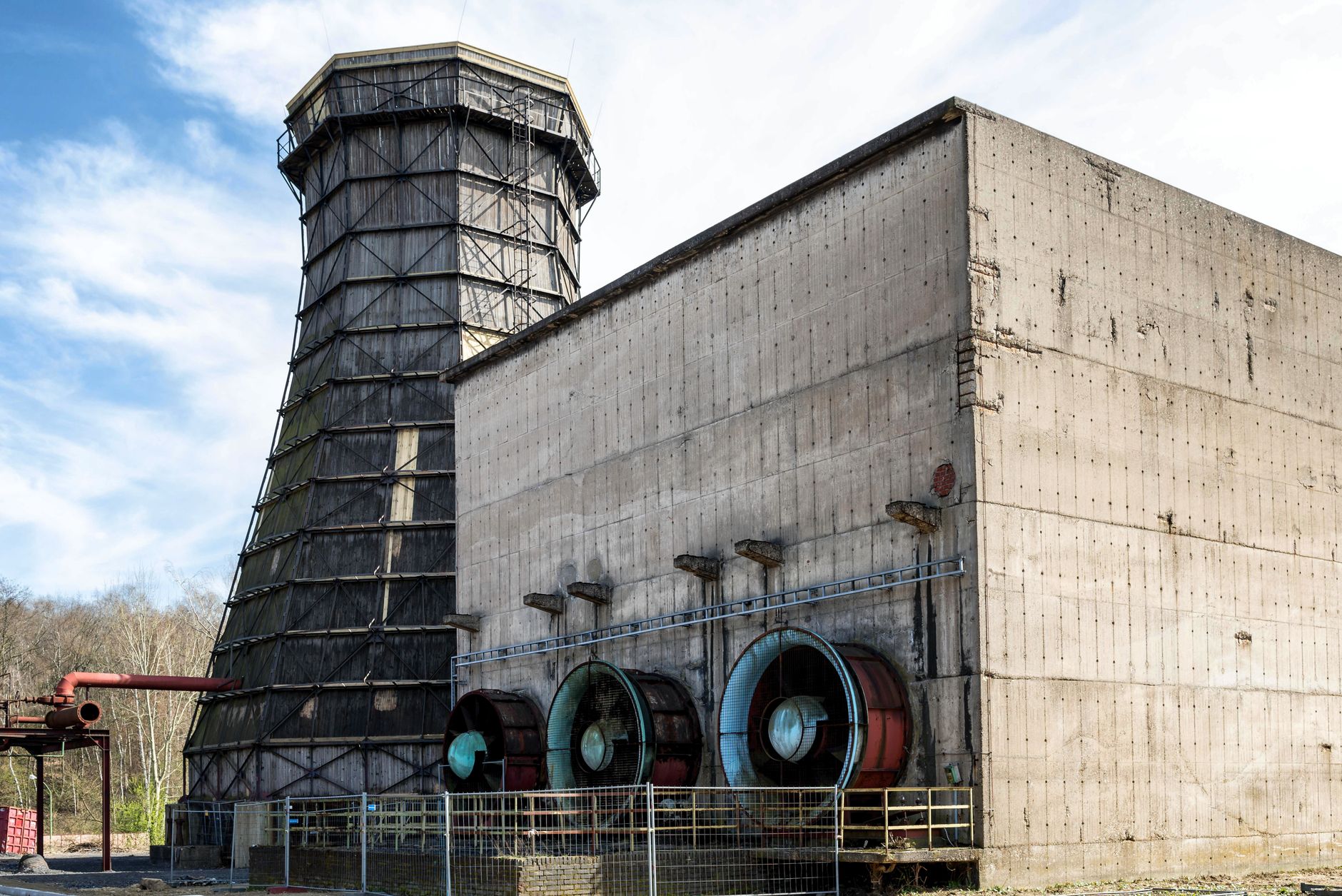
The upper parts suit a drone best: the fan deck, fan cylinders and guards, the top of the fill, the distribution deck, the casing and louvers, and the outside of the basin. Vendor guides describe drone and camera workflows for the fan deck, fill and basin, and confined-space drones for interior work. Those are vendor claims, so ask for results from your own tower before relying on them.
The limits sit below the surface and in the hands of the inspector. A drone image can show a damaged blade or a bent guard, but it cannot show a bearing that is worn without touching or measuring it. It cannot see deeper into the fill than the camera reaches, and it cannot judge water chemistry or sample the basin.
Fill is also surveyed from the ground. A USPTO patent describes a ground-penetrating radar system and a tracked vehicle that rides the fill surface, allowing a fuller fill survey without disassembling the fill. That is not a drone, but it shows the fill problem is handled with several tools rather than one.
How much time does the work take, and what do the labor numbers say?
No public source we reviewed gives hours for cooling tower inspection, so this page does not state a number. What changes the time is the number of cells, access, the number of samples and the paperwork. A drone shortens the climb and lift, which are often the slowest and riskiest parts, but it adds flight planning, a pilot and time to review the images.
Workforce data for the wider economy shows how much churn to expect. According to BLS JOLTS (2025 annual), the total separations rate was 3.3 percent, unchanged from 2024, with 62.8 million total separations. Quits were 60.6 percent of separations, at 38.0 million, and layoffs and discharges rose by 1.2 million to 21.2 million, or 33.8 percent of separations. JOLTS publishes by industry rather than occupation, so it does not measure tower crews directly.
For a facility, churn means tower knowledge leaves when a skilled technician leaves. Written images and a consistent checklist help the next person pick up where the last one stopped. Overtime and night visits are where one absence hurts most, because the work often cannot wait for a full crew.
How does a team work with a drone at a cooling tower?
The team works best as a drone plus fewer climbs. The drone images the upper structure. The inspector reviews the images against the last visit's findings, climbs only to points that need touch, measurement or sampling, and signs the record. A certified pilot can also be the inspector, if they hold both skills.
Keep a trained inspector on site for every visit. A drone without someone who knows the tower produces pictures nobody can act on, and a drone without a qualified pilot cannot legally fly. Plan a second person for flights near people, because the rules on flying over people depend on the operation.
Schedule flights around the fans. The cell being flown has to be off while the others keep running, so the flight plan follows the fan schedule and the treatment window rather than the drone's convenience. Our staff build that schedule with the facility's own team during deployment, so the first visit is not a surprise.
What are the honest limits, and what do people worry about most?
The most common worry is that a drone removes the need for anyone to go up. It does not. Touch checks, sampling, treatment decisions and interior inspection still need a person. The research we reviewed found no peer-reviewed study comparing drone detection on fill or fan decks with manual inspection, so the accuracy question is open. Test it on your tower.
Flying rules are the other worry. According to a training provider summary of Part 107, pilots may fly at night and over some people without a waiver if they meet the requirements, including anti-collision lighting visible for 3 statute miles. Beyond visual line of sight flight still requires a waiver under 14 CFR 107.31. Verify the regulation text before relying on these points.
Fill is the hardest part to judge from above. Ground-based methods exist for it, so a drone is usually one tool among several rather than the only answer.
How do fall risk and health rules shape the decision?
Fall risk is the strongest case for fewer climbs. According to a JDSupra summary of BLS-based analysis covering 2011 to 2018, 83.4 percent of fatal construction falls occurred from heights above 10 feet. The same JDSupra summary reports that over 37 percent of OSHA-investigated construction fatalities in 2015 to 2019, 1,902 of 5,172, were fall-related. Those figures are for construction, and we found no fall figures specific to cooling tower work.
Health rules set the other side of the decision. Secondary summaries of CDC guidance recommend routine environmental sampling of tower water with culture methods, and note that fans can spray contaminated droplets when disinfectant levels are low. Those duties stay with a trained person and belong in the visit plan before any drone flight is scheduled.
A health department summary of the CDC toolkit reinforces the point: cooling towers are high risk and need a plan tailored to each facility. Use that plan as the checklist for what the visit must cover beyond the picture.
How do you get started with drone inspections at your towers?
Start with one tower and a written split of tasks into drone and person. Fly it once, have the inspector review the images against the last visit's findings, and compare what each method caught. That gives you a fair test on your own equipment, not a vendor claim.
Our company is a US commercial robot integrator. We choose the right robot for the site, lease it through financing, deploy and integrate it, train the staff and service it nationwide. For a tower, we start with a free site assessment, and the lease is quoted after that assessment, so the figure reflects your site and your schedule.
Keep the inspector in the plan. Treat the first year as a drone plus fewer climbs, with a trained person still doing samples and sign-off, and a backup plan for when weather or flight rules stop the drone.
Frequently asked questions
Want a drone at your cooling tower?
Tell us about your site. We will recommend the robot, quote the lease, and keep it serviced.
Sources
- BLS JOLTS 2025 annual release
- EIA Commercial Buildings Energy Consumption Survey 2018, cooling towers
- JDSupra summary of BLS-based analysis of construction falls
- Commercial UAV News, Sterblue cooling tower drone inspection case study
- Philadelphia Department of Public Health cooling tower checklist
- Health department summary of the CDC Water Management toolkit
- Training provider summary of FAA Part 107 night operations and waivers
- Oxmaint vendor guide on cooling tower inspection drones