
The short answer
For a business in Dallas, a drone vs security guard choice usually favors a drone for scheduled patrol of large open ground such as truck yards, parking lots and fence lines, plus fast visual checks of areas a guard cannot reach quickly. A person is still needed for alarm response, access decisions and any task that depends on physical presence and authority, so most sites should plan a drone plus fewer guards rather than a drone alone.
Key takeaways
- A drone covers open exterior ground on a schedule more efficiently than a guard on foot, but it does not replace response, access control or on-site authority.
- Guard turnover in the US is very high, so a site that relies on one person's route knowledge carries real staffing risk.
- Night shifts are a normal part of guard work, and long overnight coverage is where a drone adds the most value.
- Check FAA night flight and beyond visual line of sight rules against the regulation itself before you plan around them.
- Start with a site assessment, then set the drone's role and the guard count together.
Drone vs security guard in Dallas: when does a drone make sense?
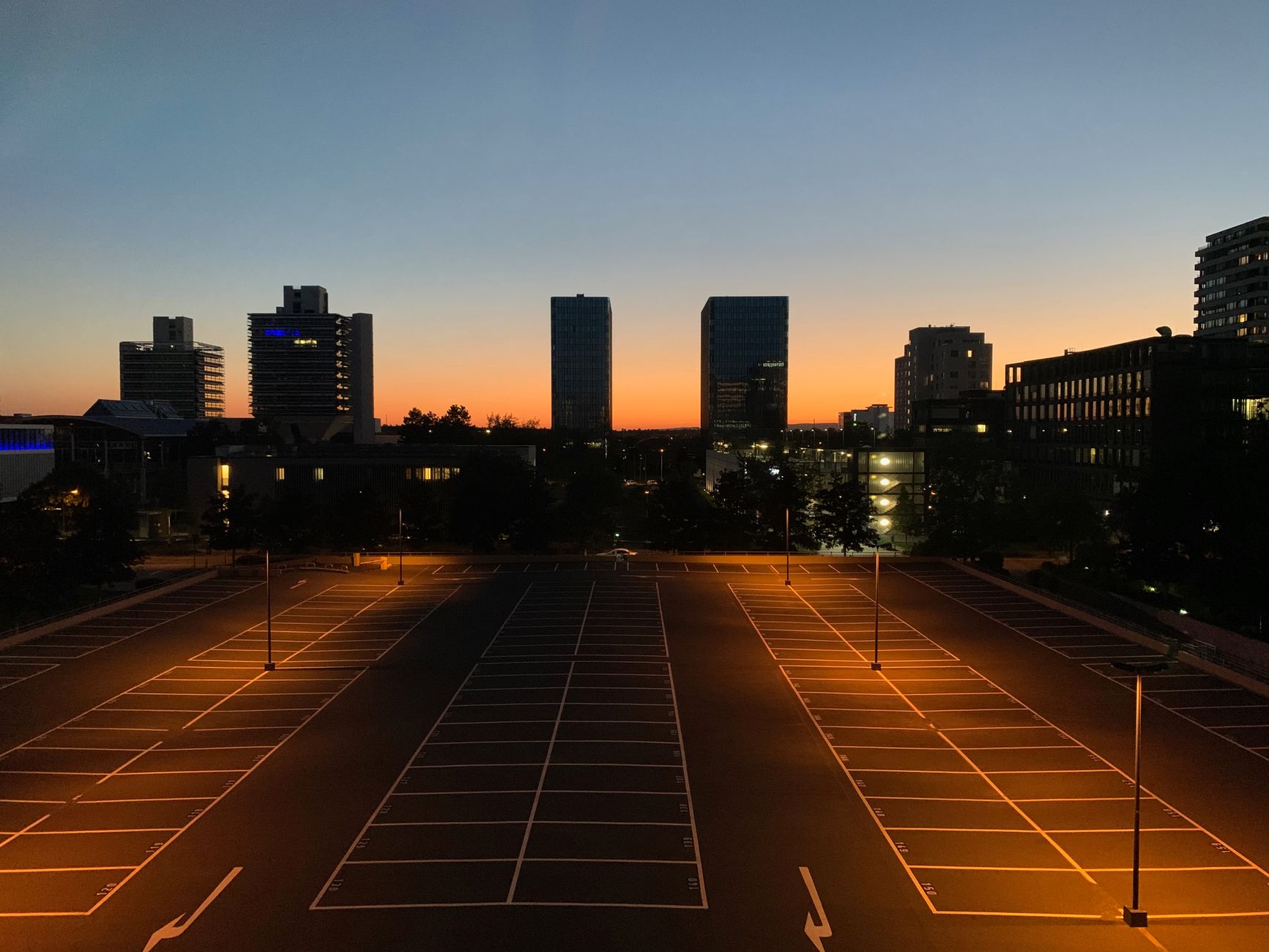
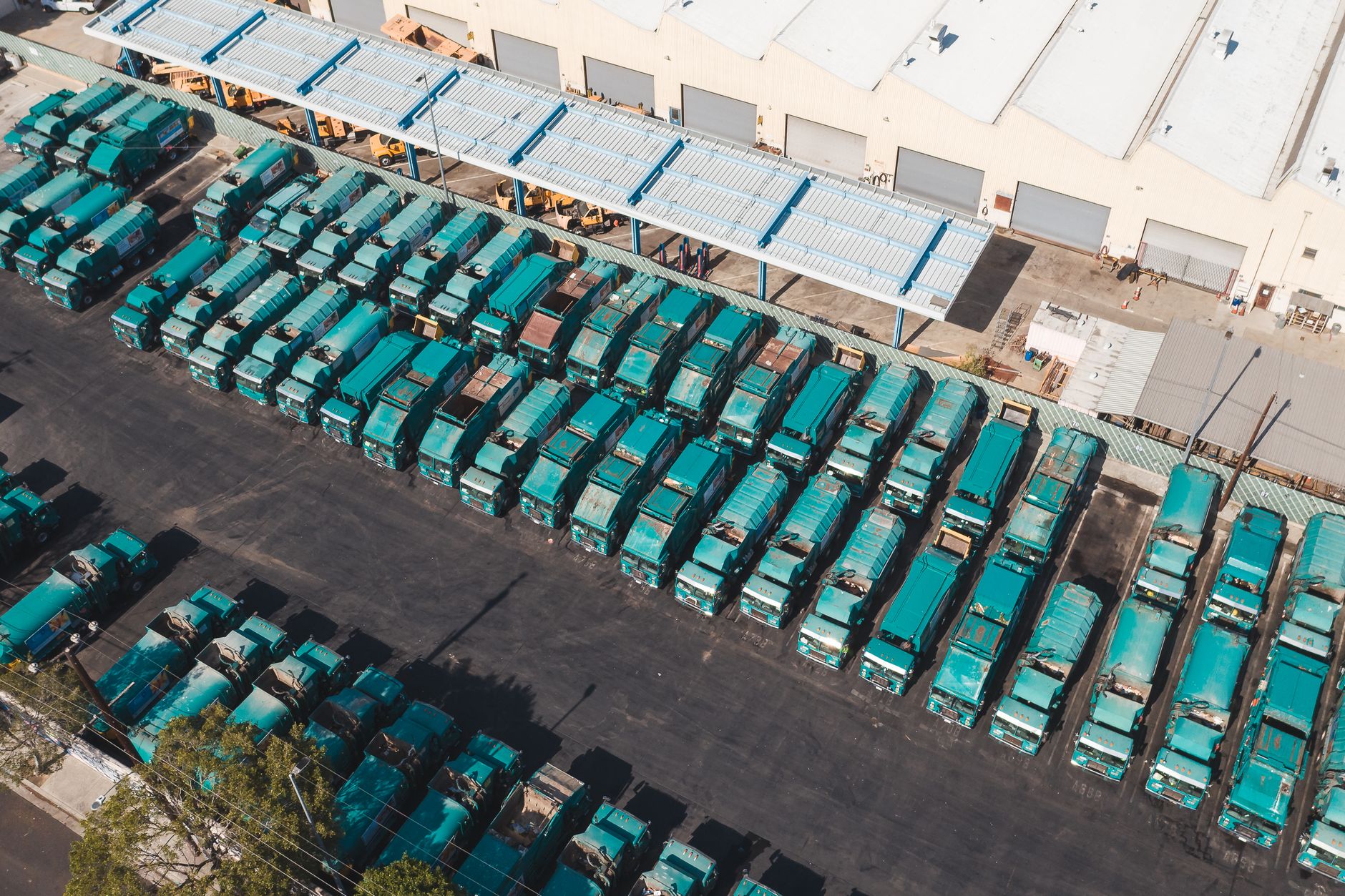
In a drone vs security guard comparison in Dallas, the drone earns its place when the work is watching large outdoor ground on a set route or schedule. Think truck yards, equipment lots, long fence lines, self-storage rows, construction staging and the outside of a warehouse campus. A guard on foot or in a vehicle covers that ground slowly, while a drone can fly the same perimeter in one pass and repeat it at hours a patrol would not walk.
It does not make sense when the main risk is inside a building, when the job depends on talking to people, or when the site needs someone with authority on the property at all hours. A drone can see a person climbing a fence. It cannot stop that person, open a gate for a delivery driver or be the first responder at a door alarm. Those tasks still need a person, so the real question is how many guard hours a drone can take off the route.
For most Dallas businesses the answer is a mix. The drone handles repeated exterior sweeps and gives a live view of ground that is hard to staff. Guards handle response, access and reporting. The sections below explain which tasks move, what the labor data says and how to test the mix before changing a shift.
- Exterior ground coverage
Drone
Flies a fixed perimeter in one pass and repeats it on schedule
Security Guard
Walks or drives the ground more slowly, but can search a specific spot in detail
- Overnight coverage
Drone
Can run through the night when flight rules and weather allow
Security Guard
Works the full night with breaks and handoffs to plan for
- Response to an alarm
Drone
Gives a fast visual look from the air
Security Guard
Arrives on site and can check doors, gates and people directly
- Access and visitors
Drone
Cannot check badges, open gates or greet anyone
Security Guard
Checks IDs, signs in vendors and handles exceptions
- Confrontation or detention
Drone
Cannot physically stop or detain anyone
Security Guard
Can make a judgment on the spot and call police
- Weather
Drone
Limited by wind, rain and low visibility
Security Guard
Works through most weather, with exposure to it
- Records
Drone
Logs flights and saves imagery for the record
Security Guard
Writes narrative reports and describes what was seen in detail
What does a security guard actually do in a shift in Dallas?
A security guard shift is mostly rounds, checks and waiting. A guard walks or drives a set route, checks doors and gates, completes patrol checkpoints, watches camera screens, signs in visitors and vendors and answers alarms. Most of the shift is routine. The value of the guard is the few minutes when something is wrong and a person has to decide what to do.
The shift also includes incident writing, handoffs to the next shift and calls to police or fire when needed. According to the BLS Occupational Outlook Handbook, guards work at industrial sites, retail stores and office buildings. At industrial and retail sites the night work often covers loading areas, lots and perimeters, which are the least visible parts of the property. At office buildings the work shifts toward lobby desks, badge checks and after-hours access.
Night shifts are a normal part of this job. The BLS Occupational Outlook Handbook says night shifts are common and that most security guards work full time. A long overnight shift that depends on one person is where an absence or resignation leaves the largest gap, and it is the part of the shift where a drone can take the most repeated walking.
Median hourly wage, Security Guards
$3,840
Monthly cost of one full-time worker in Dallas, TX, at the median wage plus payroll costs (an estimate, not a quote).
Which guard tasks can a drone take, and which can it not?
A drone can take scheduled exterior patrol, overflights of yards and roofs, visual checks of gates from above and a fast look at an alarm location before a person walks in. It can record its flights, which helps with incident reports. On spread-out ground, this is the part of the shift where a drone takes the most walking off the guard.
A drone cannot control access, cannot physically stop or detain anyone, cannot enter a building and cannot make a judgment about a person on the spot. Flights depend on weather, battery endurance and airspace rules, so a drone is weaker on windy, wet or low visibility nights. Plan those gaps before deciding, not after the first missed flight.
Some tasks sit in the middle. Camera monitoring can be done by a person in a room while the drone flies. Alarm verification can be a drone look followed by a person's decision. Sort your shift into three groups: walking, looking and deciding. The drone takes most of the walking and some of the looking. People keep the deciding.
What does the labor picture look like for guard staffing?
Turnover is the labor fact that matters most. According to UC Berkeley's news release of April 23, 2026, annual turnover for security guards in California was nearly 83 percent in 2014, 95 percent in 2019 and nearly 92 percent in 2024. That is a state figure, not a Dallas one, and our research did not find Texas turnover data for guards. According to The Next Web's secondary coverage, national security guard turnover was 89 percent in 2024, against 66 percent across the private sector. We did not check that national figure against the original UC Berkeley Labor Center report.
High turnover means a site often loses the person who knows the route, the gate procedures and the handoff habits. Each change costs training time and opens a window where a route can be missed. A drone plan only holds if flight routes, checklists and handoffs are written down, so the site does not depend on one person's memory.
The BLS outlook shows conflicting editions. The newest snippet of the BLS Occupational Outlook Handbook shows an employment change of 5,100 from 2024 to 2034, while an older 2022 to 2032 edition projected little or no change and about 151,700 openings a year. Read the live page before quoting either number in a budget.
We did not find government data on overtime, sick days or shift coverage for guards. Those are the hidden costs of an unfilled shift, so ask your guard provider for them directly.
- Guard turnover on your site over the last 12 months
- Share of night shifts covered by overtime
- Average time to fill a sick call
- Number of shifts left with a single guard
- Route handoff records for the past quarter
How often are guards hurt on the job?
The injury record for guards is dated, and we did not find 2024 Survey of Occupational Injuries and Illnesses figures for security guards. The figures below are background only, not a picture of today's risk.
According to a BLS Monthly Labor Review article using 2009 data, there were 63 fatal work injuries among security guards and an estimated 8,920 nonfatal injuries or illnesses requiring at least one day away from work. Fatal injury rates for guards were more than twice the rate for workers in general, and the BLS noted that guard fatalities were often caused by assaults.
A 2007 BLS fact sheet put the nonfatal days-away rate for guards at 107.8 per 10,000 full-time workers, which was 11.8 percent below the all-private-industry rate. The same BLS sources noted that nonfatal injuries often came from falls or assaults. A drone can reduce some walking and exposure on open ground, but decisions that carry physical risk still rest with a person.
How does a team work with a drone, and why keep fewer guards, not zero?
The model we recommend is a drone plus fewer guards. The drone takes repeated exterior sweeps and the first look at alarms. The guard keeps access control, response and reporting. Zero guard staff is not the goal, because a drone cannot answer a door alarm or make a decision about a person on site.
In practice the change is about routing. A guard post that used to run repeated exterior rounds all night may run fewer rounds plus drone alerts. The guard becomes the reviewer and responder, which is a different skill set and needs training. We train the people who will fly, monitor and respond, and we document handoffs so the night runs the same whether one person or two is on site.
High turnover makes this matter. If the route lives in one guard's head, the site is exposed every time that person leaves. A flight plan, a written handoff and a repeatable checklist keep the site covered when staff change.
What can a drone not do, and where does it fail?
Drones have real limits that a sales conversation may not stress. Weather matters. Wind, rain and low visibility can stop flights, and a patrol that cannot fly in bad weather leaves a gap exactly when risk may be higher. Battery endurance sets how long a single flight lasts, so a site needs a plan for charging, swapping and backup flights.
Airspace rules set the boundaries. According to Princeton's drone program, the FAA's Operations Over People rule took effect April 21, 2021, and under it Part 107 pilots may fly at night and over people without a waiver if they meet the rule's requirements. Flying beyond visual line of sight still needs a waiver, per secondary guides. Some sources contest the night and over-people waiver details, so check 14 CFR Part 107 directly before you plan night flights.
Remote ID is another compliance point. A Government Accountability Office report, GAO-24-106158 from June 2024, found that law enforcement had 'little knowledge' of Remote ID. Per the GAO product page, the FAA reopened the draft rule in February 2026 and a final rule is forthcoming. Your provider should show Remote ID and waiver status for every aircraft and pilot on your site.
What does Dallas already do with drones, and what does it mean for a business?
Public agencies in Dallas already use drones for safety work. According to secondary news reporting from Pulse, the Dallas Police Drone as First Responder program launched with eight remotely operated drones stationed at Dallas Fire-Rescue sites. That shows drones operating in the city for response, which is a different job from private site patrol.
The reporting does not tell you what a private drone patrol costs to run, how many guard shifts a drone replaces in Dallas, or local incident rates. We found no Dallas data on private drone security patrols, local guard staffing counts or local incident rates. Treat the Dallas picture as a set of questions to answer on your own site, not a finished forecast.
The government wage data on this page gives the local wage for this job in Dallas, and that is the labor baseline for a guard hour. It does not show what a drone costs to operate, and it says nothing about turnover or overtime. Pair it with the staffing questions in this article before you compare the two options.
How do you get started with a drone for a Dallas site?
Start with a free site assessment before you choose a drone or set a guard count. We walk the property, map routes, open ground and blind spots, check power, network points, airspace and neighboring structures, and recommend what the drone should do and what the guards keep. The lease quote comes after that assessment, so you are not asked to commit to a figure first.
We operate as a robot integrator. We choose the right machine for the site, lease it through financing, deploy and integrate it, train the staff who will fly, monitor and respond, and service it nationwide. Our team handles the flight plan, handoffs and go live period, while staff keep their response role. Testing one site with one leased unit is a reasonable way to check the mix before you change a shift pattern.
Plan the first phase around three checks: guard turnover on your site, overtime covering night shifts and the flight rules for your exact route. If those checks show repeated exterior ground and staffing that is hard to hold, a drone plus fewer guards is worth a pilot.
Frequently asked questions
Put a robot to work in Dallas.
We walk your site, learn the job, and recommend the unit that fits. Then we quote the lease, deploy it, and keep it serviced.
Sources
- US Bureau of Labor Statistics, Occupational Employment and Wage Statistics (OEWS May 2024)
- The Next Web: security guard turnover coverage
- UC Berkeley News: security guard study, April 23, 2026
- BLS Occupational Outlook Handbook: Security Guards
- BLS Monthly Labor Review: security guard injuries (2009 data)
- BLS fact sheet: security guard injuries, illnesses and fatalities (2007)
- Princeton drone program: Operations Over People rule
- GAO-24-106158: Remote ID report
- Pulse: Dallas Drone as First Responder program (secondary reporting)