
The short answer
For a drone vs security guard in Hartford comparison, a drone makes sense when the job is mostly scheduled outdoor checks across large open ground, such as fence lines, parking lots and yards. A security guard is still needed whenever an alert requires someone to walk in, verify it, talk to people on site or make a judgment call, and a drone cannot do any of that. For most Hartford sites the answer is a drone plus fewer staff, never zero staff, with a person on call for every alert, and routine beyond-visual-line-of-sight flight still needs a Part 107 waiver or Part 135 certificate until the FAA Part 108 rule takes effect.
Key takeaways
- A drone suits scheduled outdoor perimeter checks, while a security guard is still needed to respond to alerts.
- Plan for a robot plus fewer people, never zero staff.
- National turnover data points to staffing risk, so model the hours your site actually depends on.
- The newest guard injury rates we found are from 2007, so ask your contractor for its own records.
- Routine drone flight beyond visual line of sight still needs a Part 107 waiver or Part 135 certificate until Part 108 takes effect.
Drone or security guard in Hartford, CT: which makes sense?
A drone makes sense for a Hartford business when the security job is mostly scheduled observation across large open ground, such as fence lines, parking lots and yards, and when nobody needs to be called unless something looks wrong. It does not make sense when the job is response. If an alarm needs someone to walk in, verify it, talk to a visitor or secure a door, a drone cannot do that, and a guard or staff member must.
The honest middle ground is usually a robot plus fewer people, not a robot in place of people. Overnight, the drone covers ground a guard would otherwise walk on a loop, and a guard or on-call responder handles what the drone flags. A drone that detects something still needs a human to act on it, so zero staff is not a plan we would recommend for any site.
Two things drive the decision more than the robot does: how large and open the ground is, and how much of the guard's shift goes to walking versus responding. Measure those first, then ask for a quote after a free site assessment.
What does a security guard actually do in a Hartford shift?
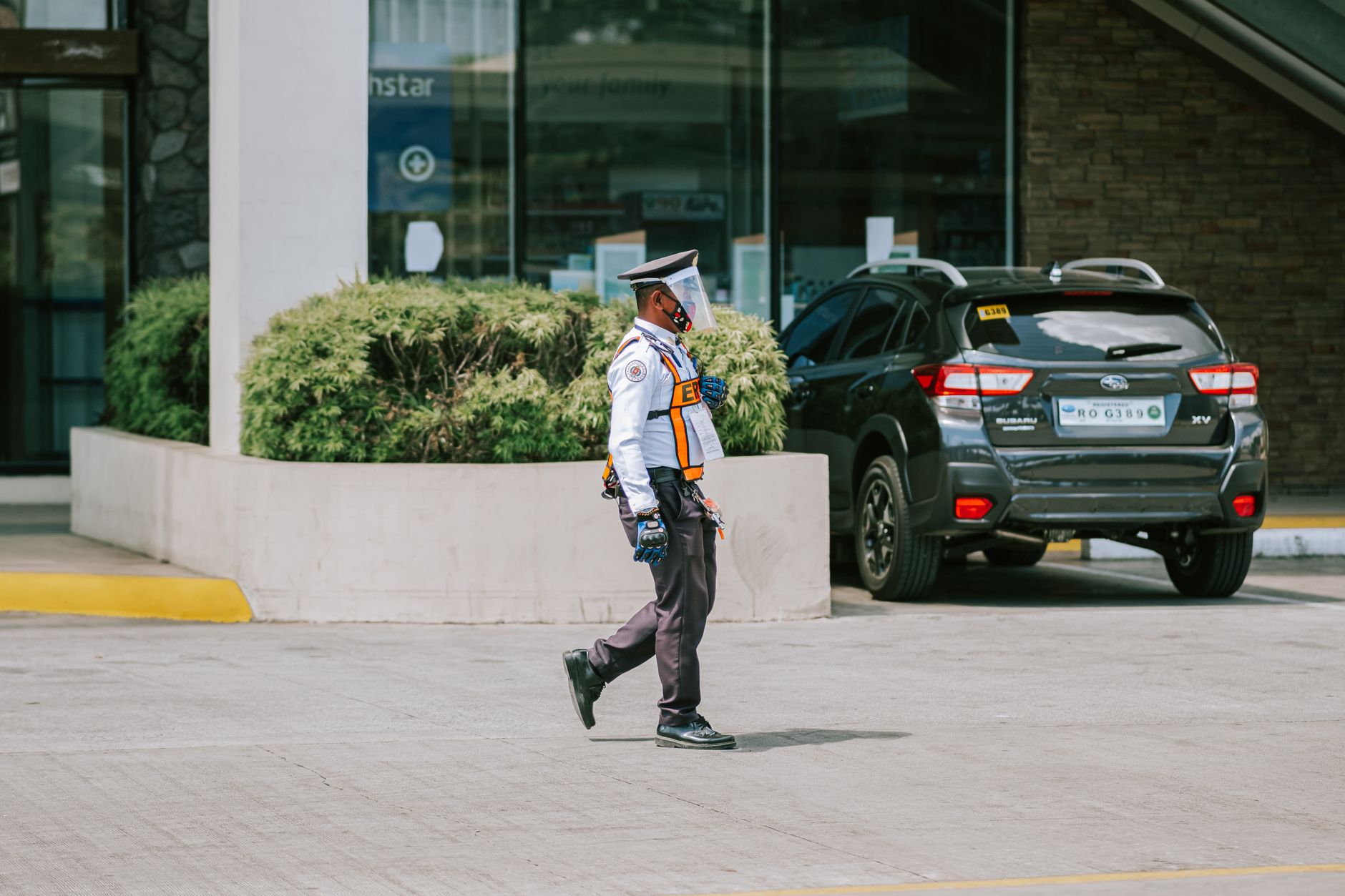
A guard's shift is usually mixed. The guard opens or closes the site, logs visitors and deliveries, watches camera feeds, makes timed rounds, checks doors and gates, answers alarms and writes reports. On a large site, rounds take up much of the shift, and walking is the part a drone can take over most easily.
Rounds are also where attention wears down. A guard alone on a long perimeter may repeat the same loop for hours, and that repetition is where missed checks happen. A scheduled drone run does not tire over a long loop, but it also does not notice what a person notices by chance, such as a propped door or a car parked where it should not be.
Before comparing options, write down the shift hour by hour for the last month. The walking blocks are usually predictable and the response blocks are not, and that split is the basis for the decision.
Median hourly wage, Security Guards
$4,249
Monthly cost of one full-time worker in Hartford, CT, at the median wage plus payroll costs (an estimate, not a quote).
Which parts of security work can a drone take, and which can it not?
A drone can take over scheduled perimeter and lot checks, aerial views of large open ground, and a repeatable record of what the site looked like at a set time. That covers much of the walking and a good share of the looking, without the fatigue of repeated loops.
It cannot physically respond. It cannot stop a person, check someone's identity at a door, lock or open a building, hold a gate, or calm an upset visitor. It also cannot write an incident report with the context and judgment a trained person brings to it. Those tasks stay with a guard or staff member.
Most sites go wrong at the boundary between these lists. Decide which alerts a person must act on within a set time, and make sure that person is reachable at all hours. A drone that spots a problem with nobody to call is a camera with a flight log.
- Scheduled perimeter checks
Drone
Flies fixed routes on a timetable and does not tire
Security Guard
Walks the same loops and can judge what looks wrong
- Large open ground at night
Drone
Covers wide outdoor ground quickly from the air
Security Guard
Covers it slowly on foot, and fatigue builds over a long shift
- Responding to an alarm
Drone
Sends images and an alert, but cannot respond
Security Guard
Can go in, verify the problem and act on site
- Visitors, contractors and disputes
Drone
Cannot hold a conversation or check identification
Security Guard
Can ask questions, check badges and defuse a situation
- Indoor rounds
Drone
This page makes no claim about indoor flight
Security Guard
Covers rooms, doors and stairwells on the same shift
- Keeping a record
Drone
Produces a consistent image and flight log
Security Guard
Writes reports with context that a log cannot capture
- When a staff member is absent
Drone
Still needs a reachable person to act on alerts
Security Guard
Needs a relief plan for sick days and no-shows
What does the local labor picture look like for security guards in Hartford?
Labor is the main reason businesses look at robots, and the national figures are poor. According to a UC Berkeley Labor Center study as reported by UC Berkeley News, annual turnover in the security industry was 89 percent in 2024, against 66 percent for the private sector overall. The same coverage says the security industry has exceeded the private-sector rate every year for a decade.
The coverage also reports that 71 percent of security officers earn less than the MIT living wage for a single adult, and 43 percent lack health insurance through an employer or union. A job with that much churn means you keep retraining, and a site that depends on one person has no slack when that person leaves. A 2025 physical security operations benchmark, a vendor survey of providers, found that 42 percent of security providers name turnover as their top operational challenge. That is a provider survey, not a guard turnover rate.
Local size matters too. According to a state wage data site citing 2024 government estimates, Connecticut had about 12,040 security guards statewide, and according to a metro wage data site citing May 2025 government estimates, the Hartford-West Hartford-East Hartford metro had about 4,130 security guard jobs. The government wage data on this page gives the local wage for this job, which is the figure to set against your own staffing hours. We did not find verified local figures for overtime, night shift premiums or sick day rates for Hartford guards, so get those from your contractor.
How does a team work with a drone, with staff still on site?
The working model is a robot plus fewer people, never zero people. The drone takes the scheduled outdoor rounds, the monitoring screen receives its images, and one person, either on site or on call, decides what to do with each alert. On a large site, the overnight guard may move from walking the whole perimeter to working one post with the screen and the on-call contact.
Public safety is moving the same way. A 2025 survey of public safety communications, as reported by a drone industry news site, found nearly half of 1,825 first responders expect to use drones and robotics daily within five years. That is adoption by people who already respond to alerts, which is the role your staff will keep.
Set the handoff before go-live: what triggers a dispatch, who receives the message, how fast they must acknowledge it, and who covers when they are sick. Most failures happen at that handoff, not in the flight. We handle the rollout side, from site mapping and a pilot route to training the people who receive alerts, plus a backup unit plan so one fault does not leave the site uncovered.
How risky is security guard work for injuries and assaults?
The newest guard-specific federal figures we found are old. Using BLS 2007 data, nonfatal injuries and illnesses with days away from work were 107.8 per 10,000 full-time security guards, about 12 percent below the all-private-industry rate.
The violence figure matters more for staffing. The same BLS data put assaults and violent acts at 14.4 per 10,000 full-time guards, against 2.6 per 10,000 for private industry overall. That gap is the strongest reason to keep a trained person in the response role. A drone that reduces lone night walks may lower some exposure, but this data does not measure that, so treat it as a question to test on your site, not a result.
We did not find a current BLS injury rate for guards, so do not treat the 2007 figures as today's rates. Ask your contractor for its own incident and injury log for the last year before you decide how much night walking to remove.
What can a drone not do for a Hartford site?
A drone cannot respond physically, cannot verify people in person, and cannot lock doors or handle a dispute. It also does not provide the human presence that some visitors, staff and tenants notice, and that presence can matter as a deterrent, so ask whether your site relies on it.
Flight rules limit where and how a drone can operate. Routine flight beyond the operator's visual line of sight is the case the FAA's Part 108 rule would address. According to drone industry trade press, Part 108 was proposed in August 2025 and sent to White House review on July 10, 2026, after a February 2026 deadline was missed. Until it takes effect, routine beyond-visual-line-of-sight flight still requires a Part 107 waiver or a Part 135 certificate, so a drone plan needs a licensed operator and a legal basis, not just equipment.
This page does not cover state or local rules, and we have not verified how Part 108 would treat indoor flight, so do not plan indoor drone patrols on the assumption that the rule will allow them.
Is a drone worth it for a Hartford business, and how do you test it?
We have no verified payback figures for drone patrols at Hartford sites, and anyone who gives you one before a site survey is guessing. The useful test is simple: measure the guard hours spent on fixed outdoor rounds, get a lease quote after a free site assessment, and compare the total with the cost of an alert that goes unanswered.
Start small. A pilot on the largest outdoor route, run alongside the existing guard for several weeks, shows whether alerts are useful and whether someone responds to them in time. Only after that does it make sense to reduce guard hours on that route, and then only by the amount the pilot supports.
Say so when the numbers do not work. A small indoor building with a short night may be better served by a second guard, a monitored camera system or a stronger alarm response contract, and a robot added on top of the existing setup will not reduce the work on its own.
How do you get started with a drone or robot assessment?
Begin with a free site assessment. Bring the site plan, the guard contract, the shift schedule for the last month and a list of outdoor areas that need checks. We map the site, identify which routes and alerts suit a drone, and say plainly where a drone will not help.
The lease quote comes after that assessment, and it should cover the financing terms, deployment and integration, staff training, the service plan with on-site dispatch, and any backup unit. Ask for it in writing and read it next to the guard contract, not in place of it.
We pick the right robot for the site, lease it through financing, deploy and integrate it, train the staff and service it nationwide. Agree the alert handoff, response time and backup plan in writing, and set a go or no-go review date before the pilot starts. Decide in advance which result would stop the rollout.
Frequently asked questions
Put a robot to work in Hartford.
We walk your site, learn the job, and recommend the unit that fits. Then we quote the lease, deploy it, and keep it serviced.
Sources
- US Bureau of Labor Statistics, Occupational Employment and Wage Statistics (OEWS May 2024)
- UC Berkeley News, Labor Center study on security guard turnover and wages
- Physical Security Operations Benchmark 2025 (vendor survey)
- State wage data site citing 2024 OEWS estimates, Connecticut security guards
- Metro wage data site citing May 2025 OEWS, Hartford security guards
- BLS, Security Guard Injuries, Illnesses and Fatalities, 2007
- Drone industry news site, first responder drone survey 2025
- Drone industry trade press, FAA Part 108 status
- Drone industry trade press, Part 108 stalled rulemaking