
The short answer
The autonomous mobile robot cost for boatbuilding plants depends on how many fixed routes the robot must run, how long those routes are, and how much mapping and station integration the floor needs before the first load moves. Unit count, shift pattern and service coverage then adjust the figure. We give the lease quote after a free site assessment, because the same route can need very different work on two different floors.
Key takeaways
- Route count, route length and floor surfaces move the lease quote more than any other input.
- Mapping, station integration and training are the costs most often left out of early estimates.
- Forklift and foot traffic across the route sets the safety design and the layout of each lane.
- The quote comes after a free site assessment and lists the fixed lease payment, term and included service.
- Hour savings should come from a time study on your own floor, since no verified site-level hours were found for this sector.
What does autonomous mobile robot cost for boatbuilding plants depend on?
The autonomous mobile robot cost for boatbuilding plants depends less on the robot itself than on the floor it has to cross. Three things set the starting point: how many fixed routes need covering, how long each route runs, and how much mapping and station integration the plant needs before the first load moves. Unit count, shift pattern and service coverage then adjust that starting point up or down.
This page does not list a number, and that is deliberate. A lease quote depends on a walk of the actual floor, the stations involved and the surfaces each route crosses. What follows explains each factor so you can judge a quote when it arrives and ask the right questions before you sign off.
Why do autonomous mobile robots fit boatbuilding plants?
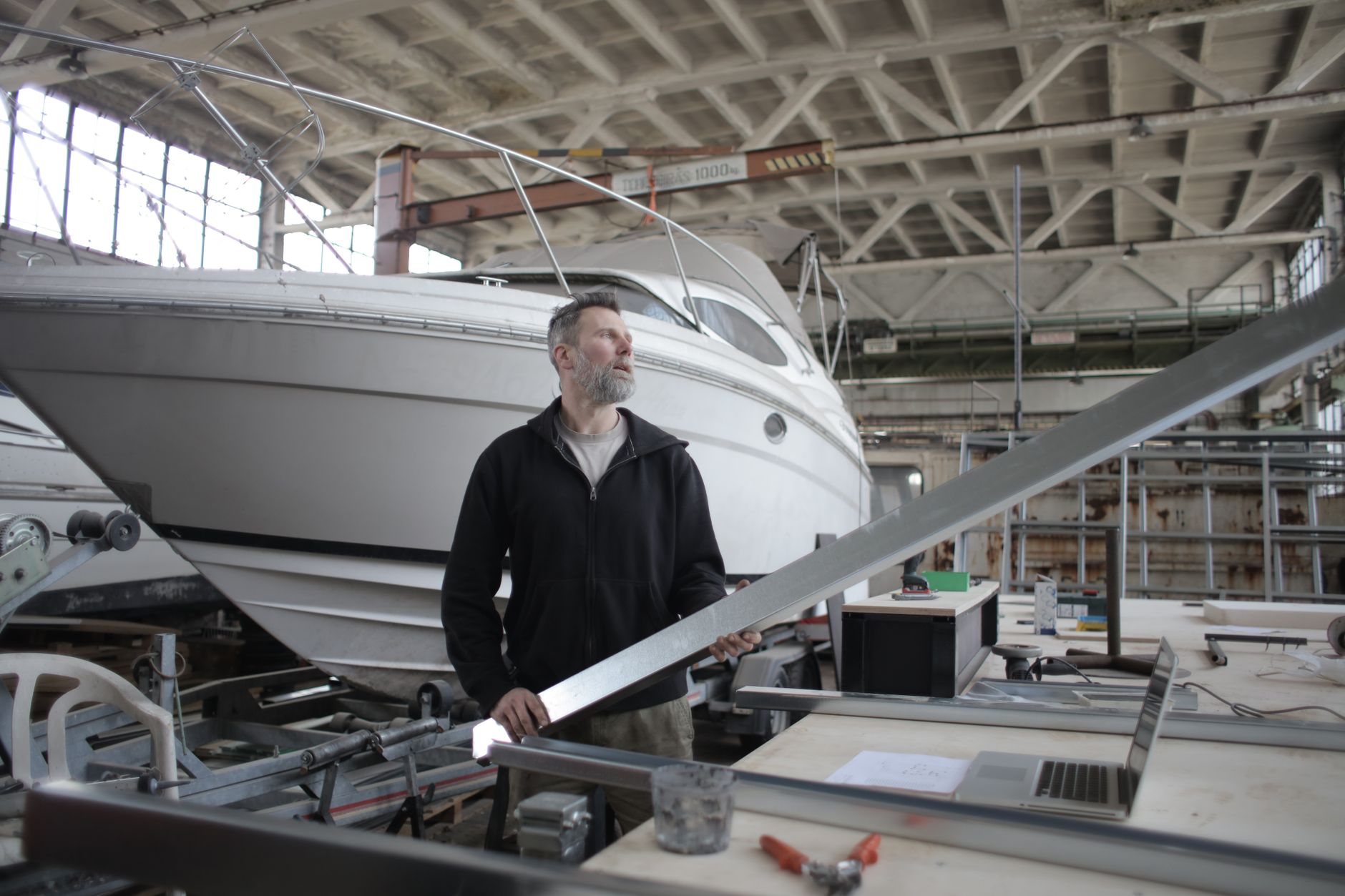
Hulls, decks, engines, rigging and interior kits move between assembly stations along the same lanes every shift. When the routes repeat, a robot can run them without a forklift cutting through the build area, and skilled staff can keep their attention on the work at the stations.
The sector is large and spread out. According to an industry data aggregator summarizing Census County Business Patterns, NAICS 336612 (boat building) had 930 establishments and 50,835 employees in 2023. According to a second data aggregator, Vantainsights, the same code shows 903 establishments and 48,087 employees with no year stated, so both should be read as rough counts rather than final figures. Recreational boating as a whole is reported at 36,101 enterprises, 93% of them small businesses, according to an NMMA figure cited in a financial news article whose study year is not stated.
Small operations change the cost picture. A small plant may run one or two routes rather than a fleet, so the quote should be built from that scale instead of from a large-plant template. We did not find a verified turnover figure specific to boat building. The all-industry quits rate for 2025 was 2.0 percent according to BLS JOLTS, which says little about any single yard.
What drives the cost up or down at a boatbuilding plant?
Route count and length come first. Each fixed route needs its own map, its own docking point at each station and its own acceptance testing before it goes live. Two long lanes can take more setup than four short ones, because the length of each lane sets how much of the floor must be surveyed and checked.
Floor surfaces and thresholds come next. Level, sealed concrete maps cleanly. Grating, seams, ramps and thresholds at bay doors add mapping time and sometimes hardware. Transitions between a shop floor and a dock, or across a lift, add the same kind of work. Staging areas that change every week add re-mapping.
Traffic and shifts shape the safety design. Where people and forklifts share a lane, the layout needs clear zones, slower speeds at crossings and sometimes separate paths. Night or split shifts change when the robot runs and how often someone must be on call for exceptions.
Unit count and service distance are the last major levers. More units cover more routes and raise the total, while a spare unit reduces the effect of a stopped robot on a line that cannot pause. Service distance matters when the site is far from a service point, so the quote should show the response model for your location.
How does leasing through financing work, and what does the quote include?
A robot lease through financing lets the plant avoid paying the full equipment cost up front. The lease carries a fixed robot lease payment over an agreed term, and the quote shows that payment alongside the scope of work. Robots are only leased, so the agreement covers the term, the units, the service and what happens at the end of the term.
We are a US commercial robot integrator. We pick the right robot for the site, lease it through financing, deploy and integrate it, train the staff and service it nationwide. On a boat floor, a stopped unit affects the next station, so it helps that one team designs the lane layout and answers the call when a unit goes down.
A complete quote should list the units, the routes, mapping and integration, training sessions, service terms and response model, the lease term and the fixed payment. It should also name anything excluded, so there are no surprises after go-live.
How many labor hours does the robot take over?
The hours a robot takes over are the hours staff spend moving kits between stations, returning carts and waiting for the next move. Those hours come from the route and the cycle at your plant, so they should be measured on your own floor rather than taken from a general figure.
We did not verify site-level hour figures for boat yards in this research pass, so the table below describes the tasks instead of the minutes inside them. Time a typical shift before you decide. Record the kit moves per station, the distance walked, the waiting time and the number of forklift trips that cross the lane.
With those numbers in hand, the comparison is direct. The hours of repeated moves go to the robot route, and the staff time that remains covers loading, checks and exceptions. The robot does not remove the people who load kits or resolve problems at a station, so the saving is the walking and waiting time, not the whole shift.

What do injury and adoption figures say about manual moves?
The injury figures below cover all private industry, not boat building alone. According to a CPA trade publication summary of BLS data, private industry recorded 888,100 cases involving days away from work in 2024, with a median of 8 days away. The same summary reports 3.1 million nonfatal injuries and illnesses across private and public employers, a rate of 2.6 per 100 FTE.
Boat building has its own record in some states. A South Carolina state injury table for ship and boat building (NAICS 3366) shows a total recordable rate of 7.7 for 2014. That is one state and an older year, so it works as a local signal rather than a national benchmark.
Adoption is moving across manufacturing. According to A3 as reported in a robotics trade news article, North American robot orders rose 6.6% for the full year 2025, and collaborative robots were 28.6% of robots ordered in Q4 2025. Market activity tells you the sector is adopting automation, not that any single plant will benefit.
For context on the sector's size, the FRED employment index for ship and boat building (NAICS 3366) read 110.094 in 2024. That figure is an index, not a headcount, so it shows trend rather than how many people work in the plants.
What can an autonomous mobile robot not do?
A robot runs fixed routes well. It does not fix a station, reconfigure a bay, lift a hull section or decide what a kit is for. Any task that changes every hour or needs judgment about the part still belongs to a person.
It also works poorly on floors where the route cannot be held. Heavily uneven surfaces, slick resin or oil, and areas that change daily make the route harder to keep, and the assessment will say so if a site is not a fit.
A robot is also not a substitute for safety design. People and forklifts still need their own rules on the floor, and a robot stopped in a lane is a hazard until staff clear it.
How do I get a quote after a free site assessment?
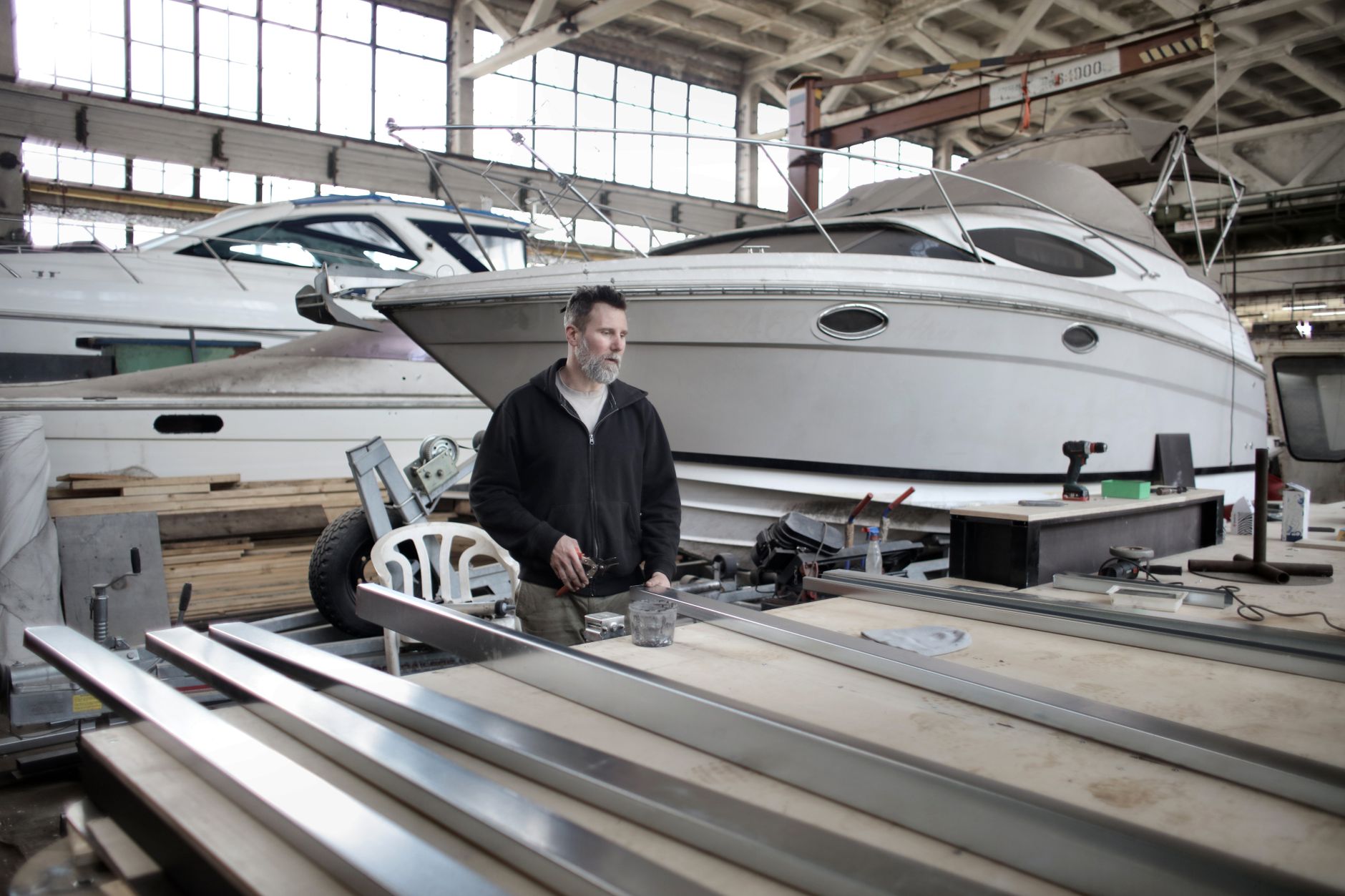
Start with a free site assessment. We walk the floor, look at the routes, the stations, the surfaces and the traffic, and map what the plant needs. The assessment turns the factors above into a number, which is why we do not quote from a written description alone.
The quote follows. It lists the units, routes, mapping and integration, training, service and the fixed robot lease payment through financing, along with the term and what is excluded. If the floor is not yet a fit for a robot, we say so and identify what would need to change.
To speed things up, gather a site plan, the station list, a note of kit sizes and weights, the shift hours, and any planned layout changes. Those five items let the assessment cover the real route rather than an estimate of it.
Frequently asked questions
Want a warehouse robot at your boatbuilding plant?
Tell us about your site. We will recommend the robot, quote the lease, and keep it serviced.
Sources
- Mewayz industry data summary of Census County Business Patterns, NAICS 336612
- Vantainsights boat building industry data, NAICS 336612
- Finviz article citing NMMA recreational boating figures
- BLS JOLTS annual release, 2025
- CPA Practice Advisor summary of BLS 2024 injury and illness data
- South Carolina injury and illness table, ship and boat building, 2014
- Robotics 247 summary of A3 robot orders 2025
- FRED employment index, NAICS 3366 ship and boat building