

The short answer
The cleaning robot cost for manufacturing plant floors is set by what the floor asks of the machine: its size and layout, surface condition, how much traffic and how many blockers share the route at night, how the robot connects to doors, elevators and the plant network, how many units run, and how service is covered. We lease robots through financing, so a plant sees a fixed lease payment set in a written quote after a free site assessment rather than a list rate.
Key takeaways
- Floor size, layout and night traffic move the cost more than any single feature.
- Surface condition and a clean map decide whether the route runs clean on the first night.
- Hidden costs sit in mapping, wireless coverage, consumables and training, so ask which ones the quote covers.
- The lease payment is set in a quote after a free site assessment, with the terms written out.
- Scrubbing covers repeat work on flat floors; staff still handle spills, restrooms and detail work.
What does a cleaning robot cost for manufacturing plant floors depend on?
The cleaning robot cost for manufacturing plant floors depends on what the floor asks of the machine. A sealed concrete bay with clear aisles and light night traffic is a much easier job than a mixed floor with pallet staging, forklift lanes, machine bases and wet zones. Two plants of the same size can land far apart because their layouts differ.
We express the cost as a lease payment, not a list. We walk the floor, time the route, and then issue the lease quote, which states the term, the payment, service coverage and the deployment work. Nothing in this page is a price, and every number here comes from published research and is named where it appears.
The sections below cover the factors that move the quote, the hidden costs people miss, how labor hours compare with the route, what a robot cannot do, and how a quote is built after a site visit. Read them with your floor plan in front of you.
Why do night shifts on production floors leave cleaning gaps?
Janitorial work is a large, steady occupation. According to the Bureau of Labor Statistics, janitors and building cleaners held 2,447,700 jobs in 2024, and the occupation is projected to grow 2% from 2024 to 2034, slower than average. Entry requires no formal credential and only short-term on-the-job training, so staffing depends on hiring people fast enough to keep routes covered.
Turnover is where night shifts break. A 2022 trade article, reprinted online, put janitorial turnover around 200% a year. A 2026 post from an HR software vendor says annual separation rates in janitorial and cleaning services commonly exceed 50%. We could not match either figure to BLS data, so treat both as trade estimates. Even the lower one means half the crew may change in a year.
A janitorial industry survey cited in trade content found that 61% of janitorial companies name labor shortages as a major obstacle to growth. The survey is undated in that source, so use it as direction rather than a benchmark. On a plant floor, the effect is that a route which once had a full crew may now get one person, a partial pass, or nothing on a short night.

What factors move the cost up or down at a plant floor?
Floor area is the first factor, but it is not the whole story. Square footage sets how many passes a route needs. Layout sets how many turns, dead ends and aisle changes the robot must handle, and each turn adds time in mapping, testing and edge cases.
Surface and condition come next. Sealed concrete and epoxy floors suit a scrubber well. Worn coatings, cracks, floor drains, metal thresholds and painted lines can force slower speeds or a changed brush and squeegee setup. Ask the site walk to note every transition between surfaces.
Traffic during the shift is often the biggest swing. A night route with no forklifts, no staging and no people is simple. A route that shares space with pallet jacks, staged pallets, carts and maintenance crews needs tighter zones, more stops and more checks, which lowers the hours saved each night.
Mapping and route complexity follow. The first map and route take real time on site. Adding a second building, a mezzanine or elevator stops adds mapping work. Integration with doors, elevator controls, the plant network and any fleet software adds another layer, and its size depends on what the plant already runs.
Number of units and service coverage finish the list. One unit on a large, open floor is a separate quote from several units shared across zones. More units spread the setup work, but they multiply the service visits and the spare-unit questions the site has to answer. The coverage level in the quote matters as much as the machine.
How many labor hours does floor scrubbing take each week?

Hours depend on the floor, so the honest answer comes from a timed walk. A manual scrub is driven by route length, the number of passes, stops around obstacles, and time spent refilling and emptying tanks. We time that route on site instead of quoting a generic figure, then compare it with the staff hours the plant already spends.
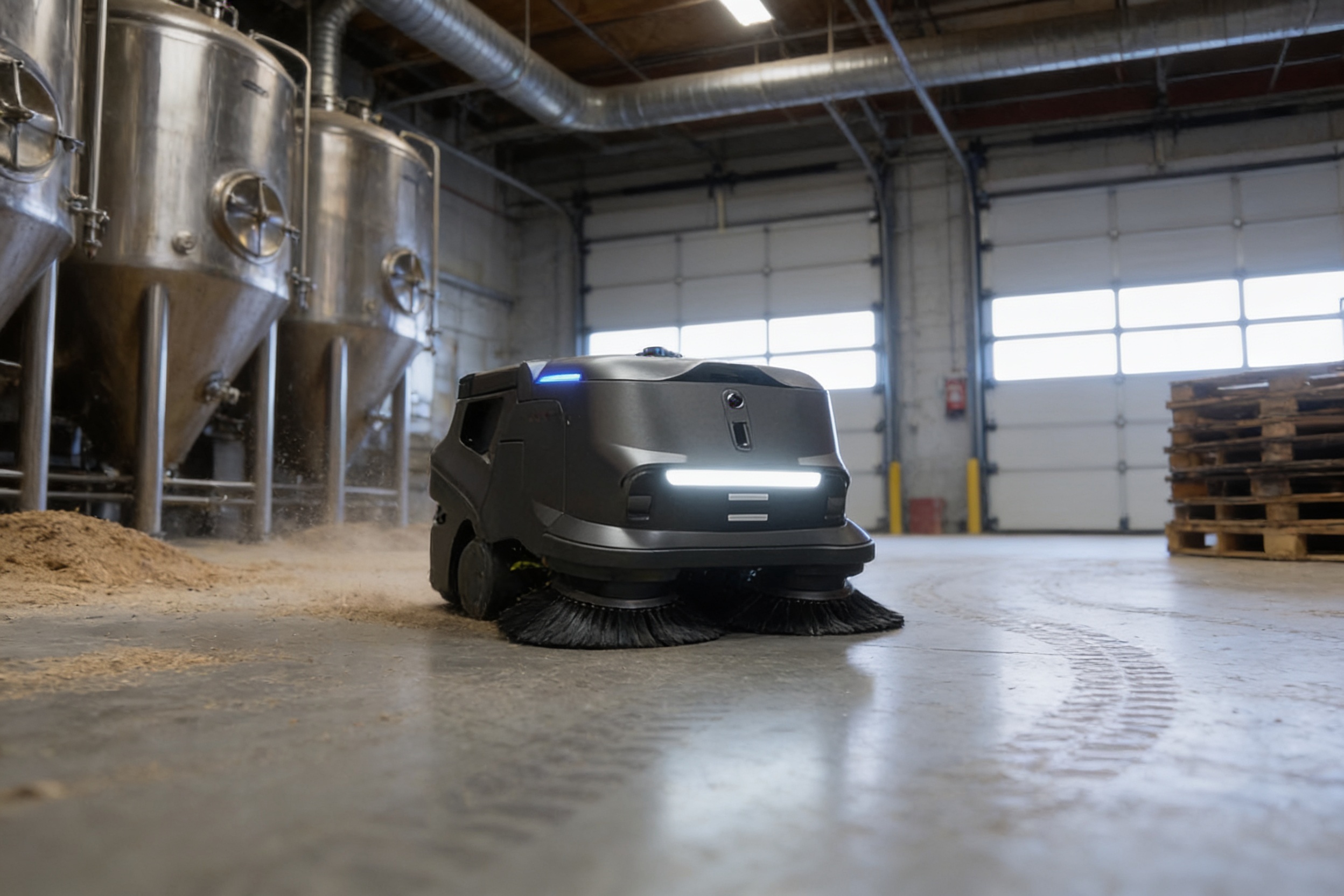
Published figures show the scale similar work can reach. A vendor case study on a fiber optic plant describes an autonomous scrubber with automated docking covering over 32,000 sq ft five nights a week, and the client reported a 33% cut in floor-cleaning labor costs. That is self-reported from one site, so read it as direction, not a promise.
A warehouse in Milton, Ontario gives a longer view. According to a trade report on that deployment, robots typically ran overnight and cleaned about 3.5 million sq ft from summer 2020 to April 2021, saving more than 300 labor hours versus conventional cleaning. The operator reported that figure itself, and a warehouse is not a production plant, so the floor types and traffic will differ.
How does leasing a cleaning robot through financing work?
We lease the robot through financing, so the plant pays a fixed lease payment over a set term and does not tie up capital up front. The payment is set in a written quote after a free site assessment, and that quote is what you compare against other options. There is no generic table to read from.
The quote is the test. Look for the lease term, the fixed payment, the service plan and what it covers, the deployment and integration work, the training hours, the go-live support window, and what happens when a unit is down, including whether a spare is available. Ask for liability and insurance terms in writing as well.
Many plants start with one unit on one zone, learn the floor, and add units once the route and staffing are settled. A phased start keeps the first lease narrow and shows the real hours on your own floor before the plant commits to a larger program.
What can a floor cleaning robot not do on a plant floor?
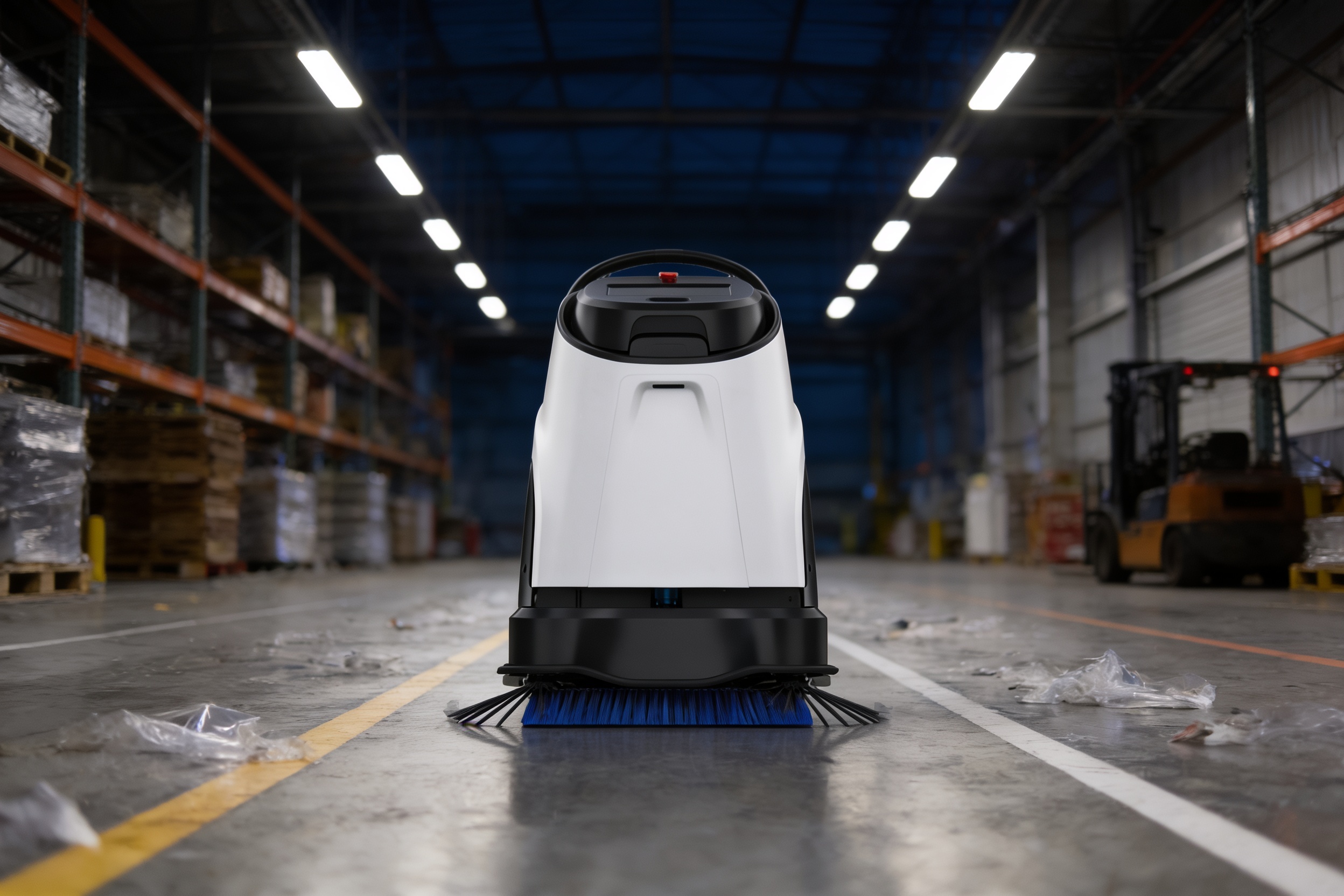
A scrubbing robot covers a repeatable floor route. It cannot judge what it has not been taught. Oil, metal chips, broken glass, leaking fluids and anything that needs a human decision still need staff. Set those rules before deployment, not after the first incident.
It will not clean around stacked pallets or equipment left in the route. Route blockers are a common reason a night run stalls, and someone must clear them before the shift starts. It also will not do edge detail behind machine bases, stairs, steep ramps, restrooms, trash pickup or touch-point cleaning.
Surfaces can limit it too. Very rough, heavily pitted or unsealed floors may need another tool, and an uneven floor can leave wet strips. Ask the site walk to test a representative zone, not only the cleanest bay.
Is a cleaning robot worth it compared with unfilled night shifts?
Worth depends on the hours it replaces and the work it protects. A3, the robotics trade association, reported that North American robot orders rose 6.6% in units in 2025 to 36,766 robots, and collaborative robot orders reached 7,212 units. Those figures cover industrial robots broadly, not floor cleaning, but they show plants adding automation at scale.
The clearest test is what a missed night costs in coverage. If a route goes unscrubbed because nobody is on shift, the plant carries a backlog, slower changeovers and more exposure on wet or cluttered floors. The Bureau of Labor Statistics injury survey, as summarized by a safety publication, reports that private industry logged 2.5 million nonfatal workplace injuries and illnesses in 2024, down 3.1% from 2023, with a total recordable case rate of 2.3 per 100 full-time workers. Floor hazards are only part of that, so do not expect a robot to move that number alone.
Payback is a plant-level calculation. Put the route hours, the coverage gaps, the staff time for checks and the fixed lease payment side by side, then compare that with a one-unit pilot on your own floor. The pilot gives you real hours before the plant commits to more units.
How do I get a quote after a free site assessment?
The quote starts with a free site assessment. We walk the floor with the shift lead, measure routes, note surfaces and traffic, time a representative pass, and check doors and wireless coverage. We also ask the cleaning staff where the route stalls today, because they know the floor better than any drawing.
From there we set a route plan, a deployment plan and a service plan, then issue the lease quote. The quote lists the lease term and fixed payment, what service is included, deployment and training, and what happens if a unit is down.
To speed it up, bring an up-to-date floor plan, the shift schedule, the surface types, the waste the floor sees, the pallet staging map, and the name of the person who will own the robot day to day. Those inputs decide most of the numbers in the quote.

Frequently asked questions
Want a cleaning robot at your manufacturing plant floor?
Tell us about your site. We will recommend the robot, quote the lease, and keep it serviced.
Sources
- Bureau of Labor Statistics, Occupational Outlook Handbook: Janitors and Building Cleaners
- Bureau of Labor Statistics injury data, summary by a safety compliance publication
- A3 North American robot orders 2025, trade press report
- Trade report on a warehouse autonomous floor scrubber deployment, Milton, Ontario
- Vendor case study, fiber optic plant autonomous scrubber
- 2026 HR software vendor post on janitorial separation rates
- 2022 trade article on janitorial turnover, as reprinted online
- Janitorial industry survey on labor shortages, trade content