
The short answer
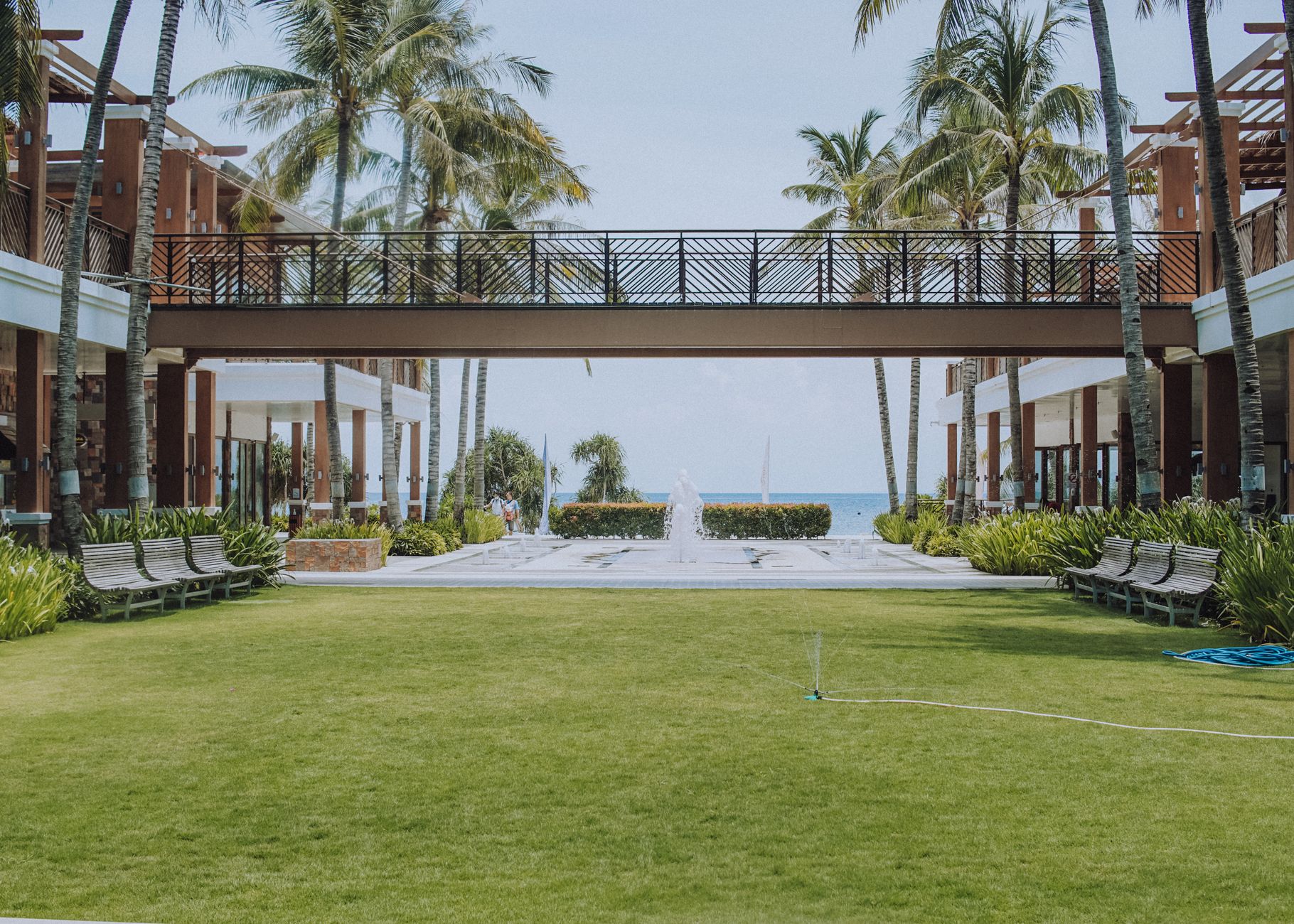
Robotic lawn mower cost for resort properties depends on how much turf the robot must cover, how steep and irregular that turf is, how many separate zones need a unit, and how much setup and service the grounds require. Wide, sloped lawns around guest areas usually need more boundary work and tighter scheduling than a flat, simple site. We issue a lease quote after a free site assessment, since the fixed robot lease payment follows from those site details.
Key takeaways
- The cost turns on covered area, slope, zone count, setup and service.
- Guest-facing edges are where a scheduled robot cut shows most between crew visits.
- Hidden costs sit in mapping, software, maintenance, insurance and training, so ask for each line.
- Quotes follow a free site assessment, because slope and boundaries set the unit count.
- Robots shorten push-mowing time but do not replace trimming, edging around fixtures and hand work.
What does robotic lawn mower cost for resort properties depend on?
Robotic lawn mower cost for resort properties is set by the work the grounds demand, not by a single list figure. The main inputs are how much turf the robot must cover, how steep and uneven that turf runs, how many separate zones need their own coverage, and how much setup and service the site needs. Guest-facing lawns also carry a higher standard of appearance, so schedule discipline and edge quality count as much as raw area.
We do not publish a figure for this, and the reason is practical. A lease quote follows a site assessment that measures those inputs on your grounds, then matches a unit to the terrain and lays out deployment and service. A sprawling resort with long sloped banks can need a very different quote from a compact campus with flat lawns, even when the total turf looks similar on a plan.
Mowing wide, sloped turf on a fixed schedule suits a robot because the machine keeps edges tidy between crew visits. Crews can then spend their hours on trimming, edging around fixtures and the areas a robot cannot reach.
How large is the resort setting and how much grounds labor does it need?
Resort grounds sit inside a large lodging sector, but the count of resorts is hard to pin down. The American Hotel and Lodging Association (AHLA) reported 54,200 US hotel properties with 15 or more rooms in 2015, which is dated. Its members alone include more than 32,000 lodging properties representing more than 3,200,000 hotel rooms. We could not verify a recent national count of resorts, so treat these figures as scale markers rather than totals for your market.
Grounds labor is also a national workforce. The Bureau of Labor Statistics counted 1,296,400 grounds maintenance worker jobs in 2024 and projects employment to change by 4 percent from 2024 to 2034, about the average for all occupations, according to its Occupational Outlook Handbook. Crew hours are a planning line in their own right, and the hours a robot takes over should be counted as such.
Injury exposure belongs in the labor picture too. The BLS snapshot for landscaping and groundskeeping workers reports 185 days-away-from-work cases per 10,000 full-time equivalent workers in 2019, with yearly rates from 149.0 to 218.8 across 2015 to 2019. A 2021 study using BLS data put the landscaping services nonfatal rate at 176.8 per 10,000 full-time workers in 2018, against 89.7 for all private industry.
Which site factors raise or lower the cost?
Covered area and run time come first. More ground means more robot hours each week, and the unit count follows from how many hours of mowing must fit inside the quiet windows the property allows. Many small lawns can require as much boundary work as one large field, which changes both setup and unit count.
Slope and surface come next. Banks, swales and sloped frontage require a unit rated for that grade, and turf type, root health and irrigation lines affect traction and where the robot can run. Wet or soft ground after a storm or an irrigation cycle can interrupt cutting, so the quote should write down rain and wet-turf rules.
Zones and guest traffic decide the rest. Walkways, pool decks, event lawns and drives split the grounds into zones, and each zone may need its own schedule, keep-out areas or boundary work. Mapping and calendar integration add setup work that a single flat lawn does not need, while clean, well-marked edges with few obstacles lower it.

How does leasing through financing work, and what does the quote include?
We lease robots through financing, so the property does not need to pay the full equipment cost at once. The lease is quoted as a fixed robot lease payment after the site assessment, and the lease term is written into the agreement before work begins.
A complete quote should show the unit or units matched to the terrain, the zones covered, deployment and integration work, staff training, the service plan with response terms, and what is excluded. Ask whether insurance, software and replacement parts sit inside the figure. A quote that cannot answer those questions is not yet a quote.
Leasing also lets a property start small. A phased start on one zone can show crew hours and edge results before the full grounds commit, and the first zone can be widened once the timesheets back the plan.
How many labor hours does a robot take over?
Hours are the figure a resort manager needs most, and the published evidence is thin. NALP, the National Association of Landscape Professionals, describes adoption of robotic mowers in commercial landscaping as still in early stages. The figures that do exist come from trade reporting and contractor case notes, not surveys.
One operator in trade press estimates that each mower can save up to 40 hours of labor. A contractor-reported half-acre example moved from two crew members spending about two hours on push mowing to roughly 30 minutes of trimming, edging and blowing. Those cases reflect particular sites and crews, so test them against your own timesheets during the assessment.
The hours that remain are the ones a robot cannot take: trimming around fixtures, edging at walks and beds, blowing debris, and checking the unit. Count those hours on the same timesheet as the mowing they replace, so the saving shows up as net crew time rather than a headline figure.
What can a robotic mower not do on resort grounds?
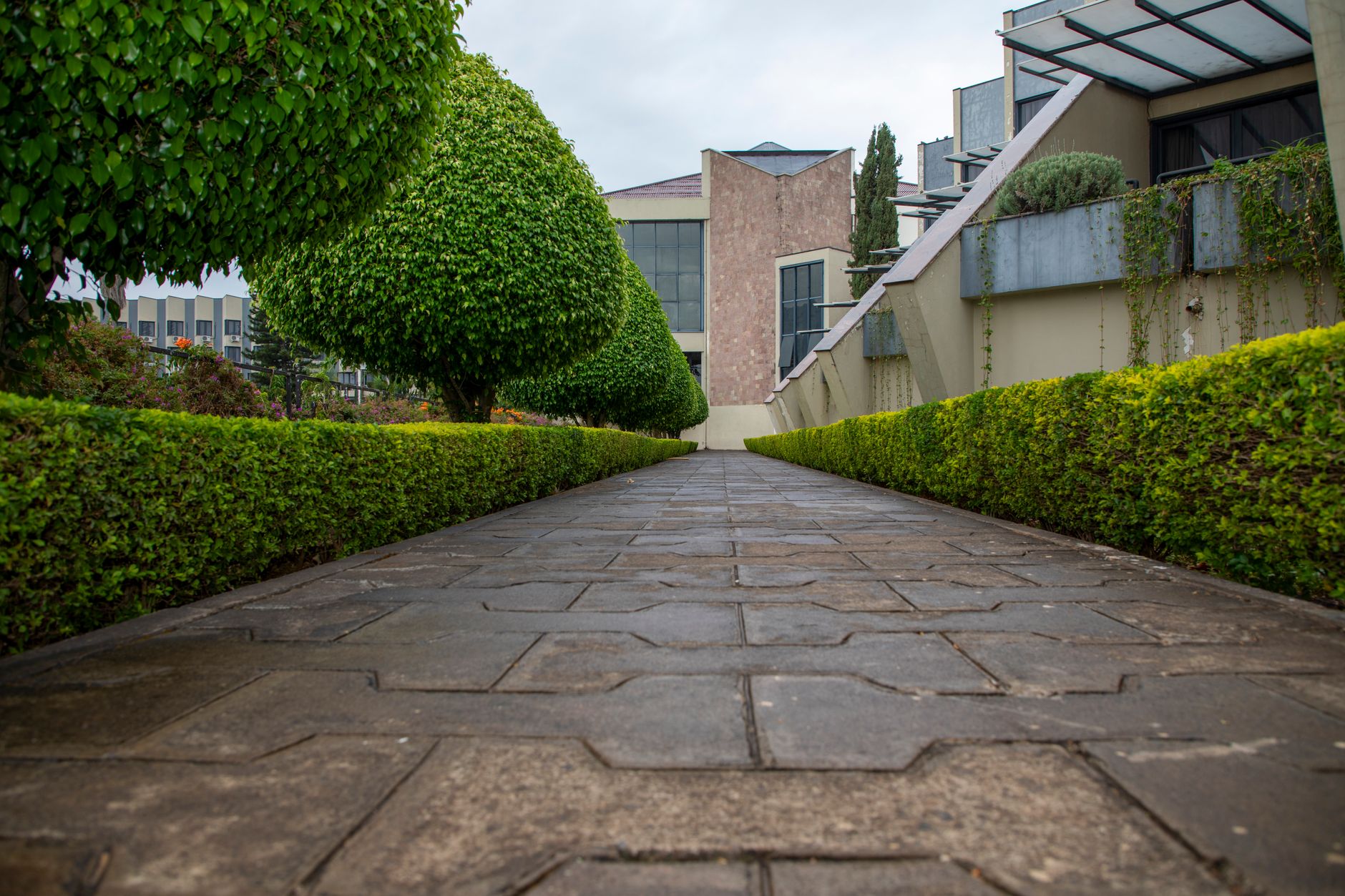
A robotic mower cuts turf on a schedule. It does not trim around planters, edge garden beds by hand, prune shrubs, clear heavy storm debris or repair irrigation heads. Crews still need those hours, and a quote that assumes otherwise overstates the saving.
Slope and wet-turf limits are model and site specific. Each unit has a grade rating, and soft or waterlogged ground can interrupt cutting or force schedule changes. The site assessment checks grade and drainage before a unit is matched, and the quote records the rules for rain days.
Boundaries and maps also need upkeep. New beds, moved edging or new hardscape change where the robot may run, so the map must be updated after landscape work. That update is a service task, not a one-time setup, and it should be scheduled rather than left to chance.
Is a robotic lawn mower worth it for guest-facing lawns?
Worth it depends on the hours the robot replaces and the standard the lawn must hold. Guest-facing turf mowed on a fixed schedule benefits when edges stay tidy between crew visits, because guests see the lawn every day. If crews are already stretched across mowing and trimming, the robot can free hours for the work it cannot do.
Savings are harder to measure than a vehicle fleet or a warehouse shift. The best test is a before and after timesheet on one zone, comparing crew hours, edge quality and missed cuts. We would rather build that comparison from your site than promise a payback period before the grounds have been measured.
The strongest case usually comes from properties where mowing already takes a large share of grounds labor and the lawns are visible from guest rooms, lobbies or event spaces. Where the grounds are small and mostly flat, the hours saved may not justify a large lease, and the assessment will say so plainly.
How do I get a robotic lawn mower quote after a site assessment?
Start with a free site assessment. We walk the grounds, measure covered area and slopes, mark zones and guest areas, note access, power and drainage, and record the crew's existing mowing and trimming hours. The assessment sets the unit count and the deployment plan.
The quote follows the assessment. It lists the fixed robot lease payment, the lease through financing, deployment and integration, training, service terms and exclusions. Compare quotes on the same site assessment, and ask every provider for the inclusions in writing.
After go live, our team services the robots nationwide, and response terms belong in the quote, not in a verbal promise. Ask about dispatch and how downtime on a guest lawn is handled before you sign.
Frequently asked questions
Want a robotic mower at your resort property?
Tell us about your site. We will recommend the robot, quote the lease, and keep it serviced.
Sources
- BLS Occupational Outlook Handbook: Grounds Maintenance Workers
- BLS Injury and Illness Snapshot: Landscaping and Groundskeeping Workers 2015 to 2019
- PMC study of landscaping injury rates using BLS data
- AHLA, Serving America's Travelers
- NALP robotic mower rundown
- Landscape Professionals blog on robotic mowers as a competitive advantage
- TotalLandscapeCare trade article on robotic lawn mowers for landscaping