
The short answer
Robotic lawn mower cost in Charlotte depends on how much turf the mower must cover, how steep and obstructed that turf is, how many mowing hours the site needs each week, and how many units the schedule requires. Service response, boundary mapping and setup, and whether the site relies on seasonal crews also move the number. We give a lease quote only after a free site assessment, because those inputs are measured on the ground and a generic figure would miss most of them.
Key takeaways
- The cost turns on mowable area, slope, obstacles and the weekly mowing window, not on a single city rate.
- Mapping, setup, maintenance, insurance and training are the costs most often left out of a first comparison.
- Seasonal crew turnover, reported at high rates by vendor research, makes crew hours harder to plan, so a written map and schedule matter.
- A lease quote follows a free site assessment that measures your turf, traffic and service needs.
- Robots handle routine open turf, while edges, storm checks and faults still need trained people on site.
Robotic lawn mower cost in Charlotte: what the number depends on
A robotic lawn mower cost in Charlotte depends more on the site than on the city. The same machine can be a light job on a small office lawn and a heavy one on a campus with slopes, planted beds and foot traffic. Before any number is written, the cost has to be tied to the turf, the mowing window and the service response the business expects.
It helps to read the cost as five questions: how much ground is mowable, how hard that ground is to mow, how often it must be cut, how many units the schedule needs, and what happens when a unit fails. Each answer moves the quote in a separate direction, so no single rate applies to every lot. We do not put a number on this page, because a figure from a generic guide would skip most of those inputs.
What moves the cost of a robotic mower on a Charlotte site
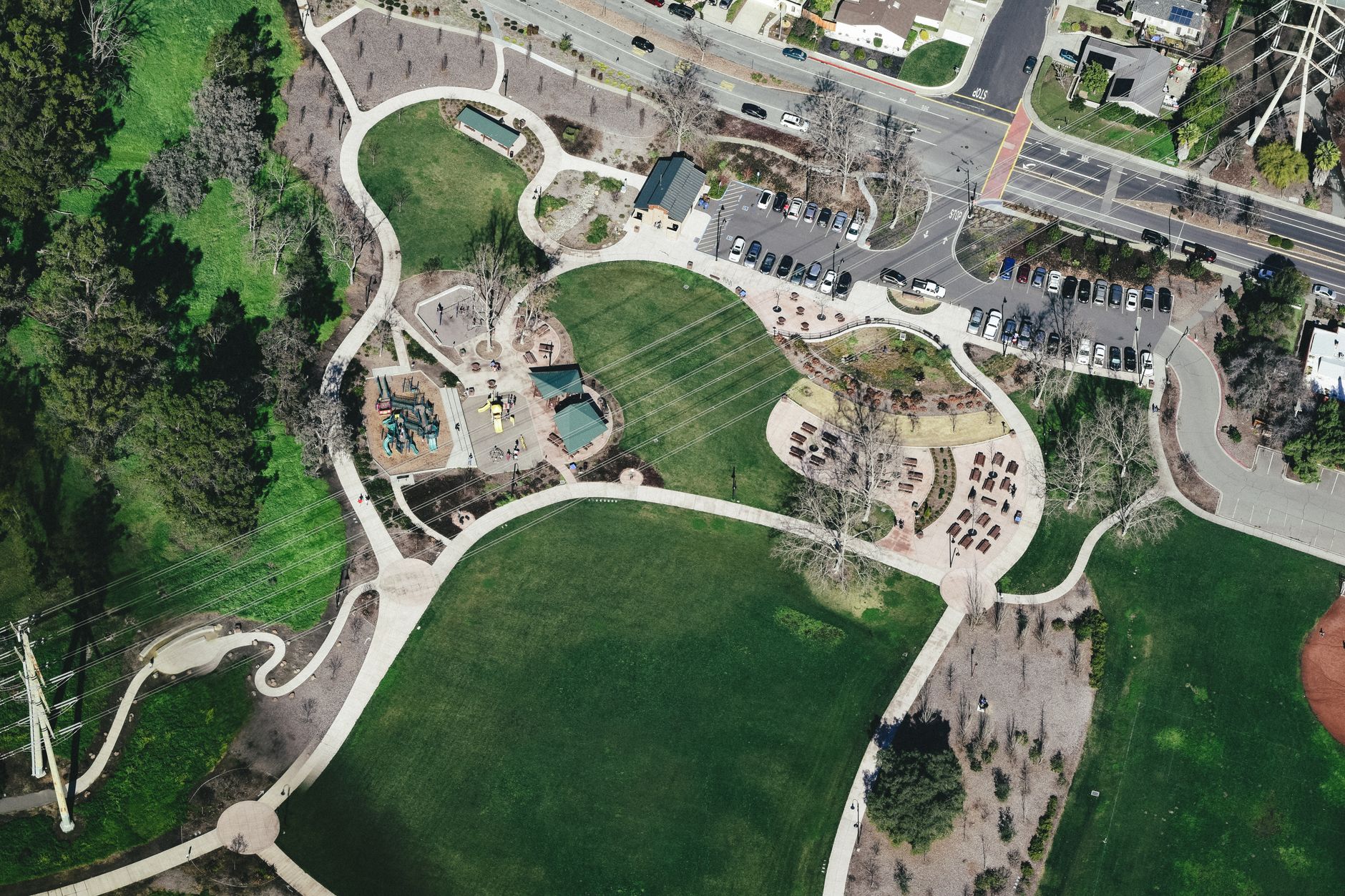
Mowable area sets the unit count and the battery cycle. Narrow strips, islands and long bands between parking rows cost more per acre than an open lawn, because the mower spends its time on edges, turns and returns.
Slope, beds, trees, light poles, signs and drains set how much boundary work the install needs and how often a unit gets stuck. Many Charlotte commercial lawns mix flat turf with graded banks and planted islands, so a site walk tells you more than a plat map does.
Mowing frequency sets the hours the machine must cover. A site cut every week through the growing season needs more unit hours than one cut every other week.
Traffic and events decide the mowing window. Lawns with heavy foot traffic, sports use or frequent gatherings are usually run in early or overnight windows, which changes staff time for checks and resets and the boundary plan around people.
More units cover more ground but add charging space, supervision and a dashboard to watch. A spare unit is a separate decision that changes the cost of downtime more than the mower itself does. Service response decides whether a fault costs an afternoon or a week of cutting.
Who runs robotic mowers in Charlotte, and what the labor base looks like
Charlotte's commercial grounds work is spread across office and corporate campuses, medical and outpatient sites, apartment and townhome communities, car dealerships, schools and places of worship, light industrial parks, and association common areas. Each type has its own mowing window and crew model, so the same machine is quoted differently at each.
The labor base is only partly measured. According to the May 2025 Occupational Employment and Wages release from BLS for the Charlotte-Concord-Gastonia, NC-SC metro, the landscaping row was not in the excerpt we could retrieve, so we give no landscaping headcount here. A third-party wage aggregator citing May 2025 OEWS data counts about 970 jobs for first-line supervisors of landscaping, lawn service and groundskeeping workers in the same metro.
Turnover is where the labor risk sits. According to a vendor research page that attributes its figure to an NALP 2025 report, seasonal crew turnover runs 60 to 70 percent, a figure we could not verify directly. A separate hardscaping page from the same vendor family cites 40 to 60 percent annual field turnover from construction workforce research, also unverified and not specific to mowing.
Safety data gives a second reason to plan carefully. According to a secondary business statistics report citing BLS 2024 tables, landscaping services recorded 3.0 recordable injuries and illnesses per 100 full-time workers in 2024, with a days-away, restricted or transferred rate of 2.0, against 2.3 for all private industry. We have not checked those figures against the BLS table itself.
How many labor hours a robotic mower takes over each week
The hours a robot takes over are a fact about your site, not a national average. We measure them during the site assessment by walking the mowing cycle with the crew that cuts the grounds today, then recording the time for each visit, the trimming, the debris checks and the post-storm resets.
Crew time usually splits into the mowing itself, which is the largest block, and the edge and obstacle work a robot does not finish. That second block is why many sites keep a person on a short route each visit, even when the machine runs the open turf on its own.
Turnover changes the planning. When the crew that knows the site is replaced each season, the hours that were learned on the job come back as training time. A robot does not fix that, but a written map and a fixed mowing schedule shorten the learning curve for the next person.

How Charlotte rain and heat shape the mowing calendar

Rain is a constant factor in the early season here. According to NOAA 1991 to 2020 monthly normals shown on a volunteer weather station page for a Charlotte-area station, January totals 3.55 inches, February 3.09 inches, March 3.78 inches and April 3.60 inches.
Those totals mean the early season brings many wet mornings. A mower on a schedule either pauses on wet ground or cuts it and leaves ruts, so the schedule and boundary plan need a rain rule. The quote should reflect the days the site can actually run, not only the calendar days.
Summer heat and afternoon storms push mowing toward early and late hours at many sites. Test those hours against your traffic and the overnight window before settling the schedule, because the same window decides when someone checks the unit.
How leasing through financing works and what the quote includes
Robots are leased through financing, and the lease sets a fixed robot lease payment over the term. That keeps budgeting steady, because a repair bill does not arrive as an unplanned line in the grounds budget.
The lease is quoted after a free site assessment. The quote itemizes the unit count, the term and payment, mapping and setup, deployment and integration with your schedule, staff training, and service nationwide. Each line can be compared with another proposal, which is the fair way to read any commercial robot lease.
Lease options vary by term and by how many units a site needs. A pilot with one leased unit before a wider rollout is a common way to test fit on your own lot. Ask for the downtime terms and the spare unit plan in writing, since those decide how a single fault is handled.
What a robotic lawn mower cannot do
It does not finish the edges. Curbs, beds and the ground under low branches still need a string trimmer, and staff should expect to spend time there on every cut.
It does not handle banks steeper than the grade it is rated for, deep standing water, sticks and litter left on the lawn, or heavy leaf loads in the fall. Those conditions need a clean-up pass before the machine runs, and some sites need another machine altogether.
It does not replace a person on site after a storm. A unit can get stuck in a washout, and a fallen branch can break a boundary, so someone has to walk the site and confirm the map before the next run.
It does not sort out traffic on its own. Where people cross the lawn at all hours, the schedule and the staffing plan have to keep the machine out of that window.
How to get a quote after a free site assessment
Start with the site. Send a site map if you have one, the mowing windows, the slopes and obstacles you know about, and the number of cuts you need each week. The free site assessment walks the ground, checks mapping and power, and confirms the unit count before anything is quoted.
The quote follows the assessment and sets out the lease, the scope and the service terms. Ask for the schedule, the spare unit plan and the remote triage process in writing before you sign, and use the checklist above to compare any robotic lawn mower cost in Charlotte estimate line by line.
We work as a vendor-neutral integrator, which means we choose the machine that fits the lot rather than fitting the lot to one model. One partner handles the lease, deployment, training and service nationwide, so the business has one number to call when a unit needs attention. A commercial robot lease can start with one unit and grow from there once the schedule is proven.
Frequently asked questions
Put a robot to work in Charlotte.
We walk your site, learn the job, and recommend the unit that fits. Then we quote the lease, deploy it, and keep it serviced.
Sources
- third-party wage aggregator, metro count of first-line supervisors of landscaping workers
- BLS Occupational Employment and Wages, Charlotte-Concord-Gastonia, NC-SC, May 2025
- vendor research page citing NALP 2025, landscaping staffing
- vendor research page, hardscaping staffing
- secondary business statistics report citing BLS 2024 tables
- volunteer weather station climatology page, NOAA 1991 to 2020 normals
- vendor-neutral market research, global robotic lawn mower market size