
The short answer
Autonomous forklift ROI in Columbus, OH comes from the hours of pallet and freight moving that a robot takes off a shift, set against a fixed lease payment. The range depends on how much of the work is repetitive, runs on predictable routes and fills most of a shift. A precise figure comes from a free site assessment that times the real hours.
Key takeaways
- The return is a range built from the hours the robot takes over, not a single fixed figure.
- The local wage for this job, shown in the government wage data on this page, prices the labor side.
- Utilization on fixed, repetitive routes moves payback more than any other input.
- Aisle layout, lane design and pallet consistency decide how much of the shift the robot can run.
- The precise figure comes from a free site assessment that times the actual work.
Run the numbers for your site
Auto-detected from your location - we use the real BLS wage here. Not right? Pick your city or state above.
What do you want to automate?
The robot takes the repetitive cart and pallet moves off the heaviest motion.
What return can a Columbus business expect from autonomous forklift ROI?
Autonomous forklift ROI in Columbus, OH is best read as a range built from hours, not a single headline figure. The return comes from moving a defined share of pallet and freight work off existing shifts, then setting that saving against a fixed lease payment. A site with steady, repetitive moves on predictable routes will land higher in the range than one with irregular, mixed loads.
Columbus has a large base of material moving work. According to the Bureau of Labor Statistics release for the Columbus metro, transportation and material moving was 11.0 percent of employment in the area in May 2024. That release covered 5,115 establishments at a 58 percent response rate, and the metro spans ten counties, so hiring for this work draws from a wider area than the city alone.
The government wage data on this page gives the local wage for this job, and the savings range is priced on that wage. Read the range as a planning estimate. It moves with the hours your site actually spends on this work, and it is not a promise.
Who does this work, and how many people are in it?
The job the robot takes over is Laborers and Freight, Stock, and Material Movers, Hand. According to the Bureau of Labor Statistics Occupational Outlook Handbook, national employment in this detailed occupation was 3,004,800 in 2023, which shows how widely this work is spread across the country.
Columbus is a large payroll market. According to a summary of BLS data for the area, nonfarm payrolls were 1,191.1 thousand in December 2025, up 13.8 thousand from a year earlier. Payroll growth is a rough signal of more freight moving through the region, but your own volume is what sets the hours at one building.
At a given site, this work is rarely one job title. Forklift operators, pickers and staging crews often share a floor, and the robot takes the material moving share of that work, not the whole shift. Map the work by task before you count heads.
Median hourly wage, Laborers and Freight, Stock, and Material Movers, Hand
$4,521
Monthly cost of one full-time worker in Columbus, OH, at the median wage plus payroll costs (an estimate, not a quote).
Where does the return come from in a Columbus warehouse?
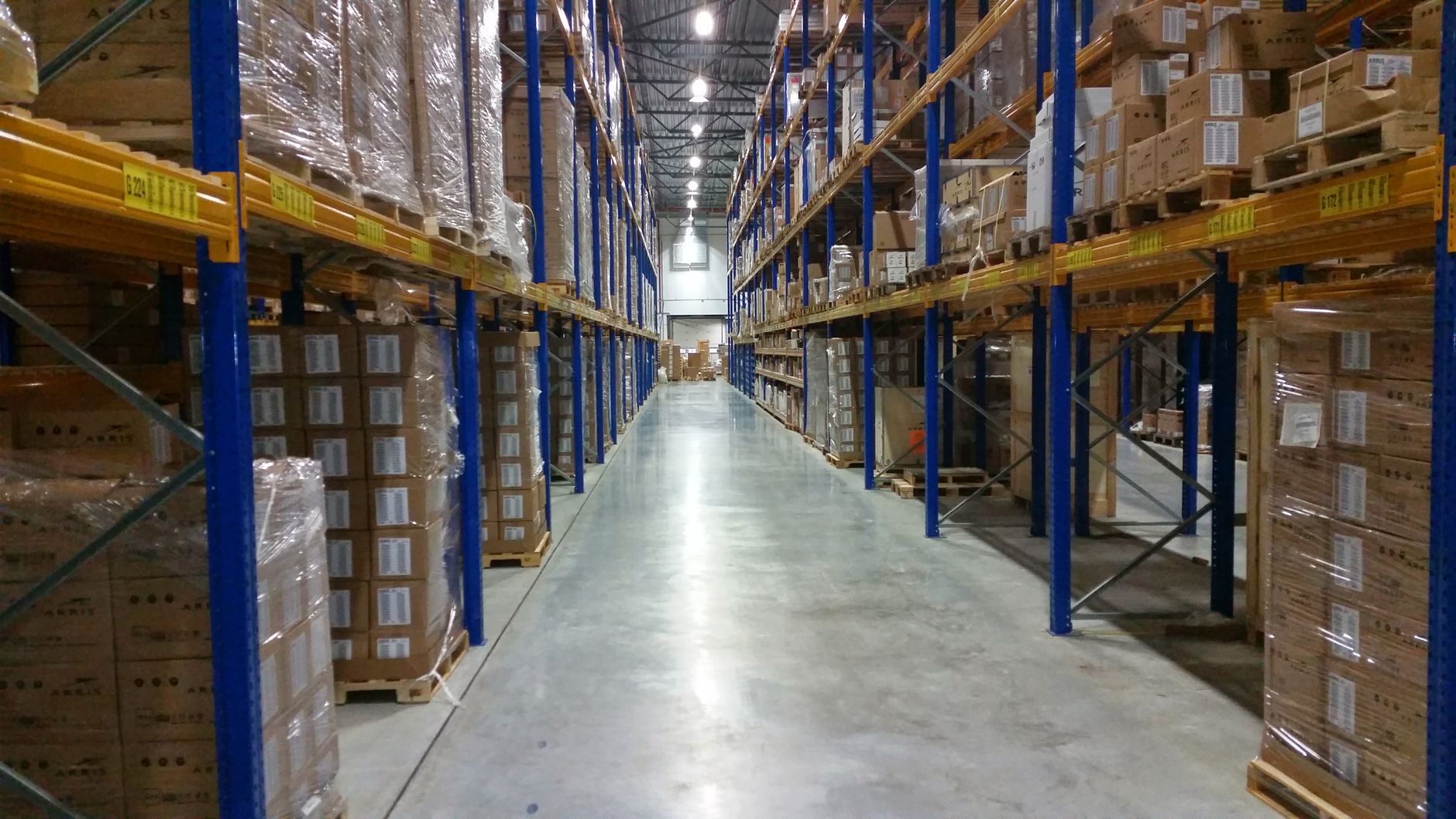
The return comes from four kinds of hours: repetitive pallet moves between staging and racking, replenishment runs from reserve to pick faces, trailer unloading and staging, and the gaps that open when a shift cannot be fully staffed. Each has its own economics. Repetitive moves on fixed routes are the easiest to automate and the easiest to price.
Fewer human-driven trucks in the busiest aisles can also reduce how often people and trucks share the same space. That benefit is real, but it is hard to put a figure on, so treat it as a secondary gain and track near misses and incidents rather than assuming them.
A site's own volume matters more than metro totals. Two buildings in the same city can move pallet counts per shift that vary widely, and that gap, not the metro average, sets the range for each site.
How does the savings math work?
The calculation has three steps. First, measure the weekly hours that material moving work takes on the routes the robot would run. Second, apply the share of those hours the robot can realistically take. Third, price those hours at the local wage for this job, add the value of covered shifts that would otherwise go unfilled, and subtract the lease cost.
In plain terms, weekly robot hours multiplied by the share it takes gives the hours offset. Multiply that by the local wage for this job, add the covered-shift value, and compare the total with the lease payment for the same period. Payback is the point where cumulative offset covers the lease cost and any deployment cost shown in the quote. The range comes from low and high values of the share and of utilization, not from one estimate.
The page assumes four people doing this work at one site, for illustration. No published count of forklift or material moving staff per Columbus site was found, so that number is a placeholder. Replace it with your own roster during the assessment, because the offset scales with the people actually on the route.
| Task | Today | With a robot |
|---|---|---|
| Pallet moves from staging to racking | the largest share of a material moving shift | robot runs the fixed route, staff handle exceptions |
| Replenishment runs from reserve to pick faces | recurring trips spread across the shift | robot runs scheduled trips, staff set priorities |
| Trailer unloading and staging | heavy, uneven work that depends on crew availability | robot moves staged pallets, staff unload and inspect |
| Coverage gaps from unfilled shifts | moves slip when a position is open | robot holds the route, staff cover judgment tasks |
No hour figures appear here. Each row is filled from the site's own time study during the assessment, priced at the local wage for this job shown in the government wage data on this page.
Is an autonomous forklift better than keeping the work with staff?
In most sites the honest answer is both, with the robot on fixed routes and people on exceptions. The comparison below sets the two side by side, including the points where a person is the better choice.
Staff keep the work that needs a decision: damaged pallets, last minute reroutes, unusual loads and any move that needs a person to read the floor. A robot that handles the predictable share frees those people for the work they do best, which makes the crew's time go further.
- Hours of coverage
Autonomous Forklift
runs scheduled shifts, including off-peak hours
Staff
needs scheduling, breaks and shift coverage
- Consistency on fixed routes
Autonomous Forklift
same route and pace on every run
Staff
pace varies with fatigue and workload
- Handling exceptions
Autonomous Forklift
stops and calls for help on unusual loads
Staff
adapts, decides and reroutes on the spot
- Training and turnover
Autonomous Forklift
setup and training once, then steady operation
Staff
ongoing hiring, training and replacement when people leave
- Change after go-live
Autonomous Forklift
route changes need re-mapping and checks
Staff
reassigned within the shift
- Working near people
Autonomous Forklift
needs lanes, zones and clear routes
Staff
shares space and reads the floor directly, where the person wins
What changes the number up or down?
Aisle layout and lane width come first. Long, straight, clear aisles let the robot run a larger share of the day. Tight turns, blocked lanes and mixed traffic lower that share. Pallet consistency comes next: uniform loads and footprints mean fewer failed moves and fewer manual interventions.
Shift count and hours of operation change the math directly, because a lease cost spread over more covered hours gives a lower cost per hour of work. Seasonal peaks change how much work there is to offset, so size the plan to the average week and check what the peak adds.
Labor availability is the other variable. Turnover for this work is hard to pin down, and published estimates vary too widely to plan on. Use your own separation and unfilled-shift records from the last year, since those show what the robot would actually have covered.
What are the risks to the return, and how do you avoid them?
The most common risk is low utilization. A robot that sits idle because routes are irregular or lanes are blocked returns little offset. Avoid it by time-studying the routes before committing, and by starting with the work that repeats most.
The second risk is safety. Forklift incidents remain a serious hazard, and a vendor-reported analysis of OSHA data, as reported by DC Velocity, counted 97 forklift-related deaths in 2024. Treat that analysis as a signal rather than a precise measure. A robot does not remove the need for lanes, pedestrian rules and training for everyone on the floor.
Other risks are integration gaps, staff resistance and layout changes made after go-live. Avoid them with a site map checked on the floor, a training plan that covers everyone who shares the route, and a change process that requires the integrator to re-check routes before any move is made.
What is a realistic timeline from assessment to payback?
The sequence is fixed even though the length of each step depends on the site. It starts with assessment and mapping, then a lease quote and terms, then deployment and integration, staff training, go-live support, and finally a measured comparison against baseline hours. Each step gates the next, so skipping the mapping usually costs more time later.
Payback is reached only when the measured offset covers the lease cost. The first weeks after go-live show how the robot behaves on the real floor, which is not the same as survey data, so judge the payback on measured results.
Starting with one leased unit lets a site measure real offset before adding more. That keeps any expansion decision tied to results rather than to the first estimate.
How do you get a precise figure from a free site assessment?
Bring the data that drives the math: the shift schedule, pallet counts per shift, an aisle map or drawing, dock layout, the hours currently spent on material moving work, your separation records and your peak-season calendar. The more accurate these are, the narrower the range.
The assessment times the actual routes, maps the floor and checks the lanes. From there, we pick the right robot for the site, set out the lease quote and service terms, and lay out the deployment plan. We lease the robot through financing, deploy and integrate it, train the staff and service it nationwide.
For autonomous forklift ROI in Columbus, the assessment is the step that turns the range on this page into a number you can sign off. The range shows what the return depends on. The assessment shows where your site sits inside that range.
Frequently asked questions
Put a robot to work in Columbus.
We walk your site, learn the job, and recommend the unit that fits. Then we quote the lease, deploy it, and keep it serviced.
Sources
- US Bureau of Labor Statistics, Occupational Employment and Wage Statistics (OEWS May 2024)
- BLS Columbus, OH metro news release, May 2024 OEWS
- BLS Occupational Outlook Handbook, Hand Laborers and Material Movers
- OSHA directive on powered industrial trucks
- DC Velocity, forklift accident analysis
- Summary of BLS data for Columbus, OH