

The short answer
Cobot ROI for cosmetics manufacturers comes mainly from the hours of repetitive packing, capping and case-loading work that a collaborative robot takes over, while people keep changeovers, inspection and exceptions. The savings are a range, not a promise, and the range moves with how repeatable each shift's steps are, how often the line changes formats, and what the lease costs against the labor hours offset. A free site assessment turns those inputs into measured figures and a quote for a fixed robot lease payment.
Key takeaways
- Cobot ROI for cosmetics manufacturers comes from repeat packing, capping and case-loading hours, not from removing whole roles.
- The labor offset is a range set by changeover frequency, how much work is repeatable, and the uptime the line needs.
- Turnover and unfilled openings strengthen the case, but your own hiring and separation history should set the number.
- Safety planning and a backup plan for downtime protect the return as much as the offset does.
- A free site assessment replaces estimates with measured hours and a lease quote, and the pilot confirms the range.
Run the numbers for your site
Pick your city or state for a real regional number - we use the real BLS wage there. (On the live site this auto-detects from your location.)
What do you want to automate?
The cobot stacks the repetitive end-of-line pallets; your team handles changeover and QA.
What return can cosmetics manufacturers expect from a cobot?
Cobot ROI for cosmetics manufacturers is mostly a labor question. A collaborative robot takes over repetitive steps on the packing line, such as placing caps, closing filled units and loading finished cases, so people can spend their shift on work that needs judgment. The return is real, but it is a range, and it moves with the line's product mix, its changeover frequency and the lease cost.
The industry is large and made up of many small plants. IBISWorld, a private estimate and not Census data, counts 5,085 cosmetic and beauty product manufacturing businesses in the US in 2025, with an average of about 11 employees per business. That average is the only verified headcount for the category, and packing crews are only part of it, so treat it as a sizing clue rather than a staffing count.
A single packing or capping station is the natural place to start. One cobot can carry a large share of a repeat step on that station, which makes the offset easy to measure, and a stopped robot can hold up the whole line behind it. Plan the backup approach from the start.
Where does the return come from on a cosmetics packing line?
The return comes from three places: repeat hours on placing and loading steps, shift gaps that open when packing roles are hard to fill, and the training time spent bringing in replacements. Each of these shows up in a time study and in your own hiring records, which is where the calculator should start.
Adoption across North American manufacturing is rising, which means plant managers now have more examples to compare. A3 reported 36,766 industrial robots ordered in full-year 2025, up 6.6 percent in units from 2024. A3's count covers industrial arms, including cobots, and excludes mobile robots, so it shows where manufacturers are investing in automation, not what any one cosmetics line needs.
The Personal Care Products Council's May 2026 report, a study it commissioned from an outside firm, says the wider personal care products industry supports more than 2.6 million US jobs across manufacturing, distribution and services. The council is an industry group, so read that figure as the sector's own estimate of its footprint, not as an independent count of packing roles.
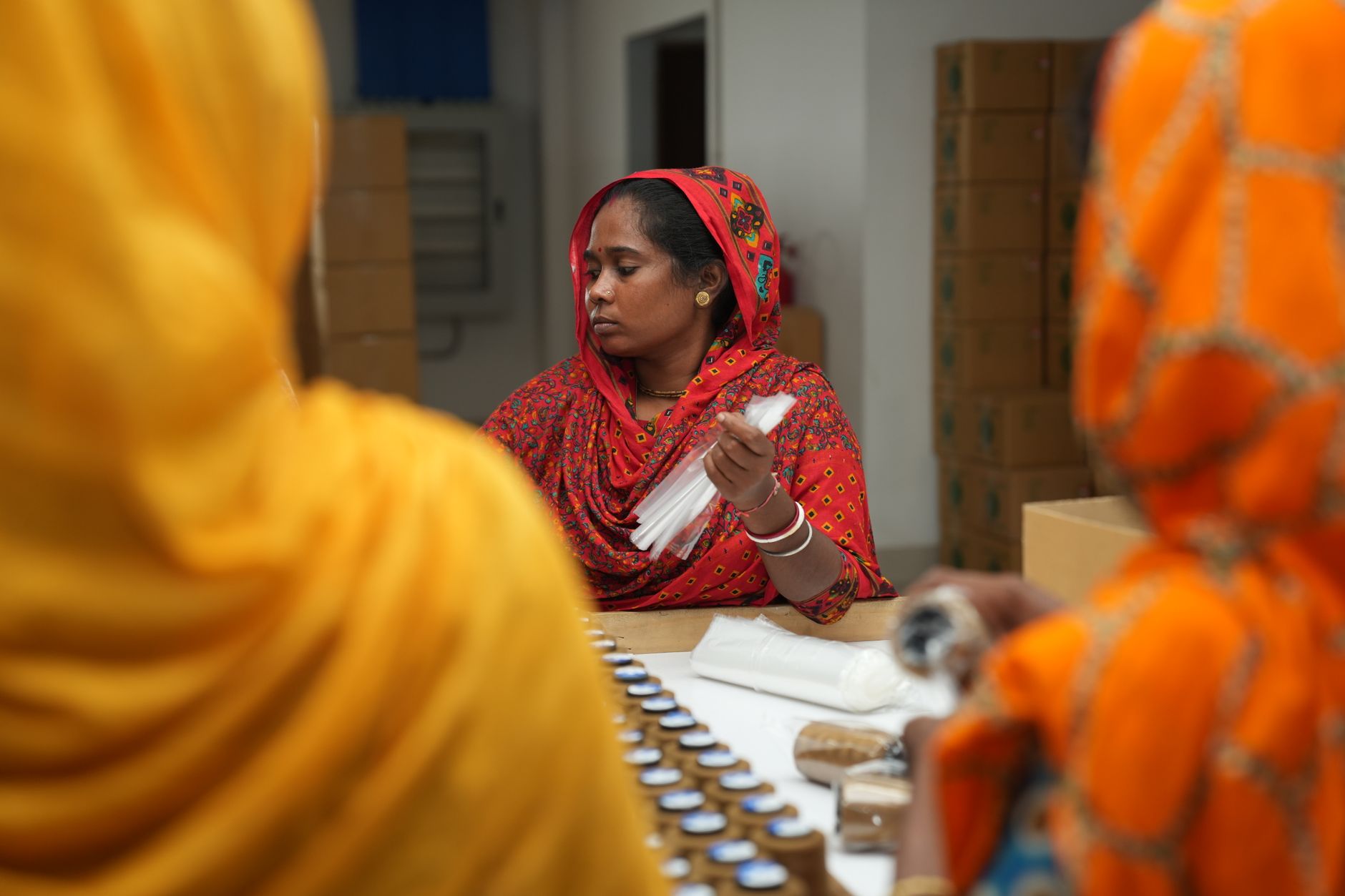
Median hourly wage, Laborers and Freight, Stock, and Material Movers, Hand
$4,380
Monthly cost of one full-time worker, at the median wage plus payroll costs (an estimate, not a quote).
How many labor hours does a cobot actually take over?

The labor side of the math is hours of work, not headcount. Count the hours your shift spends on the steps the robot can repeat, such as placing caps, closing, moving filled units to the case station and loading finished cases. Those hours are priced on the wage of laborers and freight, stock, and material movers, hand type of work, which is the government wage data on this page. Even when people on the line hold other job titles, the robot takes that kind of work off their plate, and that is what the calculator prices.
Scale explains why this kind of work is common. The Occupational Outlook Handbook reports about 2,988,900 jobs for laborers and freight, stock, and material movers, hand in 2024, and projects the overall group to grow 4 percent from 2024 to 2034. A repetitive, hand-based role with that many workers nationally is one that many employers must keep filling.
The share of those hours a robot realistically takes is the number most often overstated. Not every minute of a repeat step is repeatable. Product changes, jams and inspection stops stay with people. Use the time study rather than the shift schedule to set the offset, and count only the steps that run the same way from one cycle to the next.
How does the lease math work?
The calculation has four inputs: the hours of repetitive work the robot takes over each week, the share of those hours it realistically takes, the labor value of those hours on the government wage data on this page, and the lease cost. The savings range is the labor offset minus the lease cost and the running costs the site still carries, such as supervision time and the work the robot still needs people to do.
Service Robot Co. picks the right robot for the site, arranges the lease through financing, deploys and integrates the unit, trains the staff and services it nationwide. The lease is a fixed robot lease payment through financing. The exact cost is quoted after a site assessment, because the robot choice, the cell layout and the line's throughput all change it.
Ask whether the quote includes maintenance and what happens when the unit is down. A stopped cobot on a capping line stops the flow in front of it, so the service terms belong in the math, not in a footnote.
What changes the number up or down?
Four factors move the range more than any others: changeover frequency, the share of steps that stay repeatable, the uptime the site needs, and whether the robot covers one station or several. A line that runs one format for long stretches earns more from a cobot than one that switches formats every few hours. Short batches lose hours to setup, and setup time is not an offset.
Staffing conditions also change the value. When the line is short of people, the robot keeps the repeat step running and reduces overtime. When staffing is full, the robot still removes repetitive hours, but the return is measured against overtime and turnover avoided, not against a headcount you drop. Model both cases so the range is honest.
Why do staffing gaps and turnover strengthen the case?
Turnover is a cost to plan for. FRED, which republishes BLS JOLTS data, shows the nondurable goods manufacturing total separations rate at 2.8 in October 2025 and 2.6 in February 2026, seasonally adjusted and reported each month. The rate is not high on its own, but each separation from a repetitive packing role means training time for the replacement, and that cost recurs.
Openings show the hiring side of the same pressure. The National Association of Manufacturers' summary of JOLTS puts the nondurable goods job openings rate at 3.1 percent in April 2026, unchanged from the month before. A line that cannot fill its packing roles at that pace leans on overtime, and overtime is the first cost a cobot can reduce.
National rates set context, but your own numbers should drive the calculator. Pull the last year of vacancies, separations and overtime hours for the packing area and compare them with these figures. Where your history is worse, the case is stronger, and the range should reflect your history.
- Repeat placing and loading at steady speed
Cobot
Holds the same motion through a full shift without fatigue, as long as the feed is stocked.
Staff
Slows over a long shift and needs breaks, but can adjust the motion when a pack is off spec.
- Coverage when a packing role is open
Cobot
Keeps the repeat step running while staff cover exceptions.
Staff
Needs hiring, training and time before the role runs at full pace.
- Changeovers and new formats
Cobot
Needs programming and setup for each new format, which adds time.
Staff
Adapts to a new format quickly after a short briefing.
- Checking cosmetic quality
Cobot
Runs to fixed settings and needs added sensing to check defects.
Staff
Spots color, texture and finish faults that a fixed check does not catch.
- Irregular or delicate packs
Cobot
Handles standard case patterns well and needs fixtures for each one.
Staff
Handles irregular or delicate packs and recovers from a jam.
What are the risks to the return and how do you avoid them?
The most common risk is overstating the share of work the robot takes. Plan on the robot doing the repeat steps while people handle exceptions, and measure the first weeks of live running before counting the full offset. The second risk is downtime. A capping cobot that stops stalls the line in front of it, so confirm spare units or a loaner unit and the service response time before go-live.
Safety is the third risk. Manufacturing's total recordable case rate was 2.7 per 100 full-time equivalent workers in 2024, against 2.3 for private industry overall, according to a manufacturingleadgeneration.com summary of BLS 2024 data. Collaborative robots are built to work near people without full cages, but that does not remove the need for a risk assessment, guarding decisions and training for staff who share the line.
The fourth risk is poor integration. Badly planned cap feeds or case patterns lose the hours the robot was supposed to save. Require site mapping and a go-live plan with named owners on both sides.
What is a realistic timeline from assessment to payback?
The sequence runs in stages: site assessment and time study, quote and lease agreement, layout and integration, staff training, a go-live period and a measured review against the assessment numbers. Payback starts after the robot runs steadily on the line, not on the day it is installed.
A pilot on one packing or capping station is the lowest-risk start. It tests the offset on real product before a second station is added, and it avoids a full line shutdown. Ask for named milestones in the quote rather than a generic start date.
Payback depends on the quote, the offset you verify during the pilot and how quickly the line reaches steady running. Expect the first weeks to show a lower offset than steady state, because staff are still learning the new steps and the feed settings are still being tuned.
How do I get a precise figure from a free site assessment?
A free site assessment replaces the estimate with measured numbers. We map the line, time the repetitive steps, check the changeover pattern, confirm the uptime the site needs and review the staffing and turnover history with you. The calculator on this page is pre-filled for cosmetics manufacturing, and the assessment replaces those defaults with your line's figures.
Bring the data that changes the result most: shift pattern, cases per shift, changeover count, the packing roles you have struggled to fill and overtime records. Those inputs set the labor hours offset, which is priced on the government wage data on this page.
After the assessment you receive a lease quote with a fixed robot lease payment, the deployment and integration scope, a staff training plan and service terms. The savings stay a range until the pilot confirms them. Compare the quote with the hours your time study recorded before you decide.
Frequently asked questions
Want a cobot at your cosmetics manufacturer?
Tell us about your site. We will recommend the robot, quote the lease, and keep it serviced.
Sources
- US Bureau of Labor Statistics, Occupational Employment and Wage Statistics (OEWS May 2024)
- IBISWorld, Cosmetic and Beauty Product Manufacturing in the US (number of businesses)
- A3, robot orders grow 6.6% in 2025 as general industries drive broader automation adoption
- Personal Care Products Council, Beyond Beauty report (KPMG study)
- BLS Occupational Outlook Handbook, Hand Laborers and Material Movers
- FRED, nondurable goods manufacturing total separations rate (BLS JOLTS)
- National Association of Manufacturers, manufacturing job openings summary (JOLTS)
- manufacturingleadgeneration.com, manufacturing safety statistics (summary of BLS 2024 data)