
The short answer
Cobot ROI for injection molding shops comes mainly from keeping presses cycling when crews run thin. A collaborative robot that loads and unloads a press on a repeatable cycle takes over material moving hours that would otherwise go unstaffed, and that labor offset is weighed against a lease quoted after a free site assessment. The result is a savings range, not a promise, and it moves with cycle time, the share of cycles the cell can take, and the number of shifts the press runs.
Key takeaways
- The return comes from press cycles that keep running when a shift is short on people.
- Only the cycles the cell can complete count, so measure cycle time before you model savings.
- The labor side is priced on the hours of laborers and freight, stock, and material movers, hand work the robot takes.
- Lease cost, uptime and backup coverage set the floor under the savings range.
- A free site assessment turns the range into a figure for your floor.
Run the numbers for your site
Pick your city or state for a real regional number - we use the real BLS wage there. (On the live site this auto-detects from your location.)
What do you want to automate?
The cobot stacks the repetitive end-of-line pallets; your team handles changeover and QA.
What return can an injection molding shop expect from a cobot?
Cobot ROI for injection molding shops starts with one question: how much of the press work is repetitive enough for a cobot to take? A cobot used for machine tending can return value in two ways. It takes over hours of repetitive material moving that no longer need a person, and it keeps press cycles running on shifts that would otherwise sit idle or run short. The return is real but bounded, and it depends on whether the part, the mold and the cell fit a repeatable load and unload routine. A site assessment answers that question, not a rule of thumb.
The industry is fragmented. IBISWorld counts 369 contract injection molding businesses in the US in 2025, down 1.1% from 2024, and says no company holds more than 5% share (according to IBISWorld). Adoption of cobots is rising across industry: the International Federation of Robotics reports new cobot installations of about 66,000 units, 11% of all industrial robot installations, in what appears to be 2025, though the year is not stated clearly on that page (according to IFR).
Most of the case is made press by press, not plant wide. A shop with several presses can start with one cell, measure it, and then decide on the next, which keeps the first decision small.
Why do presses sit idle when crews are thin?
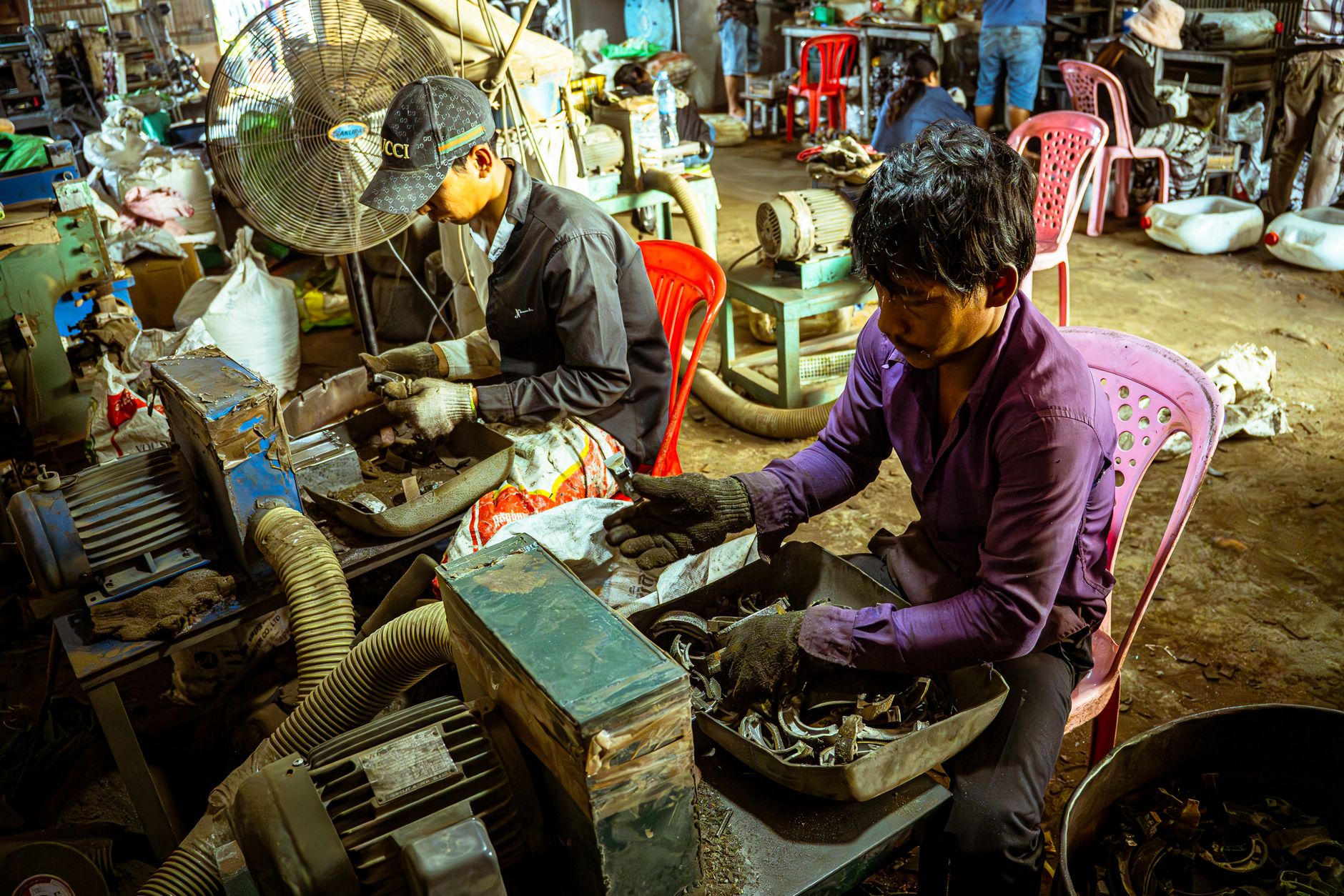
Injection molding runs on tight cycles. When a press finishes a shot, someone has to pull the part, degate or trim it, check it, pack it, and stage the next insert or blank before the next cycle. One person covering two or three presses means the press that finishes first waits, and the shift loses cycles that cannot be recovered later in the day.
The occupation that runs these machines is Molding, Coremaking, and Casting Machine Setters, Operators, and Tenders, Metal and Plastic. The BLS occupational page lists about 158,980 people employed nationally in it, with the year not confirmed in the snippet we pulled (according to BLS). The laborers and freight, stock, and material movers, hand work that a cell takes over is a separate job, and the government wage data on this page covers that job.
Staffing that work steadily on every shift is hard. The BLS JOLTS release reports a total separations rate of 3.3% for all industries in 2025, unchanged from 2024, which is a broad economy-wide figure and not a molding figure (according to BLS). FRED publishes a seasonally adjusted separations rate for nondurable goods manufacturing for each month, reading 2.8 in December 2025, 2.7 in January 2026 and 2.6 in February 2026 (according to FRED). Those are single-month readings, so they show separations in a given month, not an annual turnover count for a press crew.
Median hourly wage, Laborers and Freight, Stock, and Material Movers, Hand
$4,380
Monthly cost of one full-time worker, at the median wage plus payroll costs (an estimate, not a quote).
Where does the return come from in this setting?
The return comes from three places. The first is labor hours the robot takes over. The second is press uptime recovered on shifts that were short. The third is avoided overtime and coverage gaps. The labor side is priced on the hours of laborers and freight, stock, and material movers, hand work the robot takes off the press line. Setters and operators run a separate job, so the robot takes that material moving work off their plate, and their time is not priced in the model.
Those hours only count when the cell runs them. A cell that loads a press for part of a shift and then waits on a person does not offset a full hour of labor. The counted hours are the cycles the robot completes without help, multiplied by shifts and working weeks.
Cycle time matters more than most shops expect. A vendor guide on machine tending says cycle time is the strongest predictor of fit, that cycles over 90 seconds are favored, and that cycles under 30 seconds are disfavored (according to Standardbots, a vendor guide, so read it as a vendor view). The same guide says a dual gripper can halve cycle time by carrying a raw blank and removing the finished part in one door opening.
| Task | Today | With a robot |
|---|---|---|
| Remove finished part from press | Hours per shift, set by the time study | Taken by the robot on cycles the cell fits |
| Load raw blank or insert | Hours per shift, set by the time study | Taken by the robot when kits are staged |
| Check and count parts at the press | Hours per shift, set by the time study | Stays with a person for quality sampling |
| Cover short shifts | Press time lost when crews are thin | Cell keeps cycling on the covered shift |
| Mold change and fixture setup | Done by setters | Still done by setters, with the cell paused |
Our research found no verified hour figures for press tending, so the hours come from a time study on your own press during the site assessment. Multiply hours per shift by shifts and working weeks to get the annual labor offset.
How does the ROI math work?
Start with the labor offset. Take the hours per shift the robot takes, multiply by shifts run and working weeks per year, then multiply by the local wage for the laborers and freight, stock, and material movers, hand job shown in the government wage data on this page. That gives an annual labor value. Add recovered press time on short shifts and any avoided overtime, and you have the gross benefit.
Then subtract the annual lease cost. That is a fixed robot lease payment quoted after the site assessment, plus the service plan cost if it is not included in the lease. What is left, carried across the lease term, is the return. Payback is the point where cumulative net benefit covers any one-time integration and training cost quoted with the lease.
The share of cycles the robot takes is the largest swing factor. A cell that completes most of its cycles and a cell that completes only some of them can produce very different results on the same press. Model at least three shares, low, middle and high, and read the savings range from those. Do not model the top share until a full pilot shift has run that way.
Where does a cobot beat a person on a press, and where does it not?
A cobot does not replace a skilled setter. It is strong on a repeatable load and unload routine with a known part, a stable mold and a predictable cycle. It is weak where parts change often, molds change daily, or the defect check needs a trained eye.
Keep people where judgment matters and let the cell take the repeatable part. That split is a sensible starting point, and it is also why a backup plan matters: when the cell is down, a person still has to run the press.
- Repeatable load and unload
Cobot
Same motion on each cycle
Staff
Accurate, but fatigue and shift changes add variation
- Night and weekend coverage
Cobot
Runs a scheduled shift without a crew
Staff
Harder to staff and hold
- Mold change and fixture setup
Cobot
Needs a person, and the cell is paused
Staff
Skilled work, and the person wins
- Judging part defects
Cobot
Limited to what sensors and checks catch
Staff
A trained eye catches what checks miss
- Very short cycles
Cobot
Often a poor fit without a changed layout
Staff
Can keep pace on a fast cycle
- Handling a fault
Cobot
Stops and alerts, then needs a reset
Staff
Diagnoses and fixes the cause on the spot
What are the risks to the return, and how do you avoid them?
The most common risk is overestimating the share of cycles the robot takes. Parts that stick, sprues that drop unevenly and mold changes in the middle of a shift all push work back to a person. Log these events during the pilot and count them in the share, rather than assuming a clean cycle.
Second is uptime. A single cell that stops on a fault gives back the press time it was meant to save. Plan for spare unit coverage, a backup robot program, and remote triage with on-site dispatch for faults. Ask whether maintenance is included in the lease, because a service plan priced outside the lease changes the net benefit.
Third is safety and layout. Guarding, light curtains and clear reach zones are part of the design, not an add-on. A layout that forces a person to reach into the cell on each cycle undoes the reason for the project. The BLS industry profile for plastics and rubber products reports a total recordable case rate of 2.8 per 100 full-time workers in 2024, with 1.8 for cases with days away, restriction, or transfer and 0.9 for days-away cases alone (according to BLS). Treat that as a baseline, and judge the cell by what it does to your own recordable cases.
How long does it take from assessment to payback?
A typical path runs in phases: a site assessment that maps the press, part flow and changeover list, a quote, a one-shift pilot that logs cycle time and errors, go live with support, then a payback review using pilot numbers. Each phase has a clear output, and any phase can stop the project if the cycle does not fit.
Timelines follow the site more than the calendar. A plant with clear cell space and staged kits can move through the pilot quickly. A plant that needs new guarding, fixture work or a changed mold change process takes longer. Phased deployment without a full shutdown is the usual approach, starting with one leased unit on one press and adding units only after the first one holds its share.
Payback is read from the pilot, not from the proposal. Once the pilot shows a stable cycle count and an error rate, the model is run again with those figures, and the payback date becomes a range you can plan around.
How do I get a precise ROI figure from a free site assessment?
A free site assessment is where the range becomes a figure. The team maps the press cell, times the current cycle, reviews part flow and changeovers, and checks floor area, power and network access. The output is a fit decision, a deployment plan and a lease quote, which is prepared after the assessment rather than before it.
Bring the inputs that drive the math: shifts run per week, hours per shift that a press waits or runs short, overtime paid for load and unload work, scrap or defect rates, and the number of molds and part numbers that rotate through each press. Those inputs tighten the savings range more than any general estimate can.
Service Robot Co. is a US commercial robot integrator. We pick the robot that fits the site, lease it through financing, deploy and integrate it, train the staff and service it nationwide, with one partner and one number to call. Because the lease is quoted after the assessment, the figure reflects your cell and not a generic estimate.
What happens to the people on the floor?
The cell takes the repeatable material moving work off the press line, which is laborers and freight, stock, and material movers, hand work. Setters and operators keep mold change, tooling, inspection and fault handling, and the cell gives them a more predictable shift to manage.
Training is part of the deployment. Operators learn fault recovery, safe reset, simple checks and when to stop the cell, so the first weeks do not depend on one person who knows the equipment.
The typical headcount on this page is 2 people per press cell per shift. That is a planning assumption for one setter or operator, not a count from the research, which did not find a published figure for people tending presses per site. Confirm it during the assessment before using any labor figure in a decision.
Frequently asked questions
Want a cobot at your injection molding shop?
Tell us about your site. We will recommend the robot, quote the lease, and keep it serviced.
Sources
- US Bureau of Labor Statistics, Occupational Employment and Wage Statistics (OEWS May 2024)
- IBISWorld, contract injection molding manufacturing business count
- BLS OEWS, molding machine setters, operators and tenders, metal and plastic
- BLS industry profile, NAICS 326 plastics and rubber products
- BLS JOLTS news release
- FRED, nondurable goods manufacturing separations rate
- IFR, 2026 president's report
- Standardbots, guide to cobot machine tending (vendor guide)