

The short answer
The robotic lawn mower ROI for corporate campuses comes from taking over the repeat mowing of large open turf on a fixed weekly cycle, freeing grounds crew hours for trimming, edging and work that needs a person. The savings range depends on how many mowing hours the robot realistically takes over, how much slope and obstacle work stays with the crew, and the lease cost, so the figure is set after a free site assessment. Savings are ranges, not promises.
Key takeaways
- Most of the return comes from grounds crew hours moved off repeat mowing, not from removing the crew.
- The robot takes a share of the mowing, not all of it, and that share is set by slope, obstacles and boundary layout.
- Savings are a range built from measured hours, the robot's share and the lease cost, never a fixed promise.
- Hiring pressure in landscaping makes repeat mowing shifts harder to fill, which raises the value of hours a robot covers.
- A free site assessment replaces rough industry hour estimates with measured figures for your grounds.
What is the robotic lawn mower ROI for corporate campuses?
On a corporate campus, the return from a robotic lawn mower is mostly about crew time. Large turf areas between office buildings, parking islands and courtyards are mowed along the same boundaries every week. A robot can follow those boundaries on a schedule, so the repeat work runs without a person pushing or riding the mower, and the crew can spend that time on tasks a machine does not do well.
The return does not come from removing the grounds crew. A campus still needs edging, trimming around plantings, irrigation checks, debris clearing and response to damage. The savings come from repeat mowing hours that move off the crew calendar, and from keeping turf on schedule when a shift goes unfilled.
The savings range we give is built from those hours, the share of mowing the robot realistically handles on your site, and the lease cost. The range is set by measurements at your site, not by a fixed promise. Treat any figure that comes before the site assessment as a starting question, not a budget line.
Where the return is weakest is a campus with small, fragmented turf and heavy landscaping beds. There, the robot covers a few open patches and the crew still does most of the cycle, so the offset is modest. That is a useful result to learn early, because it keeps the project honest and points the spending at the zones that do repay.
Where does grounds labor come from, and why is it hard to fill?
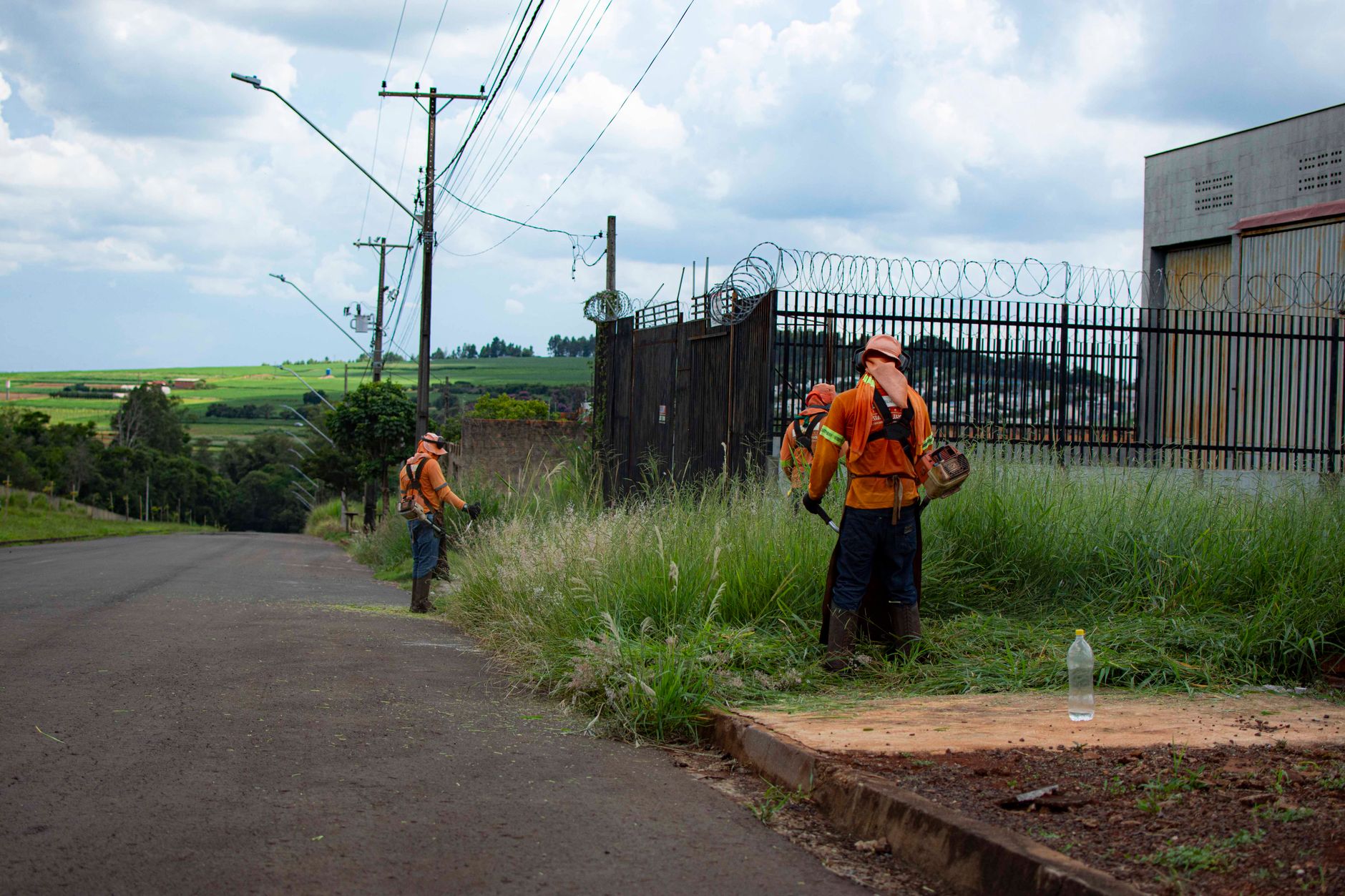
Grounds maintenance is a large occupation. The Bureau of Labor Statistics counts 1,296,400 grounds maintenance workers in 2024, and projects 4% growth from 2024 to 2034 with about 171,600 openings a year. Employers in this occupation hire every year, not once, which means staffing is a recurring task for grounds managers.
Hiring is the pressure point. The 2025 State of the Green Industry report reported that about 29% of 424 respondents named labor as their most pressing concern. A separate industry survey of more than 500 landscape professionals found that over half could not attract enough applicants for open positions. A campus crew that cannot fill a mowing shift does not get the lawn cut on schedule, and that gap is what a robot covers.
Repeat mowing is among the most predictable work on the grounds calendar, so it is usually the first task to move to a robot. Trimming, edging and corrective work stay with people. That keeps the crew focused on the work that needs judgment, and it reduces how many hours a supervisor has to fill with extra people.
Turnover adds a second layer. A third-party careers site reports an annual quit rate of 25% for landscaping and groundskeeping, against 11% across all industries, but it does not state a verified basis, so do not use that figure in a budget. Your own crew turnover records are the better input, and they show how often a mowing schedule breaks when a trained person leaves.
How is the robotic lawn mower ROI calculated?

The math has four inputs: the mowing hours your crew spends on the robot's turf each cycle, the share of those hours the robot realistically takes over, the hours that stay with people, and the lease cost. Hours taken over, multiplied by the robot's share, gives the labor offset. Subtract the fixed lease payment and any service cost, and what remains is the net return for that period.
Published hour figures vary widely, so treat them as rough. An online mowing time calculator puts a flat acre at about 1 to 1.5 hours with a commercial mower, and a 2-acre site with obstacles at 3 to 5 hours. A lawn care guide estimates 1.5 to 2 hours for a suburban acre with mixed terrain and slope, with two crew members. Those spans frame the question, but only your own measured hours can set the number.
The share the robot takes is the input that matters most. A clean rectangle of turf with no beds or trees can be handled almost entirely by the robot. A site with many obstacles, steep banks or long edges keeps more of the work with people. Setting the share too high turns the savings range into a promise the site cannot keep.
Run the calculation in both directions. First, compute the offset on the hours you can measure today. Second, compute the same offset with a conservative share, so the range has a floor and a ceiling. If the floor still covers the lease and service cost, the decision is far less sensitive to the assumptions, and that is the case worth presenting to a finance reviewer.
What changes the robotic lawn mower ROI up or down?
Site geometry moves the number more than the lease cost does. Turf layout, slope, obstacles and boundary length set how much work the robot can take on. Weather and turf condition set how many mowing days actually happen. Crew size and how many hours the crew spends on repeat mowing set how much time you can free.
The checklist below covers what to confirm before you decide. Each item should be answered with measurements from the site, not with estimates.
Two adjustments are worth knowing. Keeping the crew on edging and trimming means not all freed mowing time becomes savings, since some of it stays on the calendar. A campus with long open runs and a fixed boundary usually shows the cleanest offset, because the robot can repeat the same route cycle after cycle.
Timing matters too. Mowing that falls in a short window each week, or turf that is mown on a fixed cycle through a season, gives the robot more predictable work. Irregular schedules, such as mowing that changes with events or weather, make the offset harder to forecast and should be flagged during the assessment.
What are the risks to the return, and how do you avoid them?
Safety is part of the return, and the landscaping data is sobering. A CDC document reports that landscaping services had a days-away rate of 176.8 per 10,000 full-time workers in 2018, against 89.7 for all private industry. A robot does not remove every hazard, but it reduces the hours a person spends on repetitive passes.
The largest risk to the return is a robot that does not run. Poor boundary layout, boundary wire or beacon faults, worn batteries and unmapped obstacles all cut the share the robot takes. Downtime pushes the work back onto the crew at the worst time, so the lease has to include service coverage and a repair plan, not just the machine.
Avoid these by mapping the site properly before installation, training staff to check and clear the robot, and agreeing on service response times up front. Overpromising the share is the other common risk. A savings range that assumes the robot does everything will disappoint in the first season, and that damages trust in the whole project.
Keep the lease terms and the service plan in the same review as the hour offset. A plan with slow repair response can erase the savings in one busy season. Ask for response expectations in writing and test them against your grounds calendar.
How long does it take to reach payback?
Payback timing follows the project stages: site assessment, mapping and boundary setup, installation and integration, staff training, go-live support, and then a full mowing season of measured results. Each stage takes the time it takes on your grounds. The first season is when the real hour offset shows up, and it usually includes boundary and obstacle adjustments that change the share the robot takes.
Payback is therefore a range, not a date. A modest hour offset means the lease takes longer before the net turns positive. A robot that takes most of the repeat mowing on large open runs can close the gap faster. We do not give a payback date until the site has been measured.
Build a simple tracker from the first day. Log the hours the robot covers, the crew hours still spent on turf, and any stoppages with their causes. Those records show whether the first season is on track and when the net turns positive, and they give the finance reviewer something real to check.
How do you get a precise figure from a free site assessment?
A free site assessment turns rough hour estimates into measured figures for your campus. We map the turf, boundaries, slopes and obstacles, and we record the mowing hours your crew logs today. From that we set the share the robot can realistically take over, and we size the lease options for that share.
We pick the right robot for the site, lease it through financing, deploy and integrate it, train your staff and service it nationwide. The lease quote comes after the site assessment, because the fixed lease payment depends on the robot and service plan that fit your grounds. You receive a savings range with each assumption written out, so your team can test every input against its own records.
Bring your mowing schedule, a map of the grounds, the crew hours you spend on turf, and a list of problem areas such as steep banks, wet low spots and tight tree zones. The more measured data we have, the narrower and more useful the range becomes.
Expect the assessment to flag things you did not expect, such as a boundary that cuts through a utility area, a slope that needs a separate approach, or a zone that is better left with the crew. Those findings are useful even if you decide not to proceed, because they show where the turf work stands today.

How many corporate campuses use robotic lawn mowers?
We could not verify a count of US corporate campuses or the office park acreage they cover, so we do not state one. Turf area per campus varies widely with the site, and any national number would be a guess unless it was measured on the ground.
On adoption, a market research forecast cites roughly 170,000 units of US lawn and garden robot sales in 2027, with commercial labor relief as one driver. That is a sales forecast, not an independent count of commercial users. We did not find an independent adoption survey of commercial landscapers. Trade coverage reports that landscapers who were hesitant last year now see robotic mowers as a possible source of supplemental labor.
The practical step is to judge adoption and return on your own grounds. A pilot on one zone, measured against the crew hours it frees, gives you a figure you can defend in a budget review.
If you want to test the idea before a campus-wide decision, start with a single zone and set a measured baseline first. Compare the crew hours on that zone before and after, and include the trimming that stays with people, so the result reflects the whole workload and not only the robot's share.
Frequently asked questions
Want a robotic mower at your corporate campus?
Tell us about your site. We will recommend the robot, quote the lease, and keep it serviced.
Sources
- Bureau of Labor Statistics, Occupational Outlook Handbook: Grounds maintenance workers
- CDC document on landscaping services injury rates, 2018
- 2025 State of the Green Industry report
- Industry survey of landscape professionals on hiring
- Market research forecast of US lawn and garden robot sales
- Online lawn mowing time calculator
- Lawn care guide on how long mowing takes
- Careers site on landscaping and groundskeeping turnover