
The short answer
Robotic lawn mower ROI for resorts comes mainly from crew hours moved off scheduled mowing, and the savings range depends on mowed acreage, how often the turf is cut and the lease quote set after a site assessment. A robot does not replace the whole grounds team, so the return is the share of scheduled mowing it actually takes over, valued at the hours your crew would otherwise spend on it. Public research did not find a resort mowing hour figure or acreage benchmark, so the range on this page rests on your site inputs rather than an industry average.
Key takeaways
- Resort return comes from scheduled mowing hours that a robot takes over, not from cutting the grounds team.
- No resort-specific mowing hours or acreage figure was found, so the range depends on your site inputs.
- The closest verified crew figure is a golf course average of 21 staff from a 2011 survey.
- Landscaping injury rates in BLS and CDC data are nearly double the all-industry rate, so safety belongs in the decision.
- A free site assessment turns the range into a lease quote and a payback window for your grounds.
What is the robotic lawn mower ROI for resorts?
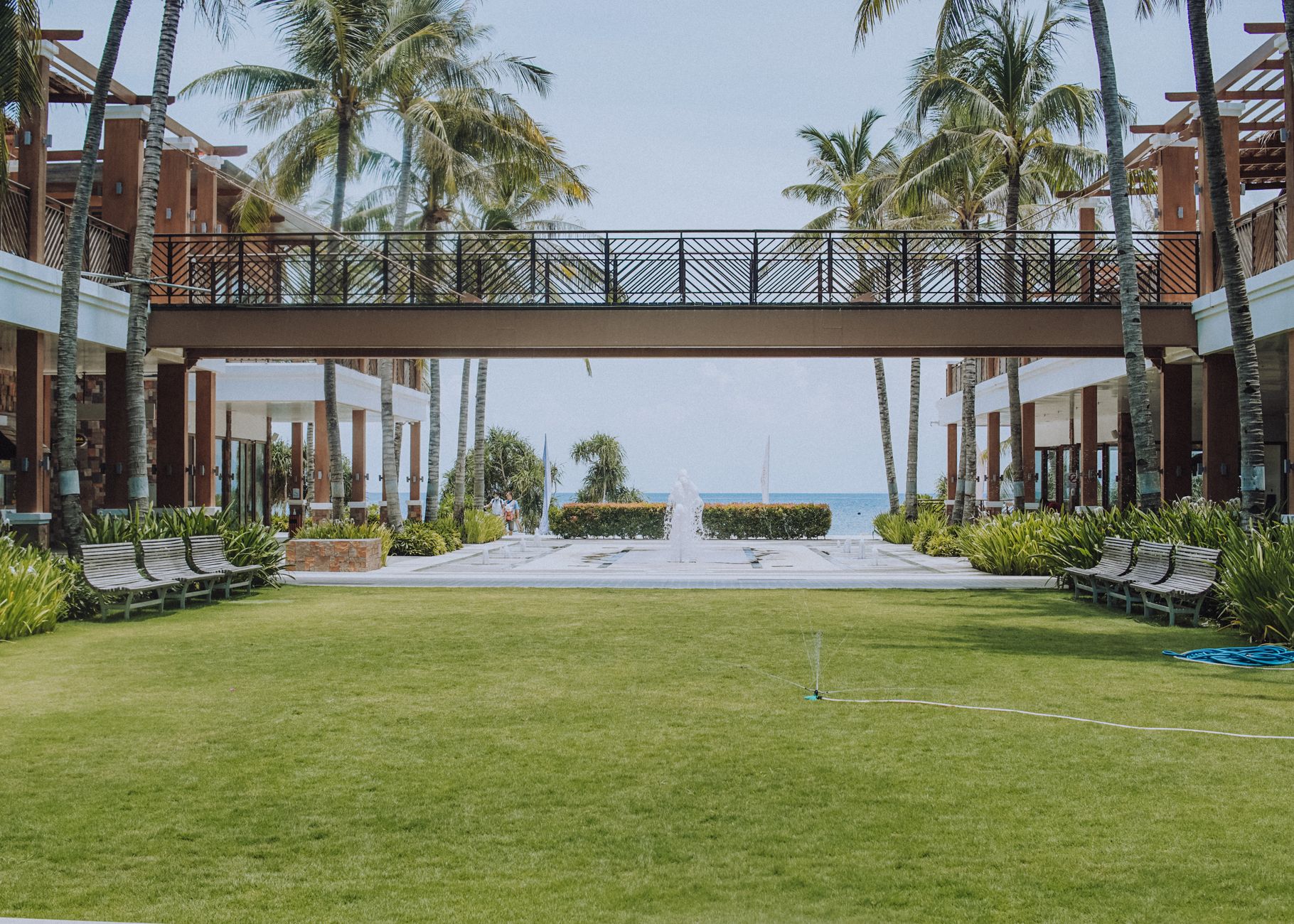
The return from robotic lawn mower ROI for resorts comes from one place: crew time that no longer goes to scheduled mowing. Open turf between guest buildings, along drive lanes and around event lawns is usually cut on a fixed rotation, which is the kind of work a robot can run on its own schedule. The gain is a share of the mowing hours you already pay for, not a cut to the grounds team.
Public research did not produce a resort-specific figure for lawn acreage, mowing hours or mower adoption. The nearest evidence comes from adjacent settings. Trade press reports that adoption on golf courses has accelerated, especially in the US Sun Belt and desert West, though it does not publish a share. We use adjacent figures to frame the range and name the setting each time.
The calculator on this page is prefilled for resort grounds and shows a savings range, not a single number. The range moves with mowed acreage, cutting frequency, season length and the lease quote for your site. Read it as a starting estimate until the site assessment replaces our inputs with your own.
Where does the labor saving come from on resort grounds?
Grounds maintenance is a large workforce to draw from. According to the BLS Occupational Outlook Handbook, there were about 1.3 million grounds maintenance jobs in 2024, and 1,192,500 of them were in landscaping and groundskeeping. The same handbook notes that some grounds work is seasonal and that workers sometimes take on winter work such as snow removal.
Seasonality is the main pressure on a resort's crew. Mowing demand peaks in the growing months and falls in shoulder seasons, yet the people you schedule in a shoulder month are the same ones needed for trimming, irrigation checks and cleanup. A robot covers the scheduled cuts in those months, which lets your staff spend their hours on work that still needs a person.
The same handbook projects 4% growth for the occupation from 2024 to 2034. A growing occupation does not make mowing shifts easier to fill, so the saving comes from fewer staffed hours on scheduled cuts, not from a smaller payroll on paper. Your own payroll sets the value of each hour, which is why the assessment asks for your loaded crew cost.
How is the robotic lawn mower ROI calculated?
Start with the hours your crew spends on scheduled mowing each week. Count the mowing itself, the travel between zones, the clearing of debris and the reset after a run. Multiply that weekly total by the share of the work the robot can realistically take over, then by the number of weeks in the season. The result is the labor hours offset.
Next, subtract the cost of the robot. Robots are leased through financing, with a fixed payment over the lease term. The figure is quoted after a site assessment rather than taken from a list. Maintenance and service sit inside the lease program, so the number reflects the service plan as well as the machine.
Value each hour at your own loaded crew cost, then compare the total with the lease. The return is the value of the offset hours minus the lease, plus any hours the robot frees for other tasks. Most of the uncertainty sits in the share of work a robot takes. A robot that covers most of a lawn returns much more than one that covers half, because the uncovered areas still need a person with a trimmer.

How big is the crew, and how many lodging properties are there?
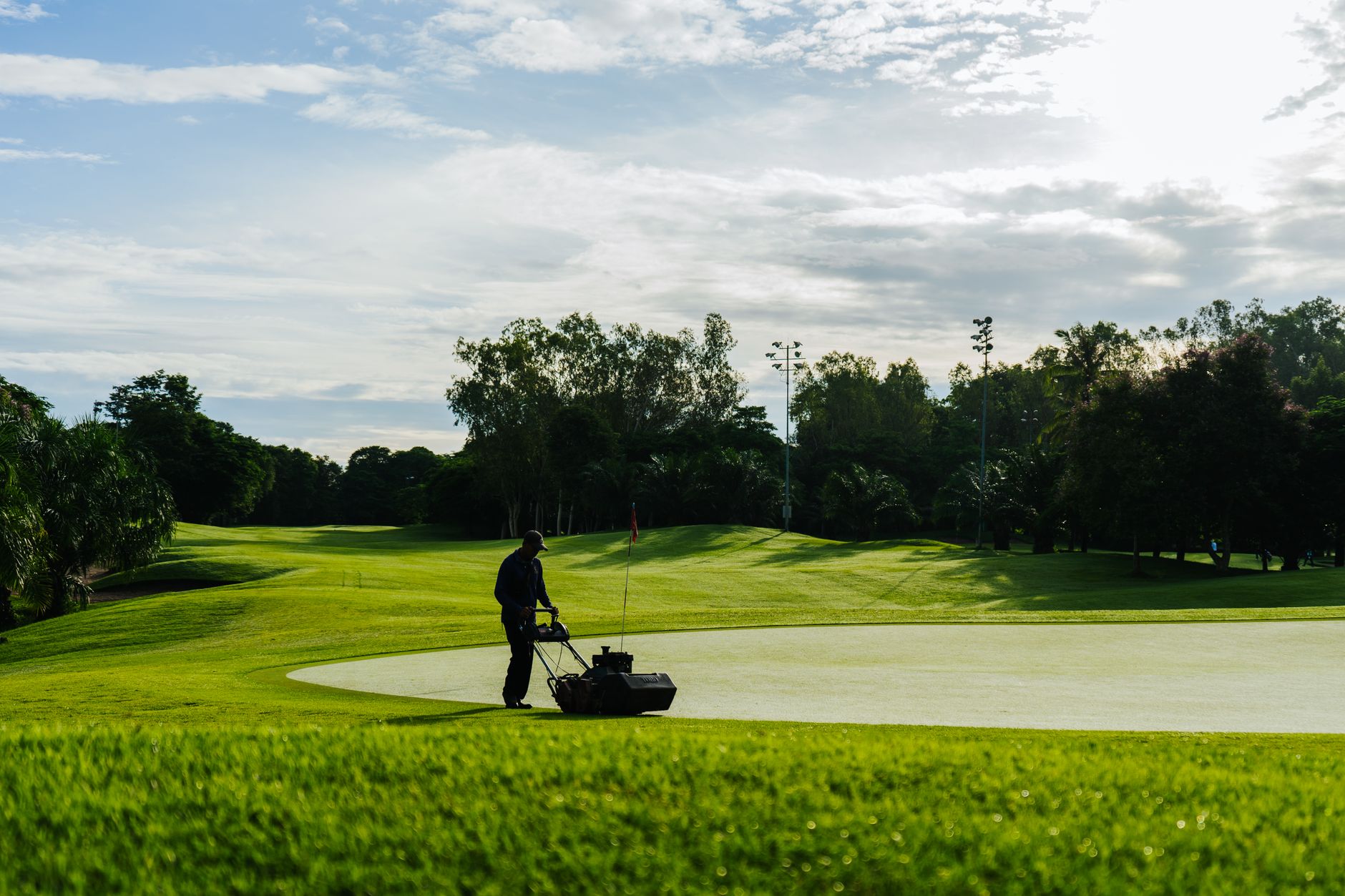
The closest verified crew figure comes from golf courses, not resorts. The GCSAA Compensation and Benefits Report, in its 2011 edition with about 50.8% response, reported an average superintendent staff size of 21. The 2009 edition reported 24. These figures are dated and describe a different grounds operation, so use them to frame a crew, not to set one.
Counts of the wider lodging base are older too. According to AH&LA figures reported through CEIC, there were 54,200 lodging properties in 2015, up from 53,432 in 2014, counting properties with 15 or more rooms. That covers all lodging, not resorts. An academic abstract reports about 834 US resort hotels with 295,617 resort rooms in 1985, which shows how far back the resort count reaches in the public record.
No current US resort count was found in this research. Before you size a program across a portfolio, check the count and the lawn area against your own property list. A single resort's crew may look nothing like the golf course averages, so your payroll and mowing log are the better source for your site.
What changes the robotic lawn mower ROI up or down?
The main drivers are the acreage a robot can cover inside its boundary, how often the turf is cut, and how much of the lawn is broken up by beds, trees, paths and water features. Open, regular turf with a steady cutting cycle gives the largest return. Lawns with many small islands need more setup and leave more hand work, which lowers the offset.
Season length matters too. A resort in a region with a long growing season can run a robot for more months, while a short season gives fewer months of offset. Event schedules move the number as well, because a lawn taken over for a function on a set day needs a route change rather than a new mower.
Labor cost is the last lever, and it sits in your own payroll. A higher loaded crew cost raises the value of every hour the robot takes over. The assessment uses your figures, so the range should narrow once your crew log, calendar and boundary go in.
What are the risks to the return, and how do you avoid them?
The most common risk is a robot installed on a lawn it cannot fully cover. The crew then keeps doing the same mowing and also carries the robot's upkeep, so the offset disappears. The fix is a site map and route plan before install, with a clear boundary and a written list of areas kept out of the route.
Injury exposure is a second risk. The BLS injury snapshot for landscaping and groundskeeping workers, 2019, counts 12,380 cases with days away from work, a rate of 185 per 10,000 full-time equivalent workers. A CDC paper gives 2018 rates of 176.8 per 10,000 full-time workers for landscaping services, compared with 89.7 for all private industry. Moving scheduled mowing to a robot reduces the hours a person spends beside a running mower, but only if staff are trained to stay clear of the work zone.
Operational risks come next. Irrigation timing, sprinkler heads and uneven ground can stop a run, and each stop can cost a staff visit. Schedule runs around irrigation and event days, and keep a response plan for stops. Consumer data is older still. A CPSC release from 1994, now archived, reported about 230,000 emergency-room treatments a year for lawn and garden tools. It is a dated figure, but it shows that mower work carries injury risk at every scale.
What is a realistic timeline from assessment to payback?
The path runs in stages. The free site assessment measures the lawn, notes obstacles and sets the route boundary. The lease quote follows from that survey, so the payment reflects your grounds rather than a generic list.
Install and integration come next. The boundary is set, the first routes run with staff present, and the crew is trained on stop and recovery steps. Go live support covers those first runs, when most early stops show up and when the route is adjusted to real conditions. Install timing also follows the calendar, so starting ahead of a peak season lets the first full cycle run before the busiest months.
Payback is measured across a full season, not a single month. The first season shows how much of the lawn the robot covers and how many staff hours it moves, so a second season of logs usually gives a more reliable figure. Do not expect a precise payback date until the first season's records are in hand.
How do you get a precise figure from a free site assessment?
A precise figure needs four inputs: the mapped lawn area inside the boundary, the mowing hours from your crew log, the share of the lawn that falls on the route, and the lease quote for the robot. The assessment collects the first three and quotes the lease after the survey. Bring the crew log, the event calendar and the list of areas that must stay out of the route.
We are a US commercial robot integrator. We pick the robot for the site, lease it through financing, deploy and integrate it, train the staff and service it nationwide. Selection, install and repair sit with one partner, so the return figure is tied to one service plan rather than several vendors.
Ask for the range and the inputs behind it, not just the headline. A figure you can check against your own crew log is worth more than one that cannot be traced to a site measurement.
Who should sign off on a robotic lawn mower for a resort?
The grounds manager owns the crew log and the route plan, so that person should check the hour inputs. Finance owns the lease terms and the payback test, and should compare the lease with other ways to fund the robot. Operations owns the event calendar and guest areas, and it needs to agree on blocked days before the route is set.
Bring all three to the assessment, because a route that works for grounds can still cut across an event lawn or cross a guest path at a bad hour. Agree on the stop response plan before install, not after the first failed run. Name who receives the service alerts and who approves a route change.
A lease with service included keeps repairs and dispatch outside the crew's hours. That matters for the return, because a robot that stops and waits for a repair gives back none of the offset it was meant to deliver.
Frequently asked questions
Want a robotic mower at your resort?
Tell us about your site. We will recommend the robot, quote the lease, and keep it serviced.
Sources
- BLS Occupational Outlook Handbook, Grounds Maintenance Workers
- BLS Injury and Illness Snapshot, Landscaping and Groundskeeping Workers 2015 to 2019
- CDC paper on days-away-from-work injury rates
- GCSAA Compensation and Benefits Report, staff size (forum page)
- CEIC, AH&LA lodging industry statistics
- Academic abstract on US resort hotels
- CPSC news release on riding lawnmowers, 1994 (archived)
- Turf Magazine, golf turf management and robotic innovation 2025