
The short answer
Robotic lawn mower ROI for wastewater treatment plants comes mainly from crew hours moved off mowing around basins, lagoon berms and fence lines, where open grass and fixed boundaries suit a mower that runs on schedule and returns to its dock to charge. The realistic return depends on how much of the grounds a robot can cover without a person, the hours your crew spends mowing today, and the lease cost measured against those hours. Savings are shown as ranges that a free site assessment narrows for your grounds, never as a promise.
Key takeaways
- The return comes from crew hours moved off grounds mowing, not from the mower itself.
- Open, clear-edged grass around basins and lagoons is where the share a robot takes over is highest.
- Plants run with few operators, so each hour freed is an hour that can go back to process work.
- Savings are ranges set by measured hours and the share of work covered, and the lease is quoted after a site assessment.
- Measure the share on a pilot zone before you trust the full-site number.
What return can a wastewater treatment plant expect from a robotic lawn mower?
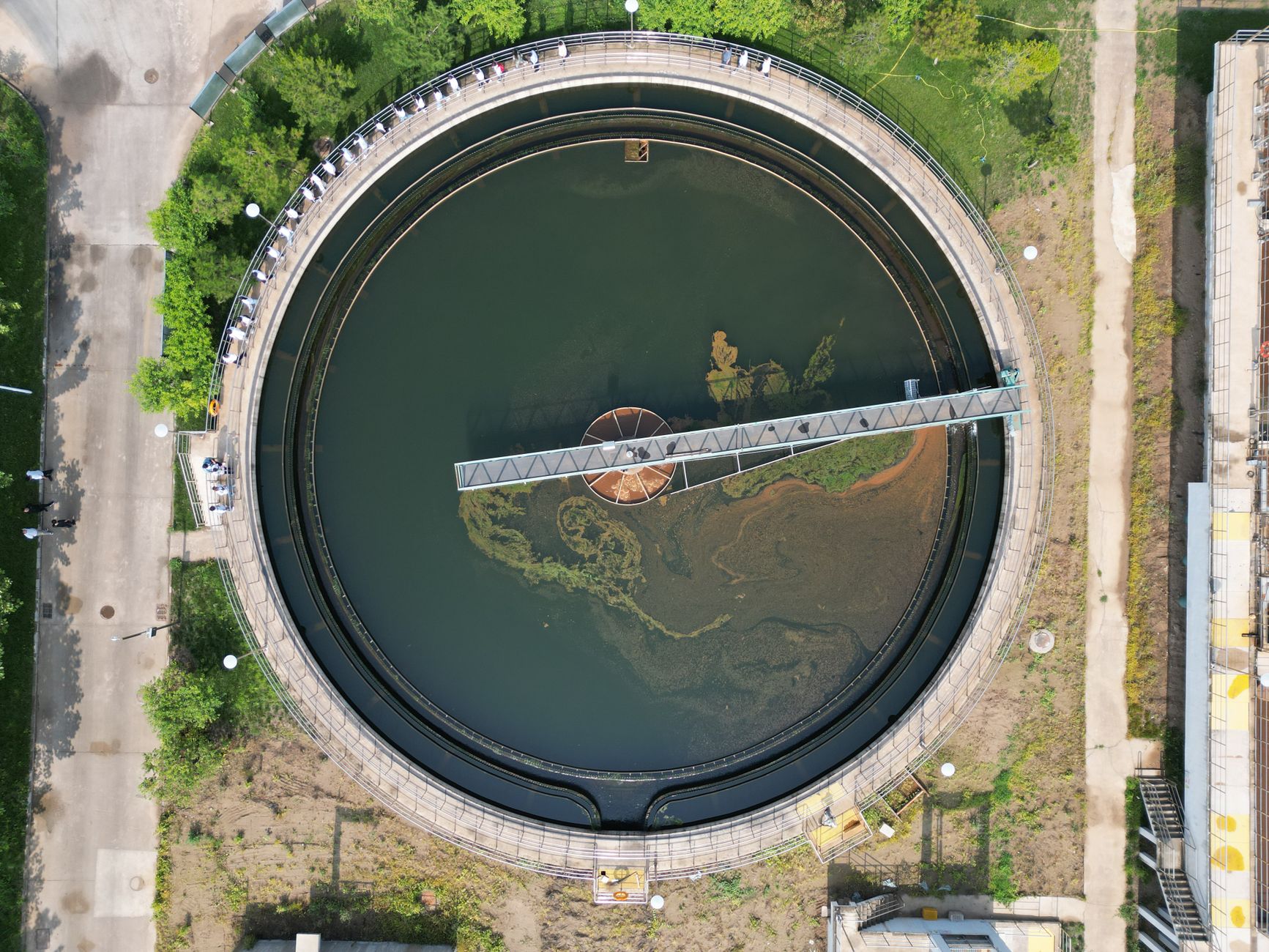
The robotic lawn mower ROI for wastewater treatment plants comes from crew hours, not from the mower itself. Most of the grass at a plant sits outside the process area: basin embankments, lagoon berms, perimeter fence lines, the strip along the access road and the frontage of the administration building. A mower that runs on a fixed schedule and returns to its dock can take over the open part of that work, which frees people for process tasks.
Scale is worth knowing before you plan. The 2017 ASCE Infrastructure Report Card counts about 14,748 wastewater treatment plants in the United States. Other counts run higher because sources define a plant in other ways, such as public versus private or industrial, so EPA's Clean Watersheds Needs Survey is the check to use for any portfolio view.
For one site, the return is set by three things: the ground you have, the hours your crew spends on it today, and how much of that work a robot can cover without a person in the loop.
Where does the return actually come from at a treatment plant?
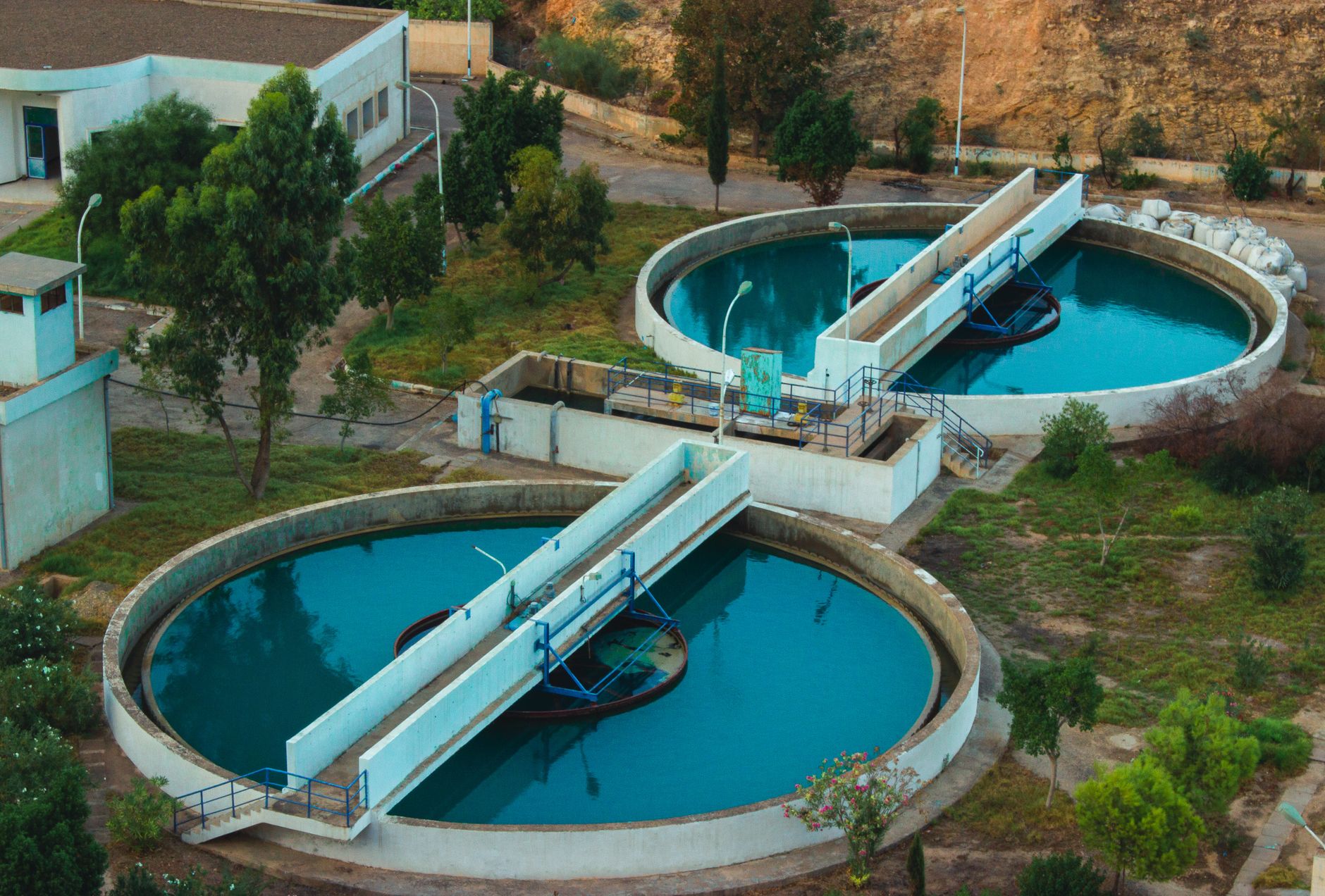
Plant grounds vary widely. A small package plant needs a footprint for the treatment units and a retention pond, while a lagoon system needs far more land. A Colorado Water Conservation Board document describes a small package plant with the plant and retention pond on about 0.3 acres, and a two-cell lagoon on about 0.9 acres. A mid-size village plant in Wisconsin has a site of about 9.6 acres, with about 6 acres in use.
These are project examples, not a national benchmark, so measure your own site. A mower spends its time on grass. Hardscape, equipment pads, gravel around tanks and paved walks do not count toward mowing time, so the open area and the edge length matter more than the total fenced acreage.
The return shows up in four places: scheduled mowing of open embankments, less hauling and fueling of walk-behind and riding equipment, less cleanup on paved areas when runs are short and frequent, and fewer cover shifts when grass cannot wait for the crew.
How does the robotic lawn mower payback math work?
The math has three inputs and one check. The first input is crew hours per mowing cycle, taken from timesheets and multiplied by the number of cycles the site needs each month. The second is the share of that work a mower realistically takes over, which is usually less than all of it because edges, obstacles and wet ground stay with people. The third is the labor hours offset, valued at your own loaded labor cost per hour and compared with the lease payment.
The check is whether the freed hours get used. An hour saved but not redirected to work the plant needs is not a return. That is why the savings range shown with this page is a range, and why it moves with the share of work the mower takes over.
The lease cost is quoted after a free site assessment, because the payment depends on the robot model chosen for the site and the financing term.
Who does the mowing today, and how hard is it to staff?
At a treatment plant, the people who would mow are usually the people who run the process. According to the Bureau of Labor Statistics, water and wastewater treatment plant and system operators held about 132,400 jobs in 2024. Projected employment change for 2024 to 2034 is minus 7 percent, with about 10,700 openings a year on average. Fewer operators covering the same plant means grounds work competes with process checks for the same hours.
Retirement pressure makes it harder. Greene Barrett, citing Bureau of Labor Statistics projections, says roughly one-third of the water workforce is expected to become eligible for retirement within a decade. That source does not state its date, so treat the figure as directional.
Small plants show the pattern clearly. The City of Janesville, Wisconsin, reports 15.5 employees across administration, operators, sewer maintenance and the lab, with the plant primarily staffed on one shift per day, seven days a week, and off-shift alarms calling an operator. At that staffing level, a mowing cycle that pulls an operator away from a process check has a direct cost.
Grounds labor is a wider market. The Bureau of Labor Statistics counts about 1.3 million grounds maintenance jobs in 2024, of which 1,192,500 are landscaping and groundskeeping workers, with projected growth of 4 percent for 2024 to 2034. That work is outdoors in all weather and some jobs are seasonal, so mowing schedules are exposed to weather and staffing at the same time.
What changes the number up or down?
Three things move the return most. The first is the share of the grounds that is open, mappable grass. The second is how many crew hours the site spends mowing today. The third is how well the freed hours are used. Slope, berm grade and wet ground pull the share down, while a clear layout with few obstacles pushes it up.
Exclusion zones add setup time, and they matter most around basins, tanks, chemical storage and the lab. A poorly placed boundary costs hours at go live and again each time the site changes. The checklist below covers what to verify before the number is trusted.
Where does a robot fit, and where does a person still win?
A robot does the repetitive part well. It runs on schedule, including early mornings and days when the crew is short, and it returns to its dock to charge without someone standing by. It does not carry judgment. It will not reliably notice a washout on a berm, a leak at a fitting or a burrow that has opened near a fence, so someone still walks the site.
A person still wins on tight corners, around equipment, on steep or soft ground, and wherever a hazard needs a decision in the moment. The comparison below is meant to be read as a plain tradeoff, not a sales case.
- Schedule
Robotic Lawn Mower
Runs on a set schedule, including early mornings and days when the crew is short
Staff
Works shifts, so off-hours mowing needs overtime or a call-out
- Open grass
Robotic Lawn Mower
Covers mapped open embankments and berms without a crew member on the mower
Staff
Covers the same ground but takes the crew hours this page is about
- Tight corners and equipment
Robotic Lawn Mower
Weak around fences, pads, tanks and obstacles unless mapped carefully
Staff
Strong, since a person can work around equipment and adjust on the spot
- Ground conditions
Robotic Lawn Mower
Needs firm, mapped ground and can stall on steep or soft slopes
Staff
Adapts to soft, wet or uneven ground and decides whether to continue
- Noticing problems
Robotic Lawn Mower
Does not reliably spot a washout, a leak or a new burrow
Staff
Spots these during a walk and reports them to the process team
- Coverage on a bad day
Robotic Lawn Mower
Keeps running unless a fault stops it, and needs an alarm route
Staff
Can be out sick, so cover has to be arranged
- Hazard decisions
Robotic Lawn Mower
Follows its boundary and stops when set to, but cannot judge a new hazard
Staff
Makes the call in the moment and keeps people clear of danger
What are the risks to the return, and how do you avoid them?
The biggest risk is an overstated share. If the plan assumes the mower takes all the open grass, the hours saved are overstated, and the return disappears when the crew still walks every edge. Map the site, measure the share on a pilot zone and carry the measured share into the calculator instead of the assumed one.
The second risk is boundary error. A poorly set exclusion zone around a basin, tank or chemical storage area can let the mower into a place it should not go, or leave a strip unmowed for weeks. Verify the map after the first full cycle and after any site change.
The third risk is downtime. A stalled unit that nobody sees gives back none of the hours it was meant to save. Set a fault alarm route in advance and plan replacement coverage, so one fault does not send the whole grounds back to the crew.
Safety still applies. A LER magazine summary of a NEISS-based study reports about 17,360 to 21,856 lower-extremity mower injuries a year for 2000 to 2018, and about 14,753 to 17,304 a year for 2019 to 2022. Those counts cover mowers of all types, not commercial units, and the primary CPSC pages were not checked, so use them as context for training and keep-out zones rather than as a rate for your site.
What is a realistic timeline from assessment to payback?
The work usually runs in phases. First, a site assessment maps the grounds, the exclusion zones and the boundary, and measures the open share. Second, a pilot zone runs long enough for the measured share to replace the assumed one. Third, the remaining grounds are added in phases, so the plant keeps running without shutting down any process area.
Payback timing depends on how fast the measured hours are redirected, not only on how fast the mower is installed. Setup fills the early weeks of the project, the pilot sets the number, and the rollout follows sign off. Put the plant's own hours and labor cost into the calculator before the pilot starts, so the pilot can be checked against the plan.
How do you get a precise figure from a free site assessment?
The site assessment is free. We pick the robot that fits the grounds, lease it through financing, deploy and integrate it, train your staff, and service it nationwide. The lease quote comes after the assessment, once the mapped area, slopes and exclusion zones are known, so the figure reflects your site and not a generic plant.
Bring three things. Bring a grounds plan with the process areas marked, the crew hours per mowing cycle from timesheets, and the staffing pattern including who receives off-shift alarms. With those in hand, the savings range on this page can be narrowed to your site, and the lease payment comes in a written quote.
Frequently asked questions
Want a robotic mower at your wastewater treatment plant?
Tell us about your site. We will recommend the robot, quote the lease, and keep it serviced.
Sources
- Bureau of Labor Statistics, Occupational Outlook Handbook, water and wastewater treatment plant and system operators
- Bureau of Labor Statistics, Occupational Outlook Handbook, grounds maintenance workers
- 2017 ASCE Infrastructure Report Card, Wastewater
- Greene Barrett, The Great Water Worker Shortage
- City of Janesville, Wisconsin, Wastewater Utility Staff
- Colorado Water Conservation Board document
- University of Wisconsin Library digital collection, village wastewater plant
- LER magazine summary of NEISS-based study on lower-extremity mower injuries