
Key takeaways
- Autonomous forklifts for bakeries take over the repeated pallet moves between mixing, proofing and dispatch.
- Fixed routes keep product moving when early-shift staffing is thin.
- Your crew keeps the mixing, proofing and quality work, with a cross-trained backup for loading.
- The savings depend on your own pallet counts, so a free site assessment comes first.
What autonomous forklifts for bakeries actually do
Autonomous forklifts for bakeries take over the repeated pallet moves that keep a bakery running between mixing, proofing and dispatch. The vehicle picks up a loaded pallet at a marked station, follows a fixed route through the plant, and sets the pallet down where the next step needs it. Your staff stay at the mixers, in the proof rooms and on the bake line instead of walking the same runs again and again.
The fit is strongest where moves are predictable. Early shifts start before most of the day crew arrives, volume is high, and the same handful of routes repeat every morning. A fixed-route vehicle earns its place in exactly that pattern, because a small crew can keep product moving without adding people to the floor.
We are a US commercial robot integrator. We pick the right equipment for your floor, lease it through financing, deploy and integrate it, train your staff and service it nationwide. The sections below cover the problem, the daily workflow, the savings drivers and the limits, so you can judge whether your bakery is a good candidate before anyone visits.
Why early shifts are hard to staff in bakeries
Bakeries start early because bread, rolls and pastry have to be on shelves before the morning rush, and that schedule is hard to staff. Industry reporting shows the gap has persisted. According to a baking trade article summarizing a 2025 industry study, 85% of respondents reported unfilled hourly positions in 2022, and conditions have improved since then. The same study found that 65% of mid-size companies still struggle to fill these roles.
Open requisitions are only part of the picture. According to a baking trade article on a workforce study, 92% of bakers cite a lack of qualified candidates in their area as a top cause. For an operator, that can mean a dough room with two people instead of three, and pallets waiting at the proofer while the dispatch crew finishes loading the first trucks.
Early start times and high volume also feed turnover in baking. Commentary on the trade covers this qualitatively, without a published rate. The practical result is that the people you do have end up moving product by hand or by pallet jack when they should be checking dough, temperature and packaging.
Where pallet moves pile up in a bakery today
Most bakeries have three or four handoff points that are easy to overlook: ingredient staging, the mixing room, the proof and cooling areas, and the dispatch dock. Each handoff involves a pallet, a rack or a cart, and each one depends on someone being free at the right moment. When early staffing is thin, the moves slide, and product waits.
Timing is the real problem. Proofing runs on a schedule set by the dough, not by the crew. If finished product sits too long waiting for a move, the team has to choose between that move and the next batch, and both suffer.
Pallet traffic also competes with people. Fork trucks driven by staff share aisles with hand trucks, carts and deliveries at the same early hour, which adds congestion and makes the work more tiring than the move itself.
How the autonomous forklift works day to day
Operations start with a site assessment that maps the building, the aisles, the dock doors and the pallet positions. From that map we set fixed routes between the stations you already run. Staff load the vehicle at a defined pickup point, the forklift travels its route, stops at the marked drop point and returns for the next pallet.
Routes are set in advance, so the forklift does not wander the building looking for work. A staff member can see the route on a status screen, call the vehicle to a point, or take manual control if a pallet needs special handling. Safety sensors and marked lanes keep people and the vehicle apart.
The first weeks are about tuning. Early runs often reveal a pallet that blocks a door at the wrong time or a route that crosses a cart path. Those problems are fixed by adjusting the route, not by asking the crew to work around the vehicle.
Which benefits matter most for a bakery
The first benefit is steadier moves during the hours when staffing is thinnest. A fixed route runs the same way at 5:00 am on a short-staffed Tuesday as it does on a full Monday. That consistency protects the mixing and proofing schedule, which is where bakery quality usually slips.
The second benefit is fewer hand-handled pallets. When the forklift takes the repeated runs, staff spend more of the shift on tasks that need judgment, such as checking dough, temperature and finished product.
Vendors report speed and labor gains, though none of these are bakery-specific. According to a vendor use-case page, a food manufacturer saw 25% faster pallet movements. A warehouse automation vendor blog reports that autonomous vehicles handling repetitive pallet moves freed up the equivalent of over 10 full-time employees, at a customer the excerpt does not name. Treat both as vendor-reported, and ask for your own baseline during the site assessment.
Working alongside your existing staff
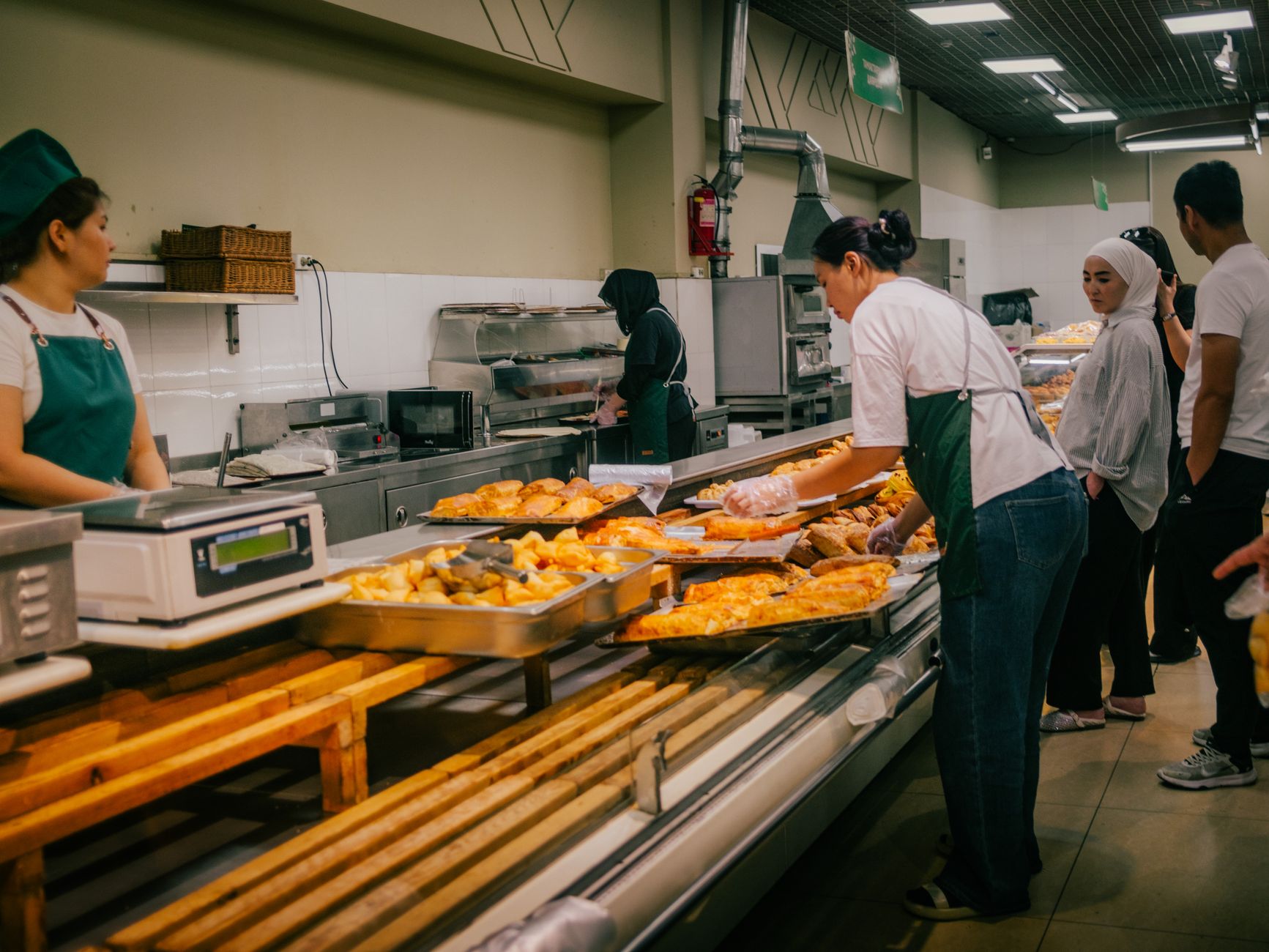
The forklift works best as part of a crew, not as a replacement for one. A typical early shift still needs people on the mixers, at the proof room, on the bake line, at the dock and on quality checks. The vehicle takes the repetitive pallet runs between those points.
Plan for a robot plus a smaller team. Some bakeries reduce the number of people driving fork trucks, but they keep the crew that knows the product. Cross-train two or three staff to load pickups, clear the route and handle the rare manual move, so the morning never depends on one person.
Expect the shift to feel different. Staff will spend less time walking and more time at stations. Brief the crew before go-live, mark the route clearly, and set a simple rule for who calls the vehicle or clears a blocked lane.
What drives the savings and the hours
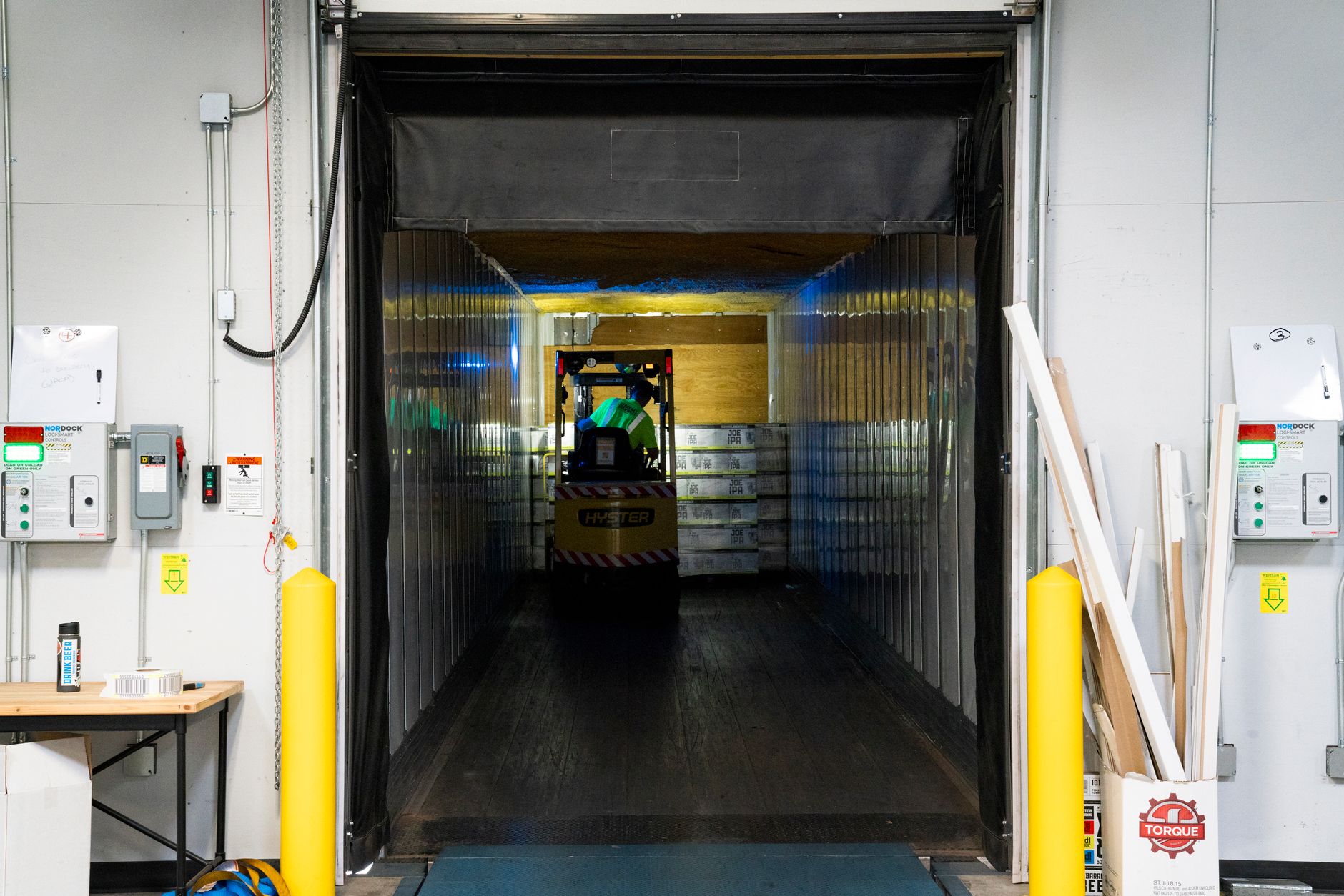
Savings come from a few drivers: the number of repeated pallet moves per shift, the distance between stations, how often a move waits on a person, and how much manual handling the crew can stop doing. We measure each of these during the site assessment, and that baseline is what any quote is built on.
We do not promise hour savings, and we do not put a number on your hours before the assessment. Treat the vendor figures above as a question to ask, not an answer. A route that saves a few minutes per run adds up quickly when it repeats many times each shift.
The size of the sector is useful context. According to a business data aggregator summarizing NAICS 3118, bakeries and tortilla manufacturing combined have 13,210 establishments. The same aggregator lists 8,979 retail bakery establishments with 93,603 employees, and separately lists 2,745 commercial bakeries. The year is not stated on those pages, so treat the counts as directional.
What an autonomous forklift cannot do
The forklift cannot make judgment calls. It cannot tell an underproofed batch from a good one, and it will not notice a damaged pallet of trays unless the crew catches it. It also cannot handle a load outside its rated limits or a pallet sitting on uneven ground.
It needs a clean, predictable route. Blocked aisles, pallets left in the path and spills on the floor will stop it, and a stopped vehicle is a delay you still have to manage. Routes that change often, such as a plant that rearranges racks every week, need more planning before they work well.
It does not remove the need for trained people. Someone still loads, supervises, clears faults and handles the rare manual move. It also will not fix a bottleneck at the oven, so if the bake line is the constraint, the route will simply move product to a wait.
How to get started with a site assessment
Start with a free site assessment. We map the building, count pallet moves by station and shift, and note the dock doors, floor condition and aisle widths. We then identify a first route simple enough to prove. Starting with one route and one vehicle is common, and it lets your team learn the routine before any expansion.
The equipment is leased through financing, so you do not need a large upfront commitment. The lease is quoted after the site assessment, because the route, the vehicle type and the service plan all change the terms. The payment comes in the quote, after the site visit.
After you accept a quote, we handle deployment, integration, go-live support and training for the staff who will run the route. Service is nationwide, with on-site dispatch and remote triage for faults, so a stopped vehicle is handled by people who know your building.

Frequently asked questions
Want an autonomous forklift at your bakery?
Tell us about your site. We will recommend the robot, quote the lease, and keep it serviced.
Sources
- Baking trade article on industry labor conditions
- Baking trade article on a baking workforce study
- Vendor use-case page, food manufacturing example
- Vendor blog on autonomous pallet moves
- Business data aggregator, NAICS 3118 bakeries and tortilla manufacturing
- Business data aggregator, NAICS 311811 retail bakeries
- Business data aggregator, NAICS 311812 commercial bakeries