
Key takeaways
- Operators who run the line are the scarce resource, and pallet moves pull them away from it.
- Fixed routes between press, curing, yard and dock suit steady, repetitive block flow.
- The figures on this page come from adjacent plants, so measure your own pallet hours first.
- We lease the robot through financing, then quote after a free site assessment.
Can autonomous forklifts for concrete block plants actually help?
Yes, for one specific job. In a concrete block plant, some of the heaviest repetitive work is moving palletized block between the press, the curing area, the finished goods yard and the loading dock. An autonomous forklift can carry those pallets along fixed routes, which frees the operators who are needed at the press and on the line.
The fit is strongest where pallet flow is high in volume and repeats the same way every shift. Autonomous forklifts for concrete block plants work best on known routes between production, curing and loading zones, not on one off jobs or tasks that change every day.
A note on evidence. We did not find a published case of an autonomous forklift working inside a block plant's curing or yard area. The hour and throughput figures on this page come from adjacent settings, such as an automotive plant, an aerospace site and a consumer goods factory, and each is labeled with its origin.
What does pallet handling take from a block plant's people today?
Block is heavy and stacked on pallets from the moment it leaves the press. Someone has to move those pallets to the curing area, from curing to the yard, and from the yard to the trucks. At a plant like this, that work often falls to the same forklift operators who keep production moving, so a pallet that waits for a lift can stall a line that was otherwise running well.
The result is a familiar pattern. Operators split their time between the line and the yard, so neither gets full attention. A materials-handling reference describes a block manufacturer that relies on conventional forklift trucks, so a driven truck is the baseline this page compares against.
The pattern is common across the industry. According to the 2019 CMU Sales Survey, as reported by CMHA, there were 206 plant locations across the United States and Canada among the companies that responded. The 2020 survey reported 187. These are participating companies, not a full census, but they show how many operations face the same pallet flow.
What are the main benefits for a block plant?
The first benefit is operator time. When pallet moves run on a schedule, the people who know the press and the mix can stay with them. A vendor case study on an automotive equipment plant, which used an autonomous tugger rather than a forklift, reported about 60 labor hours saved per week and 1,845 hours of autonomous operation in year one. Those are vendor figures from another process, so read them as direction, not a forecast.
The second benefit is consistency. A fixed route runs the same way at the start of a shift as at the end, which makes the yard easier to plan. A consultancy write-up on a consumer goods factory using 50 AMRs, meaning autonomous mobile robots rather than forklifts, reported 91% less manual material handling, with pallets per shift rising from 185 to 253.
The third benefit is fewer handling errors. Damage from rough handling is easy to miss once pallets leave the press. A maintenance software blog reported, for an unnamed FMCG plant, pallet moves per hour up 28% and product damage incidents down 62%. That blog is not independently verified, so use it to frame your own handling data rather than to set expectations.
How does an autonomous forklift work at a block plant day to day?
The day starts with the route plan, not the forklift. Your team sets the pickup and drop points at the press, the curing racks, the yard lanes and the dock, and the robot runs those routes in order. The operator sees the queue, the pallet count and any holds on a screen instead of walking the yard to check.
Pallets move in a loop. The robot collects a stacked pallet at the press, carries it to the curing area, returns empty to the press and repeats. Between cycles it can charge during planned breaks, so it is not idle in a lane when the line needs it.
When something unexpected happens, such as a blocked lane, a pallet that is not square or a person in the route, the robot stops and signals for help. A staff member clears the exception and sends the robot back on its route. That handoff is where experienced operators matter most, and it is the part of the day that good training prepares people for.
Which areas of the plant does it work in?
Most of the value sits along the pallet path rather than in one building. Think of the robot as serving the chain from the press to the truck. Each segment is a fixed route with a clear start point, end point and lane.
The six areas below are common in block operations. The role described for each is typical, not a measured result for any one plant, and your site assessment decides which segment is worth automating first.
How do autonomous forklifts work alongside existing staff?
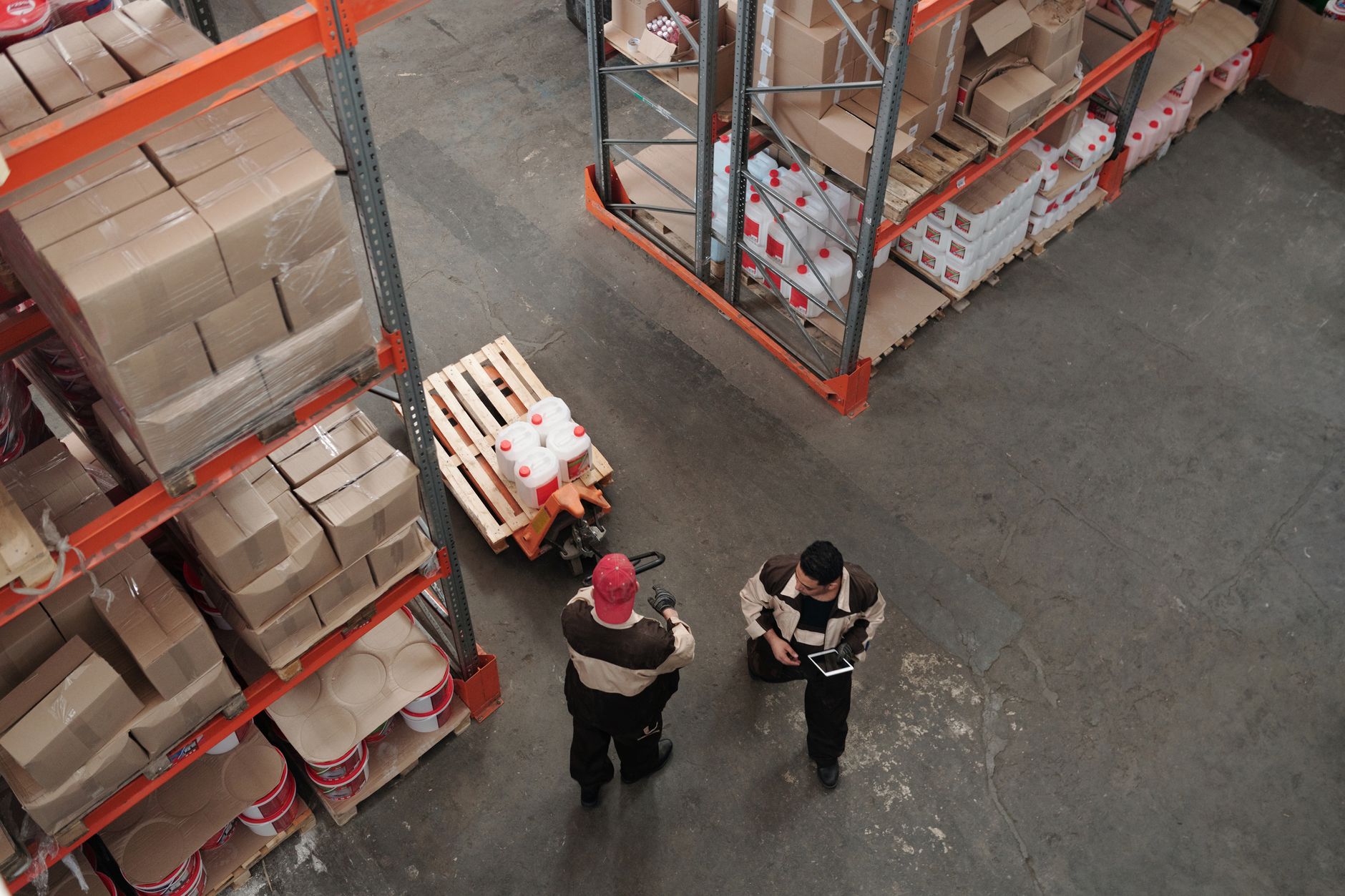
A robot plus a smaller team is the realistic model, not a robot in place of people. The robot takes the repetitive pallet moves. The crew still runs the press, checks the mix, handles exceptions and keeps the equipment in service.
What happens to people is worth watching. A consultancy write-up on the consumer goods factory reported that 32 of 36 forklift operators were redeployed, meaning moved to other work, which is not the same as a headcount cut. That write-up covers 50 AMRs, so expect a block plant's task mix to vary from it.
We pick the robot for your site, lease it through financing, deploy and integrate it with your routes and systems, and train your operators and supervisors. We also service it nationwide. Training matters most for the handoff, because the people who clear exceptions must trust the system and know when to override it.
What drives the savings at a block plant?
Hours are the main lever. Savings come from operator and forklift time that goes back to the line, plus fewer hours lost when a pallet waits on a lift. Measure today's pallet hours per shift before you look at any robot, because every figure on this page is only a comparison until you have your own baseline.
Published figures vary widely by setting. A vendor case study on an aerospace manufacturer, which the vendor described as an estimate, reported about 4,000 labor hours saved per year from autonomous mobile robots. A consultancy write-up put the payback at 14 months for the consumer goods factory's project. These show what other plants measured, not what yours will produce.
Bring your baseline to the site assessment. We measure the moves, the wait times and the handling incidents on your floor, then give a lease quote on that basis. The payment comes in the quote, after the free site assessment, so the savings you plan around are your own.
What can an autonomous forklift not do?
It is not a general purpose machine. It runs known routes with standard palletized loads, and it depends on the route staying clear. Expect limits in these areas:
- Irregular loads that do not sit on a standard pallet, or that need a person to rig, shift or reposition them
- Routes that change every day, or areas that have not been mapped
- Yard surfaces that are uneven, wet or cluttered beyond what the route allows
- Maintenance, repairs and battery service, which still need trained people
- Recovering from a fault or a missed pallet when no staff are available on the floor
How do we get started?
Start with a free site assessment. We map the pallet flow at your plant, from the press to curing, curing to yard and yard to dock, and identify the route that is worth automating first. We then choose the robot that fits your floor and your loads.
The robot is leased through financing, and the lease quote comes after the site assessment, so you see the terms before you decide anything. We deploy and integrate the unit, train your team and service it nationwide, so you have one partner for the whole program.
Bring your shift data to that first call: hours on pallet moves, pallets per shift and the places where pallets wait. Since we found no published case of an autonomous forklift in a block plant's curing or yard area, a sensible first step is one leased unit on one route, sized from those numbers.
Frequently asked questions
Want an autonomous forklift at your concrete block plant?
Tell us about your site. We will recommend the robot, quote the lease, and keep it serviced.
Sources
- 2019 CMU Sales Survey, reported by CMHA
- 2020 CMU Sales Survey, reported by CMHA
- Vendor case study, automotive equipment plant autonomous tugger
- Consultancy case study, 50 AMR consumer goods factory
- Vendor case study, aerospace manufacturer AMRs
- Maintenance software vendor blog, FMCG plant
- Materials-handling reference, block manufacturer