
Key takeaways
- Staff time goes to carrying supplies and samples, and fixed robot routes can cover much of that work.
- Published surveys put researchers' administrative load at 42 percent of their time.
- Clinical lab studies suggest faster specimen turnaround, so measure your own runs before expecting the same gain.
- The robot works beside scientists and technicians, not in place of them.
- Start with a free site assessment and one leased unit, then expand based on measured results.
How can autonomous mobile robots for research laboratories help?
Autonomous mobile robots for research laboratories take over the carrying work that fills much of a lab day: consumables from the stockroom, clean glassware from the wash room, and sample racks moving between freezers and benches. They follow mapped paths, stop at the same doors and return to a charging dock without someone steering them. For the person who runs the space, the gain is simple. Trips that used to break up an experiment get handled on a schedule, and scientists and technicians spend more of their hours at the bench.
The case rests on how the trips are structured. A lab moves the same items along the same corridors many times a day, which is exactly the predictable route a mapped robot handles well. The robot does not run experiments or make judgment calls about samples. It takes over the walking, which is the part of the day most likely to get pushed aside when experiments run long.
The sections below cover the problem as it looks in research buildings, the benefits and limits, how a day runs, which areas the robot serves, how it fits with staff, what drives the savings, and how to get started.
Where does staff time go today?
The clearest figure we found concerns principal researchers rather than the technicians who push carts. According to the Federal Demonstration Partnership, as reported in a 2007 release, 42 percent of American researchers' time is spent on administrative tasks, compared with 18 percent two decades earlier. The burden came mostly from many small chores, including procuring equipment and writing follow-up reports. That survey counted principal researchers' hours only and excluded lab staff and trainees, so it does not measure the hands-on carrying work your team does.
A 2021 report on research offices and libraries found that half of researchers spend at least 30 percent of their time on administrative tasks. A 2016 academic jobs survey, reported by Chemistry World, found that the average academic researcher spends fewer than four of every 10 working hours on research. Both point to the same squeeze: time that should go to the bench is absorbed by the work around it.
Clinical laboratory professionals report a similar pattern. A 2011 survey found that 68 percent of respondents did not participate in research activities, and respondents said there was inadequate time for research in the clinical setting. We did not find a published figure for supply-run hours in research labs, so the first step on any site is to measure them.
What are the main benefits for the lab?
The first benefit is fewer interruptions. A robot on a fixed route carries the next box of pipette tips or the sample rack due in the cold room, and the person who would have walked it keeps working. The second is consistency. Routes run at the same times through the same doors, which makes it easier to plan the day around deliveries instead of around whoever happens to be free.
Turnaround is the benefit measured most so far, though not in research labs. A 2025 study of an Italian clinical laboratory found that an autonomous courier cut mean specimen turnaround from 122.64 to 106.72 minutes, and median turnaround from 112 to 101 minutes, while tightening variability. The authors say longer and multi-section validation is warranted. A 1998 simulation paper found that one alternative for laboratory deliveries improved turnaround performance by 33 percent.
Treat these as signals to test, not projections. They come from clinical and simulated settings, and a research building has its own layout, schedules and sample rules. The useful test for your lab is whether the trips that matter most run faster and more predictably once the route is in place.
How does the robot work day to day?
The robot starts from a charging dock and follows a map built during the site assessment, which records corridors, doors, elevators and the stops the lab needs. Staff send a request from a tablet, a wall panel or a simple message, and the software assigns the nearest free unit. The robot loads a tote or cart at the stockroom, rides the elevator where it has access, and delivers to a bench, a freezer room or a receiving point.
Between requests, the robot waits at its dock or at a staging spot clear of the walking paths. Routes can be scheduled for predictable pickups, such as a morning glassware round or an afternoon rack run to storage, and ad hoc requests are slotted in around them. Doors with badge readers have to be integrated so the robot can pass without someone holding them open.
Which areas of the building does it serve?
Most runs start and end in a small number of places. The stockroom, the receiving dock, the glass wash room and the freezer corridors generate much of the traffic, which makes them sensible first routes. Shared instrument rooms and the main corridors come next, once the first routes run reliably.
Some spaces need a closer look before a route is approved. Areas with open hazardous work, biosafety suites with their own entry rules and rooms with heavy visitor traffic need separate review. Mapping those rules during the site assessment is part of the job, and it keeps the robot out of places where a route would change too often to trust.
How does the robot work alongside lab staff?
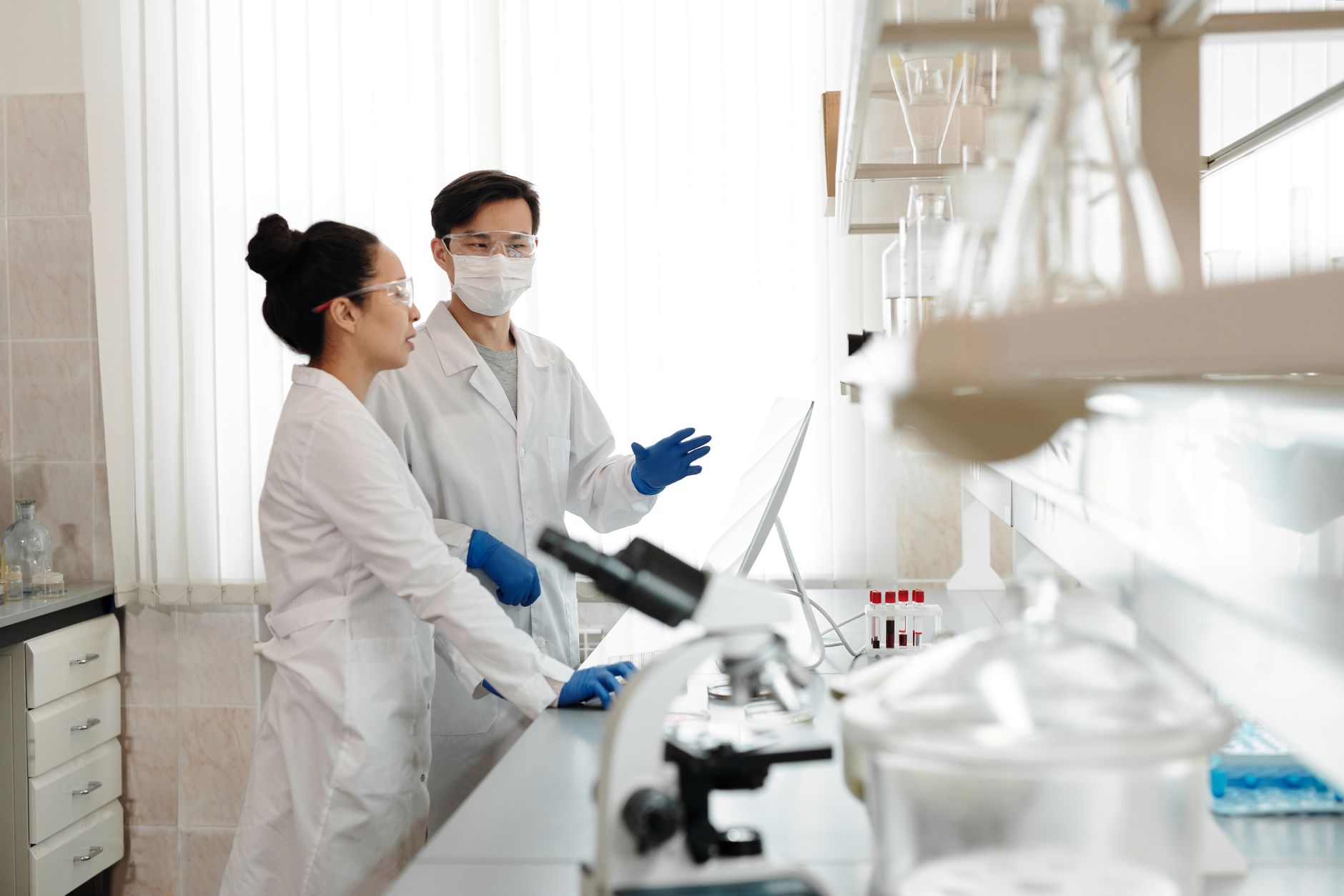
The robot does not work alone. A lab still needs its scientists, technicians and a named person who owns the robot's schedule, routes and charging. In practice that means a robot plus a smaller team: the people you have spend less time carrying and more time on experiments, while someone still handles exceptions, checks the cart and clears a unit that gets blocked.
The closest federal count for lab technical staff covers clinical laboratory technologists and technicians. According to the Bureau of Labor Statistics, about 351,200 jobs existed in 2024, with projected growth of 2% from 2024 to 2034, which it describes as slower than average. That is a clinical category, not research labs, but it shows why keeping existing staff on bench work matters.
Plan roles on paper before go-live. One person owns the schedule and the request queue, another owns the map and door access, and everyone who sends requests knows how to pause a unit, clear a blocked path and call for help. Training should cover the people who send requests as well as the people who maintain the map.
What drives the savings in staff hours?
Savings come from hours removed from carrying, waiting and rerouting. The size of that pool depends on how many runs your lab makes each shift, how far they go, and how long a person waits for a cart or a lift. No published figure we found gives supply-run hours for research laboratories, so the reliable starting point is your own log.
Published figures set the scale without giving the answer. According to the Federal Demonstration Partnership, 42 percent of principal researchers' time goes to administrative tasks. The share of that load that comes from moving supplies is not reported, so any hour estimate for your building should come from measurement, not from a national average.
Two weeks of logging is enough for a baseline. Count runs per day, time each one from request to delivery, and note how often a person stops work to make one. Then compare those numbers with the pilot. For scale, the National Center for Science and Engineering Statistics reports that its FY 2019 academic population was 915 institutions, with 878 responding, a 96.0 percent response rate. That is a large population of research-active institutions.
What can the robot not do?
The robot moves containers along mapped routes. It does not open a freezer, load a centrifuge, pipette, or decide whether a sample is fit to ship. What it may carry depends on the container, the material and your biosafety rules, and it should not be used where a handoff requires a person at both ends.
It also depends on the building. Elevators, doors and wireless coverage have to work for it, and a blocked corridor stops a run until someone clears it. Power outages and maintenance windows need a plan. A single unit is a single point of failure, so decide early whether a spare unit or a manual path for urgent items belongs in the program.
How do you get started?
Start with a free site assessment. We map the building, identify the routes that pay off first, check doors, elevators and wireless coverage, and recommend the robot that fits your floor. We are a US commercial robot integrator. We pick the right robot for the site, lease it through financing, deploy and integrate it, train your staff, and service it nationwide.
A sensible first step is one leased unit on two or three routes, run for a set period and measured against your log. Expansion follows the data. The payment comes in the quote, which is prepared after the site assessment, so you see the terms for your own building before you commit. A backup robot program and spare unit coverage can be discussed in that quote.

Frequently asked questions
Want a warehouse robot at your research laboratory?
Tell us about your site. We will recommend the robot, quote the lease, and keep it serviced.
Sources
- Federal Demonstration Partnership, via Chronicle of Higher Education
- 2021 research offices and libraries report
- Chemistry World
- Clinical Laboratory Science journal
- 2025 Italian clinical laboratory study
- 1998 simulation paper
- National Center for Science and Engineering Statistics
- Bureau of Labor Statistics Occupational Outlook Handbook