

Key takeaways
- Steel plate and kit parts are hauled by hand, crane and truck across large yards between fabrication bays.
- Autonomous mobile robots can run repeat loads on set, scheduled routes and keep crews on fitting and welding.
- The US Navy plans to hire about 250,000 dockyard workers over 10 years, so transport work competes for the same people.
- No published shipyard has been confirmed for plate hauling, so a pilot on one route is the honest first step.
- Savings depend on your own load counts and trip times, measured in a free site assessment rather than promised here.
How can autonomous mobile robots for shipyards help?
Autonomous mobile robots for shipyards take over the repeat hauling between the places where steel is stored, cut, formed and assembled. In a large yard, that means steel plate and kit parts moving from storage to the fabrication bays, and from fabrication on to the sub-assembly and block areas. The robot follows set routes, carries its load on a deck or pulls a cart, and returns to charge without a driver on board.
The fit is practical. Routes between bays repeat every shift, the destinations are known in advance, and the loads are heavy enough that carrying them by hand ties up people who are needed for fitting and welding. Material transport already runs commercially in shipyards, and an industry overview notes that routes and destinations can be scheduled digitally, which is exactly what a fleet needs.
Be clear about what the evidence covers. We did not find a published shipyard where an autonomous mobile robot hauls steel plate between bays. The nearest cases are a welding robot tested at an Italian shipbuilder's yards, a mobile manipulator demonstrated in a Spanish shipyard workshop, and plate-handling robots in a Korean steel yard. Each is covered below, and each points to the same first step: a pilot on your own routes.
What does plate and kit hauling look like in a large yard today?
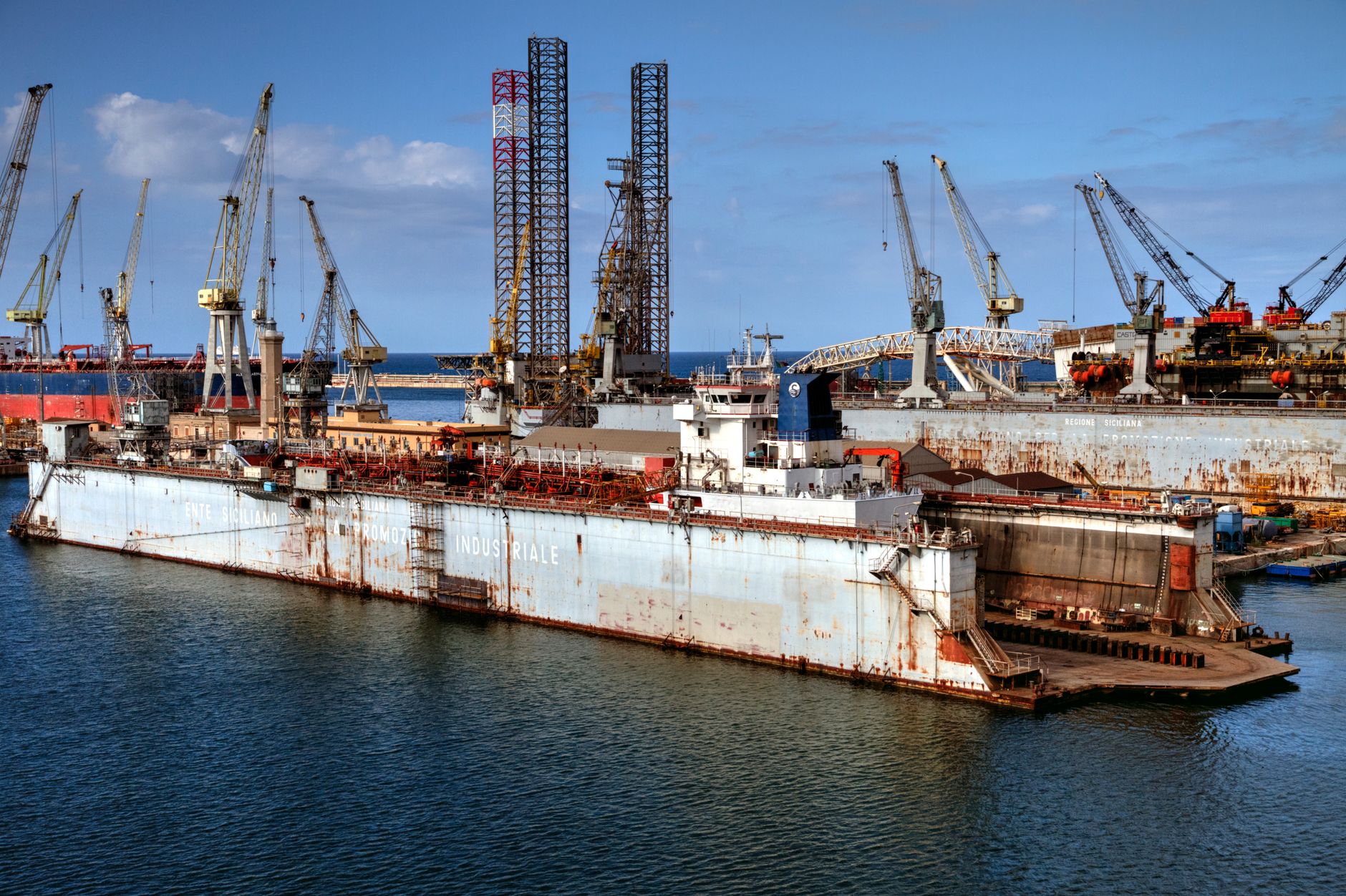
A big yard runs on movement. Plate arrives by truck or rail, goes into a laydown area, and is lifted by crane toward the cutting and forming bays. Kit parts such as brackets, fittings and pre-cut stiffeners sit in cages or on carts and are carried or towed to sub-assembly and block areas. Each move is short on its own, but a shift adds up to many runs, and each run waits on a crane, a driver or a clear path across a busy road.
Labor is the tighter constraint. According to a naval news report from January 2026, the US Navy plans to hire about 250,000 new dockyard workers over the next 10 years. A global consulting analysis puts the need at an additional 200,000 to 250,000 maritime employees over the next decade. For a yard manager, transport work competes with fitters, welders and crane operators for the same people.
Retirements add pressure. The Navy Secretary has said a quarter of the shipyard workforce is retirement-eligible within five years. A staffing firm analysis citing a Maritime Administration estimate puts it at about 17%, so the sources differ and the number is worth checking on your own roster. In Hampton Roads, Virginia, public media reporting estimated a shortfall of 10,000 shipyard workers, which could reach 40,000 by 2030.
What are the main benefits?
The first benefit is steadier flow between bays. When plate and kit parts move on a fixed schedule, fabrication and assembly crews stop waiting on the next delivery. A fleet works through a queue in order, so a bay that finishes early does not sit idle while a driver is off the yard.
The second is that skilled people stay on skilled work. Welders, fitters and crane operators are scarce, and the transport lane is where their hours leak away. Moving repeat loads to a robot keeps people on the lifts, fit-up and inspection that need judgment. It does not remove the need for those people.
The third is fewer manual handling moves on heavy parts across uneven ground. A robot takes the repeat carry and tow work, which lowers how often a person lifts or pushes a heavy part between bays. Your safety lead will want that measured on your own routes rather than assumed.
Proof of the approach is still early. A steel mill in Korea uses unmanned robots in a steel plate shipping yard to place spacers between heavy plates during loading, according to a news report. That is steel logistics rather than shipbuilding, but it shows robots working around plate in an open yard. In shipbuilding, one overview cites up to 170 metres of welding per shift for a tracked mobile welding robot tested at an Italian shipbuilder's yards, a figure the partners reported and not an independent test.
How does the robot work day to day?
Day to day, the work starts in the planning office. The fabrication schedule or kit list becomes a set of requests, each with a pickup point, a drop point and a time window. The fleet takes the requests in order and assigns a robot to each. Routes are mapped in advance so the robot knows its lanes, its crossings and the points where it must slow down.
At the pickup point, a person still runs the crane or loads the cart. The robot docks, a staff member confirms the load and the destination, and the robot leaves. At the drop point the receiving crew confirms delivery in the same system. A lead can see where each load is, reassign it, or pull a unit off the lane for charging. That is the core of robot fleet management in a yard, and it is what the site assessment tests first.
The robot does not decide what gets built, judge a weld or choose the lifting plan. It runs the schedule it is given, stops when a path is blocked, and reports the stop. Keeping the human steps explicit is what makes each handoff predictable.
Which areas of the yard does the robot work in?
Think in zones rather than the whole yard. The robot earns its place where loads repeat on known routes, and it stays out of areas where the path changes every hour. The areas below are where we would look first on a shipyard.
The route map for each zone is built during the site assessment, which measures lanes, grades, crossings and load sizes. Zones that fail those checks are left out of the first phase rather than forced into it.
How does the robot work alongside the crew?

The right picture is a robot plus a smaller, redeployed team, not an empty yard. Someone still runs the crane, loads the cart, inspects the parts and decides when a route closes for a lift. The robot takes the repeat carry, and the crew handles everything that needs judgment or a hand on the load.
Research points the same way. An EU-funded project demonstrated a mobile manipulator for shipyard blocks in a real shipyard workshop in Spain, covering navigation, stud welding and human-robot interaction. How people and machines share a working space is the same question a yard manager faces on the floor.
We train the people who run the robot, including the lead who sets the schedule and the operators who handle pickups. Training is part of deployment, and go live support covers the first shifts, when most questions about routes and handoffs come up.
What drives the savings?
The savings come from a short list of things, and we would rather measure them with you than promise a number. The main drivers are the loads per shift, the distance and stops on each route, the minutes each load waits for a crane or a driver, and how many people are tied up on transport today.
We did not find a published figure for hours spent hauling plate or kit parts per shift or per week at a shipyard. For that reason this page gives no hours range and no labor savings range. The site assessment records your own load counts and trip times, and the quote is built from those numbers rather than an industry average.
Hiring pressure changes what the same hours are worth. When shifts stay open, a transport lane that runs without a person keeps the bays fed, and the gain shows up as finished work. Ask for a route-by-route view after the assessment, not a headline figure.
What can the robot not do?
A robot is not a substitute for the crane, the crane operator or the lift plan. It is sized to a rated payload and deck, and it works on routes it has been mapped to. Outside those limits, the job stays with your crew.
The evidence has limits too. We have not confirmed a published shipyard where an autonomous mobile robot hauls steel plate between bays, so the honest first step is a pilot on one route rather than a yard-wide plan.
- It does not lift plate by crane, so the lift and the handoff stay with your crew.
- It does not carry loads over its rated payload or outside its deck size.
- It does not handle stairs, steep grades or ground outside its specification.
- It does not judge the work, inspect a weld or choose the lifting method.
- It does not run a route that changes every shift until that route is remapped.
How do you get started?
We are a vendor neutral US commercial robot integrator. We pick the right robot for the site, lease it through financing, deploy and integrate it, train the staff and service it nationwide. The robot is chosen for your routes and loads, not for a brand we happen to carry.
The start for autonomous mobile robots for shipyards is a free site assessment. We map the route, measure load sizes and yard surfaces, check the crane and crossing points, and note where the path changes. Robots are leased through financing, and the payment comes in the quote, which follows the site assessment.
Many yards begin with one leased unit on one route. A phased deployment lets the rest of the yard keep running while crews learn the handoffs. Ask during the assessment how on-site dispatch works for your site, and whether spare unit coverage applies, so one fault does not stop a lane for long.
Frequently asked questions
Want a warehouse robot at your shipyard?
Tell us about your site. We will recommend the robot, quote the lease, and keep it serviced.
Sources
- Naval news report, January 2026
- Global consulting analysis of maritime talent
- Staffing firm analysis of maritime workforce demand
- News coverage of Navy shipyard workforce
- Trade overview of a tracked shipyard welding robot
- EU-funded research project on a shipyard mobile manipulator
- Korean news report on steel plate yard robots
- Industry overview of shipyard material transport