

Key takeaways
- Cleaning robots move hard-floor work into quiet hours, so staff spend less time mopping between customers.
- Dispensary floors get busy at unpredictable times, which makes after-close and lull cleaning a practical fit.
- A floor cleaning robot works best alongside a smaller team, not in place of everyone on shift.
- Savings come from staff hours recovered, and reported results vary widely from site to site.
- Robots are leased through financing, and the payment comes in a quote after a free site assessment.
How do cleaning robots for cannabis dispensaries help?
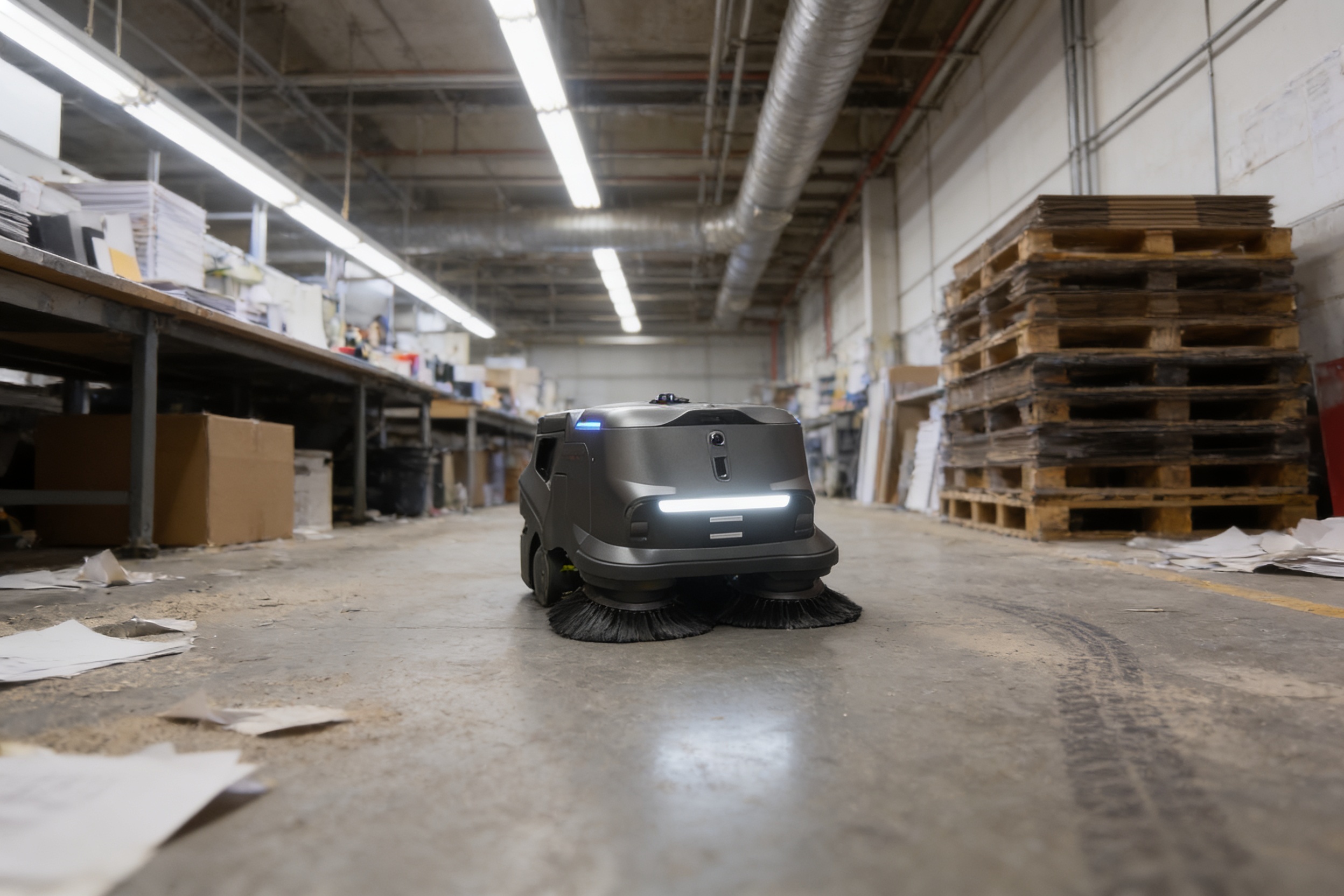
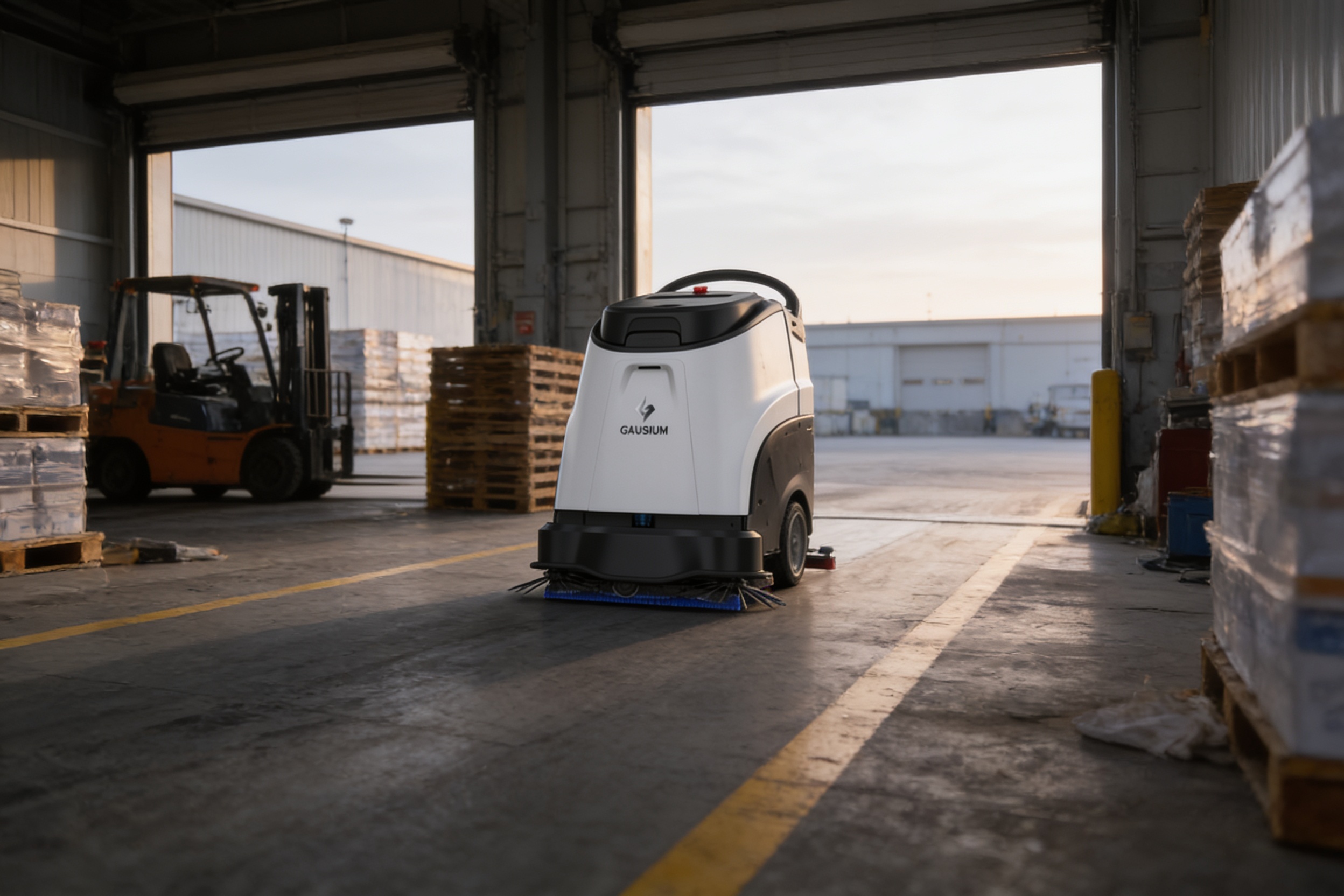
Cleaning robots for cannabis dispensaries take over the repetitive hard-floor work that eats staff time in a counter-driven retail shop. A floor cleaning robot runs a set route across sales floors, entry areas and back hallways without someone pushing it. For an operator who already runs short-handed, that means fewer interruptions to the sales team.
The core value is timing. Floor care has to fit around customer traffic and tight staffing hours, and a dispensary rarely has a long quiet stretch in the middle of the day. A cleaning robot can run during low-traffic windows, before opening, after close and during lulls, so staff are not stopping a sale to mop a spill or sweep a lobby.
We are a US commercial robot integrator. We choose the right robot for the site, lease it through financing, deploy and integrate it, train your staff, and service it nationwide. The rest of this page covers what the robot does in a dispensary, where it works, what drives the savings, what it cannot do, and how to start.
What floor care problem do dispensaries face today?
Floor care at a dispensary is a daily, interrupting task. Entry areas track in grit and water in wet weather, waiting areas see steady foot traffic, and hard floors around displays show stray debris and spills quickly. The work is usually split between a janitor who comes in during a set window and staff who mop between customers.
Staffing for this job is hard to plan around. According to the U.S. Bureau of Labor Statistics, there were 2,447,700 jobs for janitors and building cleaners in 2024, and the projection is 2% growth from 2024 to 2034. BLS calls that slower than average for all occupations, so the pool of people for this work is expanding slowly.
The result is that cleaning time gets squeezed. A dispensary has to keep counters staffed, check IDs and manage inventory, so floor work often lands on whoever has a free minute. That is the gap a cleaning robot is built to close.
How many dispensaries are there, and why does the count matter?
The number of dispensaries is growing fast in several states, and that growth multiplies the floor care problem. According to a 2025 industry report carried by a cannabis news site, nearly 15,000 marijuana dispensaries were in operation across the U.S. at that time.
State counts show the same climb. According to New York local news coverage of state licensing, 556 licensed adult-use dispensaries were operating as of late December 2025, up from 261 a year earlier. A New Jersey state presentation from July 2026 reports more than 315 medicinal and recreational dispensaries open across 21 counties. A January 2026 Oklahoma state report, carried by a cannabis news site, lists over 1,450 dispensaries among active cannabis business licenses.
For an operator, more stores means more pressure on service and presentation, and that pressure falls on the same small team. Counts differ by source and date, so check the state's own list before using any figure in a plan.

What are the main benefits for a dispensary?

The main benefit is recovered staff time. A cleaning robot takes the scheduled floor passes so that staff can stay at the counter. Customers see a clean floor when they walk in, without a team member stopping a consultation to deal with a wet patch.
The second benefit is consistency. A robot runs the same route at the same time, so the floor is covered on every shift and not only when someone remembers. That matters in a retail space where a slip on a wet tile is a real risk for customers and staff.
The third is predictability for scheduling. Because the robot runs in quiet windows, cleaning no longer competes with sales. Managers can plan the team around the counter instead of around the mop bucket.
How does the robot work day to day?
Before a robot runs at a dispensary, a site assessment maps the sales floor, the entry and the back hallways, and the clear paths it can use. Staff mark any areas that are off limits, such as secured product storage, and confirm the schedule. Once running, the robot follows its route, slows around people and obstacles, and returns to its dock to charge.
A typical day is a short loop of set runs. Staff can see the robot's status and any reason it has stopped. If it meets an obstacle it cannot pass, it pauses and alerts the team so someone can clear the path. Our technicians handle remote triage first and send on-site dispatch when a unit needs hands on it.
Vendor case studies from floor scrubber makers give a sense of runtime. According to one case study of a shopping center floor scrubber, the robot ran about 20 hours per week of autonomous cleaning, sometimes over 30, and ran 99.2% of its runtime in autonomous mode. A dispensary is much smaller, so treat those numbers as a sign of reliability, not a forecast for your floor.
Which areas does the robot cover?
A dispensary has more floor types than it first appears. Most of the robot's work happens on hard floors such as sealed concrete, luxury vinyl and tile. Carpeted rooms, thresholds and raised mats are handled differently, and the site assessment decides what is in scope.
The zones below show the areas where a floor cleaning robot typically works at a dispensary. Each one has a different traffic pattern and a different reason to stay clean.
Secured product areas are a separate decision. Where a dispensary has restricted rooms, the operator sets the boundary, and the robot stays out unless staff approve a route.
How does the robot work alongside existing staff?
A floor cleaning robot works best as a partner to a smaller team. It takes over the routine floor passes while staff handle the counter, customers, inventory and compliance checks. Zero staff is not the goal. Someone still opens the doors, restocks shelves, handles spills that need judgment, and checks on the robot.
Staffing churn is part of why this matters. A cannabis retail workforce study reports average budtender turnover of about 55% over 12 months across the U.S. overall. High turnover means new hires spend their first weeks learning the store, so a floor routine that does not depend on one person's memory holds up better.
Our team trains staff on daily checks, on what to do when the robot pauses, and on how to call for service, so the handover is never left to whoever happens to be free.
What actually drives the savings?
Savings come from hours, not from a fixed number. The clearest driver is how many minutes per shift the team spends on floor passes today, and how many of those passes can move into quiet windows. Only a site assessment can measure those numbers for your floor.
Vendor-reported case studies show a wide range, but they measure different things. The shopping center case study reports about 20 hours per week of autonomous robot cleaning. A grocery retailer's case study reports 33,649 hours saved cumulatively across its stores in 2024, up 11% on the prior year. That second figure is a fleet total across many stores, not a per store number, so it shows scale rather than a promise for one site.
Hours saved turn into cost savings only when the team uses that time elsewhere or when scheduled labor is adjusted. Your own schedule and hours decide which of those applies, and the payment comes in the quote after your site assessment.

What can the robot not do?
A floor cleaning robot does not replace staff, and it does not do the whole cleaning job. It will not wipe display cases or fingerprints from glass, it cannot restock shelves, and it does not judge spills that need a person to assess them. It cannot check IDs, count inventory or handle cash.
It also depends on the floor and the layout. Steps, high thresholds, loose mats and cluttered aisles can stop a route. Carpet and rugs need a different approach or a different machine. A route that people keep blocking will pause until the path clears.
Plan the team around the tasks that stay manual. When that is done, the robot fits into the day instead of creating a new job of babysitting it.
How do you get started?
Start with a free site assessment. We map the floor, mark the restricted areas, check path clearance and confirm the quiet windows where the robot can run. From there we recommend a robot that fits the floor and the layout.
The robot is leased through financing, and the payment comes in the quote after the site assessment. The quote spells out the lease terms, deployment, training and service coverage before you commit. We deploy and integrate the robot, train your staff and service it nationwide, so one partner handles setup and support.
Many operators begin with one unit in a single area and decide later whether to extend. Bring your floor plan and your hours to a free site assessment for cleaning robots for cannabis dispensaries, and let the numbers from your own floor decide the next step.
Frequently asked questions
Want a cleaning robot at your cannabis dispensary?
Tell us about your site. We will recommend the robot, quote the lease, and keep it serviced.
Sources
- U.S. Bureau of Labor Statistics, Janitors and Building Cleaners
- Cannabis retail workforce study, turnover analysis
- New Jersey state presentation, July 2026
- New York local news coverage of licensed dispensaries
- Cannabis news report on Oklahoma state data, January 2026
- Cannabis news report on dispensary count, 2025
- Vendor case study, shopping center floor scrubber
- Vendor case study, grocery retailer fleet