
Key takeaways
- Repetitive end-of-line palletizing is the clearest first job for cobots at an appliance plant.
- Stored programs and a second pallet position let a line switch formats and keep stacking.
- The robot takes the repetitive pick and place step while the team runs setup, checks and exceptions.
- Published throughput figures are vendor or simulation numbers, so measure your own line first.
- The first step is a free site assessment, and the lease quote comes after it.
Why are cobots for appliance manufacturing plants worth a look?
Cobots for appliance manufacturing plants do their most useful work at the end of the line. That is where finished units are picked, stacked and moved onto pallets, often by people repeating the same handling motion for a full shift. A collaborative robot arm can take over that repetitive pick and place work beside an existing workstation, once a safety assessment confirms it can share the space.
The short answer is that a cobot fills a staffing gap on a task that is hard to keep staffed. It does not need the full cage that older industrial robots often required, and it can switch between stored programs when the product format changes. Plants with several lines or several product sizes have the most to gain from that flexibility.
This page covers the problem at a typical plant, how the cell runs day to day, where it works, how the team changes, what drives savings, what a cobot cannot do, and how to start. We are a US commercial robot integrator, so we also handle the site choice, the lease, installation, training and service.
What problem do end-of-line tasks create at these plants today?
End-of-line work is repetitive and physical. An operator receives finished units from a conveyor, places them into a stack or carton, and repeats that motion through the shift. The job is simple to describe and hard to keep filled, because it is heavy, monotonous and often sits at the least popular station in the building.
The wider labor picture makes this harder. According to Deloitte and The Manufacturing Institute, in an April 2024 study titled Taking charge, US manufacturing could need as many as 3.8 million new employees between 2024 and 2033. The same study says more than five in 10 of those jobs, or 1.9 million, could go unfilled if workforce challenges are not addressed through 2033.
Operators and managers see this directly. The same study's survey found that 65% of respondents named filling open positions and retaining workers as a top concern. For a plant manager, a line that is ready to run can still stop because one end-of-line station has no one to staff it.
What are the main benefits for an appliance plant?
The first benefit is coverage. A cobot can hold a repetitive station through the hours that are hardest to staff, so the line keeps moving while people are placed on setup, quality checks and exceptions. According to a vendor summary of a home appliance palletizing project, the work covered 10 production lines and was served by five robots, with labor shortages and high volume cited as the reasons.
The second benefit is flexibility. A palletizing cell can use stored programs that an operator selects, so a format change does not need a fitter and a long reprogramming visit. The same vendor case says existing industrial robots on that project needed fencing and had to go back to the factory for reprogramming, a contrast it draws against a cobot setup.
The third benefit is throughput that can be planned. An integrator case covered formats from 50 ml containers to 500 ml bottles on one palletizing cell. An EU Digital Innovation Hubs case study projected up to 480 boxes per hour for a cobot with a gripper, but that is a simulation projection, not a measured result, so treat it as a planning target to check on your own line.
How does the robot work there day to day?
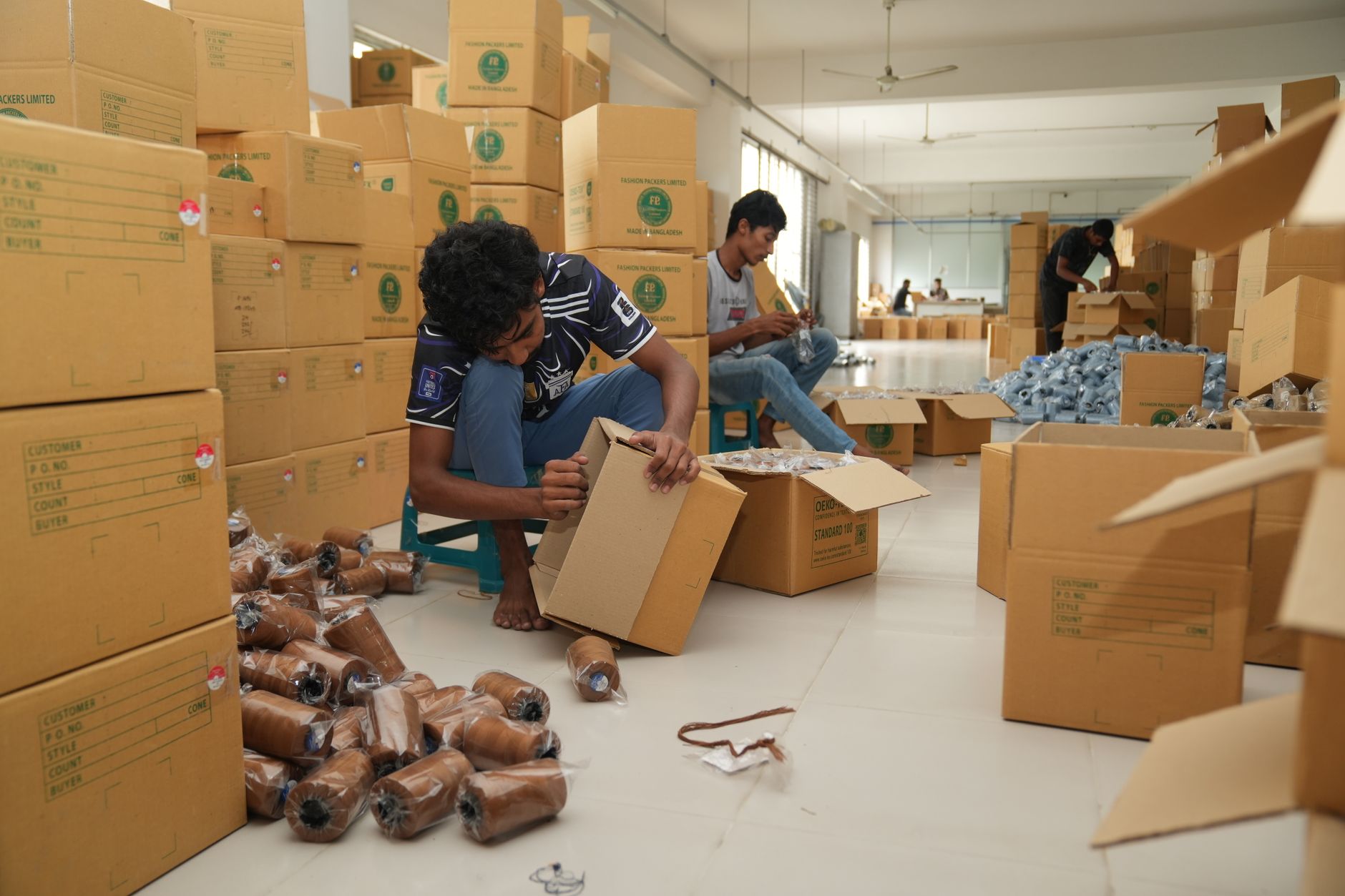
A typical end-of-line cell starts with a roller infeed carrying finished units. The cobot picks each unit with a gripper and places it onto a pallet in a set pattern. The cell has two pallet positions, so when one pallet is full, a person can swap it while the robot keeps stacking on the other.
An integrator case used that dual-pallet arrangement for exactly this reason. The operator swaps a full pallet while the robot fills the second position, so the station does not stop for each pallet change. No verified change-over time is given here, so the site assessment is where your own time gets measured.
At the start of a shift, the operator selects the stored program for the day's product, checks the gripper and pallet pattern, and confirms the infeed is loaded. During the shift the person watches the cell, clears any jam or misfeed, and keeps the next pallet ready. A format change means selecting another stored program, not rebuilding the cell.
Which areas of the plant does it work in?
A cobot earns its place where a person repeats one handling motion. In an appliance plant that usually means the end of the line first, then a few stations next to existing machines. The zones below show the areas where this work usually fits.
Each area needs its own safety review. A station next to a press, a molding machine or a conveyor has to be checked for pinch points, reach and the paths people walk. The photos show the kind of space involved, not any particular plant, and a site assessment settles the layout for yours.
A sensible start is one area and one shift, then a second station once the first one runs well. That keeps the first project small enough to learn from and makes the handover to your crew easier.
How does a cobot work alongside existing staff?
A cobot does not replace the crew. It takes the repetitive pick and place step, while people handle the work that still needs judgment, such as setup, quality checks, clearing jams, restocking the infeed and dealing with exceptions. The cell is always run with a team, never with zero staff.
Safety comes first. One vendor and integrator case describes a palletizing cell with a 20 kg payload cobot running without fences, relying on force limiting and collision detection. That is a case-specific result. According to an industry explainer on ISO/TS 15066, power and force limiting sets limits for cobots, and integrators must run a full risk assessment of the robot, end effector, workpiece, speed and layout together, then validate contact forces with instrumented tests.
The roles change rather than disappear. The people who once did the repetitive task move to running the cell, selecting programs, watching the outfeed and handling exceptions. That keeps experienced staff on the line, which is where they are usually most useful.
What drives the savings?
The savings come from labor hours on the repetitive task, not from a promise. Each station that a cobot covers frees the hours a person would spend on that motion, and those hours can go to setup, checks and exceptions. No verified range of hours saved per shift was available for this page, so none is quoted here, and the site assessment measures your hours directly.
Three inputs set the number on your floor: how many hours the task takes each shift, how many shifts the line runs, and how often the station sits unstaffed. Throughput matters too. The 480 boxes per hour simulation shows the modeled upper end of a palletizing station, which is a planning figure rather than a result.
The labor context is larger than one plant. The Deloitte and Manufacturing Institute study says US manufacturing could need as many as 3.8 million new employees between 2024 and 2033, so unfilled hours at end-of-line stations are a problem many plants share.
What can a cobot not do?
A cobot is not a fit for every task. It handles repetitive pick, place and tending steps that fit within its reach and rated payload. Heavy loads, very fast motion, fine assembly that needs a skilled hand, and tasks that change every few minutes usually need another tool or stay with people.
A cobot also depends on a steady infeed. If units arrive jammed, inconsistent or out of position, the cell stops or needs a person to fix it. The robot is one tool in a line, and it works best when the line design around it has been thought through.
- Payloads above the rated limit of the chosen arm, such as the 20 kg payload in one project
- Work that changes format every few minutes without a stored program ready
- Judgment calls on defects, fit or appearance
- Stations where temperature, access or layout rule out the guarding the cell needs
How do you get started?
Start with one station and one shift. We begin with a free site assessment, where we map the area, measure reach and traffic, look at the product and the infeed, and talk through how many shifts the line runs. The assessment shows which robot suits the site, and whether a fence or a safety scanner is needed.
We are a US commercial robot integrator. We pick the robot for the site, lease it through financing, deploy and integrate it, train your staff and service it nationwide. The payment comes in the quote, which we give after the site assessment, so the lease terms and service sit in one place.
Go-live support follows installation, and training covers the operators who will select programs, clear jams and watch the outfeed. The first step is a conversation about one station on one line. We build the quote once we have seen your floor.
Frequently asked questions
Want a cobot at your appliance manufacturing plant?
Tell us about your site. We will recommend the robot, quote the lease, and keep it serviced.
Sources
- Deloitte and The Manufacturing Institute study press release
- The Manufacturing Institute study summary
- Vendor case study: home appliance palletizer
- Vendor summary: home appliance palletizing
- Integrator case study: collaborative palletizing
- EU Digital Innovation Hubs network case study: collaborative palletising
- Industry explainer: ISO/TS 15066