
Key takeaways
- Robotic lawn mowers take the regular cutting of open grounds, arena surrounds and paddock edges off the crew's list.
- Robots work in charged blocks, so a large area becomes a schedule of sessions rather than one job.
- Slopes, wet ground, footing and manure still need people and a plan.
- The savings show up as staff hours freed for horse care, and the real figure comes from your own site assessment.
- The first step is a free site assessment, with the lease quoted after it.
How can robotic lawn mowers for equestrian centers help?
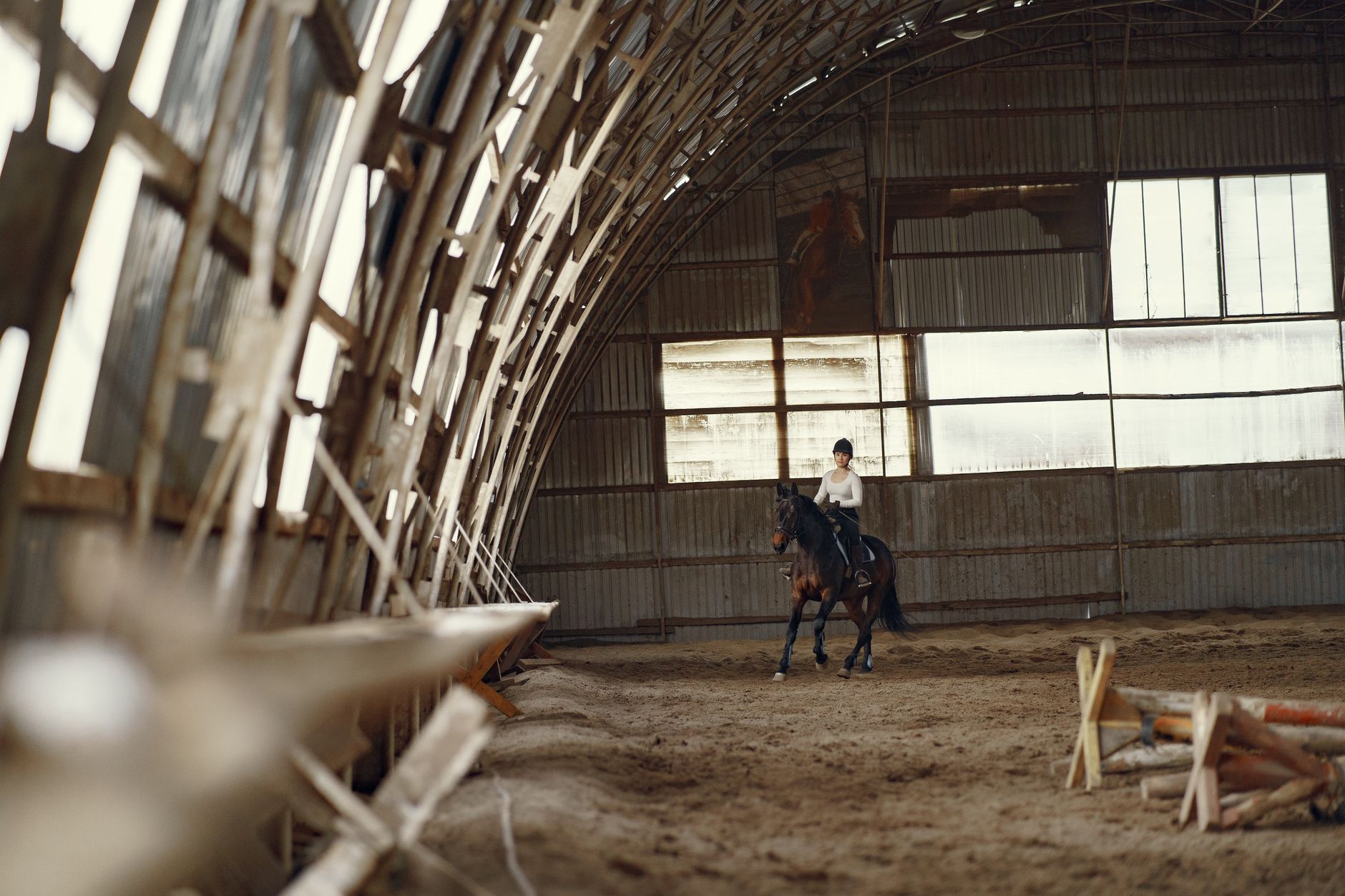
Robotic lawn mowers for equestrian centers take over the repeated cutting of open grounds, arena surrounds and paddock edges. They run on a schedule you set, not on whoever is free that morning, and that regularity is the main reason to look at them. A center that holds a lot of grass with a small crew gets a steady cut without pulling people away from horses.
The benefit is not that a robot does the whole job. The routine cut happens on a steady rhythm, the staff who once pushed a mower around the arena spend more of their time on horses, footing and fences, and the grounds look kept between the larger seasonal jobs. People still trim edges, service the machine and handle the spots a robot cannot reach.
We are a US commercial robot integrator. We assess the site, choose the robot that fits the ground, lease it through financing, deploy and integrate it, train your staff and service it nationwide. The fixed robot lease payment comes in the quote after a free site assessment, so you can judge the fit before you commit to anything.
What does mowing demand at an equestrian center today?
The grounds at an equestrian center are a set of separate areas, and each one has its own cutting need. The grass around the arena has to stay tidy and clearly bounded. Paddock edges need trimming where a mower cannot easily get close to fence lines. Open turnout and spectator lawns need regular cuts through the growing season, and entry and barn lawns have to look right on show days.
One equestrian facility quoted in an Irish trade article says it cuts its grass arena up to three times a week, alongside spring sanding and fertilizing. That is one facility's practice, and the attribution is uncertain, so treat it as an illustration rather than a benchmark. Your own weekly hours depend on your acreage, your growing season and how often each area has to look finished.
On the scale of the sector, according to secondary coverage of the 2017 American Horse Council Foundation study, the U.S. counted 7.2 million horses, down 2 million from the 2005 study. We did not find a published benchmark for weekly mowing hours at equestrian facilities, which means the right first step is measuring your own grounds.
Where does a robotic mower work at an equestrian center?
The robot works on the grass, not the footing. Arena footing, sand or blend, stays out of its path, and the boundary is set so the machine stops well short of the ring. Keep the zones clearly defined so the robot's areas are the grass you want cut and nothing else.
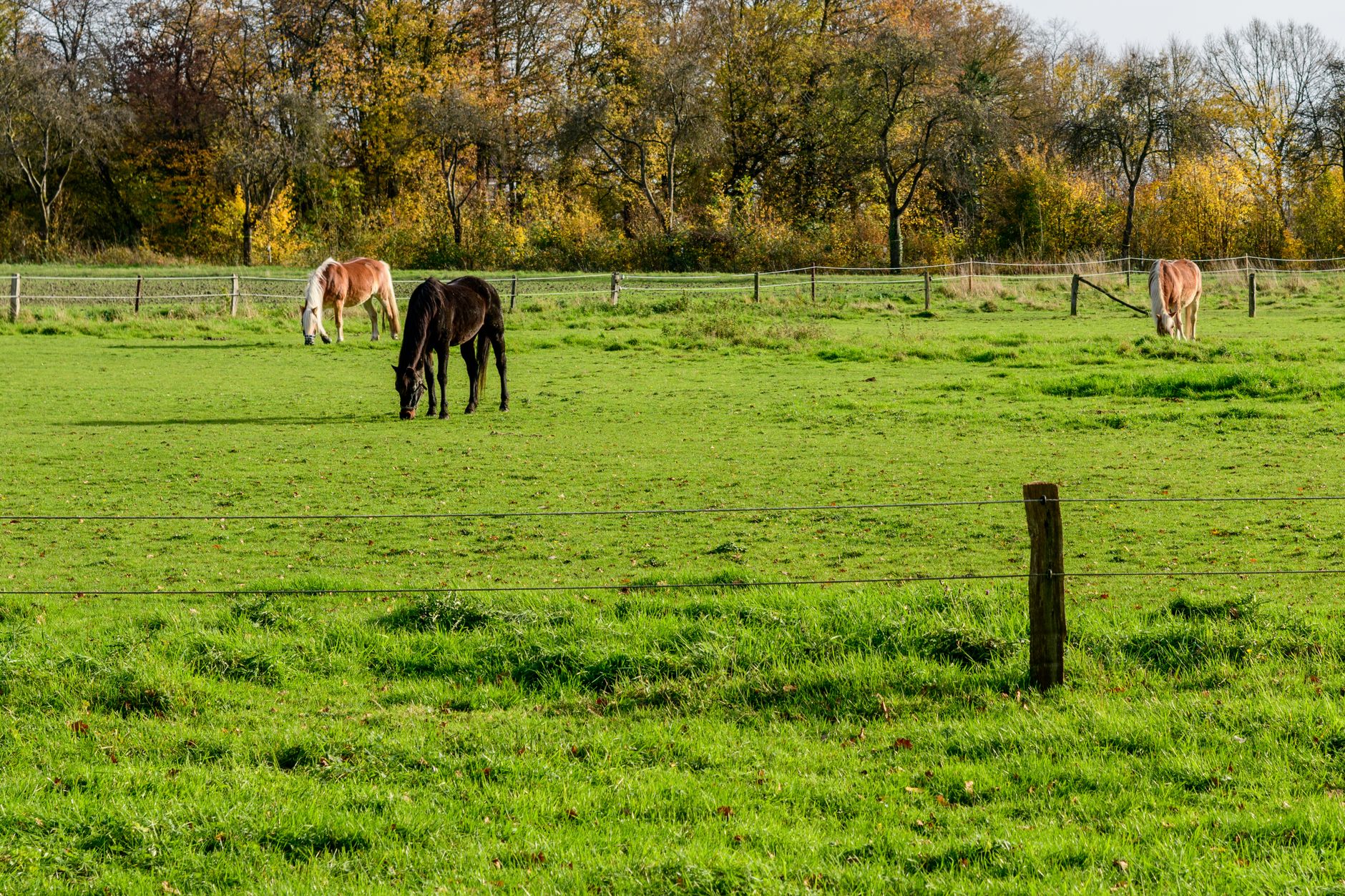
Good candidates are open areas that are large, reasonably level and cut on a regular cycle. Turnout fields, the grass around the arena, paddock margins and the lawns around barns and entries all fit that pattern, provided the slopes and footing stay within what the robot can handle.
Use the zones below as a starting map. The site assessment is where the exact boundaries, slopes and obstacles get checked on foot before anything is set.
How much mowing can the robot cover in a week?
Capacity is where manufacturer and retailer figures help, with a caveat. A consumer model in one vendor's guide to large lawns lists daily coverage of 2,500 square meters, about 0.62 acres, at its standard setting, and up to 5,000 square meters, about 1.24 acres, at its rush setting. Those figures are vendor-reported and have not been independently tested.
The same guide estimates that a 1-acre yard takes 6 to 8 hours of total mowing time, while most robot mowers run 2 to 3 hours per charge. A retailer's guide to large-yard models gives about 1.25 to 2.5 acres per hour for one model. For a center, a big area becomes a schedule of sessions across several days, not one job.
Plan the robot around charge cycles and the windows when the grounds are clear of horses. A run of 2 to 3 hours per charge fits a quiet window well, and your weekly total should come from your measured acreage, not from anyone's catalog figure.
How does the robot work day to day?
Once the boundary is set, the robot runs on its own schedule. It leaves its base, cuts a block of grass, returns to charge and goes back out until its zone is done. A staff member checks it at the start and end of each work window.
Most of the day is quiet. The robot does not need anyone steering it, but it does need a person to look at the grounds afterward, clear anything that stopped it, and note wet spots or ruts. Stones, exposed roots and fallen branches can halt a robot and need a person to clear them before it restarts.
The schedule is the real design work. Put the cutting in quiet hours when horses are elsewhere and people are off the grass, and set the robot to skip ground that is too wet to cut cleanly.
Who still does the work alongside the robot?
A robot does not replace the team. It takes over a portion of the repeated cutting. Someone still runs the schedule, watches the machine, trims by hand around posts and fence lines, handles the spots a robot cannot reach, and covers the show-day work that gets pulled in at the last minute.
The usual pattern is one robot with a smaller crew whose time moves toward horse care, footing, fencing and the barn. Our deployment includes training for the staff who will work with the machine, so the knowledge does not sit with one person. We also service the robot nationwide, so your team is not left repairing it alone.
Expect the crew to change rather than disappear. Some hours shift from pushing a mower to checking the grounds, and that shift is the part to plan for in your staffing.
What drives the savings, and how large can they be?
The savings come from hours the crew no longer spends on open ground. Those hours depend on how many acres you cut, how often you cut them and how much of that work the robot takes on. A 1-acre area that takes 6 to 8 hours of total mowing time, by one vendor's estimate, is a reference point for the arithmetic, not a promise.
Frequency is the other lever. An arena surround cut up to three times a week, as one facility reports, adds up quickly across a season. A robot on a set schedule keeps that cadence without someone fitting it in between horses, and the freed hours go to tasks that need people.
Work out the savings in hours first, then decide what those hours are worth to your center. We do not promise a number, because the right figure depends on your acreage, slopes, footing and schedule, all of which the site assessment measures.
What can a robot not do at an equestrian center?
Slope is the first limit. One robot mower manual lists a maximum incline or decline of 40%, and that rating is a ceiling for suitable ground, not a promise for every bank. Steep paddock banks and rutted turnouts need a person to assess them on foot before any boundary is drawn.
Wet ground is the second. A manufacturer's guidance on wet grass notes that wet conditions reduce grip regardless of the incline rating, and that extremely wet ground can cause slipping or rutting. Damp weather is when the robot is most likely to struggle, so the schedule should pause it after heavy rain.
Manure pickup stays with staff, since we have not verified that robots handle it. Some areas will also need hand work, including spots the boundary cannot cover, tight edges along gates and anything beneath fence lines.
How do you get started?
The start is a free site assessment. We walk the grounds, map the zones, check slopes and footing boundaries, and note wet spots and obstacles. You then get a quote with the lease payment, so the terms reflect your actual site and not a generic plan.
Many centers start with one leased robot on the most regular cut, such as the arena surround or an open turnout, then extend once the schedule holds. Our deployment and integration work sets the boundaries, runs go-live support with your staff and trains them on daily checks. The steps look like this.
- Free site assessment with a zone map
- Quote with the lease payment after the assessment
- Lease through financing with deployment and integration
- Staff training and go-live support
- Nationwide service with on-site dispatch when needed
Closing note on measuring your own hours
Once the first zone runs cleanly, you can measure the hours saved on your own grounds, which is the number that should drive the decision.
Frequently asked questions
Want a robotic mower at your equestrian center?
Tell us about your site. We will recommend the robot, quote the lease, and keep it serviced.
Sources
- The Horse, summary of the 2017 American Horse Council Foundation study
- American Farriers, summary of the 2017 equine industry study
- The Irish Field, spring arena upkeep article
- Robot mower guide for large lawns, vendor page
- Robot mower guide for large yards, retailer page
- Robot mower user manual, incline limit
- Manufacturer blog on mowing wet grass