
The question, in the buyer's words
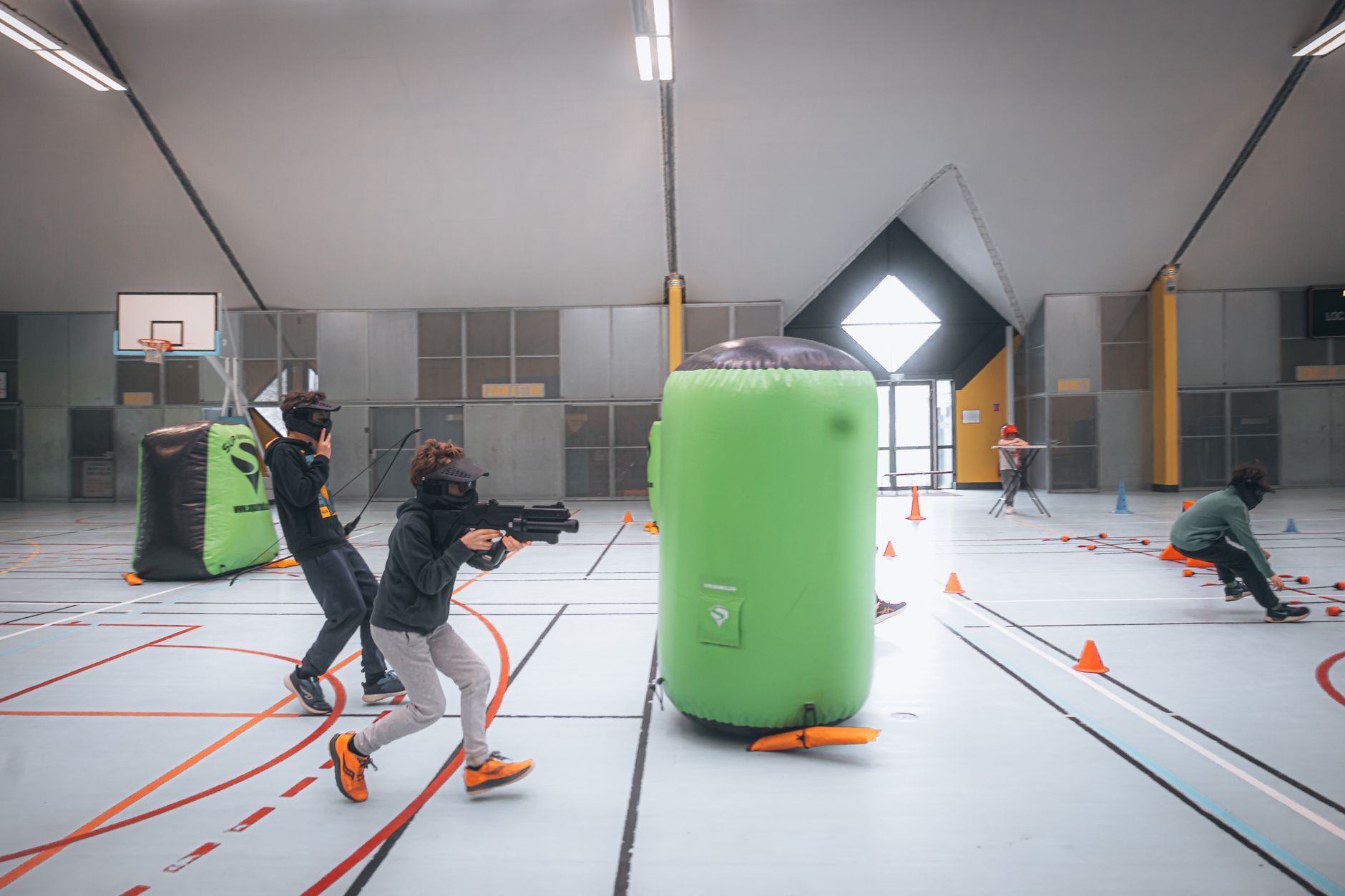
I run a 14,000-square-foot laser tag arena, and fog-machine residue and spilled slushies coat the black-light floors every night while one closer is left alone; could a cleaning robot work the arena after the last game without snagging on the foam barriers?
Key takeaways
- The open floor is the strongest case; spills, set pieces and stops still need a person.
- Barrier base height compared with the exact model's detection limit decides whether a route is safe to set.
- Dried slushies and heavy fog film should be cleared by hand before the robot runs.
- A stopped robot waits for help, so a lone closer needs a clear response plan.
- A lease quote follows a free site assessment that tests your own floor.
Can a cleaning robot work a laser tag arena floor after games?
A cleaning robot can work a laser tag arena floor after games, but the answer depends on which part of the job you hand it. The open floor between sets is the strongest case, because the route is repeatable and the floor looks much the same from night to night. The harder parts are the set pieces, the spills and the sensing questions around low objects, and those are where your closer's judgment still matters.
Your question has three parts, and they do not get the same answer. The first is residue and spills, which are the heaviest jobs and should be cleared by a person before the robot starts. The second is the foam barriers, which is a sensing question about how low each base sits. The third is the lone closer, who is the person a stopped robot will need to call for help.
At 14,000 square feet, the first site question is whether one unit can cover the open floor in the time between the last game and the closer's exit, or whether the robot should take a fixed zone each night. We do not give coverage or timing figures before we see the floor, because route length, barrier layout and cleaning width all change the answer.
Why is fog residue so hard on a laser tag arena floor?
Fog and haze machines are the main source of the film on your floor. A laser tag operator's blog says smoke machines leave an oily residue on props and walls, can make carpet slippery, and that glycol-based fluid needs regular cleaning of the arena. A thin oily film can smear rather than lift, so it is the first thing to test on your own floor, not the last.
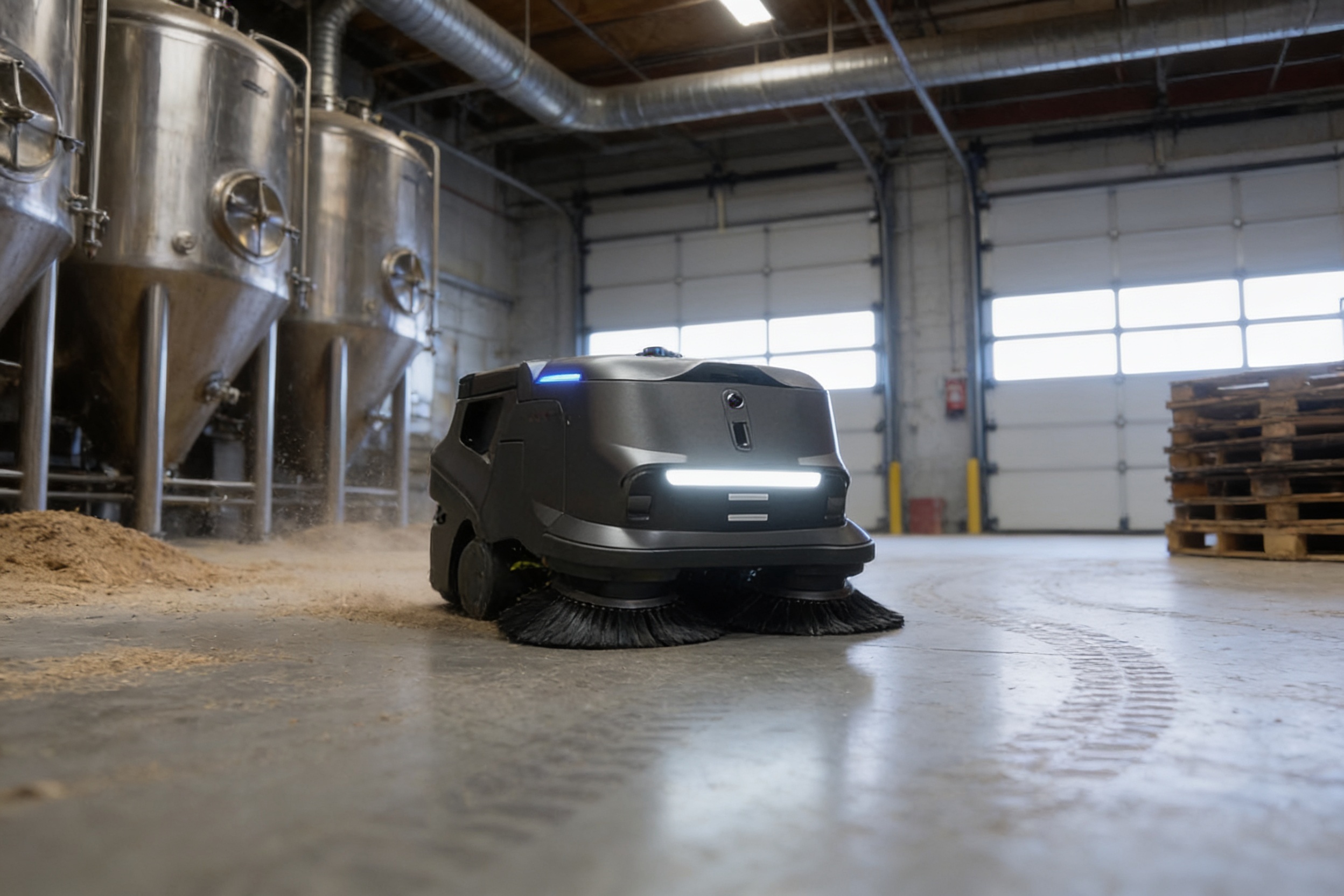
Slushie spills are a different job. Once they dry they turn sticky, and a scrubber that crosses a spill can spread it across the route and into the next pass. Scrape or wipe the heavy spills before the robot runs, and treat the robot as the step that handles routine film, not the step that clears a mess.
The fluid matters as much as the amount. Ask your fog supplier which fluid they use and request the product data sheet. We have not found a published comparison of residue by fluid type, so the real test is a sample run on your floor during the site assessment.

Can a cleaning robot tell a foam barrier from open floor?
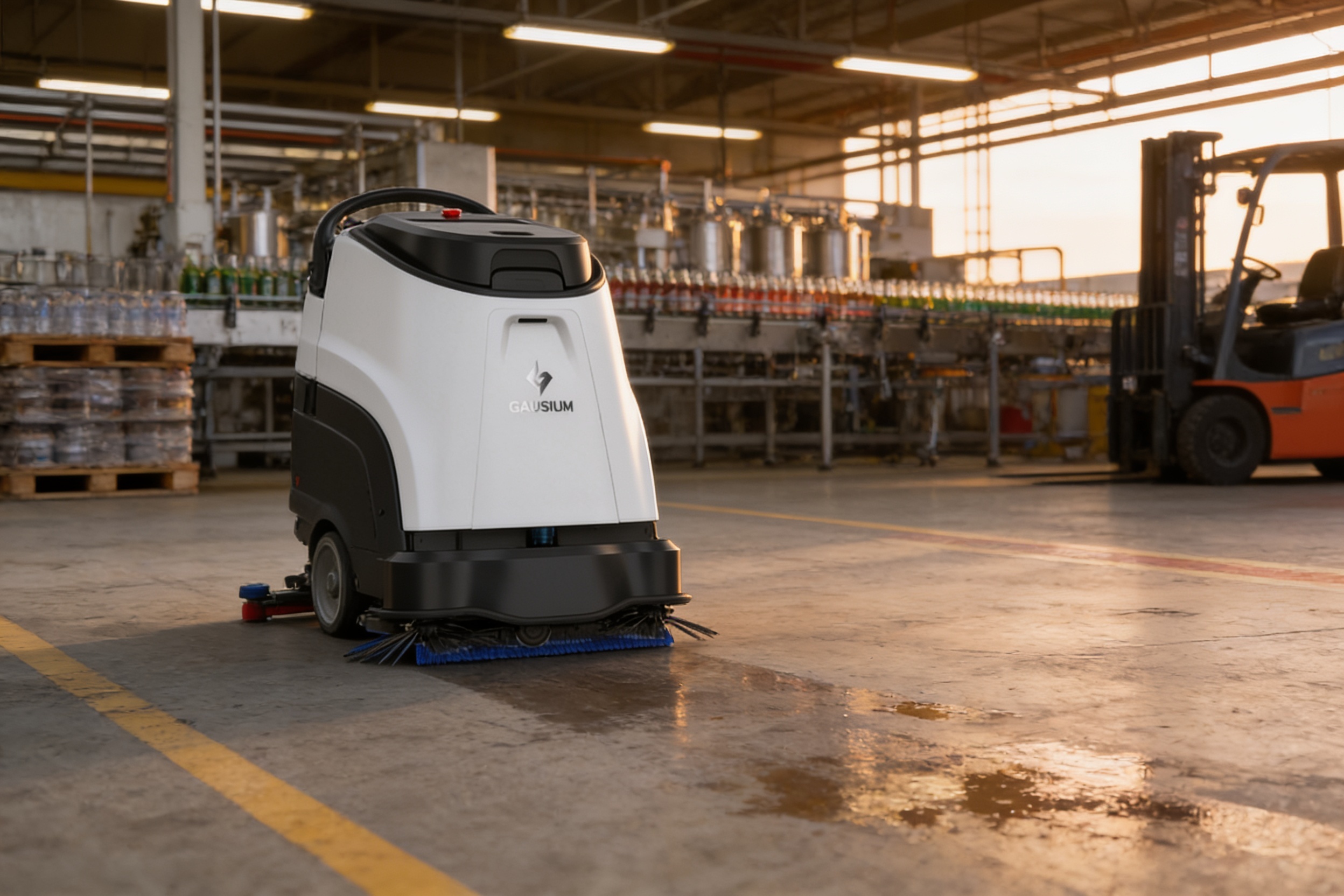
Foam barriers are a sensing question more than a cleaning question. An older scrubber design described in a floor-cleaning robot patent used ultrasonic sensors for front and side detection, a floor-levelness sensor for drop-offs and steps, and bumper switches. When an obstacle cannot be avoided, that robot stops and signals for assistance. Plan for that behavior, not for a promise that the robot never stops.
The weakest point is the low object. The same patent record notes that obstacles are often too low for 360-degree laser space sensors to detect. A floor-scrubber vendor reported that its earlier model detected objects about 39 cm (about 15 in) or taller at 2 m, and that a software update extended detection to objects as low as 16 cm (6.3 in). Those are vendor figures for that vendor's model, not for the one you would lease.
So the number to measure is the base height of every barrier, light stand and cable run on the route. If a base sits below the detection limit of the exact model, the robot may only find it by bumping into it. Ask for the detection height in writing before you accept a route plan.
How do you keep the route right when barriers move?
Laser tag sets get rearranged. If barriers move between games or sessions, a map made on one night can point at open floor on the next, and a route that skips a barrier may run into it. Set fixed cleaning zones for the open floor, keep moved barriers off the route, or map the layout you run most nights and treat barrier moves as a separate task that a person supervises.
Keep the paths clear and mark permanent obstacles so they read clearly to the sensors. High-contrast tape on barrier bases is a practical choice to test during setup, but the test is detection on your floor, not the tape itself. Set cleaning zones and times on a fixed schedule so the robot runs the same route every night.
Black-light lighting is a question the sources we reviewed did not answer. None of them addressed how black-light conditions affect a scrubber's sensors, so we test that during the site assessment rather than promise it.
What happens when the robot stops and nobody is on the floor?
A robot that stops and signals for help is only useful if someone answers the signal. On a lone-closer night, the closer is that person, which means a blocked route can pull them away from the spot cleaning they still have to finish. Decide before go-live who answers, how fast, and what the closer does when a stop cannot be cleared quickly.
The slip risk matters on a residue-covered floor. In the BLS injury snapshot for janitors and cleaners, covering 2015 to 2019, the most recent year in the sources we reviewed was 2019. That year shows 18,680 cases in private industry and a days-away-from-work incidence rate of 157.4 per 10,000 full-time equivalent workers, excluding maids and housekeeping cleaners. The same table counted 4,930 fall-on-same-level cases and 890 slips and trips without a fall. Those are occupation-wide figures, but they show why a lone worker should not hurry across a slick floor.
A robot does not remove the closer's walk-through. It takes over the repeated passes, so the closer's time goes to the spills, the barrier checks and the stop calls that need a person.
How hard is it to staff a lone closer over the long run?
The BLS Occupational Outlook Handbook counted 2,447,700 jobs for janitors and building cleaners in 2024, with a projected 2% change from 2024 to 2034, which it describes as slower than average, and about 47,800 added jobs. The occupation is large, so hiring is possible. Growth is slow, so a closer who leaves may not be quick to replace.
Turnover is the harder number. A janitorial industry blog that cites BLS figures reports average annual total separation rates around 45% from 2017 onward, excluding 2020. That blog is a secondary source, and we have not checked the figure against BLS JOLTS data, so treat it as a lead to verify rather than a settled fact.
For you, the question is continuity. When a closer leaves, the floor still has to be done that night. A robot on a fixed route gives you a baseline floor pass that does not depend on the same person being on shift, and it leaves the closer's time for the work only a person can do.
How does a robot-supported close differ from a closer working alone?
A robot is consistent. It runs the same route, the same zones and the same schedule, and it does not skip the back corners because it is tired. A person is better at judgment: deciding what a stain is, moving a barrier that is stuck, lifting a spill a scrubber should not take, and noticing a damaged barrier before a guest does. Neither replaces the other on this floor.
A realistic sequence for a robot-supported close looks like this. The steps below are an example for planning, not a measured timing; the real sequence comes out of your site assessment.
The sequence shows the honest split. The robot takes the repeated pass, and the closer handles the spills, the stops and whatever changes from night to night.
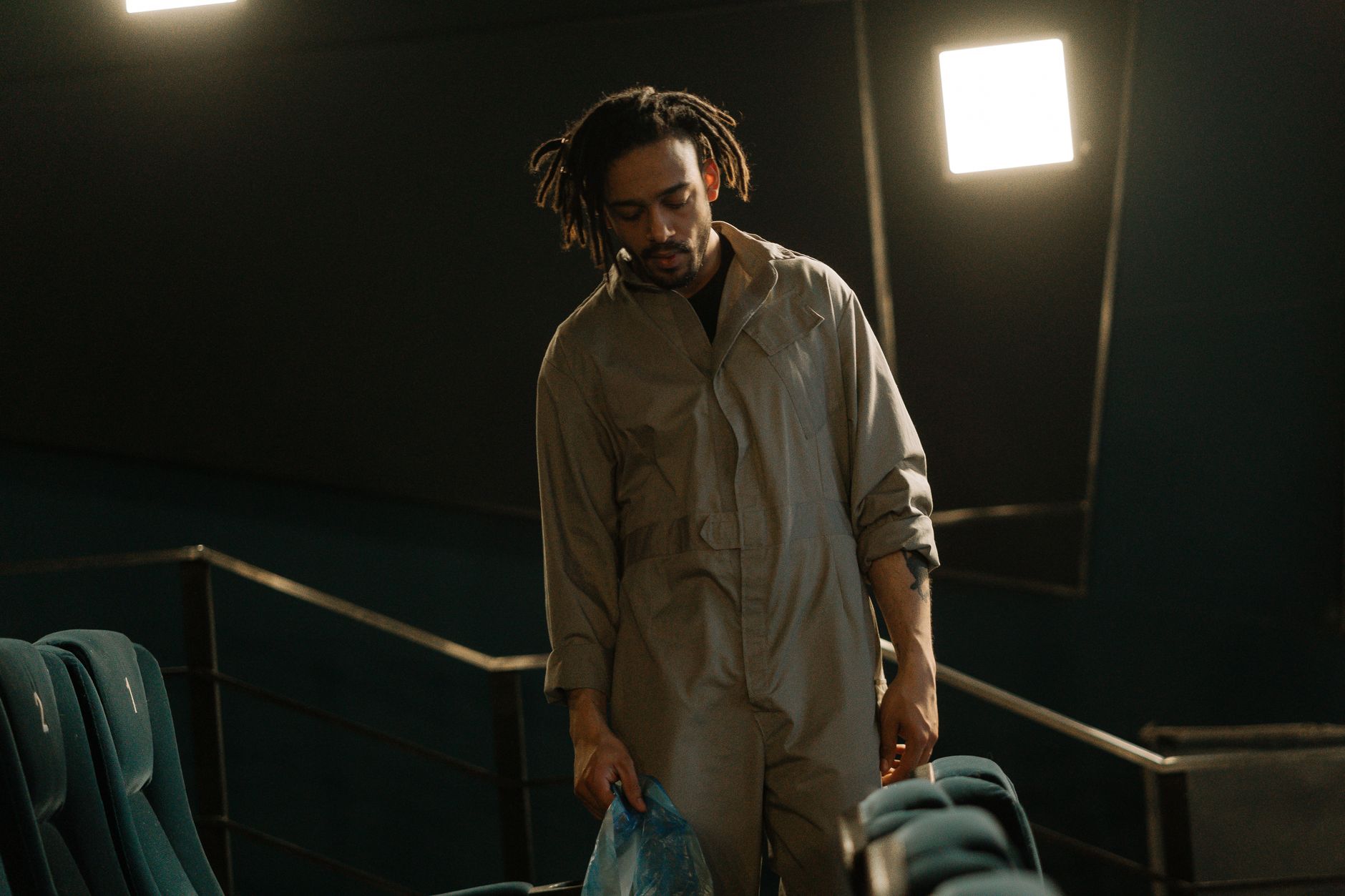
What should you check before you ask for a lease quote?
Start with a free site assessment. We map the floor, measure barrier bases and cable runs, test sensing on your residue and lighting, and set the zones and schedule. The lease payment comes in a quote after that assessment, so the number reflects the floor we actually saw. We lease the robot through financing, deploy and integrate it, train your staff, and service it under our service plan, with regional service engineers in every state we service.
If the floor is unusual, a robot pilot program with one leased unit on the open floor can show real detection and residue results before you commit to the whole arena. Before you request the assessment, gather what we will ask for anyway: a floor plan, the height of every barrier base, the fog fluid name and its data sheet, who answers a robot stop at each hour, and what your closer does now after the last game.
If any answer surprises you, the robot may still be the right tool for the open floor while a person keeps the set and the spills. That split is often the honest result, and it is easier to learn on a site visit than after go-live.
Frequently asked questions
Want a cleaning robot at your indoor laser tag arenas?
Tell us about your site. We will recommend the robot, quote the lease, and keep it serviced.
Sources
- BLS Occupational Outlook Handbook, janitors and building cleaners
- BLS injury and illness snapshot, janitors and cleaners 2015-19
- Scrubber vendor object detection note
- Floor-cleaning robot patent US11006804 (Google Patents)
- Floor-cleaning robot patent US11006804 (Justia)
- Laser tag operator blog on smoke and haze
- Janitorial industry blog on turnover