
The question, in the buyer's words
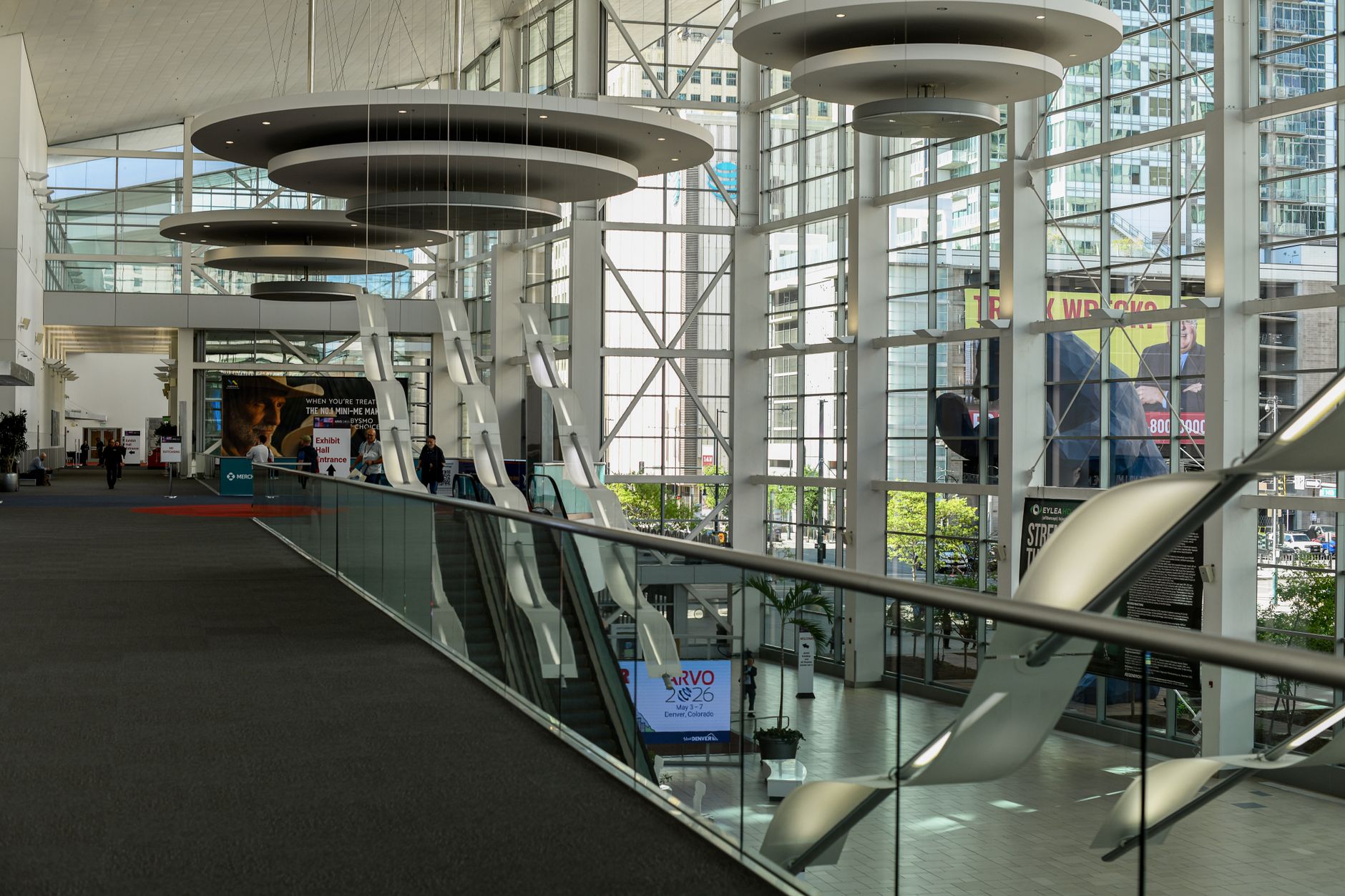
Our 500,000-square-foot convention center has back-to-back shows and only a few hours between move-out and move-in; could cleaning robots turn the halls over fast enough to take on more events?
Key takeaways
- Cleaning robots can take the repeated floor scrubbing out of convention hall turnover, but not the freight, tear-down or debris work.
- Top-speed rates imply roughly 11 to 25 machine-hours for a 500,000 sq ft building, so fleet size and sequencing matter more than headline speed.
- Show floor policies, crate volume and labor windows can block a robot run even when the floor looks clear.
- Measure your crew's scrubbing hours in one pilot hall before deciding how many units to lease.
What does a convention hall turnover actually involve?
A convention hall turnover is not one task. Between move-out and move-in, the floor has to be cleared of freight, booth remnants, crates and debris, then scrubbed, then set up for the next show. Cleaning robots can take over the repeated scrubbing and open-floor sweeping, which is the part that repeats across every aisle of the hall. They do not replace the freight and tear-down crews, and that split is where most of the decision sits.
Scale comes first. A WorldAtlas ranking, citing 2026 figures checked against a trade show directory, lists nine US convention centers with at least 1 million sq ft of exhibit space. Your 500,000 sq ft building is large but not the biggest in the country. Check whether that figure is total building area or cleanable hall floor, because only the hall floor is the robot's workload, and total building area overstates the scrubbing job.
We are a robot leasing and service company, so the sequence matters. We assess the site for free, map the halls, and send a quote for a lease through financing. We then deploy and integrate the robots, train your staff, and service every unit under our service plan. The quote comes after the site assessment, so the floor measurements we take on site are where your real numbers come from.
How much floor can a cleaning robot cover in a few hours?
Start with vendor throughput, and keep the caveat in view. These are maximum speeds on open floor, reported by sellers and not tested by an independent lab. A distributor listing puts one autonomous scrubber at about 28,000 sq ft per hour and a smaller model at about 20,000 sq ft per hour, with a claimed 98 to 99.5 percent coverage. A 2025 product report lists a large-venue model at about 45,760 sq ft per hour, and a second model from the same report at about 33,440 sq ft per hour.
Turn those rates into hours and the picture tightens. A 100,000 sq ft hall at 28,000 sq ft per hour takes about 3.6 hours of machine time, which can consume most of a short window before debris is cleared. The whole 500,000 sq ft building would take about 11 hours of one machine at the faster large-venue rate, and about 25 hours at the 20,000 sq ft per hour rate. These are top-speed figures, so count on fewer square feet per hour once turns, obstacles, charging and route resets are added.
The practical lesson is about fleet size and sequencing rather than the headline rate. Two or three units working separate halls in parallel, each started as its hall clears, will do more than one fast unit working through the whole building. Treat any per-cycle figure with care as well, since a cycle is not an hour and the two cannot be compared directly.
Where do the hours go during a changeover?
No published study we found gives a standard changeover duration, crew size or cleaning hours for convention halls, so the number that matters has to come from your own logs. Track two or three real turnovers and split crew time into scrubbing, freight removal, tear-down debris and waste removal. Only the first category is work a scrubber can take over.
The table below sets the robot side against today's crew hours. The robot figures are arithmetic on vendor maximum rates applied to a 500,000 sq ft building and an illustrative 100,000 sq ft hall, so they show the ceiling, not a promise.
Labor windows shape the calendar as much as the floor does. One show's exhibitor service document sets straight-time labor at 8:00 am to 5:00 pm on weekdays, with overtime outside those hours and on weekends. A robot running inside straight time does little to change crew hours, while overnight runs can move scrubbing out of the overtime window, though supervision and access still need a plan.
Which parts of the building can a cleaning robot work?
A cleaning robot earns its place on large, flat, mostly open floors with predictable routes. Exhibit halls are the strongest fit once aisles are clear and marked, and main concourses work when they are wide and free of loose furniture. The six zones below show where we would plan routes and where a person still does the work.
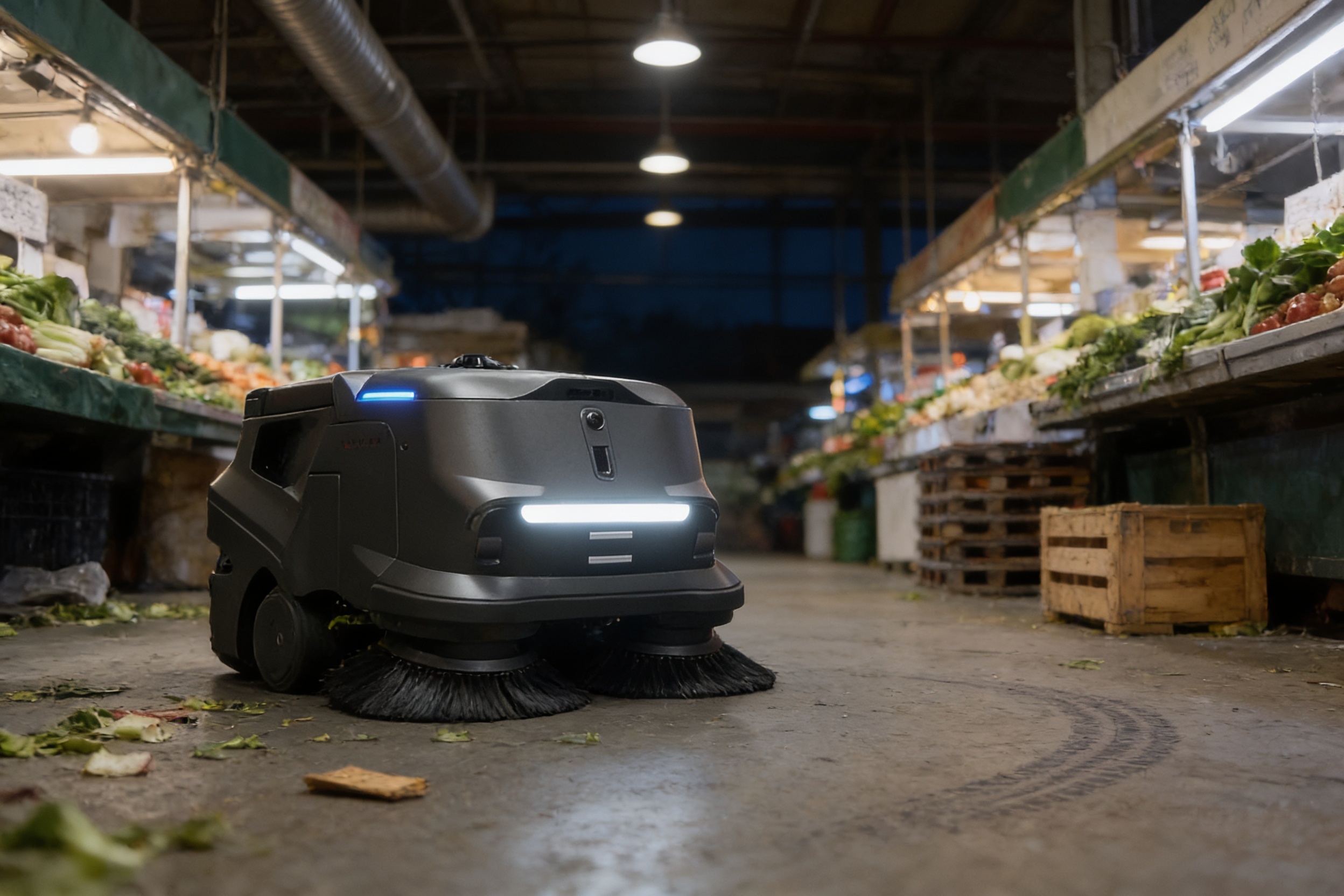
Crate-heavy floors are the main limit. A show document for one San Francisco event enforced a Clean Floor Policy in three halls because of crate volume and limited setup space. That is exactly where routes break, since the robot cannot pass a blocked aisle and the crew has to clear it first. Set a clear-floor rule for each hall before any robot run is scheduled.
What show rules and floor policies affect the turnover window?
Show rules often decide more than the machine does. Exhibitor floor policies, crate storage limits and labor windows set when a hall is open for cleaning. Ask for the exhibitor service manual for each show on your calendar before you model turnover, since those rules change from event to event.
Two rule types matter most. Clean floor requirements can force a full pre-show scrub even when a hall looks ready, which adds hours regardless of the robot. Labor windows and overtime rules decide whether any cleaning can run after the crew leaves, so an overnight robot run changes when the same square feet get cleaned without changing the show schedule.
We suggest a walkthrough of two halls against your event calendar. The result is a plain schedule: which halls can take a robot run in which gap, which need a crew first, and which need a clear-floor rule before any robot is scheduled. That schedule is the basis for the site assessment and the quote that follows it.
Is a robot or a crew better for each cleaning task?
Neither wins everywhere. A robot is steady and repeatable on clear, mapped floor, and it does not tire late in a long turnover. A person handles what the floor throws at them, including loose debris, spills, cords, corners and the judgment calls a changeover demands. The comparison below keeps those tradeoffs visible.
One workable split is the robot on the large open floor, scheduled ahead of the crew, with the crew doing debris, edges and anything unusual. That split only works when the robot's route is cleared before it starts, so the crew's first job is the floor, not the scrubbing.
- Open floor scrubbing
Cleaning Robot
Steady, repeatable passes on clear, mapped aisles at vendor-stated speeds
Staff
Slower on bare floor, but adjusts pressure and passes to the surface
- Hours of work
Cleaning Robot
Can run inside windows set by labor rules, including supervised overnight runs
Staff
Limited by shift length, overtime rules and fatigue
- Debris, cords and crates
Cleaning Robot
Stops when a route is blocked, and a person must clear it
Staff
Picks up debris, moves cords and works around crates
- Spills and odd edges
Cleaning Robot
Not suited to spills, thresholds or corners without a person
Staff
Handles spills, corners, thresholds and edges on the spot
- Layout changes
Cleaning Robot
Needs a remapped route when booth layouts shift
Staff
Adapts to a new layout without setup
- Consistency
Cleaning Robot
Same coverage pattern on every run, with logs
Staff
Varies with time pressure and fatigue
How common are cleaning robots, and how hard is cleaning labor to staff?
Adoption is still early. In an AACEM and ISSA autonomous cleaning survey from 2019, with about 23,000 respondents, 62% of building service contractors, 68% of in-house service providers and 69% of facility or property managers said they had not used autonomous cleaning equipment. A 2025 benchmarking survey reported by ISSA Today found 43% of respondents planned to add autonomous cleaning equipment, so interest is rising from a low base.
Labor is the constraint. The Bureau of Labor Statistics projects employment of janitors and building cleaners to grow 2 percent from 2024 to 2034, slower than the average for all occupations. Injury exposure is also real. Private-industry janitors and cleaners had 191.6 nonfatal injury and illness cases involving days away from work per 10,000 FTE workers in 2020, up from 157.4 in 2019, while all occupations were at 86.9 per 10,000 workers in 2019. The injury snapshot covers 2016 to 2020, and we did not confirm a newer year.
Those figures do not prove a robot saves a given shift. They do show why a crew that is hard to staff, and already exposed to heavy scrubbing, is a sensible place to start.
How would a cleaning robot get deployed at a convention center?
Start small, with one or two units and a phased plan that avoids shutting halls down. We begin with a free site assessment and mapping of the halls, then send a quote for the lease through financing, so you see the full picture before any unit arrives. We deploy and integrate the robots, train your crew, and service every unit under our service plan, with regional service engineers and on-site dispatch when a unit needs hands-on repair.
Pilot in one hall first. Log the crew's scrubbing hours before and after, count route interruptions, and record every exception that needed a person. Those three numbers decide whether a second and third unit makes sense, and a backup robot program can cover a unit that goes down during a show week, so one fault does not stop the whole schedule.
What would change this answer?
The answer moves on a few factors. Cleanable hall floor, not total building area, sets the workload. The number of changeovers each week sets how often the robot runs. Labor windows, show floor policies and crate-heavy layouts decide how much of each gap is usable. The list below is what to check before deciding.
A venue with long, clear halls and few overlapping crates is the strongest candidate. A venue where every changeover starts with a crate drop will get less from a robot than from better freight sequencing, and the site assessment would say so. If a pilot cuts scrubbing hours in a meaningful way, add units. If it does not, the better gain may be in the freight schedule and the labor windows.
- Cleanable hall floor square footage, measured on site, not the building total
- Changeovers per week and the gap between move-out and move-in on each
- Whether labor rules allow overnight runs, and who supervises them
- Show floor policies and crate volume that block robot routes
- Clear aisles and mapped routes in each hall before any run
Frequently asked questions
Upcoming event venues & stadiums events
- Trade showBrats & RobotsNov 10, 2026Alliant Energy Center Exhibition Hall, Madison, WI
- MeetupMPI Virginia Morning Brew Meet-Up, November 2026Nov 10, 2026Hampton, VA
- SummitVA1 Governor's Tourism Summit 2026Nov 18 to 20, 2026Kalahari Resorts & Conventions, Spotsylvania, VA
- ConferenceVirginia Association of Fairs ConventionJan 14 to 17, 2027Williamsburg Lodge, Autograph Collection, Williamsburg, VA
Want a cleaning robot at your convention centers?
Tell us about your site. We will recommend the robot, quote the lease, and keep it serviced.
Sources
- WorldAtlas, largest convention centers in the United States
- Bureau of Labor Statistics, Occupational Outlook Handbook: Janitors and Building Cleaners
- Bureau of Labor Statistics, injury and illness snapshot: janitors and cleaners, 2016 to 2020
- ISSA, AACEM and ISSA autonomous cleaning survey summary
- ISSA Today, 2025 facility management benchmarking survey
- Nassco, Nilfisk autonomous floor scrubber listing (vendor-reported throughput)
- Robotics and Automation News, 2025 autonomous floor scrubber product report (vendor-reported throughput)
- GES show document, exhibitor general overview (Clean Floor Policy and labor hours)