
The question, in the buyer's words
I run custodial for a 14-floor office building in Washington, DC, and the marble lobby and elevator halls get scuffed every afternoon while our crew is one person short; could a cleaning robot run those floors before the morning tenants arrive?
Key takeaways
- A cleaning robot can cover the marble lobby and elevator halls before tenants arrive, but it does not remove afternoon scuffs.
- Get the stone supplier or floor contractor to approve machine cleaning before any unit runs on the marble.
- Federal labor data show a large, slow growing workforce with steady replacement openings, so one missing person is hard to refill quickly.
- Keep a person on afternoon spot care, entrance mats, edges and polish, and let the robot take the repeatable early pass.
- Base the decision on a free site assessment and measured floor traffic, not on a single demonstration.
Can a DC office tower lobby marble cleaning robot run the floors before tenants arrive?
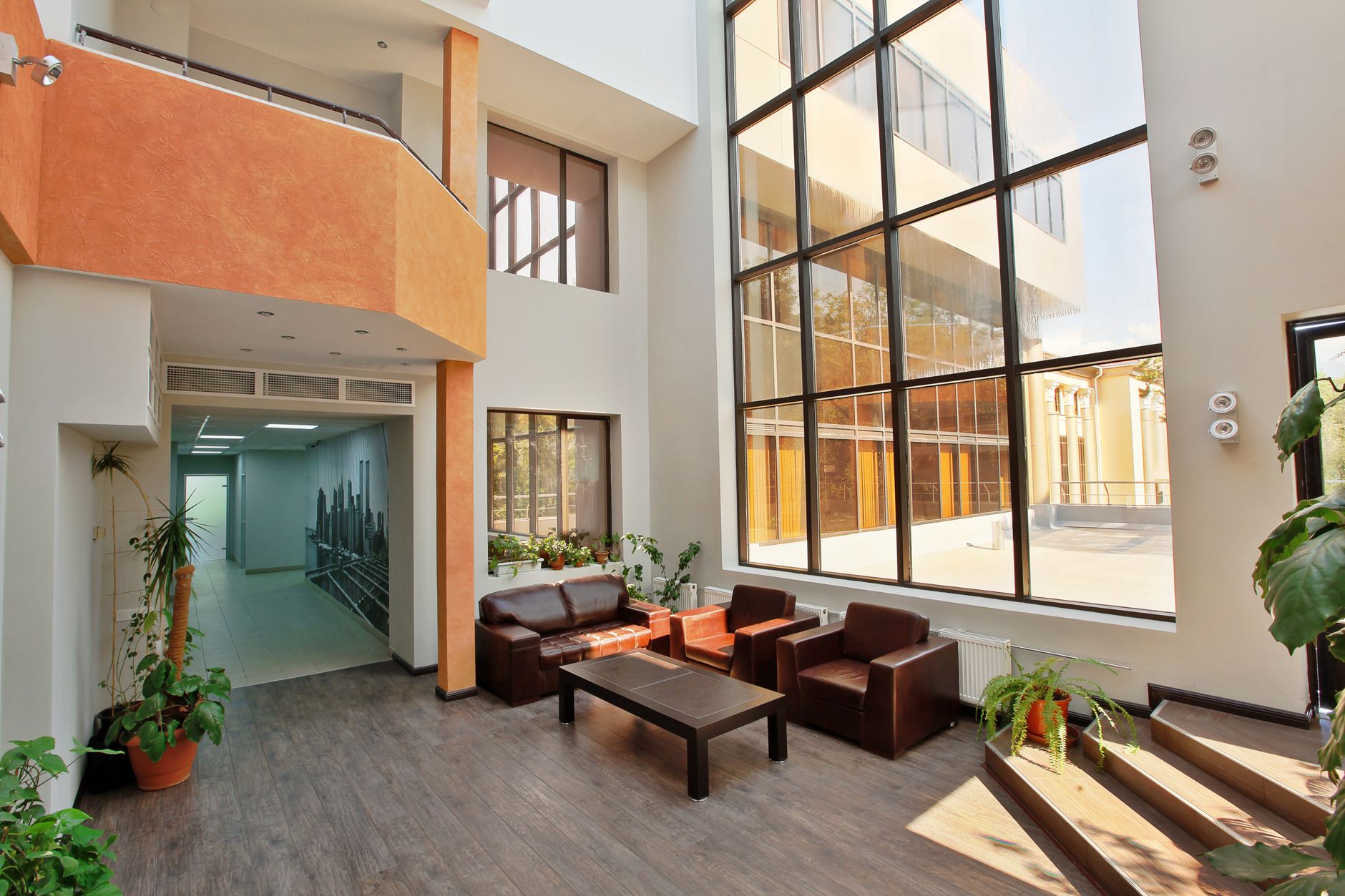
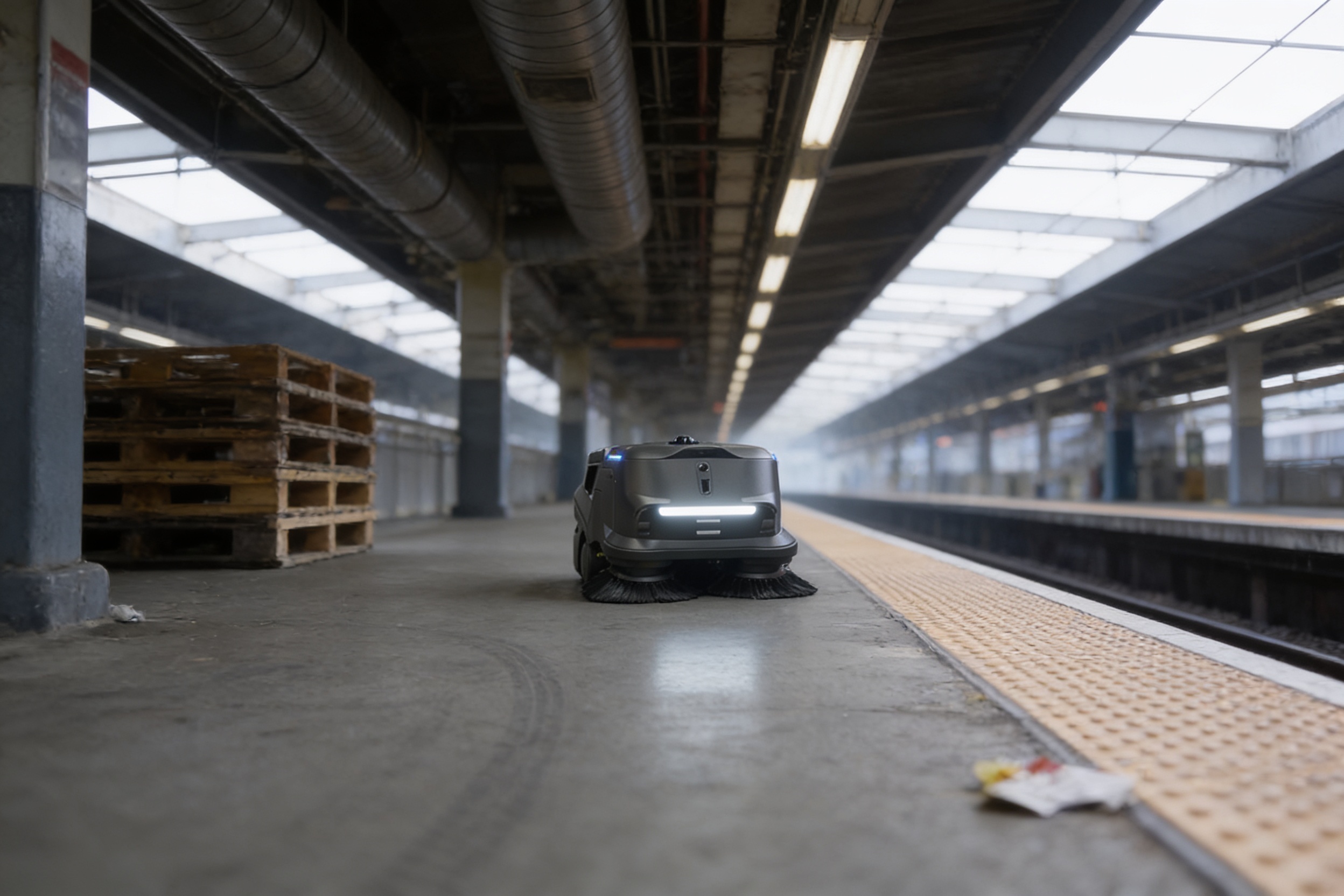
Partly, and the honest answer depends on what part of the day you mean. For the early pass, a DC office tower lobby marble cleaning robot is well suited to the large stone field, the approach to each elevator bank and the hall floors on each landing, because those areas are big, flat and repeatable. The machine follows a mapped route, so the same path runs every night without a person walking it, and a short crew is not left trying to cover a corridor by hand.
The afternoon is a different problem. Scuffs come from people, rolling carts and grit on shoes during the working day, and no unit removes a mark as it lands. A robot earns its place by taking the repeatable part of the work off your crew, so the person you have can cover the afternoon, spot spills and handle the edges and polish that a machine should not be trusted with.
Before you commit, the robot needs three things from your building. The stone finish must be approved for machine cleaning, the lobby and elevator approach must give the machine a clear and repeatable route, and someone must still own the entrance mats, the reception area and any spill that lands before a tenant reaches it.
Why do lobby floors look scuffed by the afternoon?
Marble picks up marks in predictable ways. Foot traffic grinds grit into the surface, rolling luggage and dollies leave lines, and the entrance is where most of the material arrives on shoes. A lobby that opens at dawn and fills through the morning looks clean when the early crew finishes and worn by mid afternoon, which is the pattern a short staff team notices first.
Weather changes the load. WeatherSpark, a weather site that is not an official NOAA source, lists February as the snowiest month at Reagan National, at an average of 5.4 inches. On snowy and sleety days, wet and salted shoes carry more grit across the threshold, so the vestibule and entrance mats need attention on those days even when the robot runs as planned.
Look at the floor, not only the schedule. Walk the lobby at the time tenants arrive and again in mid afternoon, note where the marks start and where they stop, and count how many fall on the route the robot would take. That map shows whether the problem is a morning gap, an afternoon gap or both, and it is the first thing a site assessment will ask you for.
How hard is it to staff custodial work in Washington, DC?
The Bureau of Labor Statistics counts about 2.4 million janitors and building cleaners nationally in 2024, and projects 2 percent growth from 2024 to 2034, which the agency describes as slower than average for all occupations. Entry needs no formal education, so the pool is open, but that also means the work turns over steadily. An earlier version of the same BLS handbook page projected about 350,300 openings a year, mostly from workers leaving the occupation, and that replacement need is the number to plan around.
The local count is older. The most recent Washington-Arlington-Alexandria figure we could verify comes from the May 2020 BLS OEWS estimates, which counted 51,350 people employed as janitors and cleaners, excluding maids and housekeeping cleaners. We did not verify a newer DC count, so use that number as context rather than a current headcount, and check your own roster for the real picture.
Pay rules move each year. The DC Department of Employment Services notice on the District minimum wage shows the rate rises on July 1 for all employers regardless of size, and it adjusts for inflation each year. The practical point for a supervisor is that the crew you keep is paid on a scale that moves every summer, so the staffing plan belongs on a yearly review rather than a one time fix.
What does a robot do better than a person in a lobby?
A robot is strong on the same route, at the same time, every night. It does not skip the elevator halls because the lobby is busy, it does not drift off the pattern, and it logs where it went, which gives you proof of the pass. That consistency is the reason to consider one for the early pass, where a short crew is most likely to skip a corridor or leave a stretch of stone for later.
A person still wins on judgment. Someone on the floor sees a fresh spill before it spreads, a gum patch that needs a different approach, a stain that needs a specific product, a scuff that calls for polish, or a wet floor that needs signage before a tenant slips. Those calls depend on what the floor is doing at that moment, and a fixed route cannot make them.
Adoption is still early. An ISSA and AACEM survey from 2019 found autonomous cleaning equipment at an early stage, with about one-third of non-adopters somewhat likely to adopt within a year. That survey is several years old, so read it as direction rather than a current rate, and ask owners who run units in similar towers what they found.
- Early pass timing
Cleaning Robot
Runs a mapped route on a fixed schedule, including before tenants arrive, with no one walking it.
Staff
Starts when staff arrive and can change the order of work around the building.
- Consistency
Cleaning Robot
Takes the same path every run and logs where it went.
Staff
Varies from day to day and can skip a corridor when the crew is short.
- Spills and fresh marks
Cleaning Robot
Does not see a spill as it lands and cannot decide what to do about it.
Staff
Spots and treats a spill or fresh mark on the spot.
- Stone care and polish
Cleaning Robot
Maintains a finish approved for machine cleaning, but does not polish or restore stone.
Staff
Polishes, does edge work and restores worn stone when it is needed.
- Entrance mats and grit
Cleaning Robot
Can pass over mats but does not clear heavy grit or wet debris from them.
Staff
Clears mats, checks the vestibule and adjusts to the weather.
- Coverage when a person is out
Cleaning Robot
Keeps the early pass going on a day when staff are out, if the unit is available.
Staff
Covers the gap, but a short crew still has to choose what to skip.
- Judgment and tenant contact
Cleaning Robot
No tenant contact and no ability to answer questions or place signage.
Staff
Answers questions, places wet floor signs and handles complaints.
What does the DC office market mean for a lobby plan?
Washington's office market is changing, and that affects how many people pass through your lobby. BNP Paribas Real Estate puts DC office inventory at about 145 million square feet, with a vacancy rate of 14.9 percent at year-end 2025. Vacancy changes how many people walk through a lobby on a given day, so measure the traffic you have rather than the traffic the building was designed for.
Space is also leaving the inventory. Lincoln Property Company reports that about 4.5 million square feet was removed from DC office inventory in 2025 for other uses. Avison Young, using CoStar data for Q1 2025, puts total inventory at about 138 million square feet, with Trophy and Class A space at about 32 percent. The sources use different scope and dates, so quote each figure with its source and avoid merging them into one number.
For a single building, the useful question is whether the owner expects the tenant mix to hold over the lease term. A building that changes use may also change its lobby hours, its floors and its traffic pattern, and a route drawn today may need redrawing. Put that question to the owner before any lease decision, along with the after hours access rules.
Can a cleaning robot be trusted on marble and stone floors?
Marble needs care, and the answer depends on the stone and its finish, not on the machine alone. Honed, polished and sealed stone react differently to a pad, to water and to cleaning chemistry, and a finish that has worn thin can dull or show marks faster. Ask the stone supplier or the building's floor maintenance contractor which cleaners and pads are approved before any machine runs on the lobby.
Test before you commit. Run the machine on a small, low traffic patch of the lobby for a set number of passes, then inspect the stone under the same light tenants see in the morning. Check for haze, changes in gloss and any pattern left by the pad. Keep the test log, because it is the record the building owner will ask for, and it shows that the decision was made on evidence.
Keep the hand work. Polishing, edge work, stone that has already dulled and any restoration should stay with a qualified person. The robot keeps the surface maintained between those visits, and the schedule for hand care should be written into the plan so it does not slip when the crew is short.
Which areas should the robot cover in a DC office tower lobby?
A practical plan puts the robot on the large, repeatable floor areas and keeps detail work with people. Start with the main stone field, then the approach to each elevator bank, the hall floors on each landing and the corridor that links the lobby to the elevators. Keep the entrance vestibule and the reception area on a person's list, because they take the heaviest soiling and need mats, edges and spills handled by hand.
Mapping decides the route. A site assessment walks the floors, measures clear paths, notes thresholds and carpet transitions, and marks any area where the machine should stop or slow. The zones below are the six areas to map first. Each one is a different kind of space, so match them against your own building before you decide how far the route should reach.
What must be checked before leasing a cleaning robot for the lobby?
Four checks settle the answer for most buildings: the stone and its finish, the route and its clearances, the staffing gap the robot is meant to fill, and the after hours access and building rules. If the stone is approved and the route is clear, the robot can take the early pass. If the building restricts machines in common areas, or the afternoon gap is the real problem, the plan needs a person first.
Our process starts with a free site assessment. We map the lobby and elevator halls, record the stone and traffic, and then quote a fixed lease payment through financing, so the lease figure comes before any decision. The unit is deployed and integrated, your staff are trained on it, and our service plan covers on-site dispatch, remote triage and regional service engineers in every state we service.
Ask for the terms in writing. Get the service response times, the spare unit arrangement for a morning failure, and the process for taking the unit off the route when stone or access conditions change. A clear written plan is the best protection for the supervisor who signs off on the decision.
How do you move from a lobby pilot to a lease?
Start small. One leased unit on the lobby and elevator halls, run for a set period with the test log kept, shows whether the stone, the route and the staff routine work before the building commits further. A phased start avoids shutting the lobby down and gives the custodial team time to learn the unit before tenants arrive.
Plan for the morning failure. A unit that stops before the first tenants walk in is a problem, so set a rule that the crew takes the route by hand that day, and confirm the service response before the pilot starts. The lease is quoted after the site assessment, so compare that quote with the real gap in your shifts and your own floor times, not with an estimate.
Frequently asked questions
Upcoming events in Washington, DC
Put a robot to work in Washington.
We walk your site, learn the job, and recommend the unit that fits. Then we quote the lease, deploy it, and keep it serviced.
Sources
- BLS Occupational Outlook Handbook, janitors and building cleaners
- BLS OEWS May 2020 estimates, janitors and cleaners
- DC Department of Employment Services, 2026 minimum wage increase notice
- BNP Paribas Real Estate, Washington office market report
- Lincoln Property Company, DC Q4 2025 market report
- Avison Young, Washington DC metro office market Q1 2025
- ISSA and AACEM autonomous cleaning survey report
- WeatherSpark, average weather at Ronald Reagan Washington National Airport