
The question, in the buyer's words
I run a regional credit union with 22 branches, and the crews that clean lobbies and teller lines after close keep quitting; could a cleaning robot handle branch floors at close so tellers are not stuck mopping before the doors open?
Key takeaways
- A cleaning robot can take the repeated floor pass after close, not the whole closing task.
- Staff still handle restrooms, glass, spills and the morning floor check.
- Measure your own closing minutes and crew turnover by branch before choosing sites.
- Start with a pilot at two or three branches that have mapped routes and a clear exception log.
- The lease payment is set in a written quote after a free site assessment.
Can a cleaning robot handle credit union branch floors at close?
Yes, for a defined part of the work. A cleaning robot can run a scheduled floor pass across the lobby, teller line and member corridors after the last member leaves, so tellers arrive to dry floors rather than a mop bucket. It does not cover spot cleaning of spills, glass, restrooms, trash or the final lock-up walk, and those stay with a person.
The useful question is less whether a machine can mop and more whether each branch has a mapped, repeatable floor area with a predictable close. Branch layouts differ, so the answer is set site by site. A credit union with many branches should expect some locations to fit well and others to need staff for most of the closing work, which is why a pilot comes before any network-wide plan.
What does the closing crew actually do in a branch lobby?
A branch close is rarely one task. The closing work usually covers dust mopping or vacuuming the lobby and member areas, damp mopping or scrubbing hard floors near the teller line and entry, emptying trash, wiping high-contact surfaces, cleaning the restroom and resetting furniture and queue ropes. Crews that also handle back offices, a break room or a vault corridor take longer again.
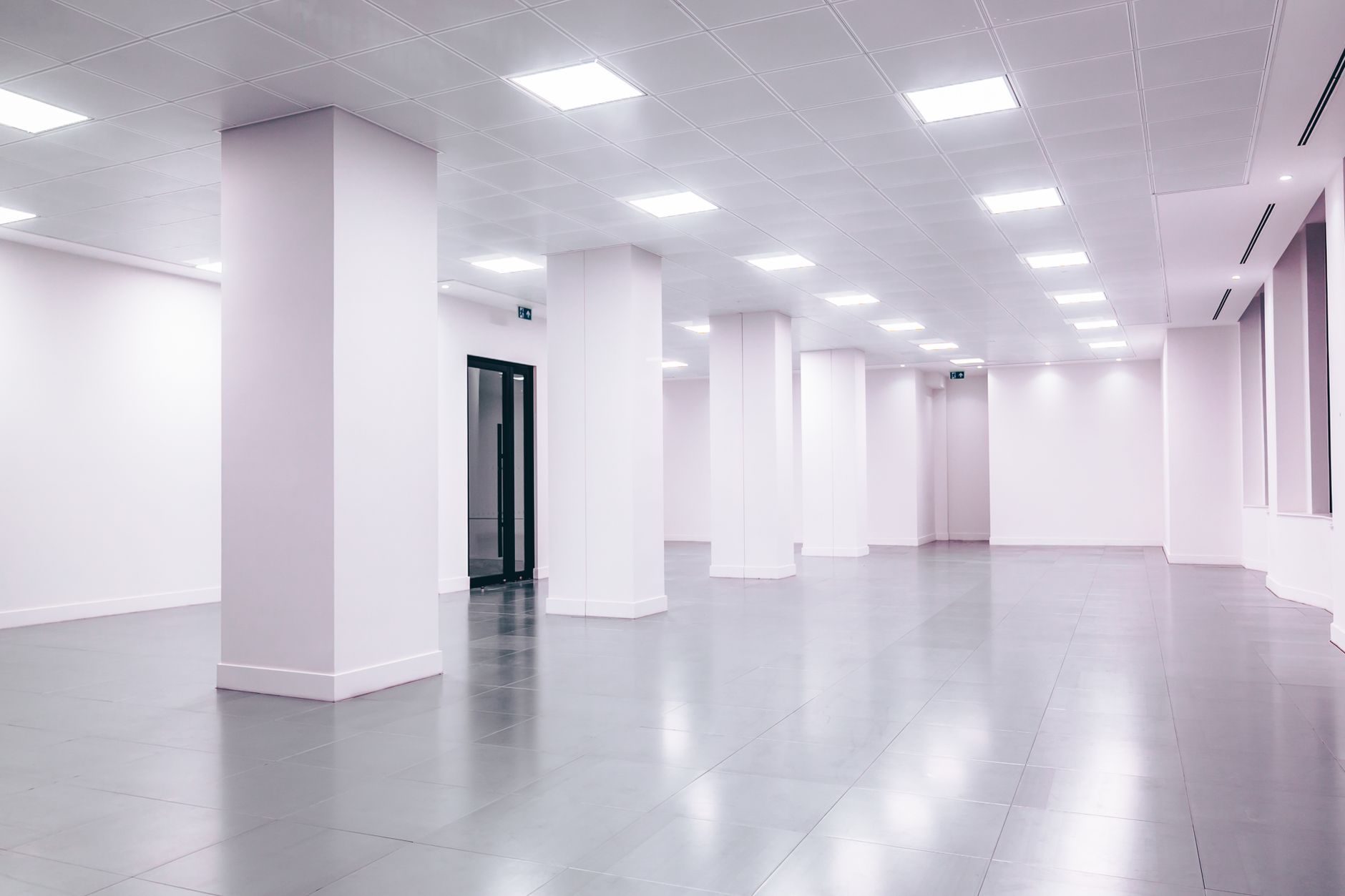
Floor work is the piece a robot can repeat without supervision. Hard floors near the entry, teller line and ATM area usually collect the most grit and moisture from foot traffic and weather, which makes them the common first zones. Carpet, thresholds and the spaces under desks need a different tool or a person, and should be checked at the site assessment before anyone promises coverage.
How big is the cleaning labor pool, and why do closing crews keep leaving?
The labor pool is large but slow to grow. According to the Bureau of Labor Statistics Occupational Outlook Handbook, janitors and building cleaners held about 2,447,700 jobs in 2024, and the agency projects about 351,300 openings a year, mostly from workers leaving the occupation rather than from new positions. Projected change from 2024 to 2034 is 47,800 jobs, or 2 percent, which the agency describes as slower than average.
Turnover is where the pressure shows. Published turnover estimates for janitorial work come mostly from industry vendors and vary widely, so treat any single figure with care. Openings are steady, growth is slow, and a branch closing crew is a small team competing with every other building service employer for the same workers. Measure your own departures by branch and by shift, because that is the number your board can act on.
What would a cleaning robot cover in a branch, and how would the time be measured?
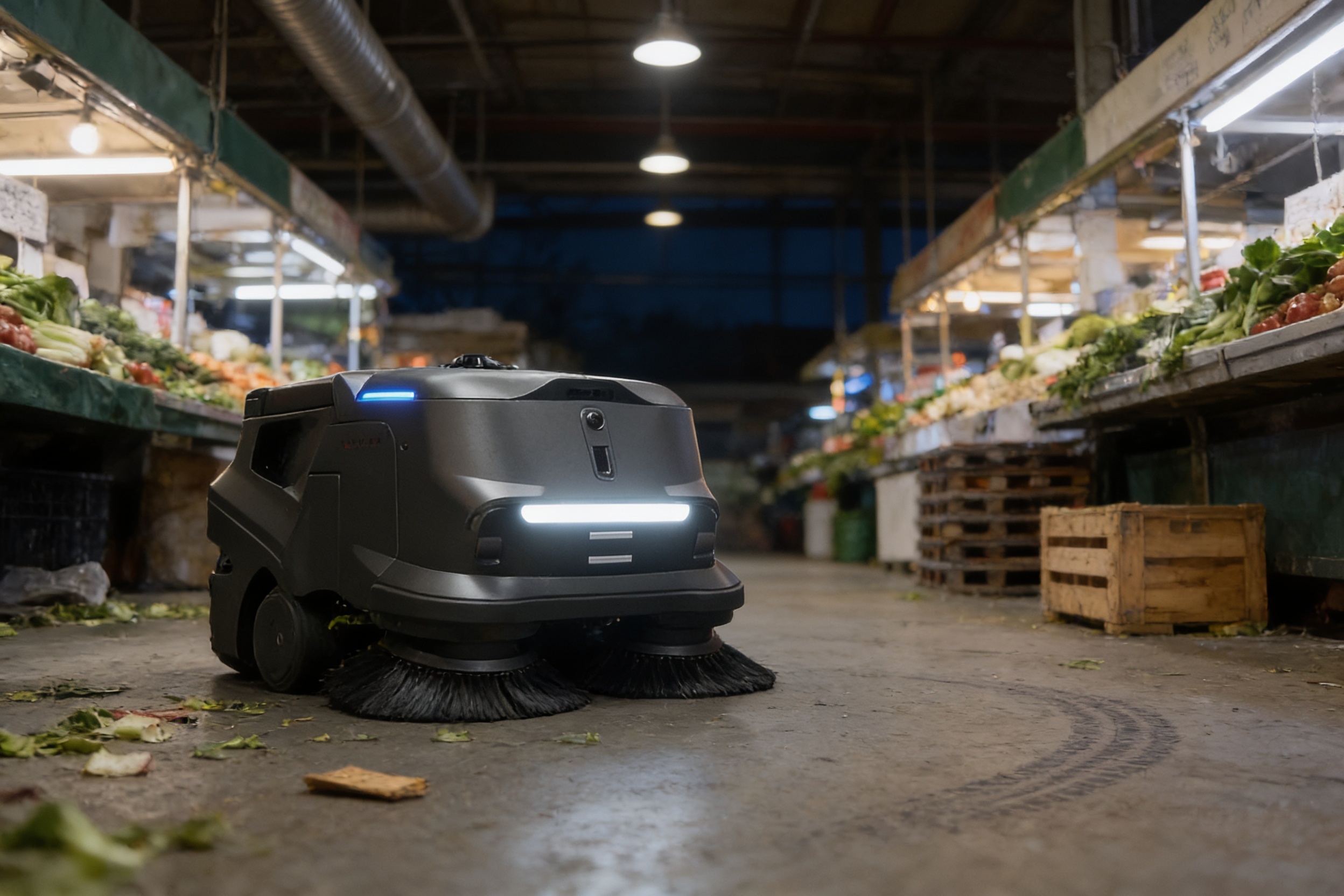
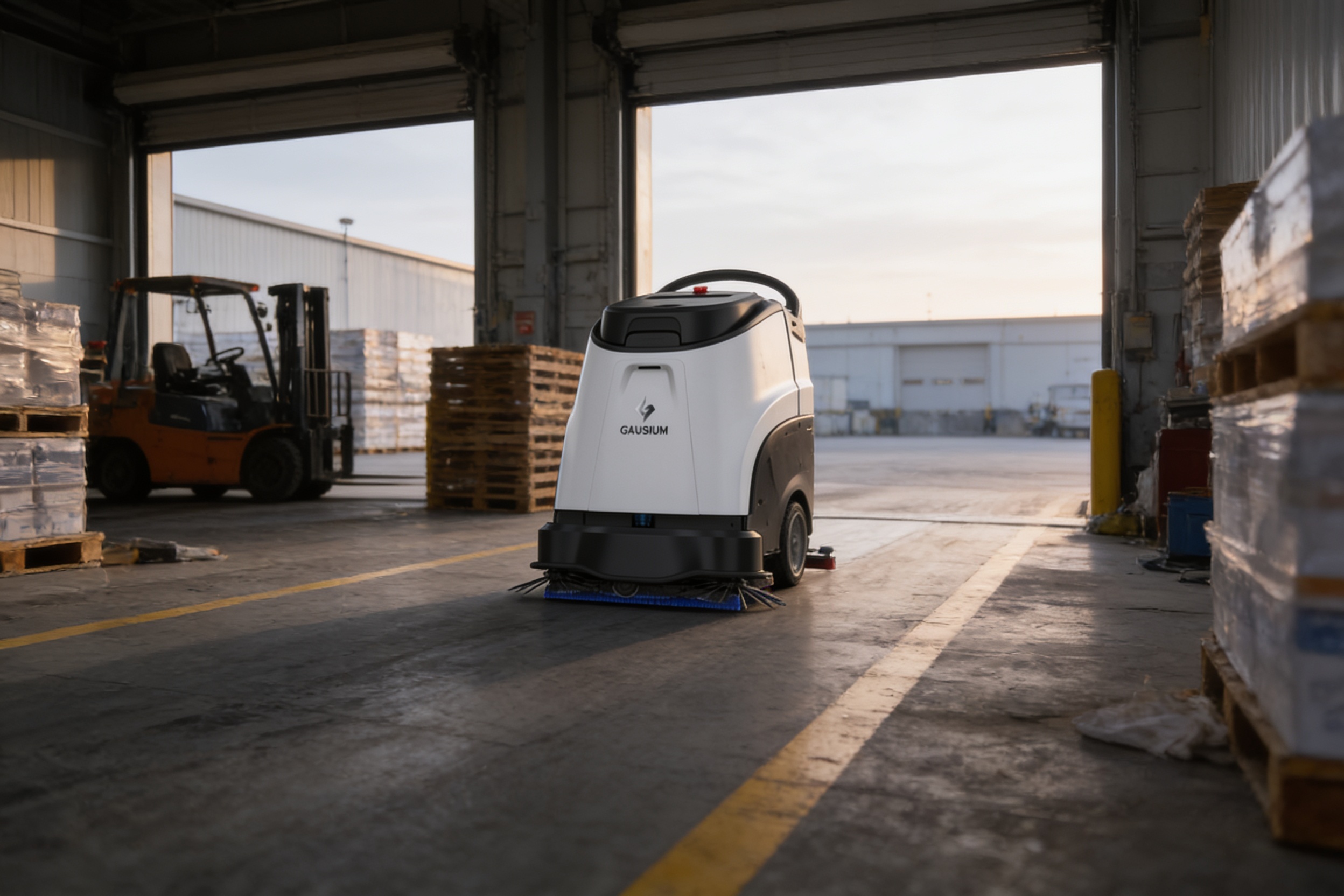
A floor cleaning robot works from a map of the branch. The site assessment records the lobby perimeter, teller line lanes, furniture positions, door thresholds and any ramps or drops, then sets a route the unit repeats each night. Expect the first weeks to involve map corrections and route tuning rather than full autonomy.
Time on task is the number that matters to a tired crew, and it is the one we could not verify from published research. According to the AACEM and ISSA autonomous cleaning survey, fielded in 2019 to nearly 23,000 contacts, the full report is limited to members, and the independent studies we found do not measure bank lobbies or teller lines. A practical method is a two-week time study at three or four branches, logging each closing task in minutes, before deciding how many sites are worth a unit.
Where does a cleaning robot fall short in a bank branch?
Some tasks sit outside the robot's job. Restrooms, glass, counters, teller stations, cash handling areas and anything with biohazard or sharps risk stay with people. Carpeted member spaces, stairs and busy open offices with moving chairs and cords can cause stops and missed areas, so they need a site check before anyone promises coverage.
Scale matters too. A small branch with a short floor and a light closing routine may not justify the setup and monitoring time, while a group of branches with the same layout can share one route plan and one training routine. Ask whether the staffing gap is the floor work or the whole closing task. If it is the whole task, a robot solves only part of the problem.
Does a cleaning robot make the closing crew safer?
The injury data supports taking some repeated work off the crew, but only in part. According to the BLS Survey of Occupational Injuries and Illnesses snapshot for janitors and cleaners, except maids and housekeeping cleaners, the rate was 191.6 cases per 10,000 full-time-equivalent workers in 2020, up from 157.4 in 2019 and 137.1 in 2018. That is a steep rise over three years, and 2020 is the latest year in the snapshot we could verify.
The snapshot figures do not show which tasks drove that rise, so we do not claim the repeated mop pass as the cause. Removing that pass may reduce some exposure for the crew, but chemical handling, ladder work, lifting and restroom cleaning remain with people. Ask your safety lead and insurer what claims history your closing crews carry before assuming any benefit.
How does a robot lease work for a multi-branch credit union?
Robots are leased through financing, so the decision sits in your operating plan and lease terms rather than a single large capital outlay. The payment is set in a written quote after a free site assessment, which is when we measure floors, confirm routes and identify the branches where a unit makes sense. Maintenance is included in our service plan, covering repair dispatch, remote triage and spare unit coverage when a unit is out of service.
Start with a pilot. A phased deployment at two or three branches lets closing leads, opening tellers and branch managers see how the morning check works before you commit to the rest of the network. Training covers the closing lead, the opening teller and the person who reviews the exception log, and it is the part most likely to decide whether the pilot holds.
What changes the answer for a credit union with many branches?
The number of branches with a real nightly floor gap matters more than the total number of branches. According to the National Credit Union Administration, there were 4,287 federally insured credit unions at year-end 2025, down from 4,455 at year-end 2024, serving 144.7 million members in the fourth quarter of 2025. Each credit union runs its own branch footprint, so the fit is decided by your own sites rather than by sector averages.
Banking offices show a similar spread. The FDIC 2025 Summary of Deposits reports more than 76,000 domestic bank offices operated by more than 4,400 FDIC-insured institutions, with deposit data as of June 30, 2025, released September 19, 2025. Those figures describe the market, so the useful measure for your board is your own mapped floor area, closing minutes and crew departures by branch.
How do we pick the first branch for a pilot?
Pick a branch with a clear, repeatable close, a floor area that is mostly hard surface, and a closing crew that is already short. Avoid starting with the busiest member branch or the one with the most carpet, because the first weeks involve route corrections and you want the pilot to show a clean result. A branch with a stable layout is a better test than the largest one.
Measure before you deploy. Record the minutes each closing task takes over two weeks, the nights the crew was short, and the number of exceptions the morning check finds. Those three numbers give the board a baseline, so the pilot can be judged against what happened before rather than against a general estimate.
Frequently asked questions
Upcoming offices & corporate campuses events
- Trade showNEBFM 2027, Northeast Buildings & Facilities Management Trade Show & ConferenceApr 14 to 15, 2027DCU Center, Worcester, MA
- ConferenceIFMA Facility Fusion Conference and Expo 2027Apr 27 to 29, 2027Hilton New Orleans Riverside, New Orleans, LA
- ConferenceAIA Conference on Architecture & Design (AIA27)May 19 to 22, 2027Pennsylvania Convention Center, Philadelphia, PA
- ConferenceBOMA International Conference & Expo 2027Jun 26 to 29, 2027Washington, DC
Want a cleaning robot at your bank branch lobbies?
Tell us about your site. We will recommend the robot, quote the lease, and keep it serviced.
Sources
- Bureau of Labor Statistics, Occupational Outlook Handbook: Janitors and Building Cleaners
- Bureau of Labor Statistics, Survey of Occupational Injuries and Illnesses snapshot: Janitors and Cleaners, Except Maids and Housekeeping Cleaners
- AACEM and ISSA autonomous cleaning survey report
- National Credit Union Administration, fourth quarter 2025 credit union system performance release
- FDIC, 2025 Summary of Deposits annual survey results release