
The question, in the buyer's words
I run a 12-field indoor sports dome where rubber infill dust spreads across the turf every league night, and our crew is two people; could a cleaning robot vacuum the turf between games without kicking dust back into the air?
Key takeaways
- Air at player height is the first control the published field work names for indoor turf, ahead of floor sweeping.
- We found no verified test showing that a cleaning robot clears infill dust from a dome without raising airborne dust.
- Published brushing guidance ranges from a workshop rule of thumb to every 40 playing hours, so build your own baseline.
- We found no national count of US indoor turf fields, so count your own playing hours instead.
- Run air sampling and a supervised pilot before any lease decision.
How does infill dust build up in an indoor sports dome?
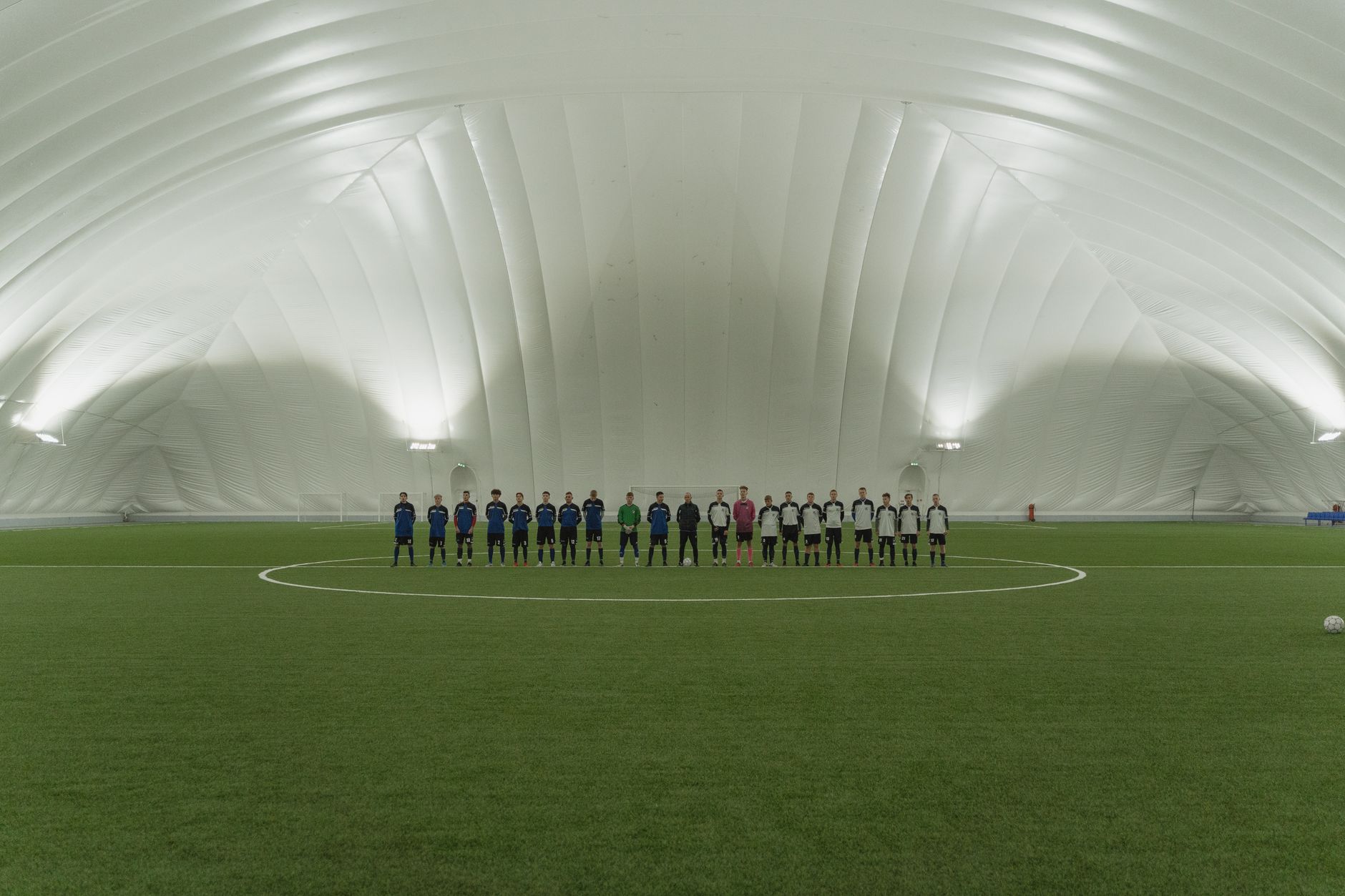
Crumb rubber infill keeps a synthetic turf field playable, and in a dome it also becomes a dust source that the building has to carry away. Connecticut's state risk assessment sampled one indoor field with no ventilation and four outdoor fields, and the indoor field showed higher emissions. Its acute Hazard Index for children came close to 1, mainly due to benzothiazole. For a dome, the dust question is really an air question.
The same state advice says building operators should provide adequate ventilation at indoor fields, and that new indoor fields should consider alternatives to crumb rubber infill. A separate Connecticut public health report on the same work says crumb rubber contains dusts and small particles, and that mechanical abrasion and wear may increase them. Any machine that moves over infill is a mechanical process, so the real test is whether it adds to that abrasion or only shifts material already in the air.
Our research found no recent indoor-specific particulate measurements, and the Connecticut report itself says more study is needed on indoor facilities. Ask the building for its air exchange rate and any past sampling, because those set the starting point for the whole decision. Treat every claim about a robot in this area as untested until your own air data says otherwise.
Will a cleaning robot kick infill dust back into the air?
Short answer: our research did not find a verified test of any cleaning robot on infilled indoor turf that measured airborne dust before and after a pass. The sources that mention robots on turf are mostly outdoor products, patents or listings. Ask every vendor for measured air results from a run, because a brochure claim does not answer the question.
The mechanism matters. A brush or blower can lift fine particles from a surface, while a vacuum moves air, so its filtration decides whether it reduces or adds to the airborne load. A machine that vacuums also has to exhaust filtered air somewhere, and that exhaust point should sit away from seating and the field edge. Infill that is displaced or low in spots is a coverage problem rather than an air problem, and the two need different fixes. Our notes do not say which mechanism any given robot uses on crumb rubber, so get the mechanism in writing before a pilot.
Plan for the worst case: a pass that lowers floor dust but raises dust at breathing height. A 2009 New York City air survey specifically recommended assessing air quality for crumb rubber fields in the breathing zones of children. Measure where players and staff breathe, not only on the floor.
How often does infill need brushing and maintenance?
Maintenance schedules differ by source, so know the spread before you set any robot program. A Loughborough workshop report describes a useful rule of thumb of one hour of maintenance for every 10 hours of use.
World Rugby lists brushing and seam checks every 40 playing hours, and decompaction every 2,000 playing hours, in its surfaces maintenance guidance. Most sources say the manufacturer sets the schedule and that heavier use calls for more frequent brushing, so the number you use should come from your installer's written plan rather than a generic guide.
For a dome that runs league nights, count playing hours, not calendar days. A busy league calendar can reach a 40 hour interval faster than most managers expect, and the hour count tells you when the work is due.
Who would run the robot with only two people on staff?
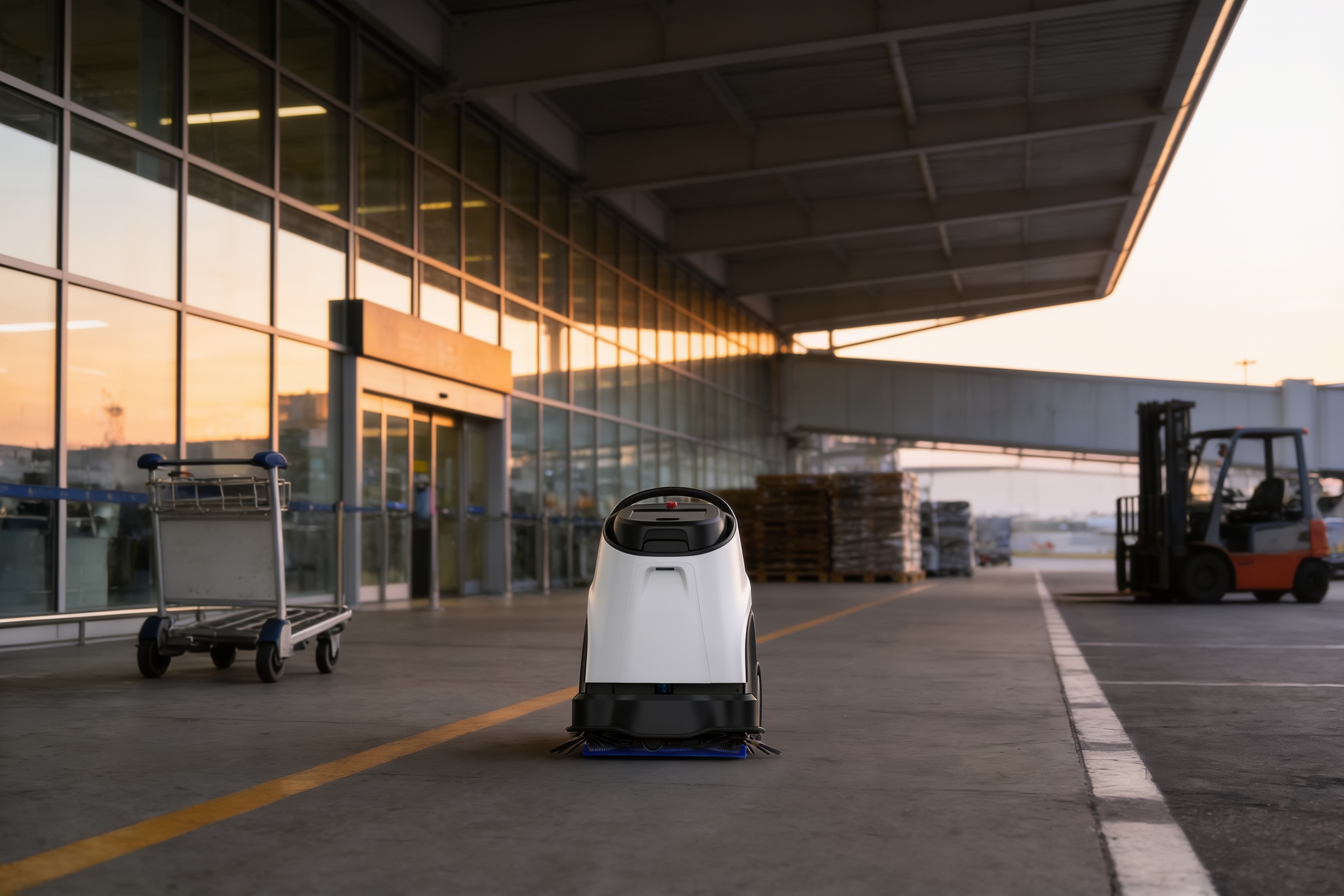
A two-person crew cannot clear infill dust between leagues by hand, and that is the real constraint. The Bureau of Labor Statistics Occupational Outlook Handbook lists 2,447,700 janitor and building cleaner jobs in 2024, with 2 percent projected growth from 2024 to 2034, which it describes as slower than average. It also projects about 351,300 openings per year, mostly from replacement.
Those figures describe the broad cleaning labor pool, not dome crews. They show that filling and keeping cleaning roles is slow, which is one reason a robot is worth weighing. Ask who covers the shift when a staff member is out, because a robot program that depends on one trained person fails the first time that person takes leave. We did not find a primary-source turnover rate for this occupation, so do not build your plan on turnover figures from vendor blogs.
The more useful question is who starts the robot, who checks the air, and who clears a fault at 11 p.m. A robot that needs a person on every run gives back little labor, so write those tasks down before the site visit.
How many indoor sports domes and turf facilities are there in the US?
We found no national count of US indoor turf fields, and the closest figures are dated. A 2002 STMA survey projected 28,714 US sports turf management facilities, according to the survey report. That is a count of sports turf management facilities in general, not of indoor fields.
A 2022 State of the Industry report found 48.1 percent of respondent facilities had indoor courts and 48.6 percent had natural turf fields. Those are shares of the facilities that responded, not national totals, so they cannot tell you how many domes exist. A market research report on indoor sports facilities defines the industry as for-profit and nonprofit facilities that earn membership or admission fees, but the notes show no figures from it.
For your decision, a national count will not settle anything for one dome. Your own air data and your installer's written maintenance plan will matter far more than any industry headcount.
Can a robot handle infill redistribution, grooming or cleaning on indoor turf?
Turf robots exist, but the evidence for indoor use is thin. A European patent filing for an artificial turf maintenance robot describes spotting low or displaced infill and directing redistribution, and says a drone could guide the robot without GPS, which may help in indoor arenas. That is a patent description, not a product specification, so it shows what someone intended to build.
Product listings lean outdoors. Satellite-navigated turf robots depend on satellite signals, so indoor operation cannot be assumed from a listing. Another turf robot is listed for outdoor fields, including non-filled turf and running tracks. Indoor floor robots that use LiDAR and pre-mapped routes exist, but our notes did not show one working on infilled turf.
Edges, goal mouths and seams are where a mapped route tends to run out, so budget hand work for those areas even with a unit running. The table below sets the robot against a person on the points that matter in a dome.
- Dust control at breathing height
Cleaning Robot
Not verified: no indoor airborne test found in our research
Staff
Can stop, check the air and adjust ventilation between passes
- Coverage across 12 fields
Cleaning Robot
Can repeat a mapped route without an operator, if the unit fits the floor and the pilot holds up
Staff
Two people often cannot clear every field between leagues
- Edges, seams and corners
Cleaning Robot
Limited to the mapped route, so edges and seams need a person
Staff
Can work edges and seams by hand, though slowly
- Judging low or displaced infill
Cleaning Robot
The patent concept describes spotting low infill; indoor use is not verified
Staff
Can see low spots and direct redistribution on the spot
- Setup before a league night
Cleaning Robot
Mapping and pilot runs come first; setup time not verified
Staff
Starts the next league with no setup
- Fault response during play
Cleaning Robot
Needs a remote triage and on-site dispatch plan
Staff
On site, can judge the problem and stop the work
- Where the person wins
Cleaning Robot
Repeats the same pass without fatigue, if the pilot shows it does not raise airborne dust
Staff
Judgment, air checks, edges and fault handling
What should you check before you pilot a robot on infill?
Four things change the answer more than any robot specification. Ventilation comes first, because the Connecticut advice calls for adequate ventilation at indoor fields and its indoor field was the one with higher emissions. Infill type comes next, because the guidance on new indoor fields points toward alternatives to crumb rubber. Infill age matters too, since worn, compacted infill behaves differently from new material.
On regulation, European restrictions on rubber infill are moving, and we could not confirm the current legal status or any deadline from our notes. Check the European chemicals agency restriction page or the EU Official Journal before you plan around a date. We found no US federal limit on infill dust in this research, and non-EU states such as the UK decide separately.
Set a baseline before the first pilot run. The New York City survey recommends breathing zone air sampling, so take readings before the pilot and again after a full league night, then compare them. Keep the readings with the playing hour count so you can tell whether a change came from the robot or from a heavier schedule.
How do we handle a lease for a dome like yours?
We are a vendor neutral robot integrator. We choose a robot for your floor across manufacturers, then lease it through financing. We deploy, integrate and train your staff, and we service every unit under our service plan, backed by regional service engineers in the states we cover.
Our first step for a dome is a free site assessment. We map the floor, record the playing hour count, and note the infill condition and the ventilation questions that need an air specialist. The lease payment comes in a written quote after that assessment, and if the site data points away from a robot, we will say so before you commit.
Training and servicing matter here because two people cannot also carry a robot's upkeep. Our service plan includes on-site dispatch and remote triage, so a fault on league night has a response path rather than a generic phone line. Financing terms and lease length are set in the written quote, so compare them with your current cleaning labor costs rather than with a headline figure.
Frequently asked questions
Want a cleaning robot at your indoor turf fields?
Tell us about your site. We will recommend the robot, quote the lease, and keep it serviced.
Sources
- Connecticut artificial turf risk assessment
- Connecticut public health report on artificial turf fields
- New York City 2009 turf air quality survey
- Loughborough maintenance best practice report
- World Rugby surfaces maintenance guidance
- BLS Occupational Outlook Handbook, janitors and building cleaners
- STMA 2002 sports turf survey
- EPO patent filing EP3703481A1, artificial turf maintenance robot