
The question, in the buyer's words
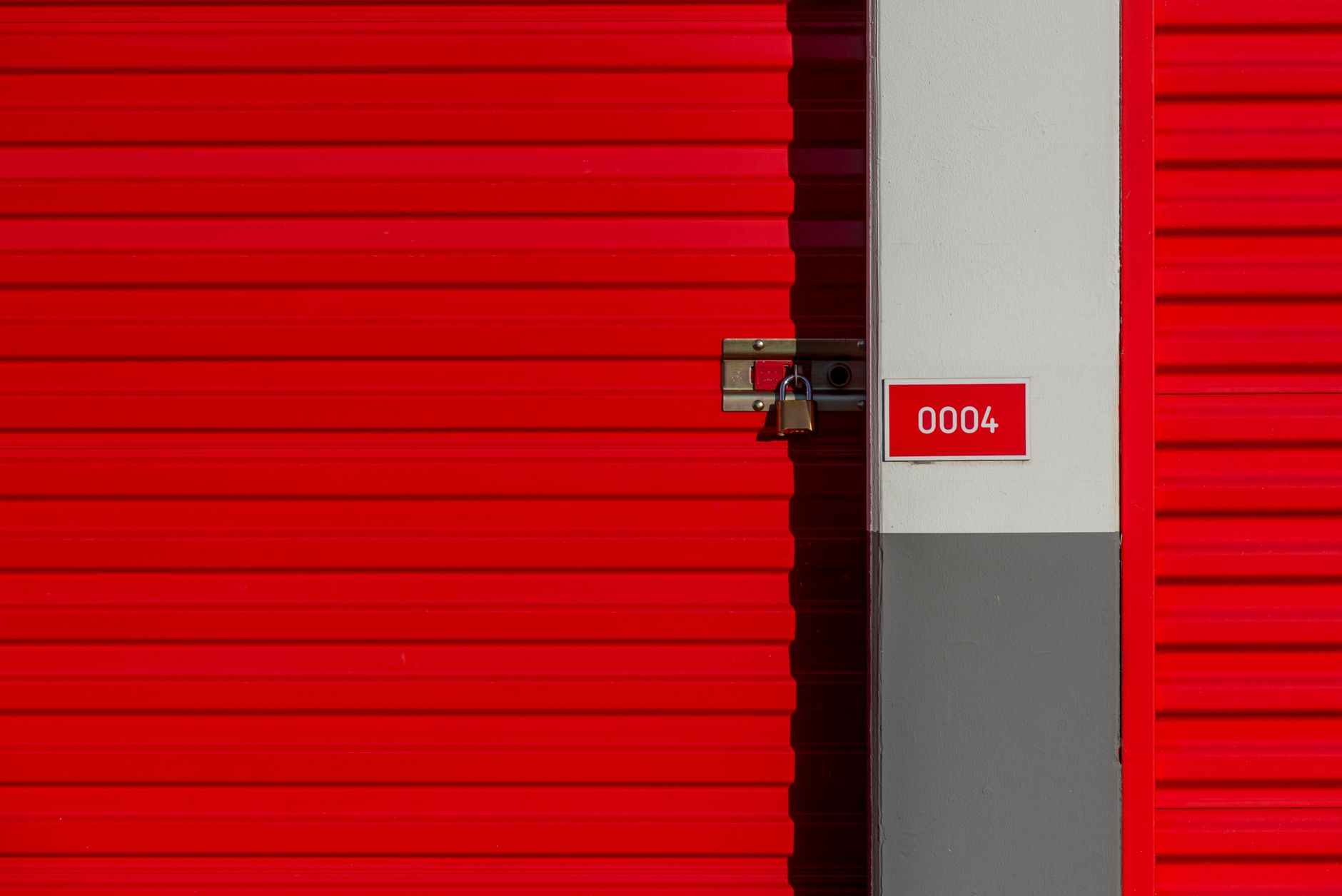
I run five self-storage facilities in Lincoln, Nebraska, and our drive-up aisles and loading docks track in grit and wet leaves every night while one overnight person covers all five; could a cleaning robot work the aisles after close?
Key takeaways
- Covered, smooth, grit-dominant aisles and docks suit a night cleaning robot, while open outdoor pavement in Lincoln winters does not.
- Wet leaves and snow need clearing by a person before any scrubbing starts.
- Plan one unit per site, since five separate buildings cannot share one robot's route.
- The overnight person stays responsible for locks, lights, gates, checks and exceptions.
- Measure hours and debris on each site before deciding, because published data does not give task times for this work.
How does a cleaning robot fit Lincoln self storage aisles at night?
Self storage is a large and growing business, and most of its floor space sits in buildings that were not designed around a cleaning schedule. According to the Self-Storage Almanac 2025, drawing on industry counts, US facilities rose from 52,301 to 57,981, an increase of 5,680. An industry research report from 2026 estimates 58,000 to 65,000 facilities nationwide, depending on the source used. For a Lincoln operator, each site is a large, mostly flat and mostly unattended floor, which is the kind of area a night cleaning robot can cover if the surface and layout suit it.
Service Robot Co. leases, deploys and services commercial robots, and every engagement starts with a free site assessment before anyone discusses a lease quote. The rest of this page works through what that assessment would measure at a Lincoln site: the dirt, the floor, the hours and the people.
Your situation has one overnight person covering five sites, so the real question is less whether a robot can clean and more whether it can take meaningful work off that person's list at each site.
What dirt does a Lincoln site track into its aisles?
Lincoln's moisture is a regular part of the floor problem. According to the University of Nebraska-Lincoln, 1991 to 2020 normals show annual precipitation of 29.34 inches. A 2021 report on the new NOAA climate normals, carried by a Nebraska broadcaster, gives snowfall of about 26.0 inches for the same period, and that figure should be confirmed against the official NOAA table before it goes into any budget.
Those totals create a predictable pattern on a storage floor. Grit and road salt arrive on tires and boots in winter, and when the snow melts the drive-up aisle holds standing water and a film of fine sand. In autumn, wet leaves blow against roll-up doors and collect at the dock edge and under overhangs. Fine grit suits a scrubber or sweeper with good suction, while leaves need to be cleared by hand or blown off before any scrubbing starts.
The climate normals update only once every ten years, and the next set is not expected until after 2030. A Lincoln operator should therefore plan around the present pattern of wet autumns, salted winters and muddy springs rather than waiting for the weather to change.
How much night work does one person cover across five sites?
The Bureau of Labor Statistics counted about 2,447,700 janitors and building cleaners in 2024, and projects growth of 2 percent, which is slower than average, with about 47,800 jobs added. That is a large, slow-growing labor pool, so cleaning staff are available but not expanding quickly. Most workers learn on the job and no formal education is typically required, so training a new overnight hire is an on-site task rather than a credential.
According to the same BLS handbook, 35 percent of these workers are employed in services to buildings and dwellings, the largest employer group in the occupation. For an operator with five sites and one overnight person, the nights that one person cannot reach every aisle are the nights the floors go uncleaned, and that is the gap a robot would fill.
The BLS does not publish a turnover rate for this occupation, so the number you need most, how often the overnight person changes, has to come from your own payroll records. A robot does not quit, but it still needs a trained person to start it, check its route and clear it after a stop.
Where can a cleaning robot work well at a storage site?
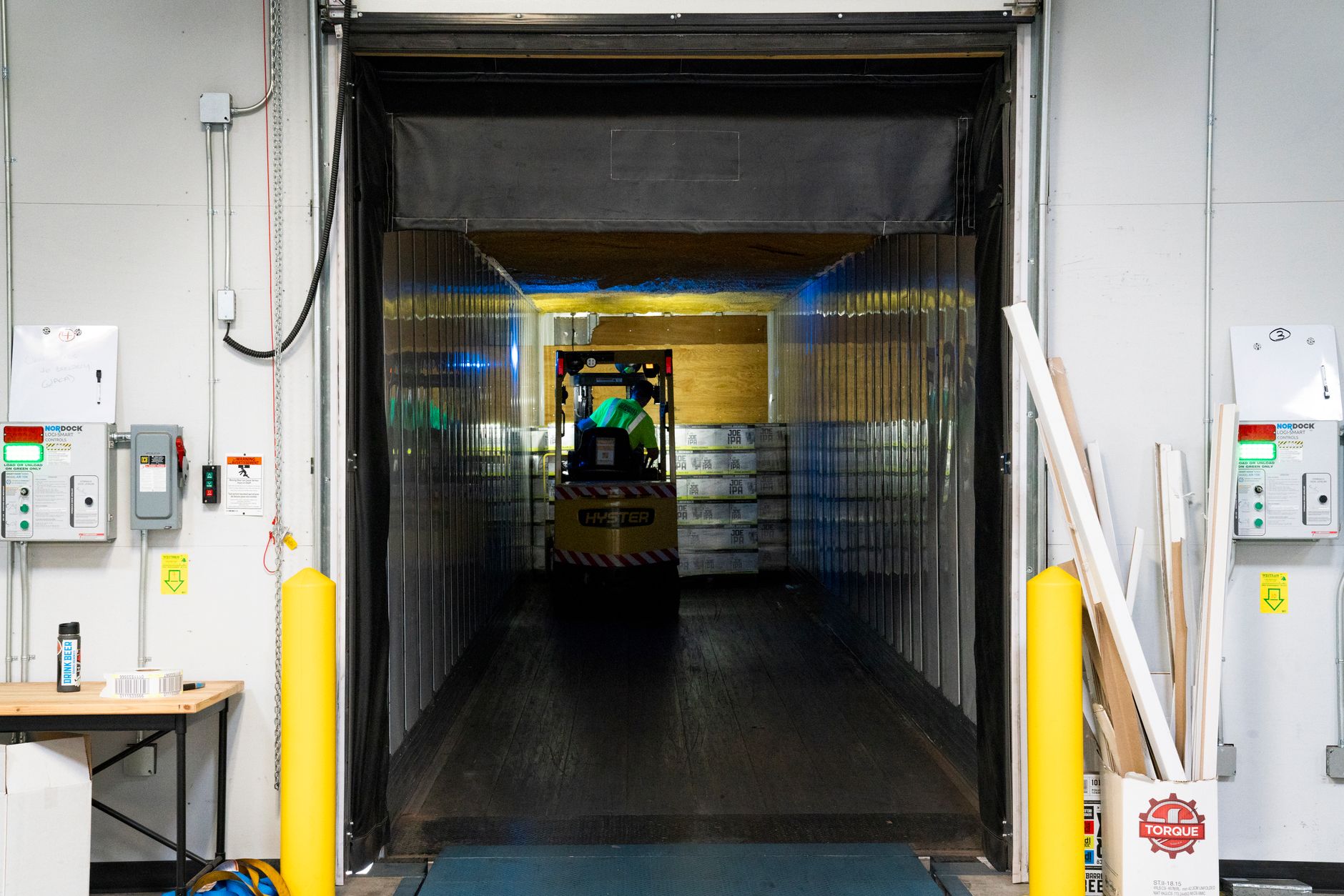
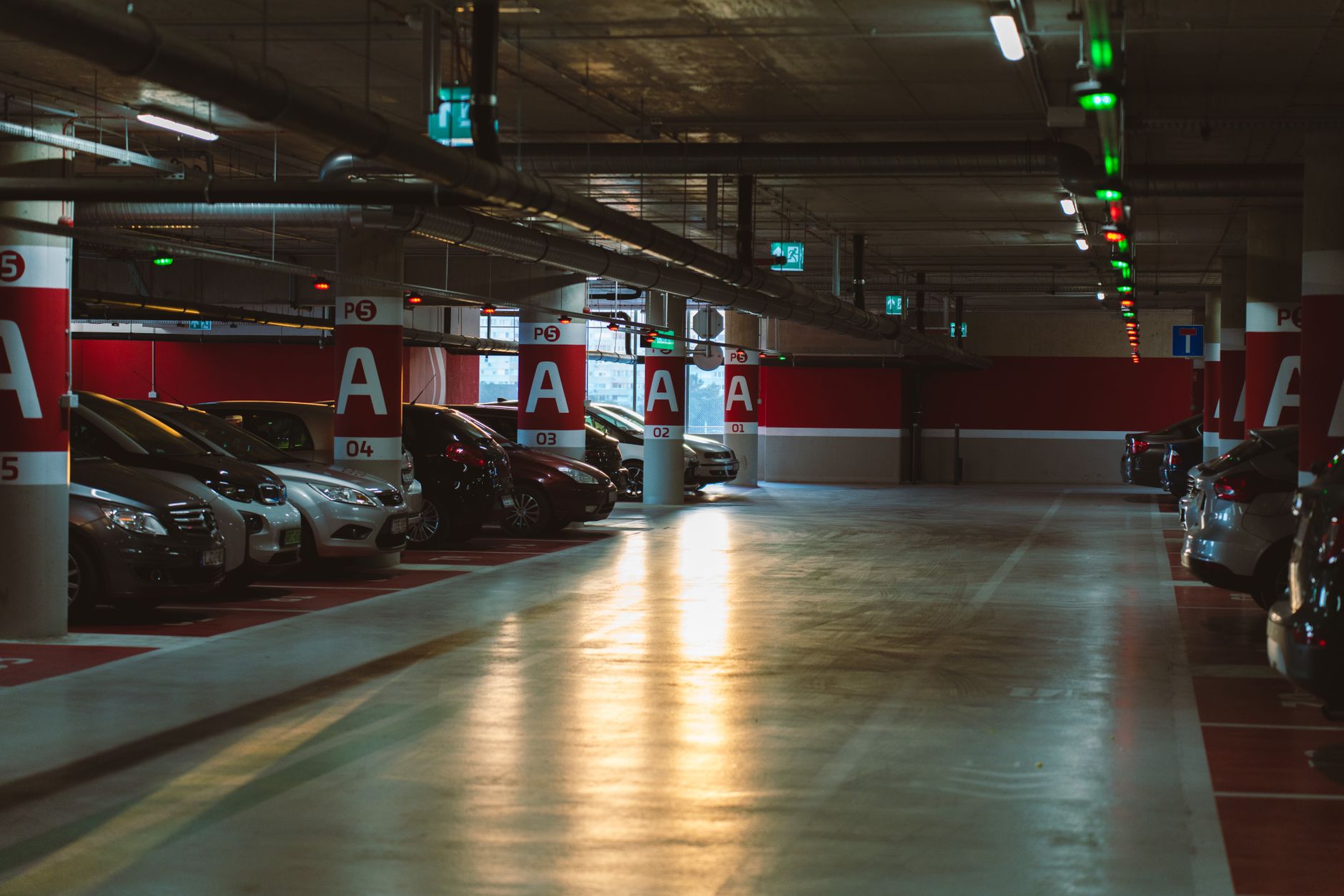
The best candidates are covered drive-up aisles and dock floors that are smooth, sealed and free of steps. Smooth sealed concrete is the usual case in newer buildings, but older storage floors may have cracks, expansion joints and worn coatings, and each of those needs a check before a route is set. Roll-up doors should be closed at the end of each run, and every dock plate or lip should be inspected, because a gap or edge is a stop point for the machine.
Leaves and large debris are the weak point. A floor scrubber is not a rake, so a person should pre-clear piles of wet leaves before the robot starts, and the robot then cleans the fine layer behind them. Snow and ice on open outdoor pavement are not a fit for an indoor-style floor scrubber through a Lincoln winter, and we would not recommend leaving that surface to the machine.
Route discipline matters as much as floor type. Parked vehicles, pallets, trailers and customer items left in the aisle can block a run, so the site needs a clear-after-close rule before the robot is scheduled. A robot that stops at every obstacle ends up cleaning only half an aisle.
Robot or person on the aisles: which does what better?
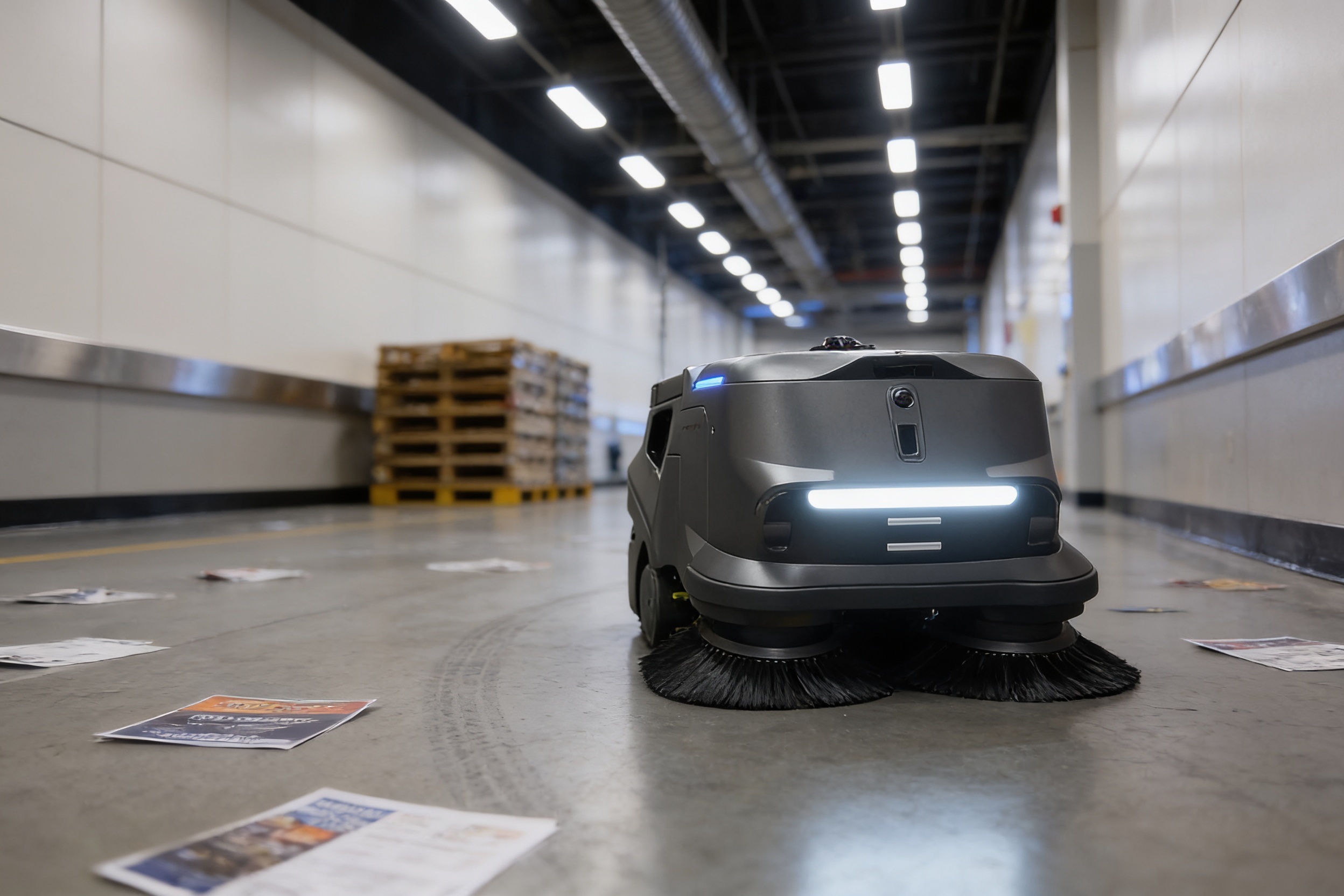
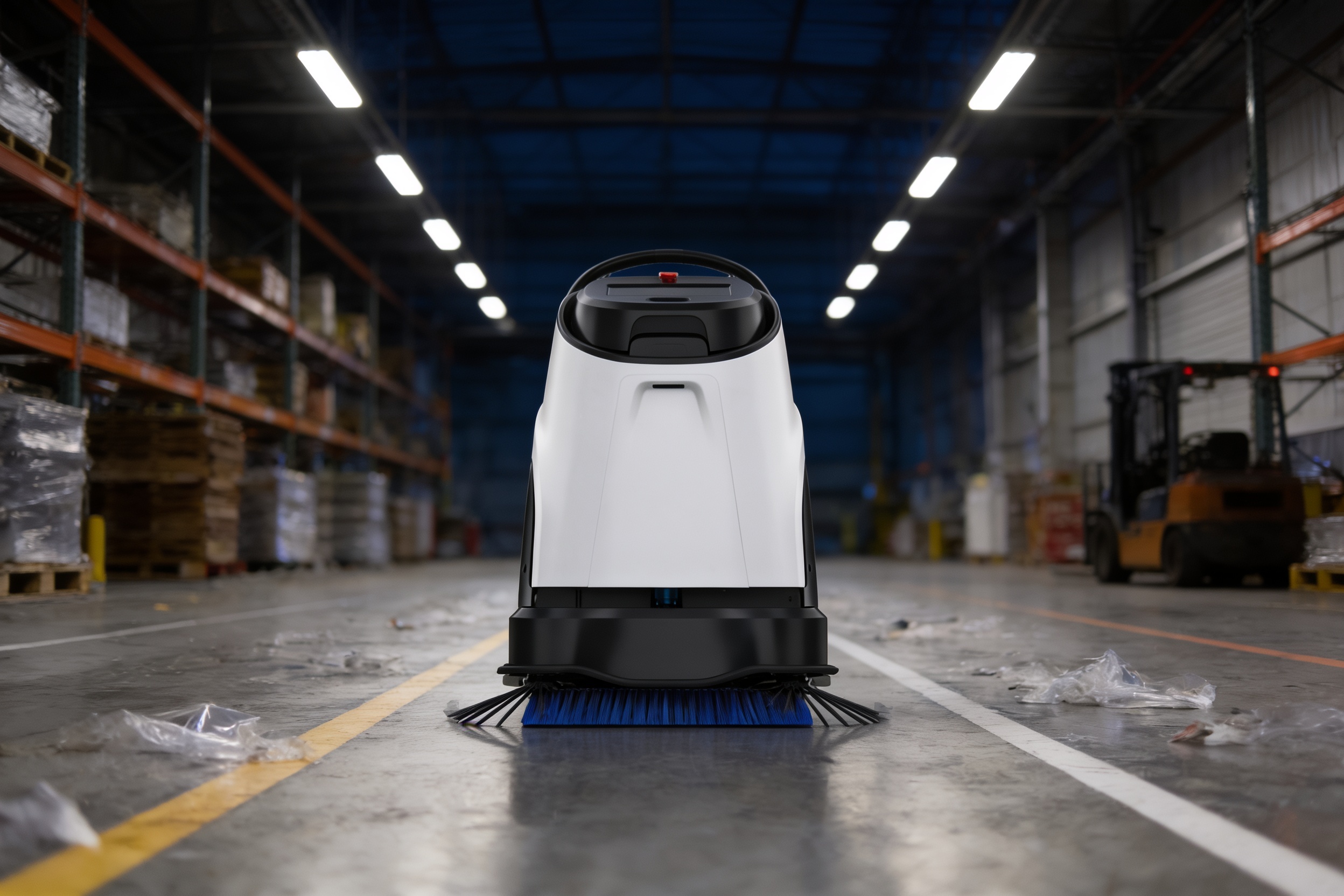
The robot is consistent. It runs the same pass each night without a break, and it does not drift from the route when it is tired. On a long, straight aisle the robot is at its best, because the route does not change and nothing needs to be remembered. The person is better at judgment: a broken door, a spill of unknown material, a stuck vehicle or a dropped item all need a human decision and often a written report.
The workable model is a hybrid. The person pre-clears leaves and debris and inspects the aisles, the robot runs the repeat floor pass, and the person clears any exceptions the robot logs. Each site needs its own mapped route and charging point, so the plan is one unit per building, not one unit shared across five separate sites.
- Night coverage
Cleaning Robot
Runs a set route at each site on schedule, the same way each night, with no break
Staff
Covers one site at a time, so five sites cannot be walked at once
- Repeat route consistency
Cleaning Robot
Repeats the same pass, which suits a fixed aisle layout
Staff
Varies the pass, but notices when the route has changed
- Unusual debris or spills
Cleaning Robot
Cannot identify a spill or a dropped item, and stops or routes around it
Staff
Identifies the spill, decides how to clean it and reports it
- Leaves and snow
Cleaning Robot
Not built to clear piles of wet leaves or snow on open pavement
Staff
Can clear leaves and snow with suitable tools, though it takes time
- Locks, lights, gates and doors
Cleaning Robot
Does not check locks, lights, gates or doors
Staff
Checks locks, lights, gates and doors, and reports what is wrong
- Set-up and recovery
Cleaning Robot
Needs mapping at each site, and a person to reset it after a stop
Staff
Needs no mapping, but needs supervision, breaks and hiring
Does a cleaning robot change the security side of night work?

A September 2025 self-storage trade survey of over 100 operators found that about 99 percent use surveillance cameras, up from 97 percent in 2024. The same survey reported that 25 percent of operators said crime had decreased significantly or somewhat in 2025, up from 21 percent in 2024. One operator reported thefts dropping after removing 24-hour access, but the survey presents that as a single anecdote, not a systematic finding.
A cleaning robot is not a patrol and not a camera. Its sensors are there to navigate and avoid obstacles, so the robot cannot be counted as part of your security layer. Camera monitoring and alarm response remain with you or with your monitoring provider.
Keep the locks, lights, gates and door checks with the overnight person. Let the robot run only in areas that are secured and empty, and review the route log each morning so that any unusual stop is noticed.
What moves a lease quote for five sites?
A lease is quoted after the site assessment, and the drivers below are what that quote reflects. The number of sites matters most, because each building needs its own mapped route, charging point and set-up time. Floor condition, debris and service coverage come next.
Service Robot Co. arranges the robot lease through financing, so the fixed robot lease payment is set in the quote, and maintenance is included under our RoboCare service plan, with regional service engineers in the states we service. One vendor handles selection, lease, deployment, training and service, so the overnight person does not have to coordinate several companies when a unit stops.
The lease makes sense when the robot takes real hours off the night person's list at each site, not when it repeats work that is already done well. A pilot at the cleanest site can show that before the other sites are committed.
What should you check before deciding on a lease?
Measure the covered aisle area at each site, the dock edges and thresholds, the share of open outdoor pavement, and the debris type by season. Ask the assessment to note whether each dock floor is exposed to the weather and whether each drive-up aisle is open at both ends, since open ends pull in leaves and snow from the road. Record the route, the power access and whether each building can be mapped cleanly, because these facts decide whether a site qualifies.
Start with one leased unit at the site with the cleanest covered floor, and log the nightly results through a full autumn and winter before deciding on the rest. A pilot shows whether the robot takes work off the person or simply adds a check to the morning.
Adoption is still early. The AACEM and ISSA autonomous cleaning survey, dated 2019, found that about one-third of non-adopters said they were somewhat likely to adopt within a year, and it described adoption as in an early stage. That is older data, so treat it as background and ask operators in your region about their own results.
How does a site assessment lead to a lease with us?
The assessment is free. We map the aisles, docks and routes, record the debris and the power access, and confirm whether each floor suits the machine. Sites that do not qualify are reported plainly, so you know which ones to leave out.
After the assessment, you receive a quote for the lease through financing. Once signed, we deploy and integrate the unit, train the overnight person on starting, checking and clearing it, and provide go-live support on the first nights. RoboCare then covers service under the plan, with on-site dispatch and remote triage when a unit stops.
Ask for the quote in writing, along with the service terms, the response expectations for Nebraska and the full scope of the site assessment. Those three documents answer most of the questions a sign-off meeting raises.
Frequently asked questions
Upcoming self-storage facilities events
Put a robot to work in Lincoln.
We walk your site, learn the job, and recommend the unit that fits. Then we quote the lease, deploy it, and keep it serviced.
Sources
- Self-Storage Almanac 2025 industry data
- IRR Self Storage Report 2026
- Modern Storage Media security survey, September 2025
- BLS Occupational Outlook Handbook, janitors and building cleaners
- University of Nebraska-Lincoln, monthly climate normals
- 1011now, NOAA climate normals report 2021
- AACEM and ISSA autonomous cleaning survey report