
The question, in the buyer's words
I run a six-bin grain elevator, and after every hailstorm two men climb the bin roofs and ladders to look for lifted panels and bent handrails before we can load; could drones fly the bin tops first and flag damage so nobody climbs unless they have to?
Key takeaways
- A drone can screen bin roofs and sides after hail, but a person checks every flagged spot.
- The sources reviewed here do not confirm hail detection on metal grain bin roofs, so test it on your own bins first.
- A flight is not a bin entry: permits, lockout and the rule against walking down grain still apply.
- Write the flag rules and the roof fall protection plan before the first flight, not after it.
- FAA Part 107 requires visual line of sight, so flights beyond that need a waiver and a check of the latest FAA rules.
Can a drone check a grain elevator bin roof after hail?
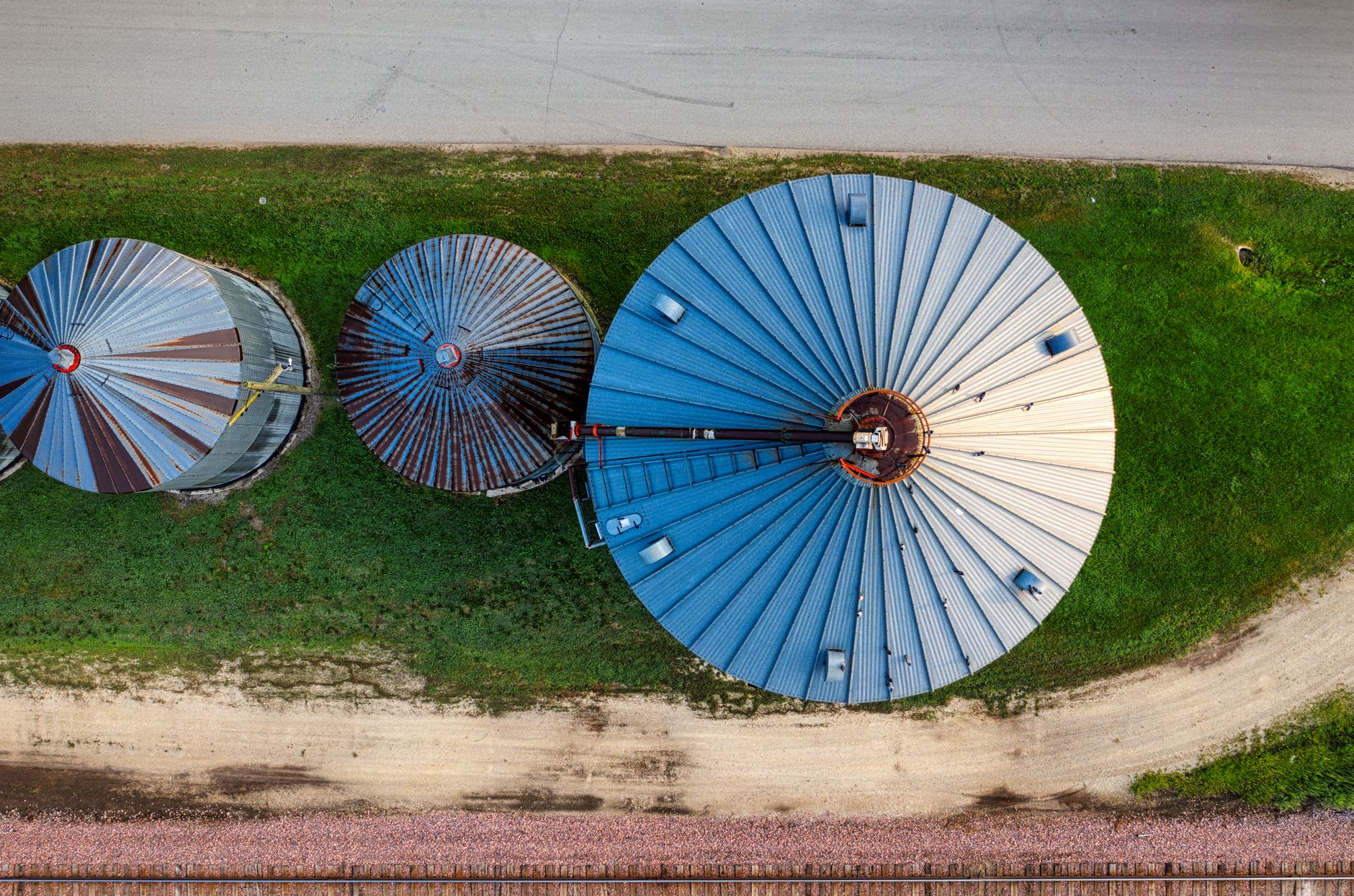
For a grain elevator, a drone is most useful as the first look. After a hailstorm, two people may climb bin roofs and ladders to search for lifted sheeting and bent handrails before loading can start. A pilot can fly the tops and sides first and mark the spots that need a person, so the climb becomes a targeted task instead of a search.
The limit is evidence. A trade article on grain bin inspection, published by Pet Food Industry, reports that drone data covered grain residue, pit concrete, corrosion, and holes in walls and roofs. Its author said the data was good enough to replace entry by an inspector. Those are the author's own test results on large bins, and they are not independently verified. Nothing in the sources reviewed addresses hail damage on metal grain bin roofs or hail inspection standards for bins, so your first flights are a test you run on your own equipment.
What can a drone actually see on a bin roof after hail?
Surface damage shows up well from above when the camera has a clear angle and enough light. Holes, corrosion and displaced panels are the kinds of damage the trade article's test flights captured, which makes them reasonable targets for a first screen. Ladder cages, roof hatches and handrails are visible too, so you can judge whether a rail looks out of line before someone grabs it on the way up.
Hail is harder to judge from the air. Roofing industry sources in this review, which write about roofs on houses rather than grain bins, say drone or binocular methods can miss some hail conditions. They also say hail can knock granules loose and leave marks that are hard to see, and that a hands-on inspection is the most accurate method. If that holds for metal bins, a flight can miss small dents that a person would find by touch or at close range. A clean flight is therefore a reason to check the flagged areas, not a reason to skip the roof.
Where does a drone still need a person on the roof or in the bin?
Entry into a grain bin is governed by OSHA's grain handling standard, 29 CFR 1910.272. Bin entry requires a permit certifying that the required precautions are in place, along with lockout or tagout of mechanical, electrical, hydraulic and pneumatic equipment before anyone goes in. The standard also prohibits walking down grain under paragraph (g)(1)(iv). A drone flight satisfies none of those steps.
Harnesses, lifelines and an observer outside the bin are described as required practice. An OSHA release from 2020 describes a worker who entered a bin without a harness and lifeline and was engulfed. That is why the observer and the rope matter even when a flight has already shown the bin looks sound. If a flight flags a spot inside a bin, the next step is a planned, permitted visit, not an ad hoc climb.
Roof and ladder falls are a separate exposure that no drone removes. OSHA's enforcement program names falls among six grain industry hazard areas. According to a secondary summary of OSHA material, an OSHA case against a farm operation cited falls from unguarded railings, climbing on lift trucks and improper ladder use. Write your fall protection plan for the roof walk before the first flight.
Why is the climb such a serious risk for elevator crews?
Falls are a steady source of injury. A secondary summary of Bureau of Labor Statistics data puts the non-fatal fall injury rate for agricultural workers at 48.2 per 100,000 in 2011. That figure is old, but it still points to climbing as a real exposure in farm and grain work. The same summary says falls from heights were the second leading cause of grain handling worker fatalities between 1985 and 1989.
Entrapment is the other killer in bins, and it is a different hazard from a fall. Purdue University figures, as compiled by a safety publisher, show 23 entrapments and 12 deaths in 2017, 30 entrapments and 15 deaths in 2018, and 38 entrapments and 23 deaths in 2019. The compilations differ, so read these as a trend rather than exact counts. The same compilation says about 83% of entrapment cases occurred in the Midwest.
A drone reduces the number of times someone stands on a roof to look. It does nothing about who goes into the bin, and that line should stay sharp in your procedure.
Which parts of an elevator can a drone check, and which need hands on?
Think of the site in six zones. The bin roof, ladder, handrails and sidewall can usually be screened from the air, which gives you a short list of what to check by hand. The interior and the headhouse need a separate plan, because a drone cannot replace a permitted entry or a site walk for those areas.
Within the roof zone, the most useful flight is one you can compare with a walk. Fly the same pass after each storm, log the bin number and date with every flag, and note which flags turned out to be real when someone checked. Over a season, that record tells you how far to trust the imagery on your own steel and your own hail.
What do FAA drone rules mean for a grain site?
Part 107 covers drones under 55 pounds, including payload, flown for non-recreational purposes. The pilot must keep the aircraft in visual line of sight, and daylight is the default. Twilight flights are allowed only with anti-collision lights. Maximum altitude is 400 feet and maximum groundspeed is 100 mph. Remote pilot certification and FAA registration are required, and the registration number must be displayed on the aircraft.
Grain sites add practical limits. Flights over people are restricted, and so are flights from a moving vehicle. Bin tops near an active elevator can have trucks, workers and augers nearby, so the pilot should map who is in the area before launch. The sources here say waiver status for flights beyond visual line of sight has changed over time, so confirm the FAA's latest rules before planning those flights.
How many grain bins and storage sites are there in the US?
Storage capacity is large. According to a National Corn Growers Association summary of USDA data, USDA NASS estimated on-farm storage capacity at 13.63 billion bushels in August 2025. That total counts bins, cribs, sheds and other structures. Most of that capacity sits on farms far smaller than a commercial elevator, so a typical site will not look like the test bins in the trade article.
A national count of individual bins is harder to find. The NIOSH Farm Safety Survey from 2011 counted 769,937 grain bins on US farms with capacity of 5,000 bushels or more. That is the most recent bin count in these sources, and it predates later survey periods, so use it as a sense of scale rather than a census.
The practical test is your own site. Compare what each flight flags with what your crew finds on the roof, bin by bin, and keep that record for the next storm season.
How do you set up a drone check that keeps people off the roof?
Write the procedure first. Decide which flags send a person up, which send a person to a permitted entry, and which need no action. Record the bin number, date, weather and pilot with each flight, so you can compare results after later storms and see whether the imagery matches what your crew finds.
Schedule the flight for the first daylight window after the storm passes and after trucks have cleared the bin area. Fly the roofs and sides, then review the images at a desk before anyone goes up. A flagged spot gets a named person, a fall protection plan and a time window. Nobody climbs on the strength of a drone image alone.
Keep one trained person on the ground as observer for any roof or bin work. Your bin entry procedures already expect an observer outside the bin, and the same discipline suits a roof walk.
Should you use a drone service, a contractor, or your own crew?
Each option has a place. A grain bin inspection contractor brings trained people and their own liability coverage. An in-house drone program keeps the data and timing in your hands, but it needs a certified remote pilot, a maintained aircraft and a trained observer. Many elevators start with a contractor for a first season baseline, then add an in-house pilot for quick checks after each storm.
We are an OEM-neutral commercial robot integrator for US businesses. We pick the drone that fits your site, lease it through financing, deploy and integrate it, train your staff and service it through our service plan, with regional service engineers in the states we serve. The payment is quoted after a free site assessment, where we walk your bins, check the flight areas and draft the flag procedure with your safety lead.
Frequently asked questions
Want a drone at your grain storage bin tops?
Tell us about your site. We will recommend the robot, quote the lease, and keep it serviced.
Sources
- Pet Food Industry: drones offer labor-saving solution for grain bin inspections
- Facility Executive: maximizing drones for roof inspections
- FAA: Small Unmanned Aircraft Systems (UAS) regulations (Part 107)
- OSHA: Grain handling standards
- Wikipedia: Occupational hazards of grain facilities (secondary summary citing OSHA and BLS)
- Grain handling safety stats and facts (secondary compilation of Purdue figures)
- NIOSH Farm Safety Survey (2011)
- National Corn Growers Association: a look at current U.S. grain storage capacity (summary of USDA NASS data)