

The question, in the buyer's words
I run a 90,000-square-foot indoor tennis club where clay and rubber grit get tracked from the courts into lobbies and locker corridors every night; could a cleaning robot sweep those floors after close without getting caught on the benches?
Key takeaways
- A night cleaning robot can cover the after-close sweep of lobby and corridor hard floors, not the clay on the courts.
- Bench clearance and door thresholds decide the route, and only a measured site check settles them.
- No national count of indoor tennis clubs and no source on tennis benches turned up in the research.
- The staffing and injury figures support taking the repetitive midnight pass off staff, not replacing their judgment.
Can a night cleaning robot sweep grit from an indoor tennis club at night?
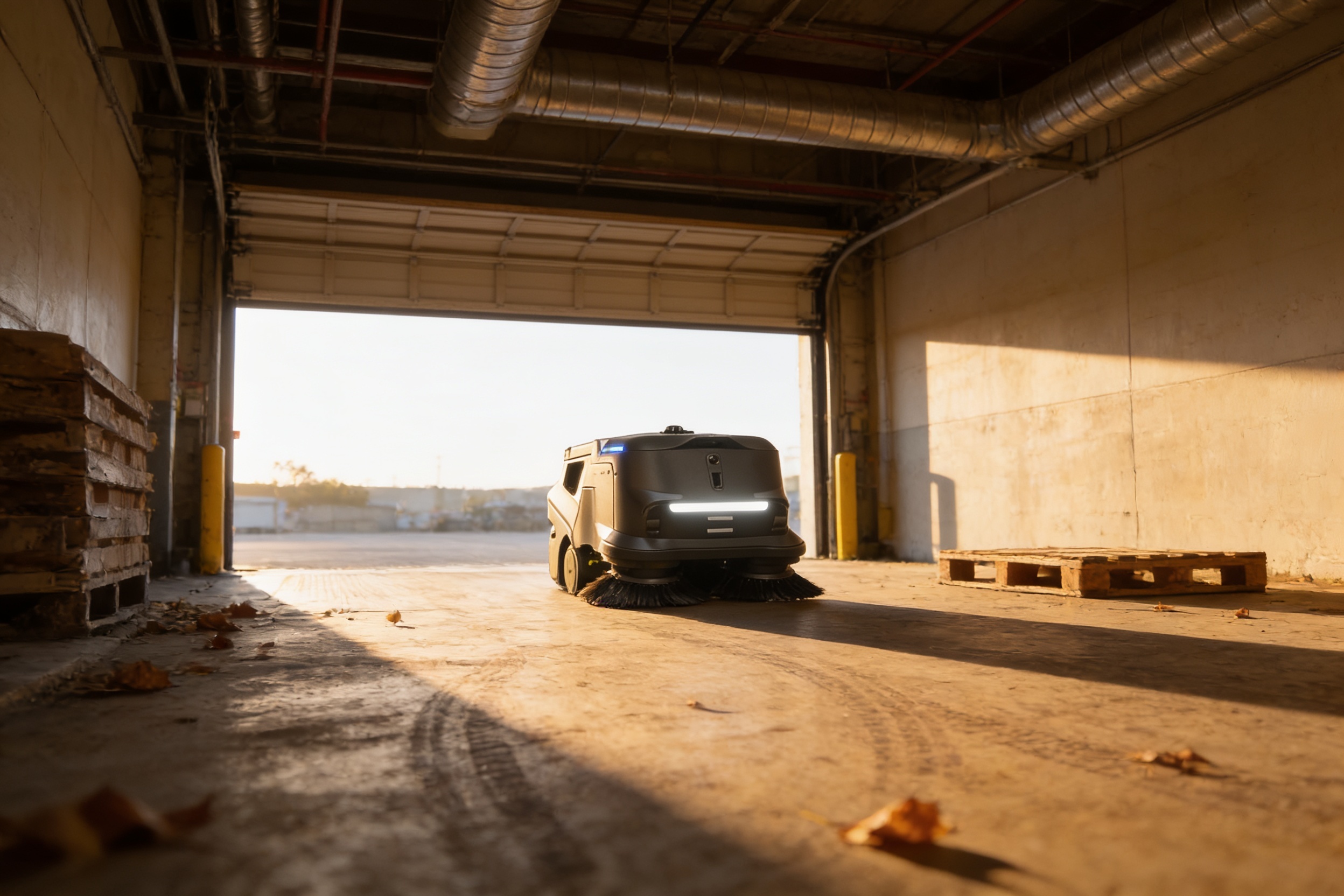
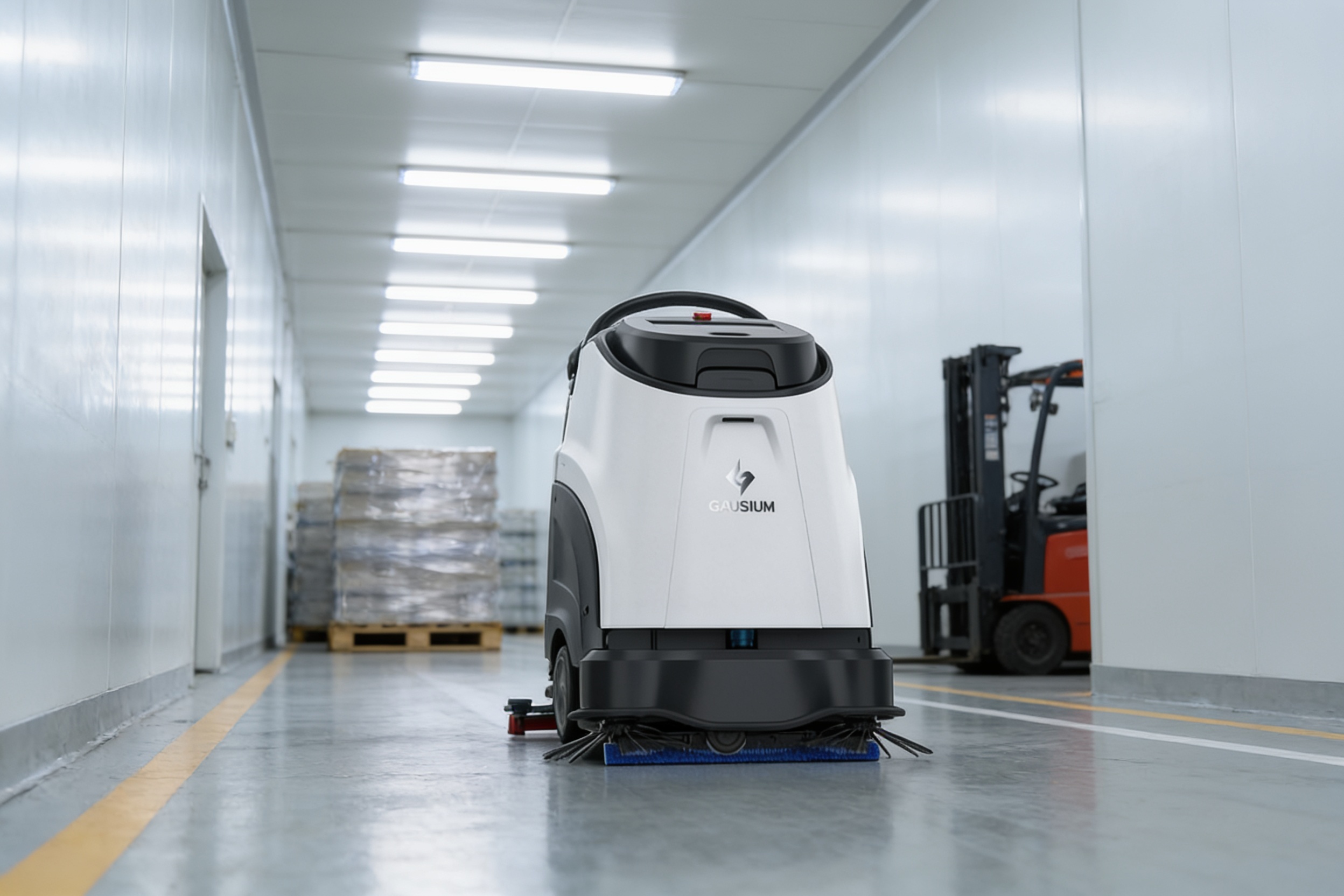
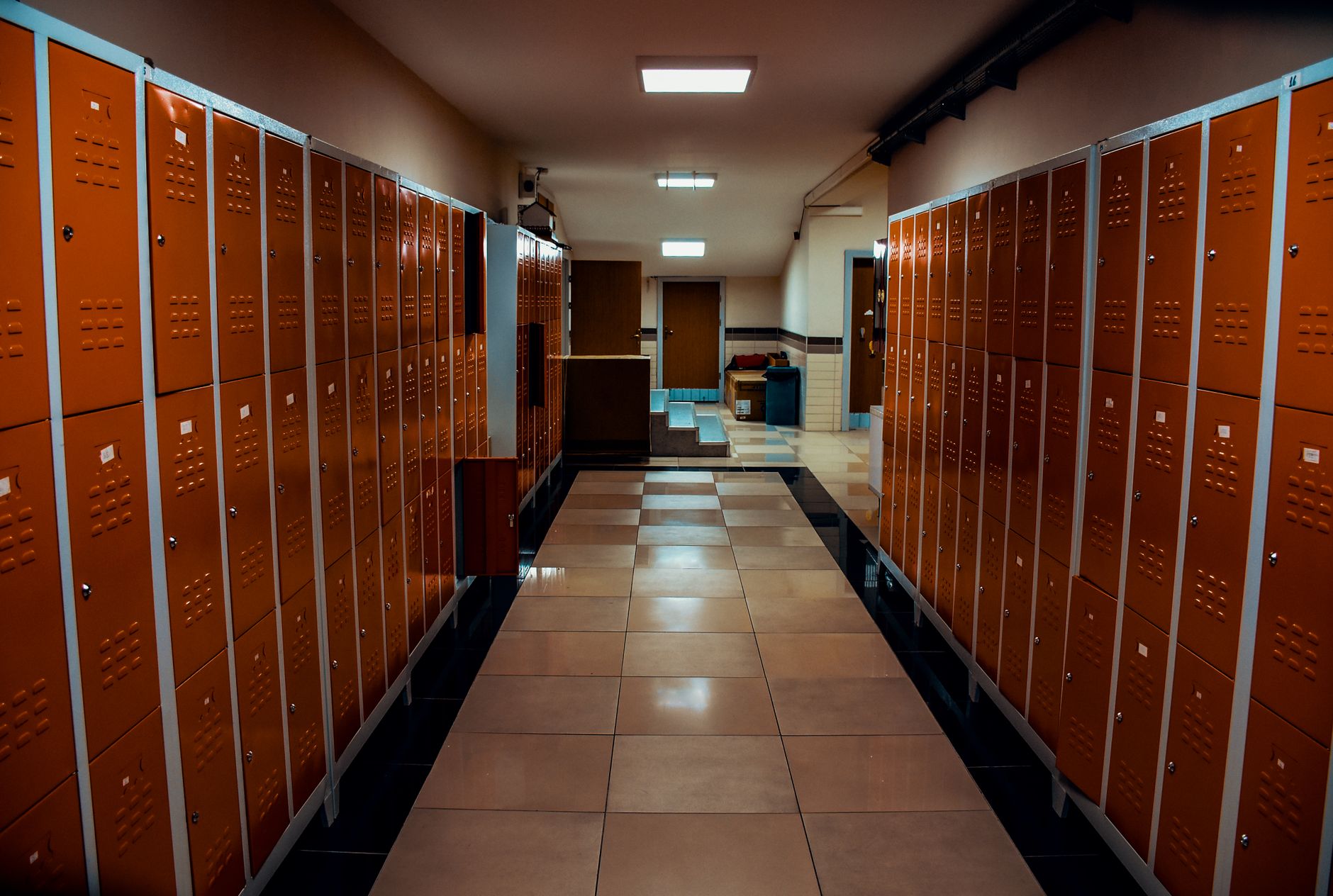
Grit tracked off an indoor tennis club's courts ends up in the lobby and locker corridors, and by the time the last lesson finishes it has been walked across most of the building. A night cleaning robot fits that part of the job. Lobbies and corridors are mostly flat, hard floors with repeatable routes, which is the kind of surface autonomous cleaning equipment handles well when it runs on a fixed schedule after close. The staff member who sweeps at midnight can then move on to closing work that needs a person.
What a robot does not solve is the source. Clay grit is generated on the courts, so the most useful control sits upstream. An indoor court cleaning blog says a daily dry mop or sweep minimizes loose grit and clay, while caked-on debris needs more effort than a routine pass. A night robot is a back-end sweep that keeps corridors clear, not a substitute for the court routine, and it works best alongside that routine.
The benches are the real test. A robot can clean a corridor well and still stop or get stuck if a bench sits low over the floor, a bag hangs near the floor or an entry mat curls at its edge. The night plan therefore has to be tested on the actual layout, not judged from a floor plan.
How much grit reaches the lobby and locker corridors?
No national count or measured figure for lobby grit at indoor tennis clubs turned up in the research, and no source tracked clay grit specifically in lobbies or locker corridors. What the research does show is the conditions that make the problem worse. The same indoor court cleaning blog says older buildings and poorly maintained HVAC systems make grit a bigger problem, so the building can be part of the cause. Check the ventilation and the age of the air handling before you assume the courts are the only source.
Moisture matters too. The indoor maintenance manual from a clay court surface maker says excess humidity makes clay fines cling to balls and can cause mildew, and it recommends ventilation to control moisture. A club that tightens humidity and airflow may see less material cling to surfaces, though the research did not measure that effect.
Traffic is the other driver. US tennis participation has been climbing, and a club whose court hours have grown will carry more clay and rubber crumbs into its corridors at night. The participation figures in a later section describe the sport as a whole, not any one club, but they point in the same direction.
Measure the problem before you choose a method. Count how many nights a week the corridors need a full sweep, note where the grit sits, and record whether it is loose dust or caked material. Loose debris on hard floors is generally the easier job for a sweeping route, while ground-in material often needs a scrubber or a person. The right answer depends partly on that measurement.
- Night coverage
Cleaning Robot
Runs a set route after close without an operator on site.
Staff
Has to be on site, and can respond to a spill or a locked door at any hour.
- Clay on the courts
Cleaning Robot
Not the right tool for court surfaces.
Staff
Trained staff with dedicated court tools handle court surfaces.
- Spills and wet patches
Cleaning Robot
May not classify a spill or wet patch reliably.
Staff
Sees it, stops and reports it.
- Benches and low furniture
Cleaning Robot
Depends on bench clearance and sensor reach, so it can stop mid-route.
Staff
Steps around everything without a plan.
- Unusual messes
Cleaning Robot
Repeats the same pass whatever the floor holds.
Staff
Judges what a mess needs and decides what to do about it.
- Consistency
Cleaning Robot
Repeats the same route and pass every night.
Staff
Quality varies with fatigue, short shifts and turnover.
Where does a cleaning robot fit: courts, lobby or corridors?
Split the building into three floor types before you think about the robot. Court surfaces are a specialist job, handled with dry sweeping, mopping or dedicated court equipment, and the right method depends on the surface and the maker's guidance. The indoor court cleaning blog notes that some manufacturers do not endorse automated floor scrubbers for court use, so check the court maker's written guidance before any machine goes near a playing surface. Lobbies, corridors and locker room floors are standard hard flooring with heavy foot traffic, which is the realistic target for a robot. Viewing areas, stairs and the pro shop need their own decision.
Kept to the lobby and corridors, the robot takes a repeatable, low-judgment task off staff at midnight. Staff still check seams, entry mats and any spill that a sensor may not read, and they still handle the courts. Expect the robot to do the bulk of the corridor sweep rather than every piece of cleaning in the building.
Write the scope down in the form the site assessment will use: which floors, which hours, which doors open and close, and which areas are off limits. A narrow written scope is easier to test and easier to change than a vague goal of cleaning everything overnight.
Will a cleaning robot catch on benches and low furniture?
This is where the research is thinnest. No source covered tennis courts, bleachers or benches specifically, so the answer for your club rests on the physical clearance of your own benches and on how the robot handles low obstacles. Obstacle detection on commercial cleaning equipment is a sensor and software question, and general claims about a model do not tell you how it behaves under a particular bench.
According to a published patent on robot obstacle handling, a machine can check whether an obstacle's height falls under its own clearance height before deciding to avoid it. The same patent text says prior machines rely on sensors that detect only obstacles taller than their ground clearance. In practice, a bench with a low apron, a short gap under the seat or a crossbar may be read as a wall, or missed, depending on the sensor and the robot's deck height. Measure both sides of that comparison, and remember that a patent describes a design approach, not a product spec.
Mats, bags, cords and loose gear are the other risk. Treat anything on the floor at bench height as a clutter problem to clear before the run. A robot that stops on its route every night turns the task back into a staff job, which is the outcome you are trying to avoid.
What do staffing figures say about the midnight sweep?
According to the Bureau of Labor Statistics, there were 2,447,700 jobs for janitors and building cleaners in 2024, with projected growth of 2% for 2024 to 2034, which it describes as slower than average. The largest employer is services to buildings and dwellings at 35%, followed by educational services at 17%. A slow-growing occupation means a club cannot count on a large pool of applicants to fill a late shift.
Turnover is harder to pin down. The research did not find a federal turnover figure for this occupation, and the industry estimates it turned up were unverified or weakly sourced. Ask your cleaning provider or payroll records for the real rate in your building, because that rate, not an industry average, determines how often a new person is sweeping a corridor for the first time.
Night work adds its own strain. The person sweeping at midnight is also the person who responds to a spill, checks a locked door or handles a guest problem, so the sweep is often the first task to slip when the shift runs long. A robot does not replace that judgment, but it takes the repetitive pass off the list so the judgment goes where it is needed.
How do injury rates change the case for a robot?
Floor cleaning carries a real injury load. According to the Bureau of Labor Statistics, janitors and cleaners, excluding maids and housekeeping cleaners, had 18,680 nonfatal days-away-from-work cases in 2019, the latest janitor-specific snapshot the research found. The incidence rate for that group was 157.4 per 10,000 full-time equivalent workers. Treat it as the latest federal benchmark rather than a current count.
These figures describe the whole occupation, which includes hospitals, schools and office buildings, not tennis clubs. Use them as context for why a repetitive sweep matters, not as a forecast for your floors. Slips and falls on gritty or wet floors are the kind of hazard a sweep route may reduce, because it takes the repetitive pass out of a worker's hands. It does not remove the need for staff to watch for spills.
Do not treat the robot as a safety device for the courts. Its benefit is fewer manual corridor passes by staff, and that only holds if spills are caught and reported. Ask your safety officer and insurer which hazards they track before you set the scope, and write the reporting step into the night procedure.
How does leasing and service work for a club like this?
We are a full-service commercial robot integrator for US businesses. We pick the right robot across manufacturers rather than fitting your club to one brand, then lease it through financing, deploy and integrate it, train staff and service every unit under our service plan, backed by regional service engineers in every state we service. One partner covers the whole lifecycle instead of several vendors.
The first step is a free site assessment. We measure bench clearance, thresholds and the route between the lobby and locker corridors, then quote the lease after that assessment, so the payment reflects your building rather than a generic floor plan. A commercial cleaning robot lease quoted before anyone measures the benches is only a guess.
Ask about service terms before you sign. A cleaning program that depends on one machine stops when that machine stops, so ask how remote triage and on-site dispatch work, how long a visit takes in your region, and whether backup or loaner units are available during a repair. For a club that cannot accept an empty corridor on a busy weekend, the service plan matters as much as the robot.
How big is the US tennis market this floor problem sits in?
According to TennisTourTalk, reporting on USTA findings, the USTA reported 25.7 million US tennis players in 2024, the fifth consecutive year of growth, based on studies not yet fully released. According to Sports Destinations, a summary of Tennis Industry Association figures puts total US players in 2023 at 23.8 million. The two figures come from separate studies, so read them as direction rather than as one series.
Court supply is tight in at least one state. According to BriefGlance, which reports on a USTA Florida white paper, the state has 17,800 tennis courts, 80% of them private, and an estimated 1.9 million Floridians who played tennis in 2025. The report frames the issue as limited public courts, which may push more play toward private clubs, although the research did not test that link.
No national count of indoor tennis clubs turned up in the research, so the size of that part of the market cannot be stated with confidence. What the figures do support is a simple point: more play means more traffic, and more traffic means more grit reaching the corridors you clean at night.
What should a club do first?
Start by separating the three decisions: the courts, the lobby and corridors, and the benches. Keep court surfaces on your existing routine, with a daily dry mop or sweep as the guidance suggests, and scope any robot to hard floors in lobbies and corridors. That split keeps the robot away from the specialist work it is not suited to.
Then run a supervised trial pass on the real route after the last lesson, with the clutter cleared and the benches in place. Log every stop, its cause and its location. Those logs show whether the bench question has a clean answer or needs a layout change, such as moving a bench, clearing a threshold or marking an area out of the route.
Bring the logs and your building measurements to a free site assessment. We can then quote a lease for the scope the trial supports. If the route is narrow, a single unit can be a sensible start before wider coverage. The decision should rest on what the route test shows, not on a general answer.
Frequently asked questions
Want a cleaning robot at your indoor tennis club lobbies and corridors?
Tell us about your site. We will recommend the robot, quote the lease, and keep it serviced.
Sources
- Bureau of Labor Statistics, Occupational Outlook Handbook: Janitors and Building Cleaners
- Bureau of Labor Statistics, injury snapshot for janitors and cleaners, 2015 to 2019
- TennisTourTalk report on USTA participation
- Sports Destinations, US tennis participation data
- BriefGlance report on USTA Florida white paper
- Indoor court cleaning blog
- Clay court surface maker indoor maintenance manual
- Published patent text on robot obstacle clearance