
The question, in the buyer's words
I run night custodial for a nine-building corporate campus, and our crew has gone from four people to one since spring; could a cleaning robot take the lobby and corridor floors after the last shift so that one person can cover all nine buildings?
Key takeaways
- Partly: cleaning robots can take lobby and corridor hard floors after close, not the whole night shift.
- One person across nine buildings works only if that person still handles starts, faults, restrooms and trash.
- Rated coverage figures are upper bounds, so measure your own floor and route times before deciding.
- Adoption is still early, so a one building pilot with a logged baseline is the sensible test.
- Lease terms come in a quote after a free site assessment.
How big is the night custodial staff gap across the country?
The gap you describe is common and mostly a replacement problem. According to the Bureau of Labor Statistics, janitors and building cleaners held about 2,447,700 jobs in 2024, and the agency projects only 47,800 new jobs (2%) from 2024 to 2034, which it describes as slower than average.
The turnover side matters more for a night crew. The same BLS outlook puts average openings at about 351,300 per year, mostly from replacing workers who leave, so a vacant night slot tends to come back. Cleaning robots can take part of the floor work without depending on one hire to fill the slot.
These figures describe the occupation nationally, not your shift or your campus. Treat them as context for why the gap is hard to close, not as a forecast for your buildings.
Which lobby and corridor floor work can cleaning robots take?
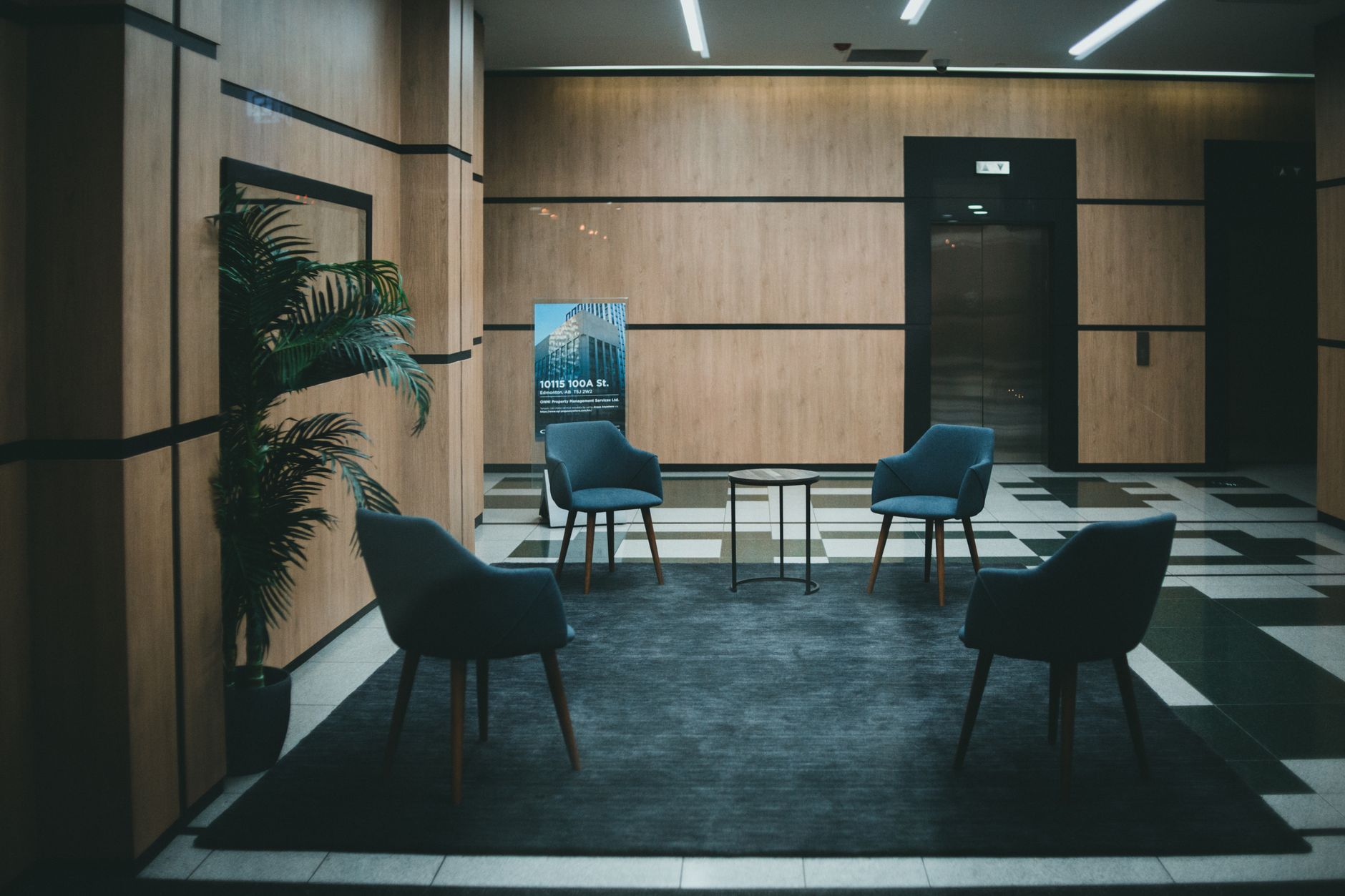
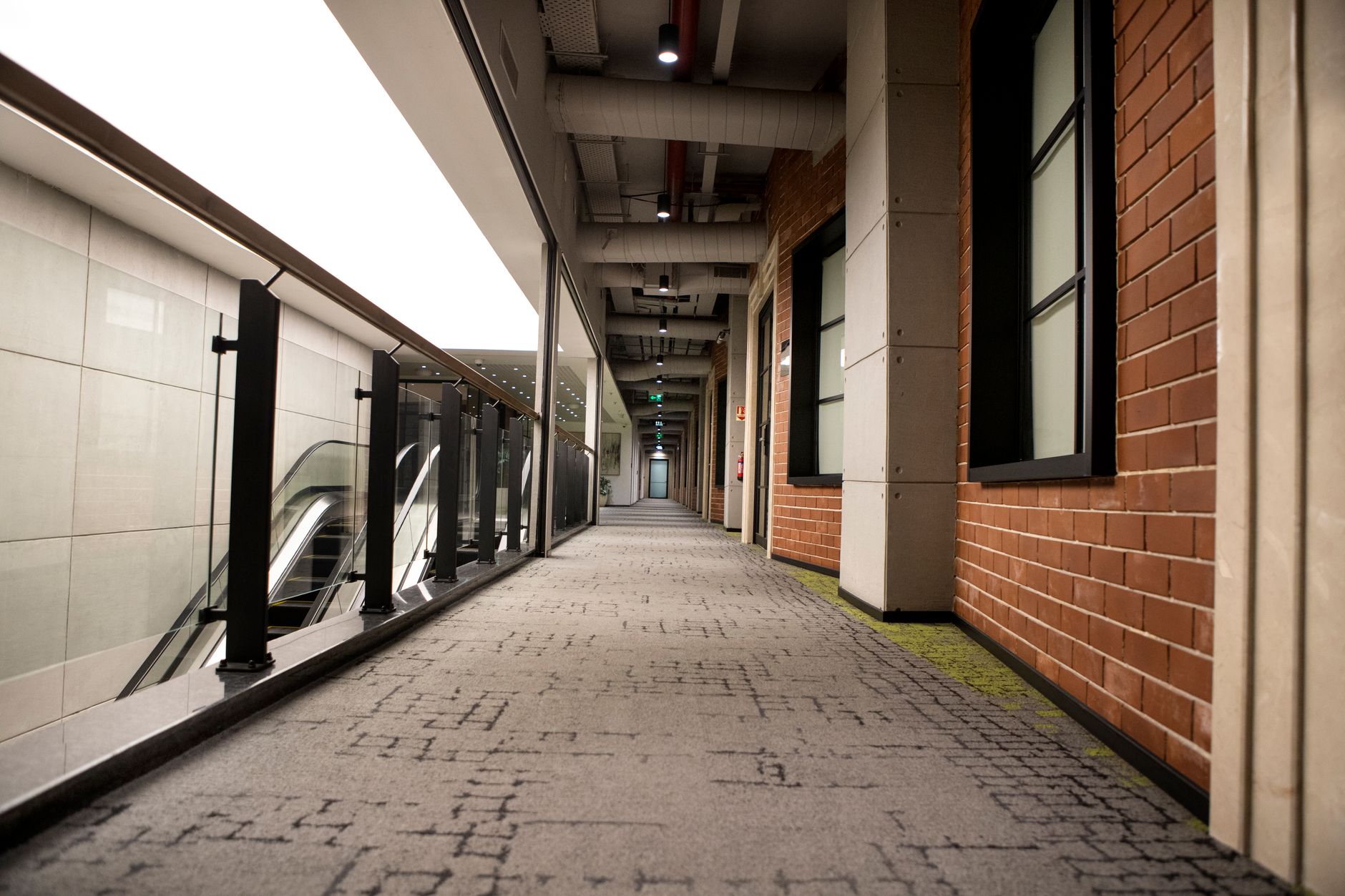
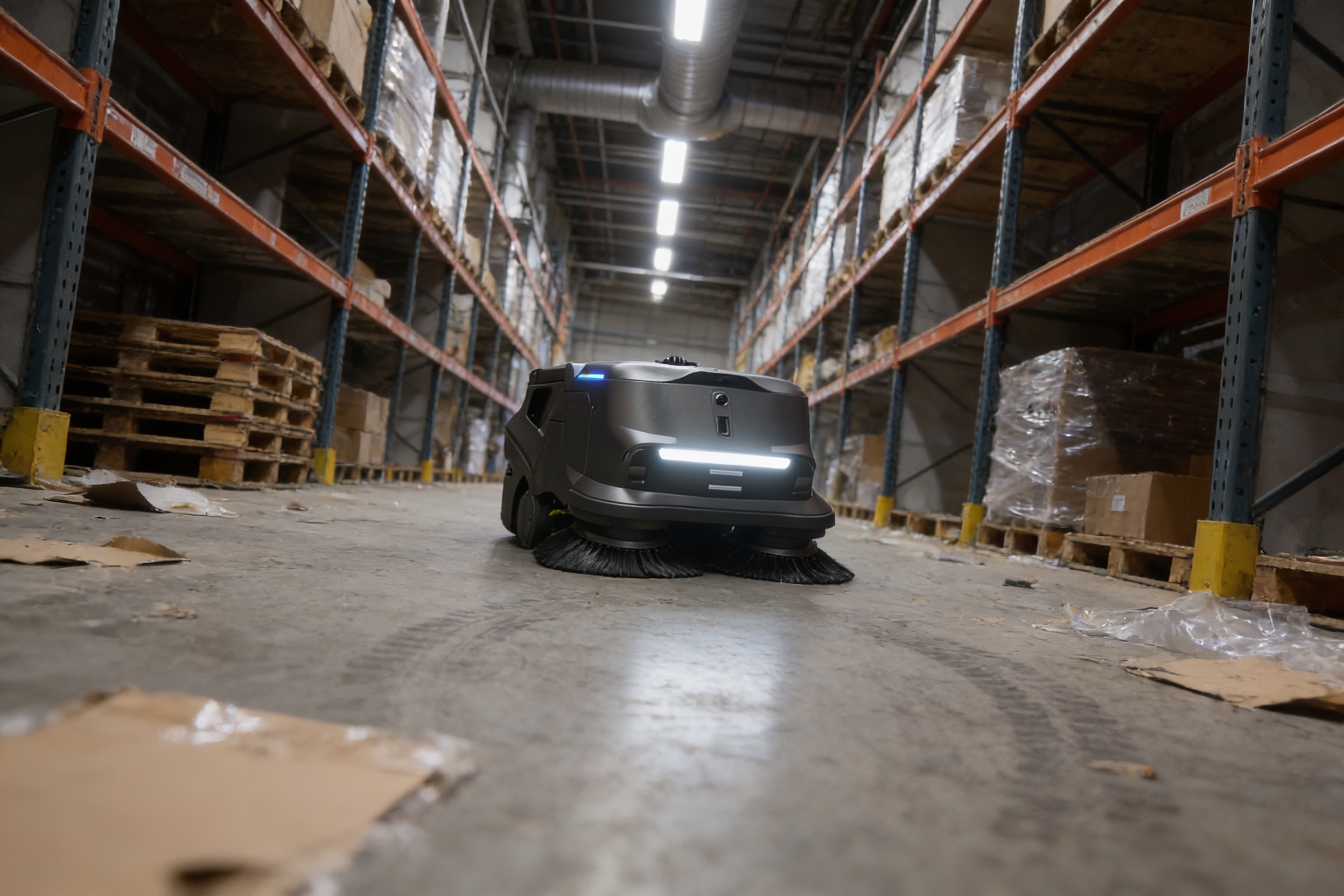
Lobby and corridor floors are a good match because the route repeats, the surfaces are mostly open and the work is the same every night. Scrubbing or sweeping a hard floor along a mapped path is the core task, and it is the work most often left unfinished when a crew drops from four people to one.
Where robots struggle is the setup around the floor. Thresholds, rugs, carpet borders, stairs, moved furniture, cords and wet floor signs all change the path, so the robot needs a site walk and a clear route plan before it can run unattended.
Robots do not empty trash, clean restrooms, check locked doors or lights, respond to a spill that sits off the route, or clear a jam. Those tasks keep the one person busy, so the real question is how much of the night that person still has to spend on the rest.
Ask the person who does the work now to walk you through the lobby and corridors at close. The route they take, the spots they return to and the areas they skip are the real scope, and they tell you more than a floor plan does.
How much floor can one cleaning robot cover in a night?

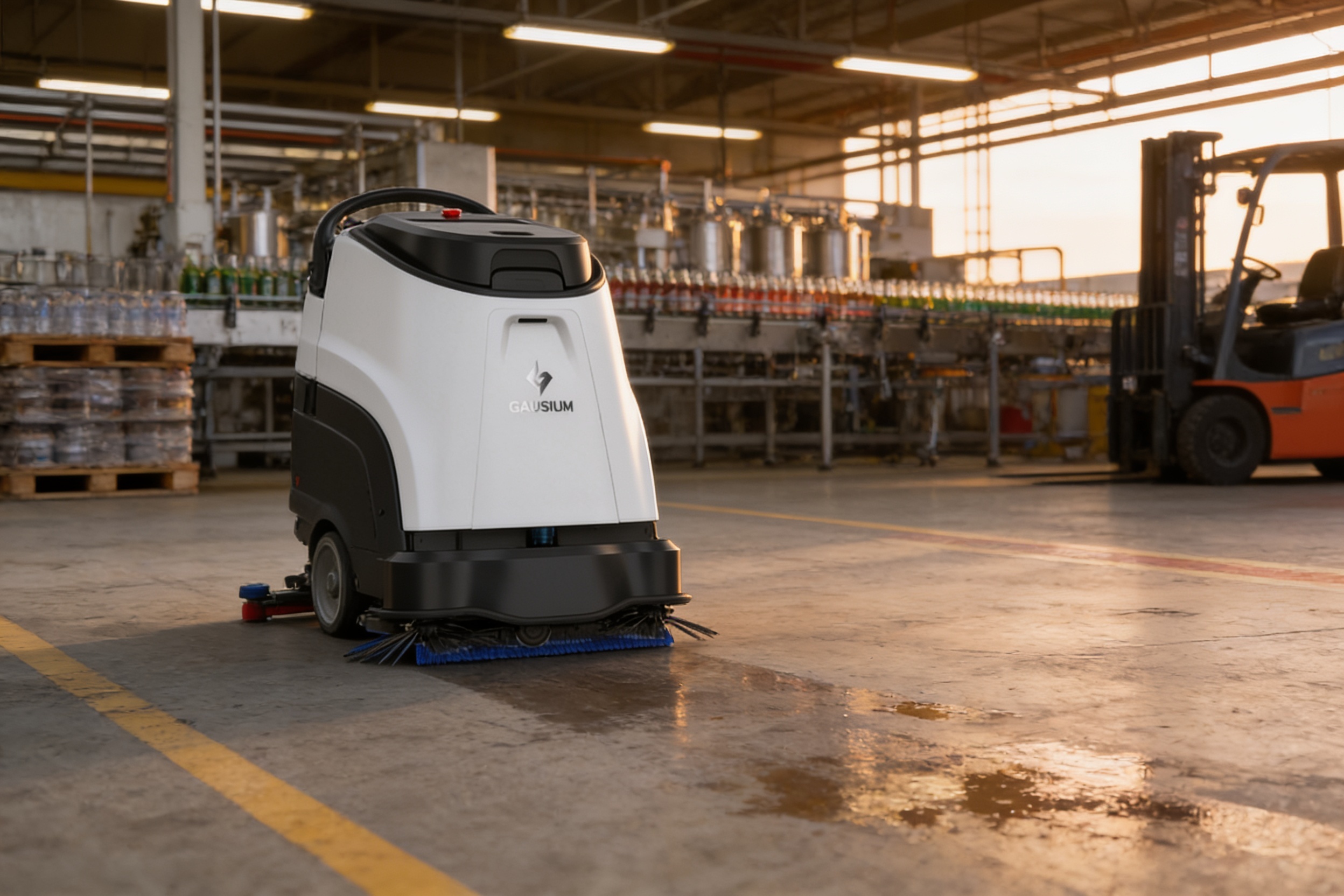
Manufacturer specification pages rate a compact robotic scrubber at up to 15,000 sq ft per hour, a larger facility model at up to 28,000 sq ft per hour and a top industrial model at 64,500 sq ft per hour. A commercial supplier lists walk-behind manual scrubbers at about 16,000 to 22,000 sq ft per hour for 18 to 20 inch paths.
A vendor guide to commercial floor cleaning robots warns that real coverage falls below rated figures once doorways, furniture and foot traffic are included. Treat every rated number here as an upper bound, and plan with your measured route time instead.
Autonomous vacuums are often rated per charge rather than per hour, so compare them with scrubbers only after putting both on the same basis. For a campus, the useful question is whether one unit can finish every lobby and corridor run inside the hours after the last shift.
Plan for charging and idle time too. If a unit needs a recharge between passes, the schedule has to leave a window for it, and that window is set by the route length and the hours the building is empty.
Can one person really cover nine buildings with cleaning robots?
Partly. A robot does not need a person in the room while it scrubs, but it does need a person to start it, confirm the route is clear, clear a jam or blocked door and check the finished floor. Each of those tasks repeats in every building, so nine buildings means nine starts, nine route checks and nine sets of doors to watch.
The workable model is a schedule. Robots begin after the last shift, and one person moves between buildings to start runs, inspect results and handle restrooms, trash and spills. Whether that works depends on the walking distance between buildings, how many units each building needs and whether a unit can pass doors and use elevators without help, which a site assessment will confirm.
Do not promise the board nine buildings on day one. Start with the largest building or the one with the biggest floor backlog, log the person's minutes there for two weeks and use that record to decide how many buildings one person can realistically cover.
- Floor passes on lobby and corridor hard floors
Cleaning Robot
Repeats the same mapped route on a schedule without a person in the room
Staff
Adjusts for wet spots, moved furniture and spills in the same pass
- Hours of coverage per night
Cleaning Robot
Runs in the hours after the last shift, limited by charging and route time
Staff
Limited to one shift, including breaks, sick days and leave
- Coverage across nine buildings
Cleaning Robot
Each building needs its own scheduled run, and someone must start and check it
Staff
One person can only be in one place, so travel time between buildings is the constraint
- Restrooms, trash and spills
Cleaning Robot
Does not do these tasks
Staff
Does them, along with checking doors and lights
- Fault handling
Cleaning Robot
Stops and alerts, then needs a person to clear the fault
Staff
Clears jams and reroutes the run on the spot
- Judgment off the route
Cleaning Robot
Follows its mapped route and misses what sits outside it
Staff
Sees a spill, a damaged mat or a blocked exit and acts on it
Does high turnover change the case for cleaning robots?
Turnover numbers for cleaning work are loose, and none of the sources we found is authoritative for 2025. A vendor compilation cites an industry range of 100% to 400% annualized, with about 200% as the most cited median, and a trade publication reader survey reports an industry average of 73%.
Each of those figures comes with a method caveat, so treat them as direction, not measurement. The practical reading is that a night shift which cannot keep one person filled will keep returning to coverage problems, while a unit that repeats the same floor passes on schedule does not need a new hire each time someone leaves.
Robots reduce how much of the night depends on one person's floor work. They do not remove the need for a trained person to run the building, so turnover still matters for the restroom, trash and fault roles.
Count the cost of the gap itself as well. Unfinished corridors mean staff and tenants see dirty floors on arrival, which is hard to measure but easy to notice in complaints.
Are facility managers actually using cleaning robots yet?
Adoption is still a minority position. In a 2019 survey by an industry association covering nearly 23,000 building service contractors, in-house providers and facility or property managers, 69% of facility or property managers had not used autonomous cleaning equipment, compared with 62% of contractors and 68% of in-house providers.
Among those non-adopters, about one third said they were somewhat likely to adopt within a year. That survey is from 2019 and its full results sit behind a membership paywall, so the figure is dated and the detail is limited.
A 2026 industry review, published by a vendor, reports that about 32% of building service contractors plan to adopt robotic floor equipment within 12 months, about double the 2025 share. It covers contractors rather than facility managers, so it shows momentum among cleaning firms, not necessarily among campuses like yours.
The adoption data suggests most facility managers are still watching rather than deploying, so a reference visit to a similar site and a short pilot are a reasonable test before any wider lease.
How do you lease cleaning robots for a campus?
We are a vendor neutral integrator, so we pick the cleaning robot that fits your floors rather than the one we happen to lead with. We lease the units through financing, which lets you start without committing capital up front, and we deploy, integrate, train your staff and service each unit under our service plan.
The lease payment comes in a quote after a free site assessment. That assessment is where we walk the lobby, corridors and building links, measure floor area, map routes and note the doors, elevators and surfaces that change the plan.
Service runs through regional service engineers, with on-site dispatch and remote triage for faults. Ask for the service terms, spare unit coverage and liability responsibilities in the quote, since those details shape your staffing plan more than the robot specification does.
What would change the answer for your campus?
The answer moves most on three things: the floor surfaces, the walking distance between buildings and whether someone is available to answer a stopped unit during the shift. A campus with mostly hard floors and short walks between buildings is a stronger fit than one with carpeted corridors, stairs and long outdoor connectors.
Two checks matter more than the robot specification. Log the minutes the person spends in each building for two weeks, then decide whether floor passes are the bulk of that work or a small share. If floor passes are a small share, a robot will not solve the staffing gap by itself.
Decide what success looks like before the pilot starts. If the goal is every lobby and corridor floor finished before staff arrive, measure that outcome each morning. If the goal is covering all nine buildings with one person, measure the person's minutes per building, including travel and fault time.
Work through the checklist before you request a quote, so the site assessment can answer the questions that decide the outcome.
Frequently asked questions
Upcoming offices & corporate campuses events
- Trade showNEBFM 2027, Northeast Buildings & Facilities Management Trade Show & ConferenceApr 14 to 15, 2027DCU Center, Worcester, MA
- ConferenceIFMA Facility Fusion Conference and Expo 2027Apr 27 to 29, 2027Hilton New Orleans Riverside, New Orleans, LA
- ConferenceAIA Conference on Architecture & Design (AIA27)May 19 to 22, 2027Pennsylvania Convention Center, Philadelphia, PA
- ConferenceBOMA International Conference & Expo 2027Jun 26 to 29, 2027Washington, DC
Want a cleaning robot at your office buildings?
Tell us about your site. We will recommend the robot, quote the lease, and keep it serviced.
Sources
- Bureau of Labor Statistics, Occupational Outlook Handbook: Janitors and Building Cleaners
- Secondary wage compilation for janitors and cleaners
- Vendor blog on janitorial turnover
- ISSA building service contractor survey (2019) summary
- Vendor-published industry review of robotic floor equipment adoption
- CMM online article on cleaning robotics trends for 2026
- Manufacturer specification page for commercial floor scrubbers
- Supplier listing for commercial walk-behind floor scrubbers