
The question, in the buyer's words
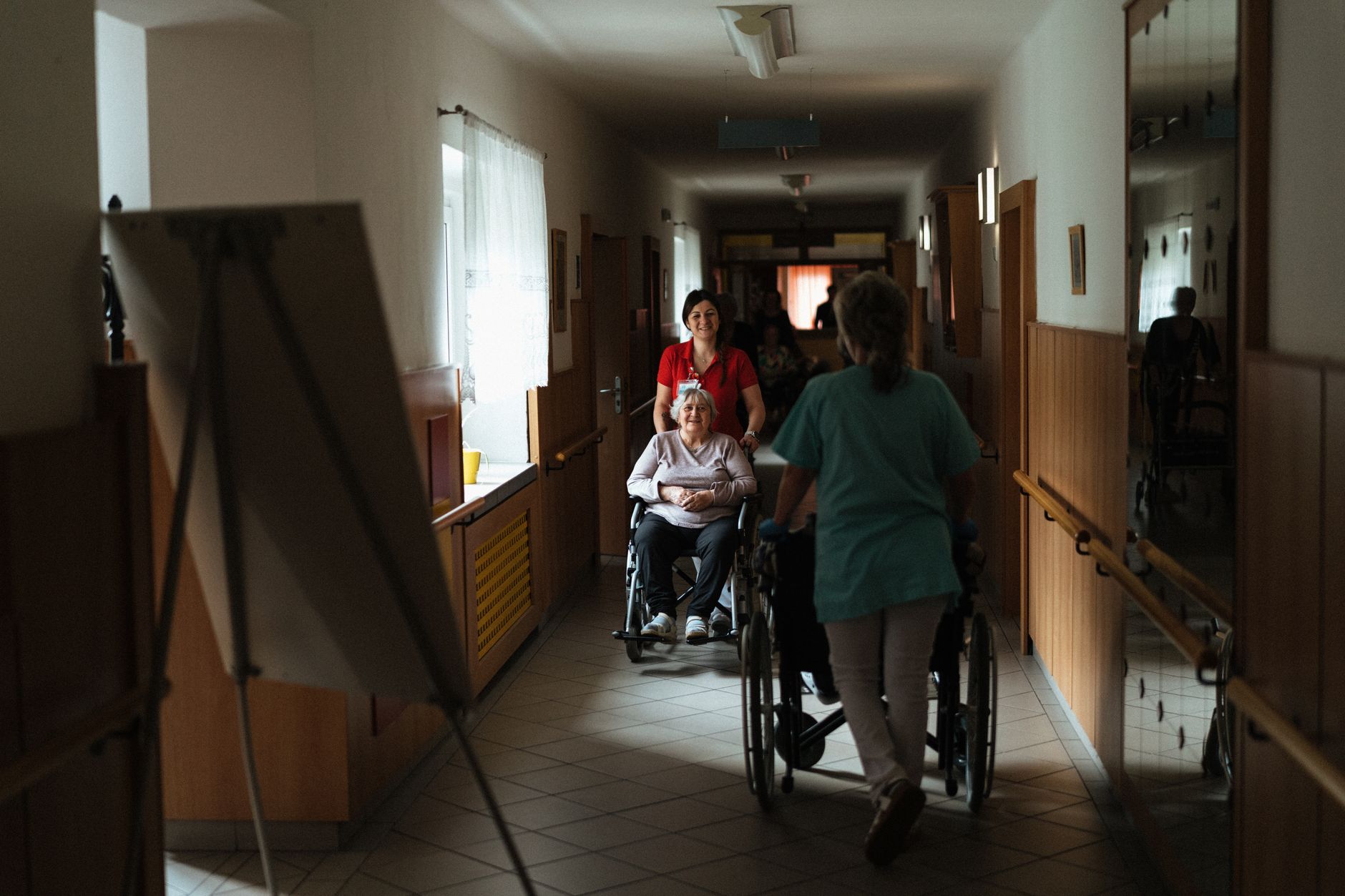
I run dining services for a 90-resident memory care wing, and aides carry meal trays down a long corridor while residents wait at their doors; could delivery robots carry those trays without startling residents or blocking the wheelchair path?
Key takeaways
- A delivery robot can take the walking off tray runs, but it cannot feed or sit with residents.
- Mealtime help is the largest block of aide time, and a tray robot does not reduce it.
- No study we reviewed measures startle effects on residents with dementia, so observe real runs first.
- Hospital pilots tie failed deliveries to elevator use and congestion, so plan the route around both.
- CNA turnover of 42.34 percent in 2025 makes steady tray support worth weighing, not aide replacement.
Where does a delivery robot fit in a memory care dining wing?
In a memory care wing, the dining team usually moves trays from a kitchen or hold station to a row of resident rooms, and aides carry them down a long corridor while residents wait at their doors. A delivery robot can take over that carrying, provided the route is fixed, the corridor is wide enough for a robot and a wheelchair to pass, and the robot stops for people. It does not take over the work of getting a resident to eat, and that is where most aide minutes go.
This is a common setting. The CDC's NPALS 2025 weighted estimates count about 31,415 residential care communities in the US. Memory care is a smaller slice of that world: NIC MAP data, as reported by Senior Housing News, put just under 49,000 memory care units against about 193,000 assisted living units, and about 30 percent of memory care units sit in standalone communities.
That mix matters for any delivery robots plan. A standalone memory care building has its own corridors, lifts and kitchen access, while a memory care wing inside a larger assisted living community shares elevators and dining staff with other floors. Map your wing as it runs during a busy meal, not as it looks on a plan drawing, because the robot will meet the real traffic.
How much aide time goes to mealtime help versus carrying trays?
The clearest time figures come from a feeding-assistance trial, which reported mean staff time of 42 minutes per person per meal for mealtime help, against about 5 minutes under usual assistance. The same trial reported 13 minutes per person per between-meal snack, and its authors noted that snack delivery takes less time than mealtime help. The trial's journal was not identified in the results we reviewed, so use these figures as a starting point and check them against your own logs.
Published guidance on nursing home meals, as summarized in the sources we reviewed, puts long-stay residents who need help eating at 20 to 30 minutes of help per meal. That time covers hands-on feeding, prompting and sitting with the resident, and a tray robot does none of it. What a robot removes is the walking and carrying, which is real time, but not the hour an aide spends at one table.
Staffing ratios explain why that time is scarce. Miami University's Bridge Project guidance says experts recommend about 5 residents to 1 nurse aide at mealtimes, while most homes run about 8 to 10 residents per aide. When one aide covers eight to ten people, every trip down the corridor is a trip not spent at a table.
Will a delivery robot startle residents or block a wheelchair path?
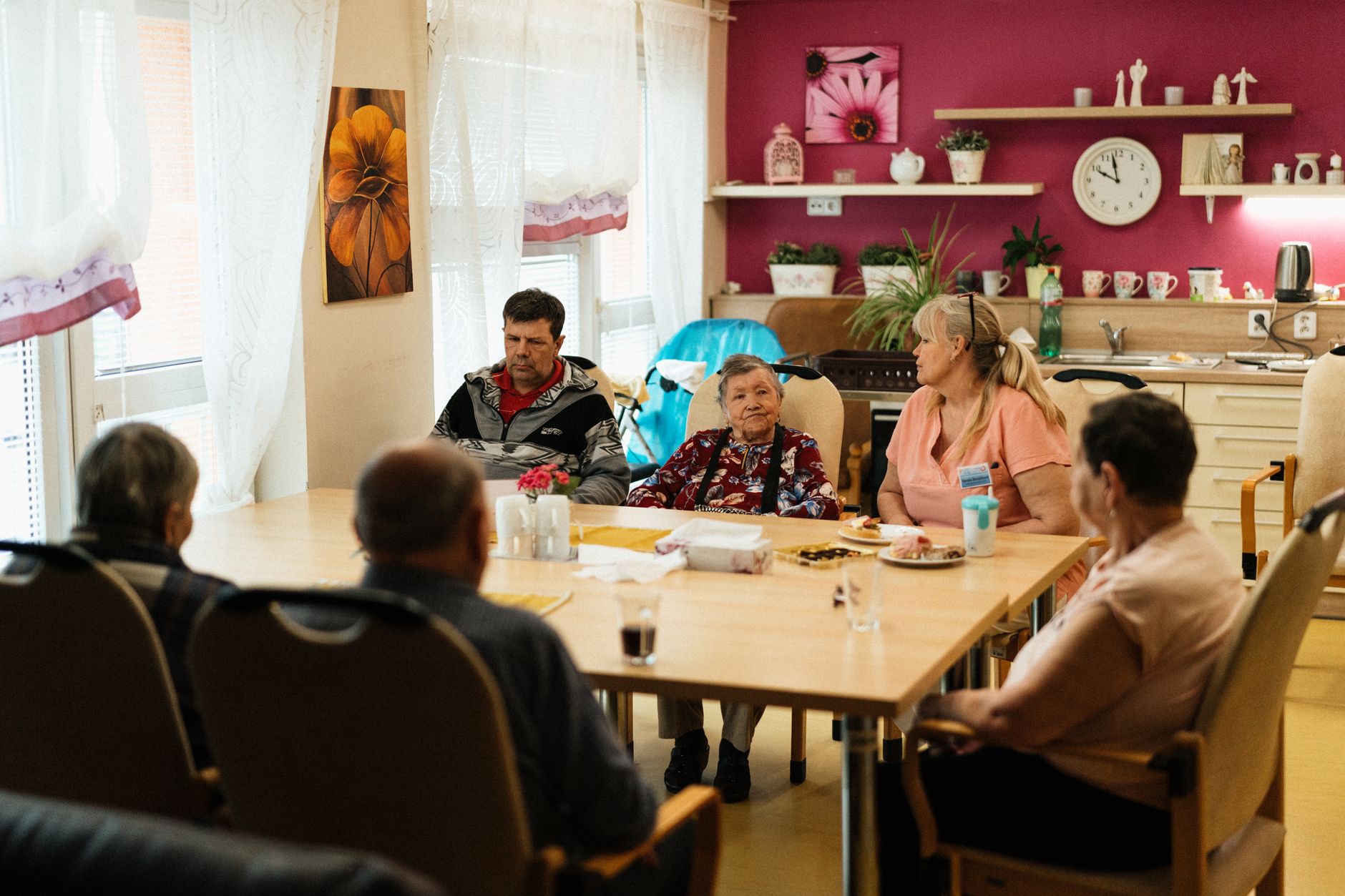
The honest answer is that the evidence is thin. The search we ran found no 2025 study measuring corridor noise or startle effects of delivery robots on patients, and the hospital work we reviewed did not test people with dementia. A memory care resident may react to a sudden sound, a moving shape or a voice from nowhere, so the risk is real even though it is unmeasured.
A wheelchair path is mostly a layout question. A robot that stops for obstacles still needs enough open width for a wheelchair and the robot to pass at the same time, and staff must keep carts, chairs and linen bins out of the route. Ask your accessibility or facilities lead to mark the route and test passing at the busiest hour, not on a quiet morning when the hall is empty.
Ask any vendor how the unit announces itself. Quiet operation, a low tone and no speech on approach are features to check, and any sound setting should be tested in your own hallway with staff who know which residents are sensitive to noise. Plan an observed run before any resident sees the unit in service.
- Startle risk
Delivery Robot
Moves on a fixed route, but no published study measures startle effects on residents with dementia
Staff
Can speak softly, read a resident's mood and wait at a door before passing
- Wheelchair path
Delivery Robot
Stops when its sensors detect an obstacle, so the route has to stay clear of carts and chairs
Staff
Steps aside, adjusts around a wheelchair as it moves and can move a cart out of the way
- Mealtime help and company
Delivery Robot
None, since it carries the tray and stops at the door
Staff
Feeds, prompts and sits with residents, which is where most aide minutes go
- Elevators and peak meal windows
Delivery Robot
Depends on elevator access and timing, and hospital pilots saw more failed runs as elevator use rose
Staff
Waits for a lift, reroutes and uses judgment when a hall is crowded
- Consistency across a shift
Delivery Robot
Same route and timing on every run, with no tiredness
Staff
Affected by turnover, since CNA turnover was 42.34 percent in 2025 in one industry survey
What do hospital delivery pilots teach about corridors and elevators?
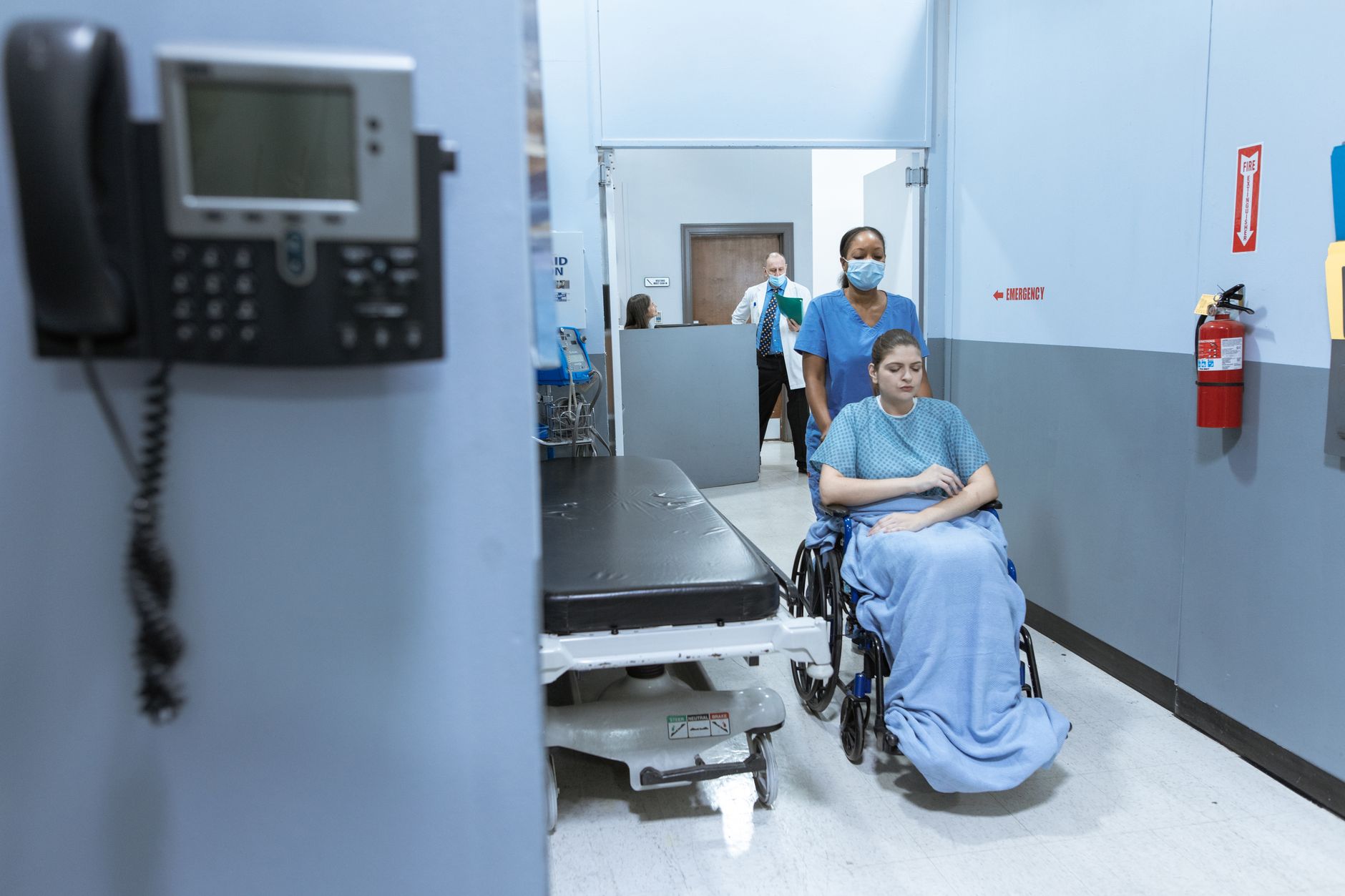
A 2025 feasibility study at Korea University Guro Hospital ran 122 non-urgent medication delivery missions between June 18 and June 29, 2025. Higher elevator operating rates were strongly associated with more failed deliveries, which matters if your residents' rooms sit on a floor other than the kitchen. Staff rated the system usable, but frequent users reported more time pressure during congestion.
The study's authors suggest scheduling runs when congestion is low. Meal times are the hard part, because every tray leaves in the same window and the lift is busiest at the same moment. A single-floor route or a staggered tray schedule is the practical fix, and both should be decided before go-live rather than discovered on the first busy lunch.
A Norwegian study at a women and children's centre, reported by eletimes, found robots occasionally took over elevators and forced staff out of one, and the researchers argued robots should not take elevators when sick patients need them. A Tampere University pilot at a Finnish hospital found staff wanted clear traffic rules for shared corridors and clear emergency procedures. Write both into your route plan.
How do you set up a tray corridor run that works on a memory care floor?
Start with the route, not the robot. Mark the corridor from the tray hold point to the last resident room, note every door that opens into the hall and every spot where a wheelchair or walker parks, and decide which stretches the robot may use. A route that avoids the elevator and the busiest intersection will be easier to keep reliable.
Plan the handover. Residents in memory care may not know a tray is theirs, so the robot should end its run at a point where an aide can take the tray, say the resident's name and sit briefly. The robot finishes the walk, and the aide starts the human part. Decide before go-live who checks the diet card, who opens the lid and who calls for help if a unit stops.
Set the run times around the meal, not the other way round. Snack runs fall between meals, when aides are freer, and the snack figures above suggest they are the easiest first step. Start with snacks and one hall, then decide whether tray runs at the main meal earn a place.
Lock the route compartment so a resident cannot take a tray from it, and check that an aide can stop or redirect the unit quickly if someone walks into its path. Write down who holds that authority on each shift. Those controls matter more on a memory care floor than they would on a general hospital ward.
How serious is aide turnover, and what does it change for the dining room?
Turnover is the reason many directors look at robots at all. The Hospital & Healthcare Compensation Service 2025 to 2026 Nursing Home Salary and Benefits Report, based on 917 nursing homes, put CNA turnover at 42.34 percent in 2025, down from 44.16 percent. RN turnover was 36.53 percent and LPN turnover 35.29 percent. That is an industry survey, not a federal dataset.
A 2023 scoping review estimated that 35 to 65 percent of CNAs leave home health employment each year. Home health is another setting, so treat that range as a sign of the same pressure rather than a forecast for your staff. We did not find a verified Bureau of Labor Statistics turnover figure for nursing assistants in this search, so ask your HR team for your own rate.
Turnover makes a case for steady support, but not for replacing aides. A new aide still needs time to learn the residents, and a robot can keep tray runs steady while the experienced aide does the feeding and the talking. Use turnover to justify the routine parts of the walk, not the human parts of the meal.
How do we scope, lease and service a unit for a wing like yours?
We are an integrator, so we pick the robot for your floor, not the other way around. The first step is a free site assessment, where we map the corridor, the elevator and the dining route, check clear widths and talk with your staff about the meal schedule. Only after that do we quote a lease through financing, and the payment comes in that quote, not on this page.
Deployment and integration come next. We install and configure the unit on the route you agreed, train dining staff and aides on how to load, send and stop a run, and provide go-live support through the first meal services. Training also covers what to do when a unit stops in a hall, who calls for help and how each tray is checked before it leaves.
Service stays with the unit. Our service plan covers every unit we lease, with regional service engineers and on-site dispatch, and we handle remote triage first where we can. Ask us to put response times in writing and to describe the fallback route for your hall before you sign, because a stopped unit is the question a dining director will be asked about.
What should a pilot prove before you commit to a wing-wide rollout?
Treat the first weeks as a test of your own rules. Pick one hall, one tray or snack run per meal and a fixed route, then log every run with its time, any stop, any blocked door and any resident reaction an aide notices. A pilot that cannot show reliable runs in the busiest window is not ready for a whole wing.
Decide the no-go conditions in advance. If the robot would need to enter a dining room, use the elevator at peak, or pass a wheelchair without clear room, that route stays with aides. A partial yes is still useful if it removes snack runs from one hall.
Judge success by aide time returned to residents, not by the number of trays moved. The question is whether an aide spends more of the meal seated with a resident, and whether residents at their doors are no more upset than before. Those answers come from your logs and your staff, not from a brochure.
Frequently asked questions
Upcoming hospitals & healthcare events
- ConferenceNew England College Health Association (NECHA) 2026 Annual MeetingNov 11 to 13, 2026Newport Marriott Hotel & Spa, Newport, RI
- ConferenceHLTH USA 2026Nov 15 to 18, 2026The Venetian Expo, Las Vegas, NV
- ConferenceIndiana Safety and Health Conference & Expo, 2027Feb 8 to 10, 2027Indianapolis, IN
- ConferenceHealthcare Project Delivery Conference 2027Feb 10 to 11, 2027Manchester Grand Hyatt, San Diego, CA
Want a delivery robot at your memory care corridors?
Tell us about your site. We will recommend the robot, quote the lease, and keep it serviced.
Sources
- CDC NPALS 2025 weighted estimates
- Senior Housing News, NIC MAP data
- Miami University Bridge Project, meals overview
- Skilled Nursing News, nursing home turnover 2025
- Korea University Guro Hospital medication delivery feasibility study
- Tampere University, hospital logistics human-robot interaction pilot
- eletimes, hospital robot elevator study
- PMC scoping review on home health aide turnover