
The question, in the buyer's words
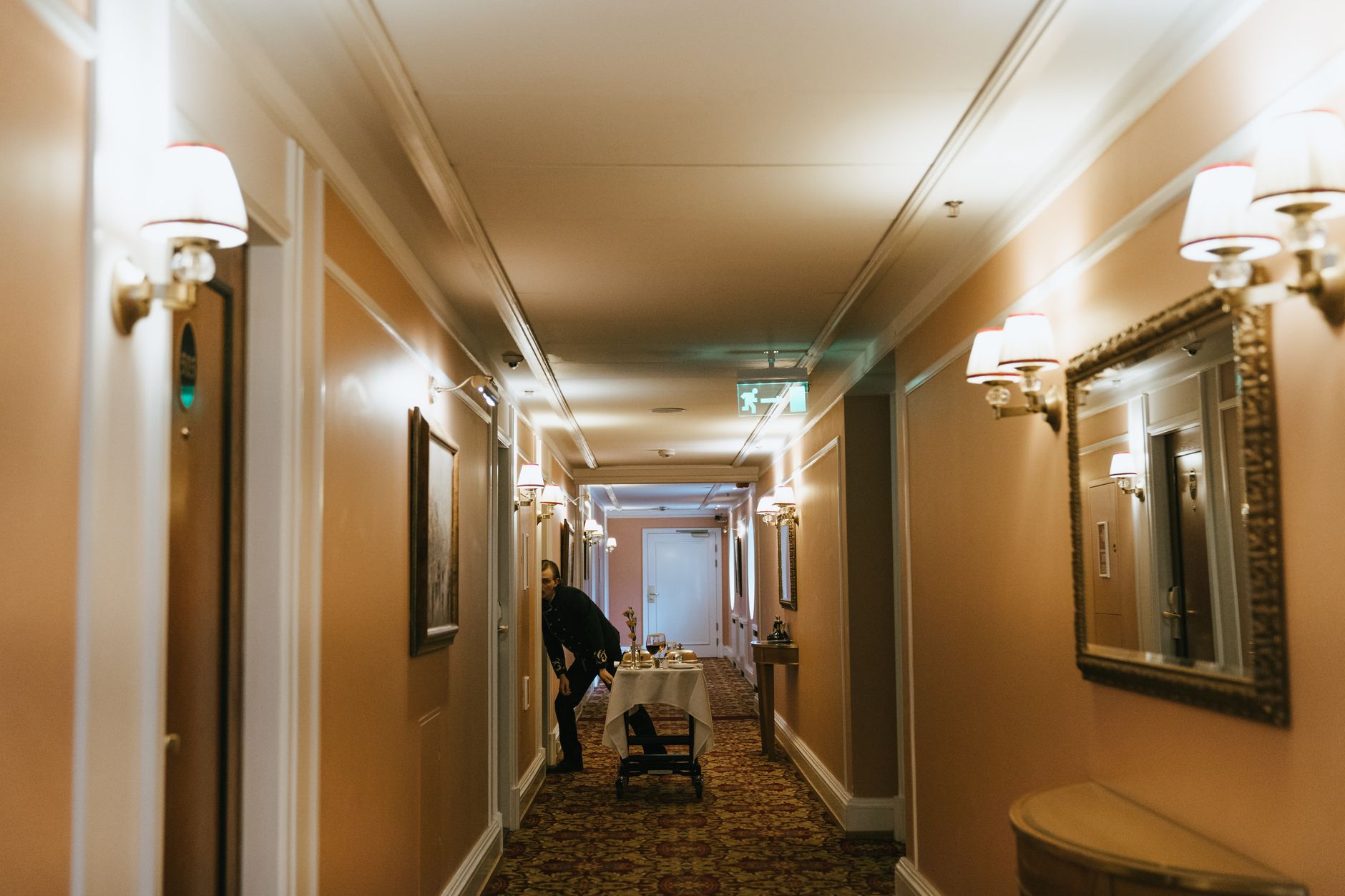
I run a 310-room hotel in Orlando, Florida, and at 11 p.m. housekeeping is stretched between turndowns, so room-service trays and extra linens sit at the service elevator until someone walks them up; could a delivery robot carry those runs to floors 6 through 12 without blocking the housekeeping carts?
Key takeaways
- Robots can take room service and linen runs off the service elevator, but they do not do turndown work.
- Housekeeping carts need mapped no route zones and run times set between turndown sweeps.
- The service elevator link on floors 6 through 12 is the first check, and a failed link means no robot run.
- Orlando drew 76,663,200 visitors in 2025, so late orders stay steady and routes need planning for busy weeks.
- A free site assessment comes before any lease quote, and the quote follows the building check.
Can Orlando hotel room service and linen delivery robots run floors 6 to 12?
Orlando hotel room service and linen delivery robots fit one narrow job in a property like yours: moving trays and extra linens from the service elevator to guest floors when nobody is free to walk them up. At 11 p.m. in a 310 room hotel, the walk itself is short. The wait is the problem, because the people who could make the run are on turndown routes three floors away. A robot can take that run, but it does not turn down beds, restock carts or answer a guest at the door.
Floors 6 through 12 decide the answer. Each trip depends on three things working together: the service elevator accepting the robot, a staging spot where the item waits in the same place every time, and corridor width that leaves room for guests and carts. We check all three during a free site assessment before any lease quote is written, and we test them at night, when the building is quiet and the real traffic shows.
If one of the three fails, the robot becomes a slow cart of its own. Each building answers differently, so a brochure cannot settle it, and neither can a demo in an open lobby at noon.
How do delivery robots keep clear of housekeeping carts in hotel corridors?
Housekeeping carts cause more trouble than path finding does. Carts park in corridor alcoves, block lanes during turndown and move in both directions down the same hall. A route that ignores those patterns will stop often, and a stopped robot becomes something staff step around at the worst hour of the night.
The fix is planning, not hope. Map the cart staging spots on floors 6 through 12, mark them as no route zones in the robot's map, and set run times for the gaps between turndown sweeps. Your housekeeping supervisor should sign off on that map, since they know where carts actually stand at 11 p.m., which often differs from the floor plan.
Expect tuning. The first routes will be too cautious in some corridors and too close to a cart in others, and the map changes as staff habits change. Schedule a review with housekeeping after the first week and another after the first busy weekend, and treat every stop in the logs as a route to fix.
Set one rule early: a robot waits for a clear lane, and a person moves a cart when a lane stays blocked. Robots should never be the reason a cart moves, and carts should never be parked in the path of a scheduled run.
- Repeat runs on a set route
Delivery Robot
Runs the same path on a schedule without breaks or drift
Staff
Can repeat the route, but the walk is the first task to slip when turndown falls behind
- Blocked corridor
Delivery Robot
Stops and waits, then reroutes if the map allows
Staff
Steps around the cart, moves it or flags it for the supervisor
- Service elevator wait
Delivery Robot
Depends on the elevator link working, so a down car stops the run
Staff
Can ride a passenger car or call for help
- Guest handoff
Delivery Robot
Leaves the item at a set spot or needs a pickup step
Staff
Checks identity, confirms the order and talks to the guest
- Unplanned requests
Delivery Robot
Only carries what is loaded on its route
Staff
Handles a late extra towel, a new order or a guest complaint
Can a service elevator take a delivery robot at night?
This is the most important check for floors 6 through 12. A robot that waits for a car that never comes costs more time than the walk it replaced. Ask your elevator contractor whether the service car can be called by a building system, how long the doors hold at a service level, and who is responsible when that car is out of service.
A workable setup gives the robot its own call and hold for the service car, so the car stops at the service level and waits instead of competing with guest traffic. That link has to be tested at night with real loads and real stops, because daytime traffic on a hotel elevator looks nothing like 11 p.m.
Plan for the failure case too. When the service car is down, the robot should hold its run and alert staff, not take a passenger car at 11 p.m. Decide that rule before go live, write it into training and post it at the night desk so nobody has to invent it under pressure.
If your building cannot support that link, the honest answer for floors 6 through 12 is no, and the walk stays for now. A site assessment that says no is more useful to you than a yes that fails in the second week.
How tight is the labor market for hotel housekeeping and night work in Orlando?
Orlando's hotel demand is large and steady. Visit Orlando reports 76,663,200 visitors to the Orlando area in 2025, made up of 70,325,600 domestic and 6,337,600 international visitors. That volume keeps late orders coming in, including on quiet weeknights when the team is thinnest.
The labor side is just as tight. Berkadia's mid-2025 Orlando multifamily market report found that leisure and hospitality grew 4.8% over the prior 12 months, adding 13,800 net new jobs, and that leisure and hospitality workers make up nearly 20% of those employed locally. Your night staff compete for the same local pool as other leisure employers.
The hotel survey data point the same way. An American Hotel and Lodging Association survey, as summarized by 10minhotel, found 71% of hotels had openings they could not fill in early 2025, down from 79% the prior June. Housekeeping was the largest single shortage at 38%.
Asking the same few people to cover the walk every night gets harder as shifts stay open. A robot does not solve turndown staffing. It takes the runs off the people you already have, which is the narrow job it does well.
- Early 2025 hotel survey, as summarized by 10minhotel: 71% of hotels had openings they could not fill, down from 79% the prior June.
- Same survey: housekeeping was the largest single shortage, at 38%.
- AHLA Front Desk Feedback survey of 282 hoteliers, December 6, 2024 to January 3, 2025, as summarized by 10minhotel: housekeeping was the hardest role to staff at 38%, ahead of front desk at 26%, culinary at 14% and maintenance at 13%.

Does a linen and tray robot reduce strain for hotel housekeepers?
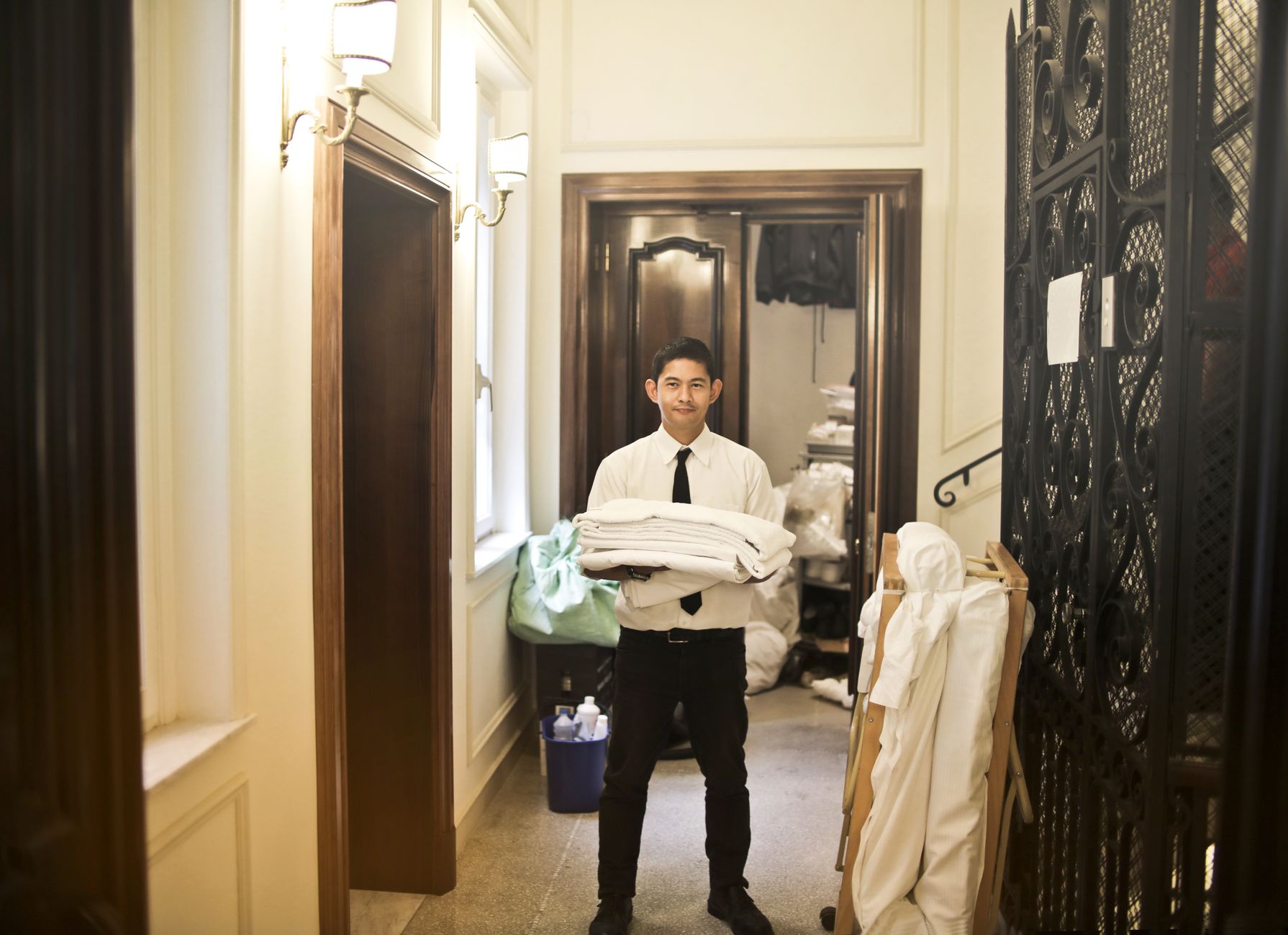
Hotel work is hard on the body, and housekeeping carries most of the load. A study of OSHA 300 logs from 50 hotels between 2003 and 2005, published in PubMed, recorded 2,865 injuries over 55,327 worker-years. The overall hotel injury rate was 5.2 per 100 worker-years, and housekeepers had the highest musculoskeletal disorder rate at 3.2 per 100 worker-years.
Those figures are older, so treat them as a direction rather than a current baseline. The pattern still fits the job. Lifting and pushing linen and trays on a loop late in a shift is the repeated load a robot can take off a person, provided the run is short enough to be worth it.
A robot will not take the turndown cart off the floor or remove the push. Expect relief on the extra runs, not on the whole housekeeping day, and measure that in your own logs before and after go live.
Track lift counts, route lengths and the number of times staff touch a cart. Take a baseline for two weeks before go live and compare against it. That gives you a result from your own building instead of an older industry average.
What do Orlando's rain and summer season change for hotel robots?
Orlando's rainfall matters more inside the building than on the street. Wikipedia gives average annual rainfall of 51.45 inches (1,307 mm) for Greater Orlando, based on 1981 to 2010 normals, with most of it falling June through September.
A 2026 Orlando weather guide from Florida Review, citing NOAA 1991 to 2020 normals at Orlando International Airport, gives June at 8.05 inches, July at 7.46 inches, August at 7.69 inches and September at 6.37 inches. Wet shoes and umbrellas bring water into lobbies, and from there onto the floors near the elevator where the robot waits.
Plan lobby entry mats and a floor check at the service elevator lobby during the rainy months. A wet floor slows a robot's wheels and creates a slip risk for staff carrying trays. These are routine fixes, but they belong in the schedule, not in the surprise column.
Summer also brings full houses in busy weeks, so run volume can change faster than your staffing plan. Review the route schedule against your occupancy calendar each month, not only after complaints.
How does leasing change the cost picture for a 310 room hotel?
Cost is often the first obstacle. EHL Insights names high upfront capital cost as the main barrier to hotel robot adoption, citing a 2023 figure that more than 60% of small Southeast Asian hotels rank cost as their top obstacle. That survey is far from Orlando, but the barrier looks familiar to any general manager with a full capital plan.
Adoption is moving quickly elsewhere. The IIM research organization, as reported by AsiaNews network, estimates that hotel service robot penetration in China exceeded 30% in 2025, with projections above 50% by 2030. That is an industry research estimate, not a count of Orlando hotels, so use it as a sign of direction only.
We do not sell robots. We lease them through financing, so the cost arrives as a fixed robot lease payment in a written quote, after a free site assessment, rather than as one large upfront charge. You can also start with one leased unit on floors 6 through 12 and decide on more after the first months of logs.
Model the decision on your own numbers: night runs per week, staff time tied up in those runs, and any overtime or open shifts you cover to keep the walk going. The lease quote only makes sense against those hours, and we build that comparison with you during the site visit. Ask for the service terms in writing as well as the payment, including what the service plan covers, how fast dispatch can reach your building and what happens to the run when a unit is down.
How do you get a delivery robot leased and running in an Orlando hotel?
We are a vendor neutral robot integrator for US businesses. We choose the robot that fits your floors, lease it through financing, deploy and integrate it, train your staff and service it under our service plan. One partner handles the whole lifecycle, so the elevator link, the map and the service calls do not get split across several vendors.
The process starts with a free site assessment on floors 6 through 12. We map the service elevator, the corridors, the linen room and the kitchen pass, and we confirm whether our regional service engineers cover Orlando. The lease quote comes after that visit, so you see what the building allows before any payment figure appears.
Go live is staged. Start with one leased unit on the overnight run, test the elevator link and cart routes for several weeks, and then add units or a spare for backup coverage if the logs support it. A spare and on site dispatch keep one broken robot from turning into a night of carrying trays by hand.
Bring your night lead and your housekeeping supervisor to the assessment. Between them they will know the real cart positions and the real elevator habits, and those details decide whether the first route works.
Frequently asked questions
Upcoming hotels & hospitality events
- MeetupMPI Virginia Morning Brew Meet-Up, November 2026Nov 10, 2026Hampton, VA
- SummitVA1 Governor's Tourism Summit 2026Nov 18 to 20, 2026Kalahari Resorts & Conventions, Spotsylvania, VA
- ConferenceVirginia Association of Fairs ConventionJan 14 to 17, 2027Williamsburg Lodge, Autograph Collection, Williamsburg, VA
- ConferenceIHLA Convention and Exposition, 2027Feb 8 to 10, 2027Indianapolis, IN
Put a robot to work in Orlando.
We walk your site, learn the job, and recommend the unit that fits. Then we quote the lease, deploy it, and keep it serviced.
Sources
- Visit Orlando data and trends
- 10minhotel summary of AHLA and Hireology hotel staffing survey
- PubMed study of OSHA 300 logs from 50 hotels
- Berkadia mid-year 2025 Orlando multifamily market report
- AsiaNews network report on IIM hotel service robot estimate
- EHL Insights on hotel robots
- Wikipedia, Greater Orlando
- Florida Review Orlando weather and rainfall guide