
The question, in the buyer's words
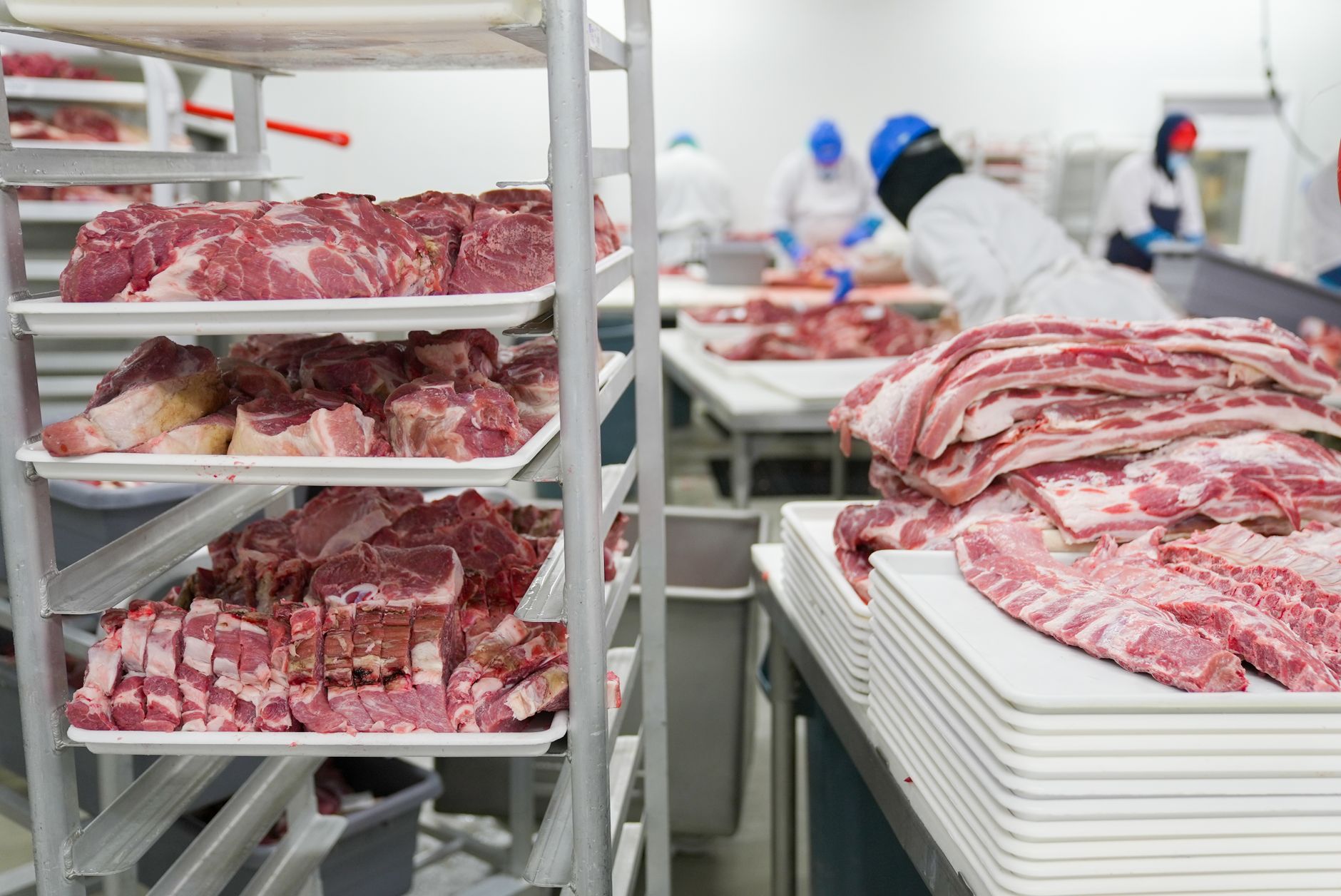
Our 55-person jerky and sausage plant turns away holiday gift-tin orders because smokehouse trays move from the cooler to the slicing room by hand; could autonomous mobile robots run those tray moves through the rush?
Key takeaways
- A mobile robot can take the repeat tray run between cooler and slicing room, but not the loading at each end.
- Time your own tray moves at peak before requesting a quote, because the public figures do not measure smokehouse trays.
- Sector injury and turnover figures argue for less hand carrying, not for cutting crew.
- Start with one leased unit on a fixed route, then add a second only if your log shows the peak needs it.
Can mobile robots move jerky smokehouse trays to the slicing room?
For most plants like yours the honest answer is partly. Autonomous mobile robots can carry jerky smokehouse tray moves between the cooler and the slicing room on a fixed route, which removes the walking and waiting that builds up when one or two people share the job during a gift-tin rush. They do not remove the need for people at the loading and unloading ends, and they do not decide which product to slice first.
Your problem has a specific shape. Gift-tin orders are being turned away because trays stall between two rooms, so the bottleneck is the transfer, not the slicing itself. A repetitive, route-bound move like this is where autonomous mobile robots tend to earn their place, but only if the rest of the flow can keep pace with what the robot delivers.
This page works through the route, the staffing, the safety record and the questions to answer before you request a quote. It also says where the public evidence is thin. We found no published measurement of tray robots in a smokehouse, so a trial on your own floor will settle more than any industry average.
Why do tray moves stall the slicing room in the holiday rush?
A tray move looks small on paper. A rack leaves the cooler, travels down a corridor, and waits at the slicing room door until an operator is free to take it. At holiday volume each handoff adds queue time, and the trays back up at the door rather than at the slicer, so the line appears to stop at the slicer even though the delay started earlier.
Staffing makes it worse. A plant of about 55 people usually runs a small crew across the cooler, smokehouse and slicing rooms. When one person covers the tray runs and the slicers at the same time, slicing stalls whenever the runs fall behind, and nobody has spare time to catch up.
Watch for timing as well as volume. Gift-tin orders often arrive in batches, so the rush can come in short bursts, and a route sized for average daily volume will fall behind during a burst even if it keeps up the rest of the week. Your log should separate the burst hours from the quiet ones, because that split decides whether a robot covers the work or only part of it.
Before deciding anything, time the moves on your own floor during the peak week. Log how many racks cross the cooler door each hour, how long each move takes from door to door, and how long slicers sit idle waiting on trays. That log is the first thing any integrator will ask for, and it is the one number this page cannot supply.
How do autonomous mobile robots handle smokehouse tray moves?
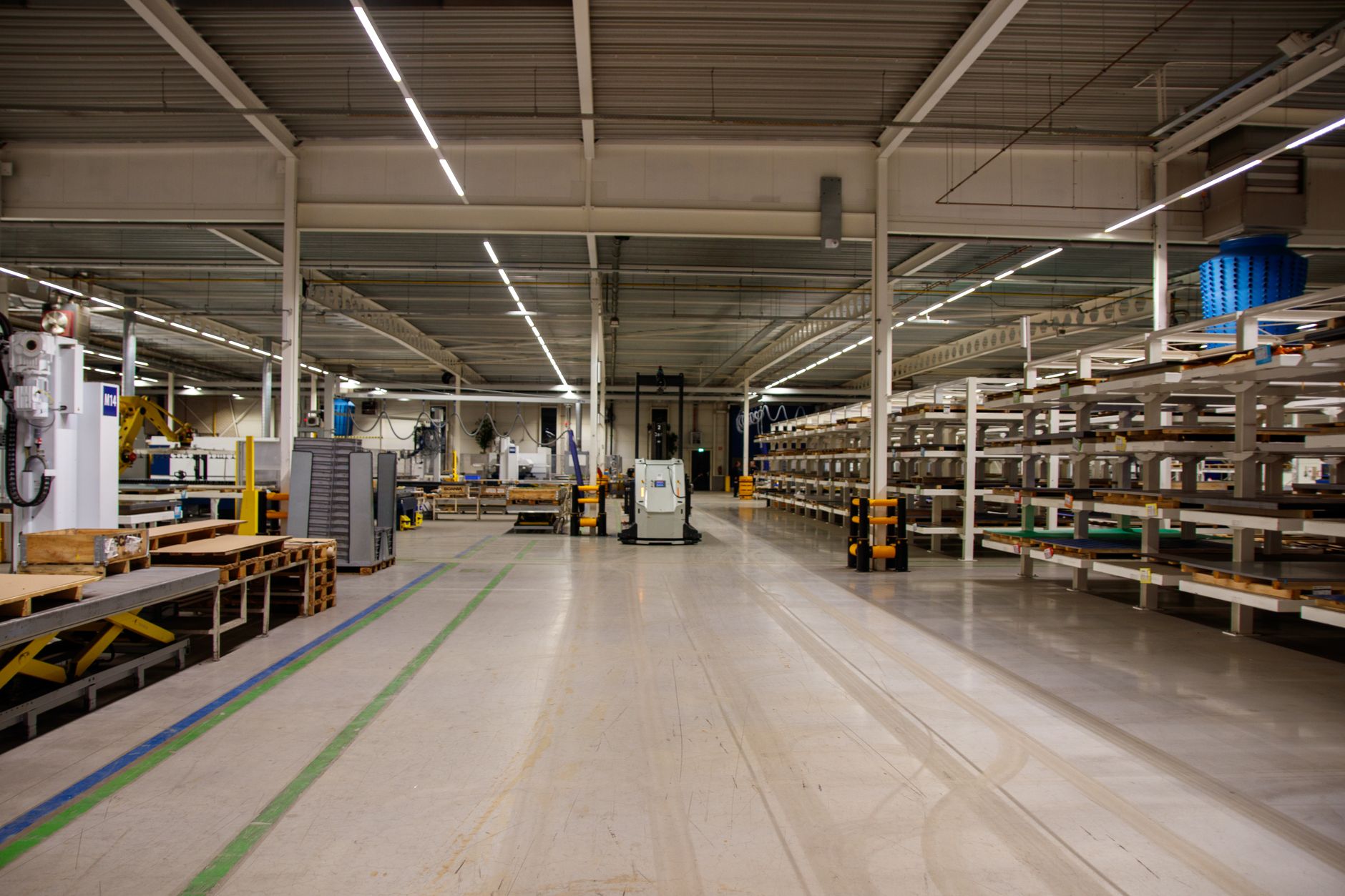
An autonomous mobile robot is a wheeled platform that navigates a mapped route without a driver, using onboard sensors to find its way and to stop for people and obstacles. Robots of this type are used for repetitive transport, such as tugging carts and moving loads between fixed points. The same logic carries over to racks of trays moving between two rooms, provided the route is clear and the loads sit securely on the robot's deck.
Fit depends on the building. Doors and thresholds need to be wide and level enough for the platform, the cooler must allow a clear approach to the loading point, and the rack height has to match the deck. Ramps, wet washdown areas and heavy foot traffic on the same path all change what can run and when, so the site assessment has to map them.
Some tasks will stay with people. Checking product by eye, judging tray heat, catching a label error and dealing with a tray that is out of spec all depend on judgement a route-following robot does not have. The workable model is a robot on the repeat run, with staff watching both ends and the product.
- Repeat runs on a fixed route
Autonomous Mobile Robot
Keeps the same path and pace through a long shift
Staff
Slows on repetitive runs, but can adjust the route on the fly
- Peak-week coverage
Autonomous Mobile Robot
Runs when the route and charging allow it, and stops when they do not
Staff
Can cover any task, but gets pulled off the line when the crew is short
- Judgement on product
Autonomous Mobile Robot
Follows the route and stops for obstacles, but does not judge the product
Staff
Checks fill, label, heat and appearance by eye and catches problems early
- Handling at the ends
Autonomous Mobile Robot
Needs a person to load and unload each rack
Staff
Loads and unloads trays directly at the cooler and slicing doors
- Changes to the job
Autonomous Mobile Robot
Needs mapping, a trial run and staff training for exceptions
Staff
Learns a new route by walking it, with no integration work
- Availability in a holiday week
Autonomous Mobile Robot
Does not call in sick, but needs a charger and a fault response plan
Staff
Can call in sick or leave, and turnover in the sector is high
What changes on the cooler to slicing route?
The route is where most of the gain is won or lost. Map the cooler, the corridor, the slicing room door and the drop point before any unit is chosen. A route that crosses a loading dock or a shared forklift lane adds conflicts you must manage on every shift, and those conflicts often cost more time than the walking did.
Think in trips per hour at peak. One robot on a fixed loop can make only a set number of round trips, so during the rush you may need a second unit, or one unit plus a person on overflow. The timed log from the first section tells you whether one unit covers the peak or whether the holiday weeks need two.
Plan the handoffs with the same care. Someone must load racks in the cooler and unload them at the slicing room, and those two points are where delays hide. Give the handoffs written work rules and a named person for each shift, or the route will still stall while the robot waits.
Plan for downtime too. A robot that is charging or waiting for a fault response removes its route from service, and the crew must fall back to hand moves without warning. Write the fallback into the holiday plan, name who covers it, and agree how fast a unit must return to service before the peak week opens.
How much staffing risk sits in hand-moved tray work?
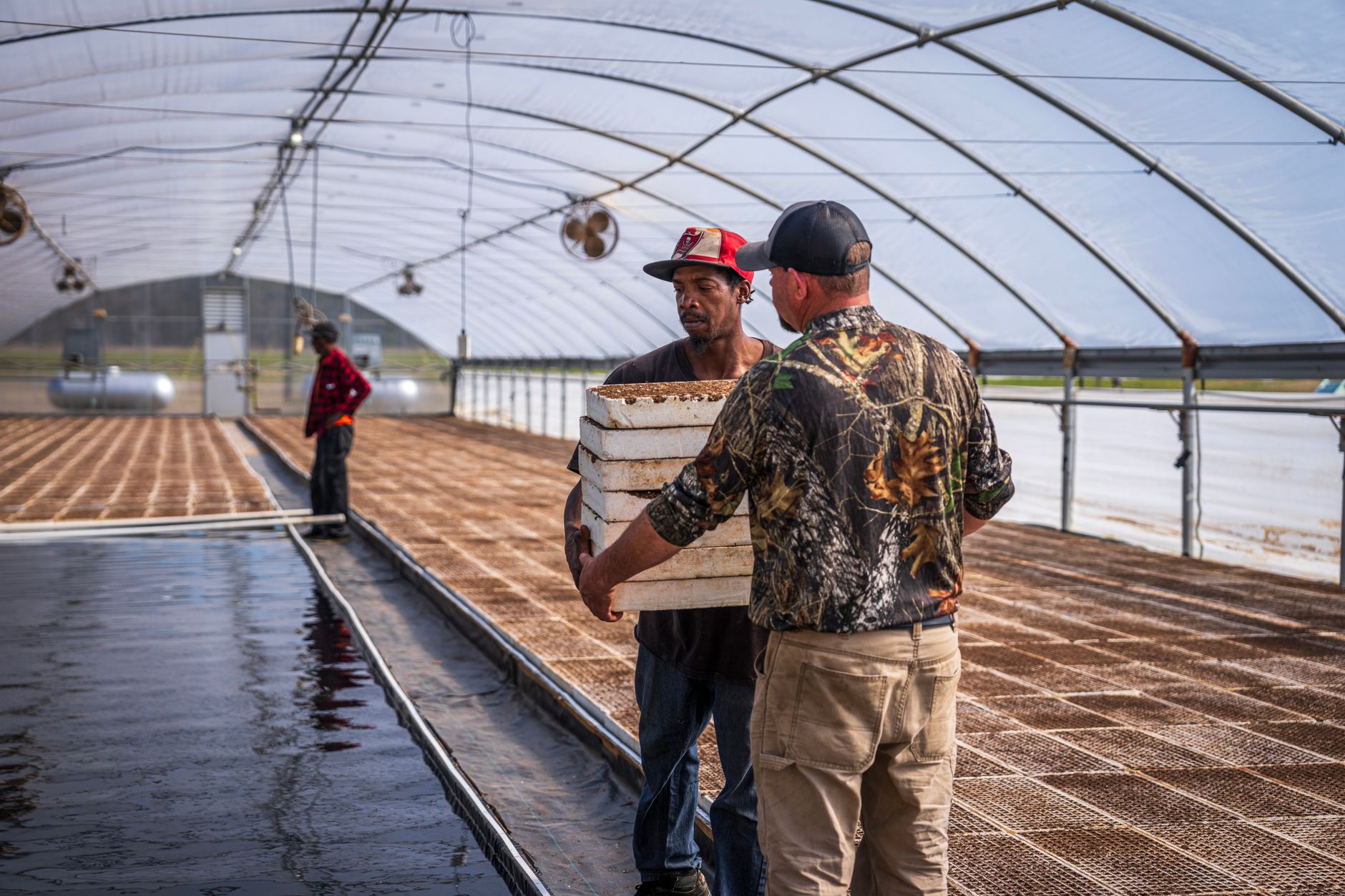
Staffing for this kind of work is hard to hold steady. An Australian report by AMPC, covering five meat plants over 28 plant-years, put average annual turnover at 35%, with individual plants ranging from 16% to 54%. That is a non-US figure, but it shows how quickly the people who know a cooler route can leave.
US coverage points the same way. A survey by the American Association of Meat Processors, as reported by Meat+Poultry, found that two-thirds of respondents reported turnover of up to 25% in the past year. The survey year is not stated in the coverage we found, so read it as a directional signal rather than a precise rate.
Turnover matters to the robot decision in two ways. A robot does not quit in a holiday week, so the route keeps running when a runner leaves. It also means someone still has to be trained to run, monitor and clear the route, so training is part of the decision and must be planned for each new hire.
Training is the lever you control. Cross-train at least two people on the route and the loading steps, so the run survives an absence. Keep a short written procedure at each end of the route, covering loading, unloading and what to do when the robot stops.
Where do injury and safety rates fit into the decision?
Injury data for the sector is a reason to look hard at the transfer work, not a reason to cut crew. According to the Meat Institute, reading BLS data, the animal slaughtering and processing injury and illness rate fell to 3.2 cases per 100 full-time workers in 2024, down from 3.6 in 2023. The BLS table itself was not checked for this page, so treat the figure as the trade group's reading.
Poultry processing shows a similar pattern. According to the National Chicken Council, citing BLS data, poultry processing recorded 2.4 cases per 100 full-time workers in 2024, against 2.7 for manufacturing and 2.6 for general industry. A safety lead will expect to see these sector comparisons in any board paper on the project.
OSHA measures differently, so keep the units straight. Its 2024 interpretation cites 2022 BLS data giving a total illness rate of 278.9 per 10,000 full-time equivalent workers for NAICS 3116, against 45.2 for private industry. Those are not the same measure as the per-100 figures above, so do not compare them directly, and use your own OSHA logs to judge the tray route.
A robot brings its own hazards. A powered platform moving on a shared path needs the same pedestrian rules, marked lanes and stop behavior as any moving equipment, and those rules belong in the plan before the route is set.
Are mobile robots proven in food plants yet?
Adoption is rising, but the evidence for food plants is narrow. According to A3, North American robot orders rose 6.6% in units and 10.1% in revenue across 2025 compared with 2024, the sixth straight quarter of order growth. In the third quarter of 2025, food and consumer goods orders rose 105% against the same quarter a year earlier, according to A3 as reported by Controls Engineering.
The limit is that the same A3 results do not break out mobile robots for food. The 4,259 cobot units ordered in the first nine months of 2025 belong to a separate category, since they are arms rather than tray carriers. The growth shows the market is moving, not that a smokehouse tray route is proven, so your trial has to supply that proof.
Plant population gives context. USDA FSIS counts reported by Meat+Poultry as of December 2025 list 2,961 very small, 2,847 small and 508 large FSIS-regulated establishments. Adding those counts gives about 6,316 in total, so a 55-person plant sits among thousands of establishments whose layouts and crews vary widely. Check your own listing in the official FSIS directory.
How do you lease a robot and get it running before the holidays?
We are a vendor-neutral integrator for US businesses. We pick the robot that fits the site from across manufacturers, lease it through financing, deploy and integrate it, train the staff, and service every unit under our service plan with regional service engineers. One partner handles the whole lifecycle instead of several vendors handling pieces of it.
The sequence starts with a free site assessment that maps the cooler, doors, floors and peak volume. The lease terms are set in a quote issued after that assessment, so this page gives no fixed figure. Because a holiday deadline does not move, decide early enough for installation, training and a trial run before the peak arrives.
A sensible first step for your plant is a pilot with one leased unit on the cooler to slicing route. Set measures before it starts, such as racks moved per hour, slicer idle time and the number of tray runs the crew no longer makes. Add a second unit only if the log shows the peak still stalls.
Ask for the full lease terms, the service response times in your state and the training plan in writing before you agree to anything. A quote that answers those questions makes the comparison with hand moves straightforward, and it gives your operations lead something to test against during the trial.
Frequently asked questions
Want a warehouse robot at your smokehouse and slicing rooms?
Tell us about your site. We will recommend the robot, quote the lease, and keep it serviced.
Sources
- Meat Institute, citing BLS data
- National Chicken Council, citing BLS data
- OSHA standard interpretation, 2024
- USDA FSIS establishment directory
- AMPC employee retention report, Australia
- Meat+Poultry, AAMP survey coverage
- A3 robot orders release 2025, via Business Wire
- Controls Engineering, A3 Q3 2025 orders