
The question, in the buyer's words
Our 650,000-square-foot furniture distribution center in Joliet, Illinois ships about 4,000 orders a week, and pick waves stall at 2 a.m.; how many autonomous mobile robots would we need to keep those waves moving?
Key takeaways
- The robot count comes from your own 2 a.m. wave data, not from square footage or order volume alone.
- Robots take over repeatable travel and transport, while bulky picking and exceptions usually stay with people.
- Warehousing is Will County's largest employment sector, so competition for night pickers is real.
- Winter in Joliet changes dock floors and battery conditions, so size for the worst winter week plus spares.
- Start with a site assessment and one zone, then extend the fleet only after the overnight wave clears.
How do pick waves stall at 2 a.m. in a Joliet furniture DC?
A pick wave stalls when the work released to pickers is larger than what the floor can finish before the outbound cutoff. In a furniture DC the usual causes are long walking distances across a large building, pick faces that are empty because replenishment is behind, a shift handoff that thins the floor just when the wave is heaviest, and bulky items that take far longer to handle than a carton. Overnight the gap widens, because staffing thins while the release schedule often stays exactly as it was at noon.
A robot helps with the part of that work that is pure transport: moving totes or carts from pick faces to staging, or bringing replenishment to the forward pick area on a fixed route. It does not pick an irregular furniture part at the pace of a trained person, so it helps most when travel and transport are the main drag on the wave. Before you size anything, confirm which cause sits behind your 2 a.m. stall, because a robot count only means something for the causes a robot can actually touch.
The right way to frame this is as a robot count tied to a specific stall, not as a general fleet number for the building. That framing points you to data you already have: wave release times, the timestamps when each wave finishes, and the replenishment log for the same nights. If you can pull those for the last several weeks, the sizing conversation gets much shorter.
What does the Joliet labor market mean for a night shift?
Joliet sits inside a large logistics labor pool. A local news report citing Illinois Department of Employment Security data says warehousing and transportation was the largest employment sector in Will County in 2024, employing nearly 37,000 people. Statewide, Bureau of Labor Statistics data hosted by the Federal Reserve Bank of St. Louis put Illinois transportation and warehousing employment at about 326,100 in September 2025, not seasonally adjusted. The state figure is context rather than a Joliet count, but it shows how many employers draw from the same pool.
That competition matters for a 2 a.m. shift. Experienced pickers and forklift operators have many openings to choose from, and night shifts tend to be the hardest to fill and keep staffed. We could not confirm a current, published turnover rate for warehouse workers in this metro, and the figures that circulate online trace back to sources we could not verify. Use your own separation and absence data for the overnight shift before you assume a staffing gap, and compare it with the stall pattern in your wave log.
Robots do not fill a shift. They can reduce how many people must walk the building during the overnight window, which matters most when the gap is the number of pickers rather than the number of replenishment runs. If your overnight team is short a few people on most nights, a fleet may reduce the stall, but it will not replace a shift that is missing entirely. Be clear about which problem you have before you commit to a count.
How do Joliet winters change night warehouse operations?
A climate data summary for Joliet puts January at an average high around 31°F and an average low around 17°F. The Illinois State Climatologist's normals show snow typically falls from December through March, with January usually the snowiest month, and published snowfall totals vary by station and period. Those figures matter less for indoor robot travel than for what trucks and dock doors bring into the building.
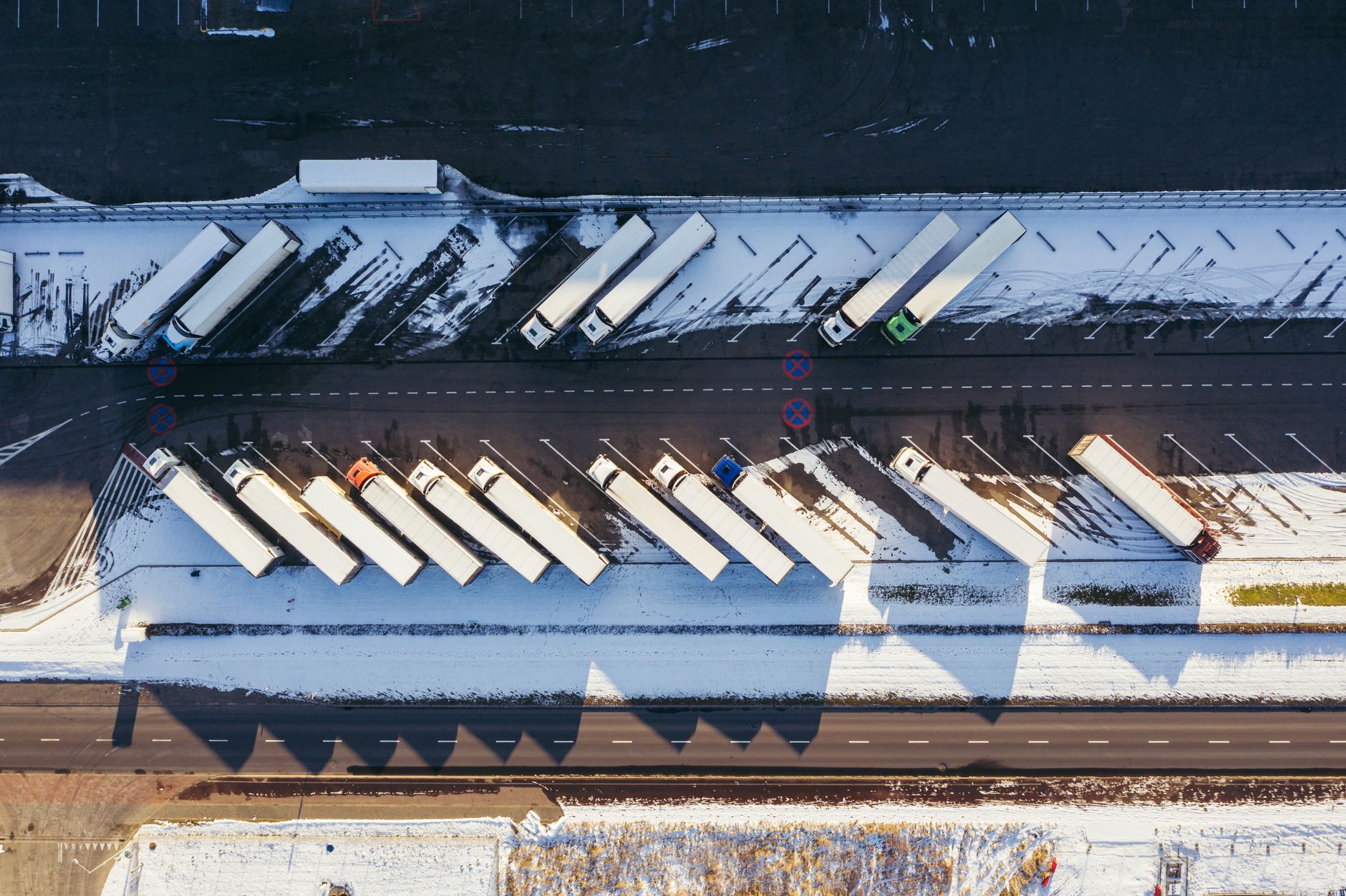
Winter affects a warehouse in three places. Trucks arriving at the dock track snow and salt onto the floor, which affects traction and can leave wet patches that slow travel or trigger stops. Cold air near open dock doors lowers the temperature of the nearest floor zones, and battery runtime on any unit drops in cold conditions, so ask for cold-temperature specifications before you set spare-unit counts. Any yard route outside the building also needs a plan for ice, although most of an overnight wave runs indoors.
If the 2 a.m. stall gets worse from December through March, the seasonal peak, not the average night, should set the robot count. Size for the worst winter week you expect, add spare units for battery swaps and failures, and plan dock floor cleaning as part of deployment. Those choices are cheaper to plan before January than to fix during it.
How many robots does a 650,000 square foot furniture DC need?
No honest number comes from building size and order volume alone. Your figures, a 650,000 square foot building and about 4,000 orders a week, describe the scale, but they do not give travel distance per pick, the share of each wave that is transport rather than picking, the number of pickers in the overnight window, or how long a stalled wave takes to clear. Those four values decide the count. We measure them during a free site assessment rather than guessing from square footage.
The method itself is straightforward. Take the overnight work that is pure transport, convert it into the trips the floor must complete in the window you want to clear by, and divide by how many trips one unit completes per hour in your layout, after you account for charging time and travel between zones. Add spare units so one failed unit does not restart the stall. Test the math in one zone first, usually the busiest pick faces, and then decide whether the rest of the building needs the same treatment.
Expect the count to be a range until the pilot runs. Two buildings of the same size can need fleets of quite unequal size if one has long replenishment runs and the other has short ones, or if one has heavy overnight waves and the other spreads its work across the night. A range that the wave data supports is more useful than a single number nobody can check.
Robot or person: who handles the 2 a.m. wave best?
The useful answer is a split, not a replacement. Robots are strong at repeatable travel and a steady pace along fixed routes, while people handle irregular items, damage checks, and exceptions that do not follow a route. The comparison below is about the overnight wave specifically, because that is where the stall lives.
A split usually means robots take the transport legs and people keep the picking and the exceptions. Plan the bulky furniture SKUs as their own workflow, because those items often decide how long the last part of a wave takes. Check the comparison against your own wave log rather than against a generic claim.
- Overnight coverage
Autonomous Mobile Robot
Runs through the window without breaks, but only on the zones and tasks it is set up for.
Staff
Covers any task, but absences and fatigue thin the shift at 2 a.m.
- Walking and transport
Autonomous Mobile Robot
Moves totes and carts along the same mapped routes every time.
Staff
Walks further with each pick and cannot carry a full cart as efficiently.
- Bulky and irregular furniture
Autonomous Mobile Robot
Needs a designed fixture or tote and cannot judge a damaged or oversized item.
Staff
Handles bulky parts, judges damage, and adapts to odd sizes.
- Exceptions and blocked routes
Autonomous Mobile Robot
Stops and escalates to a person when a route is blocked.
Staff
Resolves exceptions on the spot.
- Ramp-up and change
Autonomous Mobile Robot
A new zone needs mapping and a test run before it goes live.
Staff
A new picker learns a route within a shift, though full competence takes longer.
- Scaling up or down
Autonomous Mobile Robot
Units can be added or moved between zones as the wave pattern changes.
Staff
Hiring and training take weeks, and the pool of available night workers is limited.
- Physical strain
Autonomous Mobile Robot
No lifting or repeated walking for the transport tasks it covers.
Staff
Repeated walking and lifting contribute to the injury rates reported for warehousing.
How safe is warehouse work, and what do robots change?
Warehousing carries real injury risk. The Bureau of Labor Statistics reports that warehousing and storage (NAICS 493) recorded 4.8 total recordable cases per 100 full-time workers in 2024, with a days away, restricted, or transferred rate of 4.1 per 100 full-time workers. The same BLS page reports 32 fatalities in 2024, up from 28 in 2023, although the series changed with a 2023 revision of industry codes, so compare years with care.
Those figures do not prove that a robot will lower the injury rate in your building. They do show why reducing repeated walking and heavy transport is a reasonable target for overnight work, since fatigue builds in the last hours of a shift. Ask us to map which overnight tasks create the most strain before you decide which work to hand off.
Robots bring their own safety duties. Plan barriers, speed zones, pedestrian separation where fleet routes cross picker routes, and a training schedule for people who work near the fleet. Put those duties into the sizing plan from the start, because a fleet that is safe on paper but ignored on the floor creates new incidents.
How common are autonomous mobile robots in warehouses?
Adoption is growing, but most facilities still do not run them. The MHI 2025 Automation Survey reports robotics adoption at 48% in 2025, according to a summary of that survey. A 2026 GlobeST report puts AMR and AGV use at roughly 10% to 15% of facilities. Those two numbers measure different things, since the first counts robotics of any kind and the second counts only mobile units.
Vendor-linked research shows more interest than use. A vendor-reported survey covered by SDCExec found that more than 70% of respondents had adopted or planned to adopt AMRs or AGVs. A separate vendor-run study reported by SDCExec found that 70% of companies had never deployed an AMR and 76% had never deployed an AGV.
Read both sides. Being early is not the test, and an industry average says little about whether your wave clears at 2 a.m. The test is whether a unit or fleet clears your stall in your building, and a pilot shows that faster than any benchmark. Use the adoption figures to understand the market, and your wave log to make the decision.
How do you lease and deploy robots for a furniture DC?
We are a full-service commercial robot integrator for US businesses. We pick the right robots across manufacturers for your floor, lease them through financing, deploy and integrate them with your systems, train your staff, and service every unit under our service plan through regional service engineers in the states we cover. One partner runs the whole lifecycle, so you do not manage several vendors for one overnight wave.
The first step is a free site assessment. We map the building, measure travel distance and wave timing from your data, and test a fleet count in the zone that stalls first. Your lease payment comes in a written quote after that assessment, so the number you approve reflects your floor and your waves, not a guess made from square footage.
A phased deployment lets you start with one zone and one leased unit, prove the overnight wave clears, and then extend the fleet without shutting the building. Ask that the service plan cover spare-unit coverage, on-site dispatch, and remote triage, so one failed unit at 2 a.m. does not restart the stall. Get the financing terms, including what happens at the end of the lease, in writing before you sign.
What should you check before you size the fleet?
Before you accept any count, including ours, check the inputs. Ask for the wave log for the last several weeks, the pick face map, the replenishment schedule, and the overnight roster. The count should trace back to those records, not to a square footage figure or a generic benchmark, and it should show how much of the stall a robot can actually reach.
The checklist below lists what would change the answer. Several of those items can move the count up or down, and one of them, the release rule, can remove the need for a fleet altogether.
If the stall turns out to be a release rule or late inbound freight, the site assessment should say so plainly. Fixing those first is often cheaper than adding units, and it will show you whether a fleet still earns its place.
Frequently asked questions
Upcoming warehouses & 3pl events
Put a robot to work in Joliet.
We walk your site, learn the job, and recommend the unit that fits. Then we quote the lease, deploy it, and keep it serviced.
Sources
- U.S. Bureau of Labor Statistics, Warehousing and Storage (NAICS 493), 2024
- Climate data for Joliet, Illinois
- Warehousing surpasses manufacturing in Will County (TMA News)
- Illinois transportation and warehousing employment, FRED
- MHI 2025 Automation Survey
- GlobeST, warehouse automation and modern logistics space, 2026
- SDCExec report on a vendor-reported warehouse automation survey
- SDCExec report on a vendor-run warehouse automation study