Key takeaways
- AMRs fix horizontal transport. VLMs fix storage density and parts presentation.
- If workers lose time walking totes between storage and benches, start with AMRs.
- If floor space, slotting, and small-parts access are the pain point, start with a VLM.
- The strongest layout often pairs a VLM as the dense buffer and AMRs as the delivery layer.
- Workstation ergonomics still matter. A bad pick face can waste the benefit of either system.
Which bottleneck are you actually buying against?
For small-parts moves, the real choice is not AMR versus VLM in the abstract. If your pain is long walks, cart pushes, and repeated hand-carries between storage and workstations, start with an AMR. If your pain is crowded shelving, poor slotting, and too many touches at a static parts room, start with a vertical lift module.
Those systems attack different losses. An autonomous mobile robot handles horizontal flow across distance. A VLM handles storage density and parts presentation at a fixed access point. Mix those jobs together and the project usually underdelivers, because the machine is being asked to cure the wrong problem.
In many facilities, both belong in the same material-flow design. The VLM holds small-part inventory in a compact, controlled footprint. The AMR carries totes or kits from that buffer to benches, assembly cells, QA stations, or repair islands. That split is often the cleanest way to separate the storage problem from the transport problem and get to payback with less confusion.
What job does each system own on the floor?
An AMR is a mover. It earns its keep by taking miles of low-value walking and cart handling out of the day. It is strongest when the same small parts have to travel repeatedly between a stockroom, supermarket, kitting point, and multiple points of use. In that setting, the value is route coverage, dispatch logic, and reliable handoff, not storage density.
A VLM is a compact automated stockroom. It stores parts vertically, presents them at an access opening, and keeps the picker in one general position instead of sending that person up and down aisles. A 2024 International Journal of Production Research paper notes that VLMs are often used in practice for small parts when throughput needs and layout constraints matter. That is the tell. A VLM earns value when the hard part is fitting inventory into the building and presenting it cleanly, not moving it across the building.
When does an AMR deserve the first budget line?
AMRs tend to win first when demand is spread across many workstations and the route pattern repeats all shift. A 2021 Applied Mathematical Modelling paper comparing collaborative AMR approaches found that last-mile-delivery setups fit higher throughput operations, while meet-in-aisle setups fit large picking areas with low picks per cycle. In plain English, mobile transport starts to look better as distance and dispatch frequency rise.
That same paper also makes an important buyer-side point. In smaller facilities, where walking distances are short, the value of mobile transport can shrink fast because the travel you are removing was never that large to begin with. This is why an AMR can be the right call in one 250,000-square-foot plant and an expensive detour in a cramped stockroom attached to a single line.
This is also where autonomous mobile robot leasing, AMR leasing, or a material handling robot lease pilot can make sense. If your route logic, tote standard, and workstation demand are still changing, a pilot tells you more than a theoretical spreadsheet. The key is to measure loaded trips, empty returns, wait time at pickup and dropoff, and the share of moves that still need a person because the handoff was poorly designed.
When does a VLM deserve the first budget line?
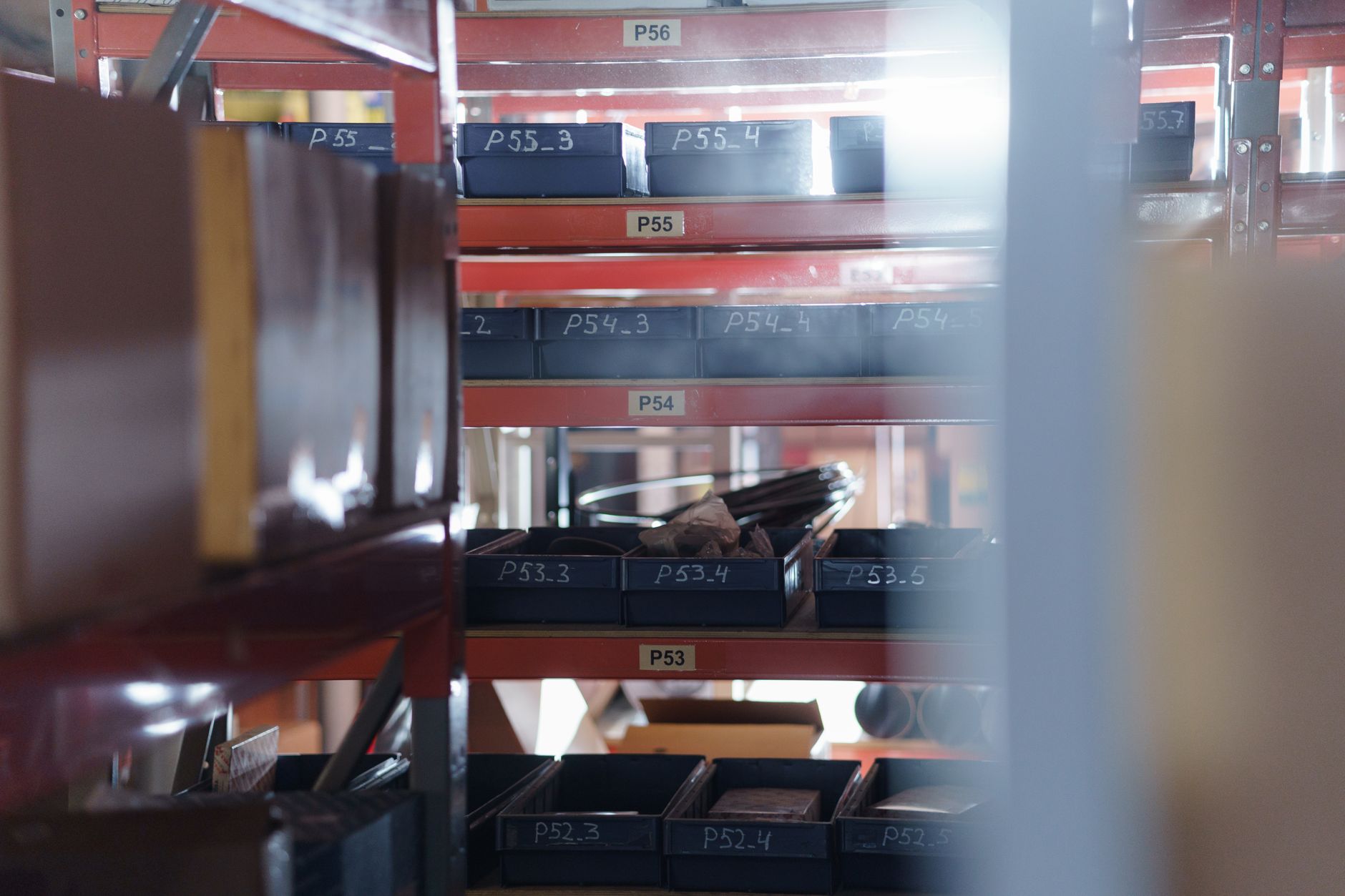
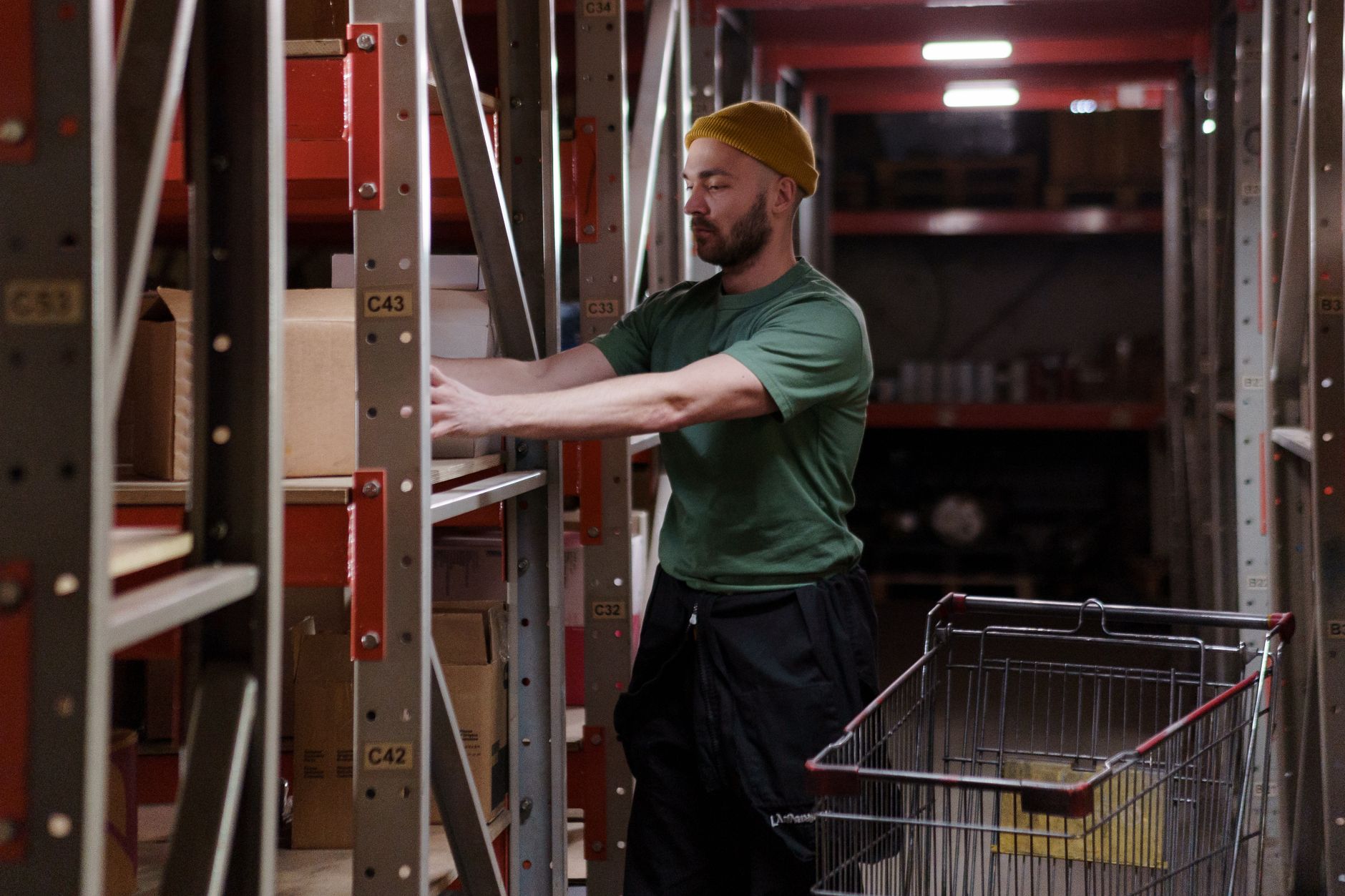
A VLM should lead when the pain sits inside the stockroom itself. That usually means too many small SKUs, too much floor space consumed by shelving, too much searching, and too much bending or reaching during picks and replenishment. In those cases, the bottleneck is not the trip from storage to the bench. The bottleneck is the way storage is arranged before the trip even begins.
There is practical evidence for that framing. In an IOP Conference Series case study of a retailer using a VLM for basket storage, revised allocation policies reduced vehicle travel time by 37.5 percent. The point is not that every facility will see that exact number. The point is that storage architecture changes travel behavior upstream. Better slotting and denser presentation can remove wasted motion before you add a single mobile transporter.
VLM-first projects are especially strong when parts consumption is concentrated. If many technicians or assemblers draw from the same controlled small-parts area, a vertical module can lift pick accuracy, space use, and order in one move. What it does not do is distribute material across a large footprint on its own. Once the tray reaches the access opening, transport is still somebody else's job.
What changes at the pick face and workstation?
This is where buyers often miss the operational nuance. A 2020 study in Work comparing moving-robot and AS/RS goods-to-picker systems found lower risk for task-related postural stresses in the AS/RS type. That does not mean mobile transport is ergonomically weak by default. It means the final human touchpoint still needs disciplined design.
OSHA makes that concrete in its warehousing guidance. It advises placing high-volume items near standing elbow height, keeping item weights under 10 pounds, or 2 pounds when a pinch grip is used, and keeping tote weights under 35 pounds. A VLM naturally helps with some of that because it presents inventory at a controlled opening. An AMR can help too, but only if the cart, shelf, or tote handoff lands at the right height and does not force twisting, long reaches, or awkward double-handling.
So the right question is not just, which machine moves the part. It is, what posture does the worker use at the exact moment of pick, place, and confirmation. A badly designed pick face can turn a technically sound AMR fleet into a source of queueing and awkward reaches. A badly slotted VLM can do the same.
How do safety and labor risk shift in a U.S. facility?
According to the Bureau of Labor Statistics, warehousing and storage posted a 2024 total recordable case rate of 4.8, and general warehousing and storage was 4.9. Private industry overall was 2.3. That gap matters because small-parts flow is full of low-drama, high-frequency motions that pile up into fatigue, errors, and avoidable injury exposure.
OSHA says the most common injuries in warehousing are musculoskeletal disorders, mainly from overexertion in lifting and lowering, along with struck-by incidents involving materials-handling equipment. It also says inspections under the updated National Emphasis Program for warehousing and distribution began on July 31, 2026. In other words, the labor and safety side of material flow is not a soft benefit anymore. It is squarely inside current operating scrutiny.
AMRs and VLMs reduce different risk patterns. AMRs take out horizontal walking, cart pushing, and routine part shuttles. VLMs cut aisle travel, overhead reaches, floor-level picks, and the visual hunting that comes with crowded shelving. The smart design move is to map which exposure is actually dominant in your process before you automate it.
Why do both systems often belong together?
Because most real facilities have both kinds of waste at once. The stockroom is too flat and too crowded, and the points of use are too far away. If you solve only the transport side, people may still spend too much time searching, waiting, or reaching inside the stockroom. If you solve only the storage side, people may still burn labor carrying bins across the building.
A common pattern is simple. Put the VLM near receiving, kitting, maintenance, or a line-side supermarket. Use it as the dense, accurate source for small-part inventory. Then let AMRs handle repetitive transport automation between that source and the consuming workstations. The VLM becomes the organized buffer. The AMR becomes the circulation layer.
This pairing also fits the reality of the market. MHI estimated in 2025 that 80 percent of warehouses still operate in a largely manual approach, and only about 15 percent are automated warehouses. That means many U.S. sites are not choosing between two fully automated worlds. They are choosing which pain to remove first in a brownfield building, and how to sequence the next layer without breaking production.
How should a buyer scope the project before talking hardware?
Start with a flow map, not a brochure. Track where the part is stored, how often it is touched, how far it travels, how many stations consume it, and where queueing forms. Then ask a blunt question. Are you short on cube, short on transport labor, or short on both? That one distinction keeps a lot of automation projects from chasing the wrong machine.
A practical first pass looks like this:
For U.S. operators, this is where Service Robot Co. fits. We are a full-service, OEM-neutral commercial robot integrator and vendor neutral robot integrator for warehouses and manufacturers. We help teams choose the right autonomous mobile robot lease path, AMR leasing pilot, or purchase or lease structure, then handle robot deployment and integration, training, service, and ongoing support through a nationwide engineer network. One partner, one number, for the lifecycle.
That matters most when both systems belong together. The hard part is not just buying equipment. It is coordinating interfaces, software triggers, pickup and drop rules, charging, training, and service coverage after go-live. If your facility needs robot leasing for business, monthly payment programs, or a phased rollout instead of a single capital event, the evaluation should be built around the flow first and the financing format second.
- Choose VLM first when floor space is tight, SKU count is high, parts access is messy, and most demand starts from one controlled stockroom or supermarket.
- Choose AMR first when the same totes or kits repeat across long routes, many benches or cells need replenishment, and the real waste is walking and cart handling.
- Combine them when you need dense central storage and reliable station replenishment in the same process.
Frequently asked questions
Sources
- OSHA Warehousing Overview
- OSHA Warehousing Hazards and Solutions
- BLS 2024 Injury Rates by Industry
- Applied Mathematical Modelling AMR Fulfillment Paper
- Work Journal Order Picking Ergonomics Study
- MHI Warehouse Manual vs Automated Estimate
- IOP VLM Basket Allocation Case Study
- IJPR Vertical Lift Module Research