Key takeaways
- Budget fairway, greens and bunker hours separately, using last season's timecards rather than a generic benchmark.
- Split each crew shift into task codes before you model any robot pass.
- Test autonomous fairway passes as hours moved from the seat to other work, not as an automatic headcount cut.
- Treat vendor and pilot hour savings as unverified inputs until your own mowing log confirms them.
- Give the board one table: baseline hours, scenario hours, and the difference by task, with each assumption written out.
What goes into a next-season fairway hours budget?
A next-season fairway hours budget is a forecast of crew time, written in hours and split by task. It starts with last season's timecards, sorted into fairway, greens and bunker work, with a fourth bucket for everything else. The output is one number per task that a board can check against payroll.
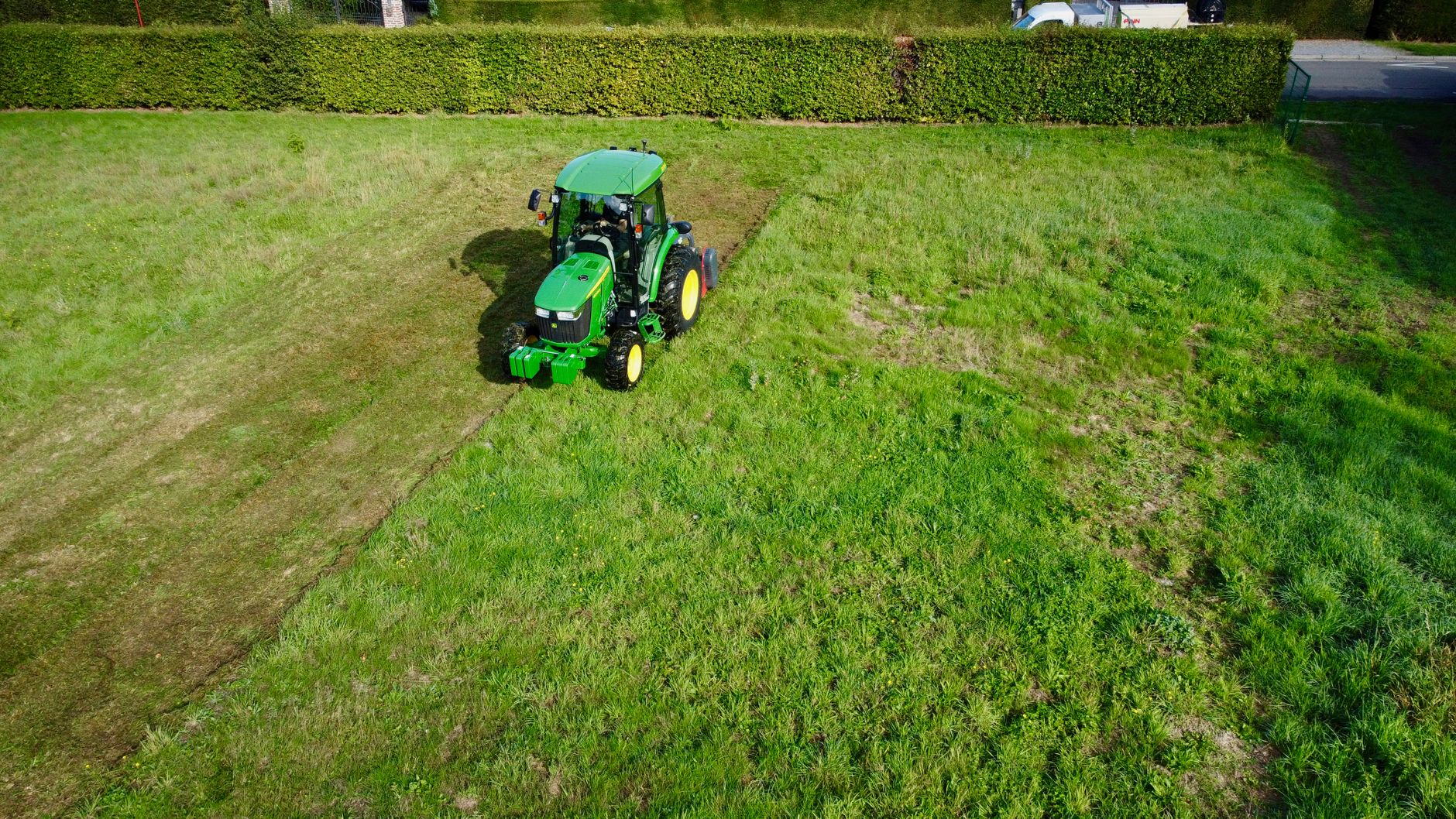
The second half of the budget tests where autonomous fairway passes would move time. Robots do not delete a line from the budget on their own. They shift the hours an operator spends on the seat, and the budget has to show where those hours go instead.
Keep the scope tight. Model one season as it stands, then one scenario, and show the gap between them.
Why use your own timecards instead of a benchmark?

Benchmarks give context but weak proof. The USGA Green Section Record reported that lack of qualified or skilled labor was the top-ranked concern in a recent superintendent survey, and that the pain has eased at some facilities but remains a concern. That is a national picture. Your course's crew hours, fairway acreage and tee sheet decide what next season costs.
A board member can challenge a generic figure in one sentence. A figure drawn from your own timecard export is harder to dismiss, and it lets you show the code used for every line.
How should timecards be split into task codes?
Most timecard systems let a worker select a job code. If yours offers only a grounds code, the first step is adding codes that match the decisions you will make. Use codes that reflect the split you need, not the defaults the payroll vendor shipped with.
A workable starting set looks like this.
- Fairway mowing, including seated operator time and pre and post checks
- Greens mowing, rolling and setup
- Bunker raking, edging and face work
- Cart path, tee and rough work
- Travel, fueling and equipment prep
- Unassigned time, which should shrink each month of the audit
How do you build the baseline and the forecast?
Start with the baseline. Sum fairway hours for the season, divide by mowing days to get an average day, and separate tournament weeks and aerification weeks from ordinary weeks. Show those outlier weeks rather than averaging them away, because they explain much of the variance a board will ask about.
Then forecast. Multiply the planned fairway passes by the hours per pass from your log, and repeat for greens and bunkers. Note any change in play volume, such as a new league night or a closed hole. The forecast is only as sound as its assumptions, so write each assumption in one plain line.
Where would autonomous fairway passes move crew time?
The honest scenario moves hours, not headcount. An autonomous fairway mower still needs supervision, checks and charging, so seated hours fall while supervision hours do not drop to zero. The real question is how many seat hours the crew can redirect to greens and bunkers, and what those redirected hours would cover.
Published estimates are a starting point, not proof. Gullane Golf Club in Scotland ran four Toro Turf Pro 500 autonomous fairway mowers, and course manager Paul Armour estimated they recovered 30 to 40 labor hours a week during the growing season. That was a manager's estimate, not a controlled study, and the stated aim was to redeploy staff. Use the figure as one input and test it against your own log.
Model the scenario with three inputs: fairway hours a robot can take, supervision hours that remain, and the greens and bunker hours the freed time covers. Show the net result, and show the assumption behind each input.
Does the budget need agronomy hours too?

Yes. The ROBO-GOLF European study compared robotic mowers with reel and rotary mowers on cool-season fairways and rough at five courses. Robotic mowers delivered acceptable turf quality in nearly all situations, and superintendents rated overall quality very high. That supports the case, but it does not remove the need for checks.
A Scandinavian fact sheet from STERF calls robotic fairway mowing a good strategy for limiting white clover spread. It also calls for further study of dew removal, disease incidence, mowing height, fertilizer and weed encroachment. Each of those is a task with hours attached, so budget scouting and dew-season checks as their own lines so the scenario does not hide them.
How should the scenario go to the board?
Present one table with three columns: baseline hours, scenario hours and the difference by task. Beside it, list the assumptions in plain sentences, naming the source of any outside figure. Do not present a vendor range as your forecast.
Be direct about what is not proven. The sources reviewed for this piece include no formal USGA policy or position statement on fairway robots, and no independent, controlled study of hours saved. Saying so in the memo strengthens the request. Visibility is a separate matter: the 2026 U.S. Senior Women's Open at Barton Hills Country Club used robotic mowers, reportedly among the first official USGA championships to do so, according to Husqvarna and Golfdom. Both are promotional or secondary sources, so treat that as context only.
Where Service Robot Co. fits in the lease decision
If the scenario holds, the next step is a lease decision. Service Robot Co. is an OEM-neutral integrator, so we compare robots from more than one manufacturer against the task list in your budget, not against one brand's catalog. We lease robots through financing on a 3-year lease with one fixed payment, quoted after a site assessment of the course.
Deployment, integration and training are part of the offer, and every unit is serviced under RoboCare, our service plan, backed by regional service engineers in every state we service. A course can start with a single leased unit, test the hour assumptions on its own turf, and then decide whether a larger fleet makes sense.
Frequently asked questions
Want a robot working for you?
Tell us the job and the site. We will recommend the robot, quote the lease, and keep it serviced.
Sources
- Pitchcare: Gullane reclaims 40 hours a week using Toro robotic mowers
- Greenkeeping EU: Gullane robotic mower report
- USGA Green Section Record: biggest challenges facing the golf course maintenance industry
- USGA Green Section Record: how robot mowers affect turf management and the golfer experience
- STERF fact sheet: use of robotic mowers on golf courses
- USGA Green Section Record: rise of the machines, autonomous mowers on golf courses
- Golfdom: 2026 U.S. Senior Women's Open robotic mowers
- Husqvarna press room: 2026 U.S. Senior Women's Open