Key takeaways
- A route time audit logs every minute of a mowing day by task: open turf, trimming, edging, beds, cleanup and travel.
- No published study splits commercial mowing hours by task, so your own crew logs are the baseline you can defend.
- Travel and cleanup hide in the gaps between properties, where a simple time log makes them visible.
- Open turf passes are the strongest robot candidates, while trimming, edging and bed work still need a crew member.
- Aspire's vendor-reported survey says optimized software users are five times more likely to save 11 to 20 hours a week, though those hours are admin time, not field time.
How do you find where mowing hours go?
Log one full route day minute by minute, and sort every minute into one of six buckets: open turf mowing, trimming, edging, beds, cleanup and travel. The totals show where crew hours actually land, and that can differ from the time the bid assumed.
Once the buckets are filled, the account manager can see two piles clearly. One holds minutes a robot could plausibly take over, and the other holds minutes that need hands, judgment or a person on site.
That split, rather than a generic benchmark, is what makes a robot proposal defensible to a client who knows the property.
Why there is no published split to lean on
Trade press describes crew structures but not task time. Lawn and Landscape describes one firm running mowing only crews with separate detail crews, and another running three person crews that cover mowing, edging, trimming, spraying and fertilizing. Neither breaks out the minutes.
Consumer price guides offer minute estimates for home yards, and they conflict. One puts a 0.25 to 0.5 acre flat yard at 30 to 60 minutes per visit, stretching to 60 to 90 minutes once edging, trimming and bagging are added. These are not commercial data and do not split tasks, so keep them out of a client deck.
We also found no university extension or association study on the labor split for landscape maintenance. Treat any single percentage you encounter online as unverified until your own crews produce it.
What belongs in a route log
A time-tracking vendor's landscaping guidance recommends recording the crew member, the property, the date, start and stop times, and the task. That structure is enough for a route audit, and a shared spreadsheet can hold it. Consistency matters more than the tool.
Log travel as its own line, not as a leftover. Each travel minute can then be counted against the property it served, which makes the next step far easier.
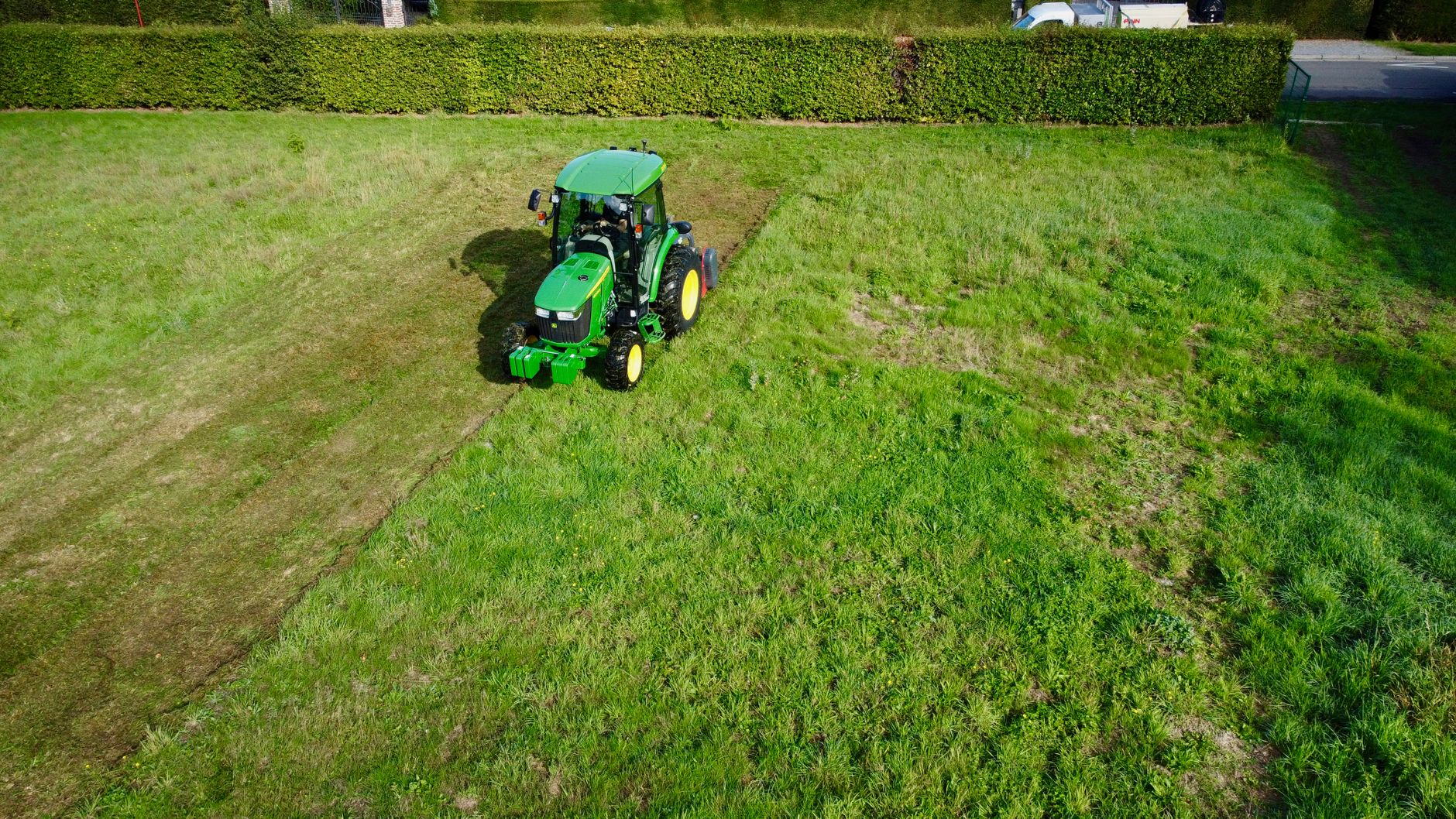
- Open turf mowing: straight passes over open lawn, with no beds, trees or hardscape pulling the machine off line.
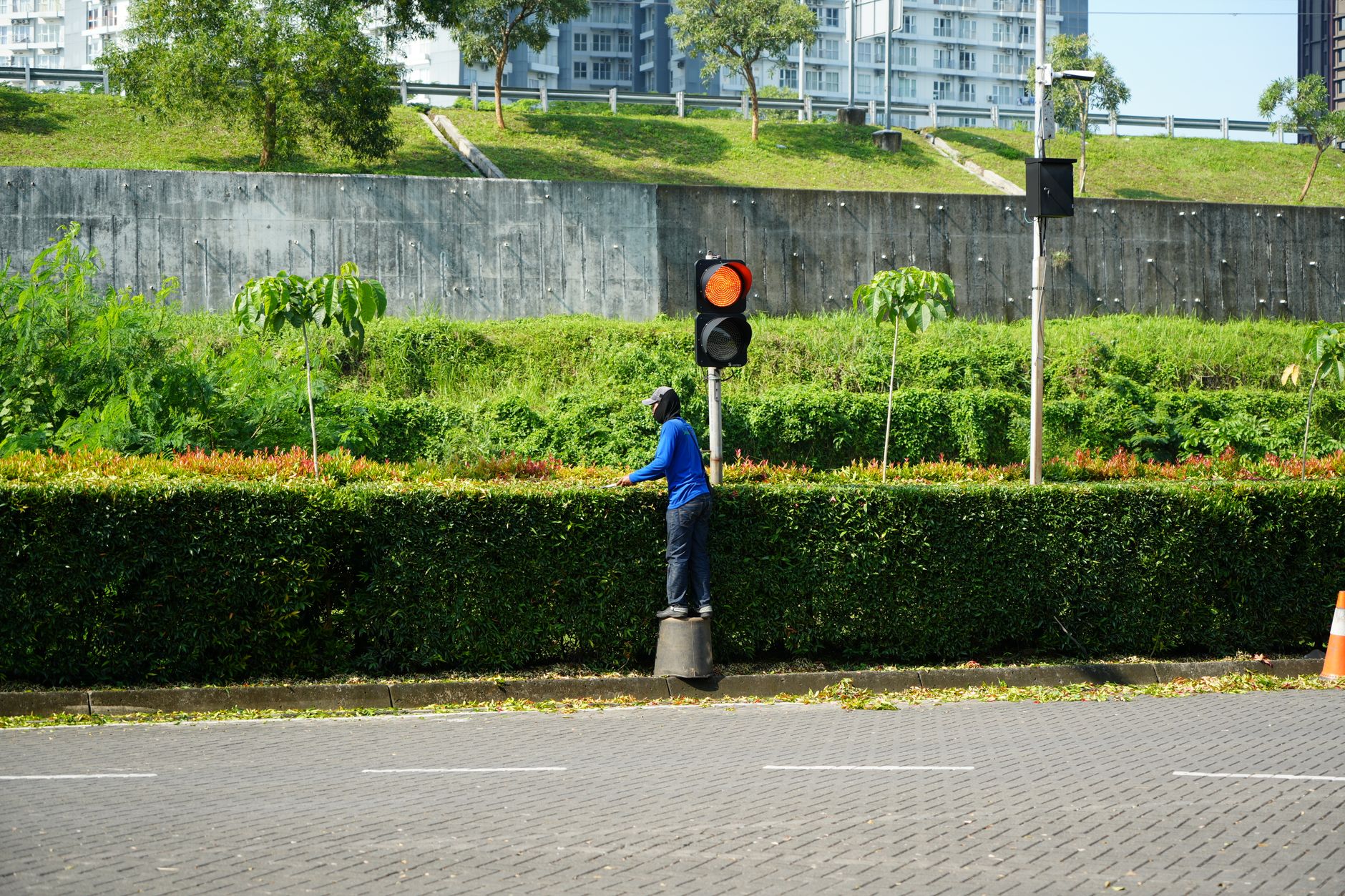
- Trimming: close work around posts, fences, signs and tree bases.
- Edging: the hard line along walks, curbs and drives.
- Beds: mulch, weeding and shrub work between passes.
- Cleanup: clearing clippings, bagging and removing debris from walks and drives.
- Travel: driving between properties, loading trucks and waiting at gates.
Where do the hours leak?
Total each bucket across the full route, then express it as a share of total route time. A bucket that looks small on one property can grow when it repeats across a week of stops.
Look for three leaks. The first is travel between properties that sit far apart. The second is trimming and edging repeated on the same stops because the open turf pass left edges uncut. The third is cleanup that follows every pass. Each leak has a different fix, and each fix falls to a different part of the operation.
Price each leaked hour before you talk to a client. Lawn and Landscape reports $35 to $45 per man hour on commercial sites, a useful sanity check against your own crew cost, though your figure should come from your payroll rather than a trade range.

Which minutes a robot can take, and which need a person
Sort every minute into one of three piles: robot candidate, person only, or unclear until a site visit. Open turf goes in the first pile, because straight, repeatable passes over mappable lawn are the work a robotic mower is built to repeat.
Trimming, edging and bed work sit in the person pile on the evidence we reviewed, and cleanup belongs there too, since clippings and debris still need someone to clear them. Travel is not a robot task, but fewer minutes on site can change how many stops a crew reaches in a day, which is a scheduling question for the route log.
What do vendor surveys say about hours saved?
Aspire, a software vendor, reports that contractors on manual tools typically save less than five hours a week through their setup. Contractors on optimized platforms are five times more likely to save 11 to 20 hours a week. In the same research, 61% of Aspire users cite labor efficiency as a top profit driver.
Read these figures with care. They are vendor-reported, the sample of more than 1,000 respondents is about half Aspire platform users, and the hours measure administrative time, not field crew hours. A separate Aspire community post claims that seven or more apps can cost 10 to 20 hours of admin time a week, another vendor claim rather than an independent figure.
Turf magazine reported on Aspire's commercial landscape research, which polled 1,015 commercial landscape contractors with fieldwork from May 2 to 23, 2025. None of these numbers tells you how many minutes a mower saves on a route, which is why the route log comes first.
How does the route audit reach a lease quote?
Service Robot Co. is an OEM neutral integrator for US businesses. We pick robots across manufacturers, lease them through financing, deploy and integrate them, train the crew, and service every unit under RoboCare, our service plan, backed by regional service engineers in every state we service.
Our quote follows a site assessment, and it arrives as one fixed lease payment on a three year lease. Bring the bucket totals, the property list and the robot candidate pile to that visit, so the assessment starts from measured minutes instead of an estimate.
A first trial can start with one leased unit on the cleanest property in the log. A robot lease does not remove the person pile. It targets the open turf minutes, and the crew keeps the trimming, edging, beds and cleanup.

Frequently asked questions
Want a robot working for you?
Tell us the job and the site. We will recommend the robot, quote the lease, and keep it serviced.
Sources
- Lawn & Landscape, Cashing in on Cutting Crews
- Rising Sun Arts Centre, Lawn Mowing Cost Guide 2026
- Everhour, Time Tracking for Landscaping
- Aspire, New Research Reveals Busy Is Not the Same as Profitable
- Barchart, Aspire Commercial Landscaping Research 2026
- Turf Magazine, Aspire 2026 Commercial Landscape Industry Report