Key takeaways
- A route time audit replaces guesses about crew hours with minutes logged task by task.
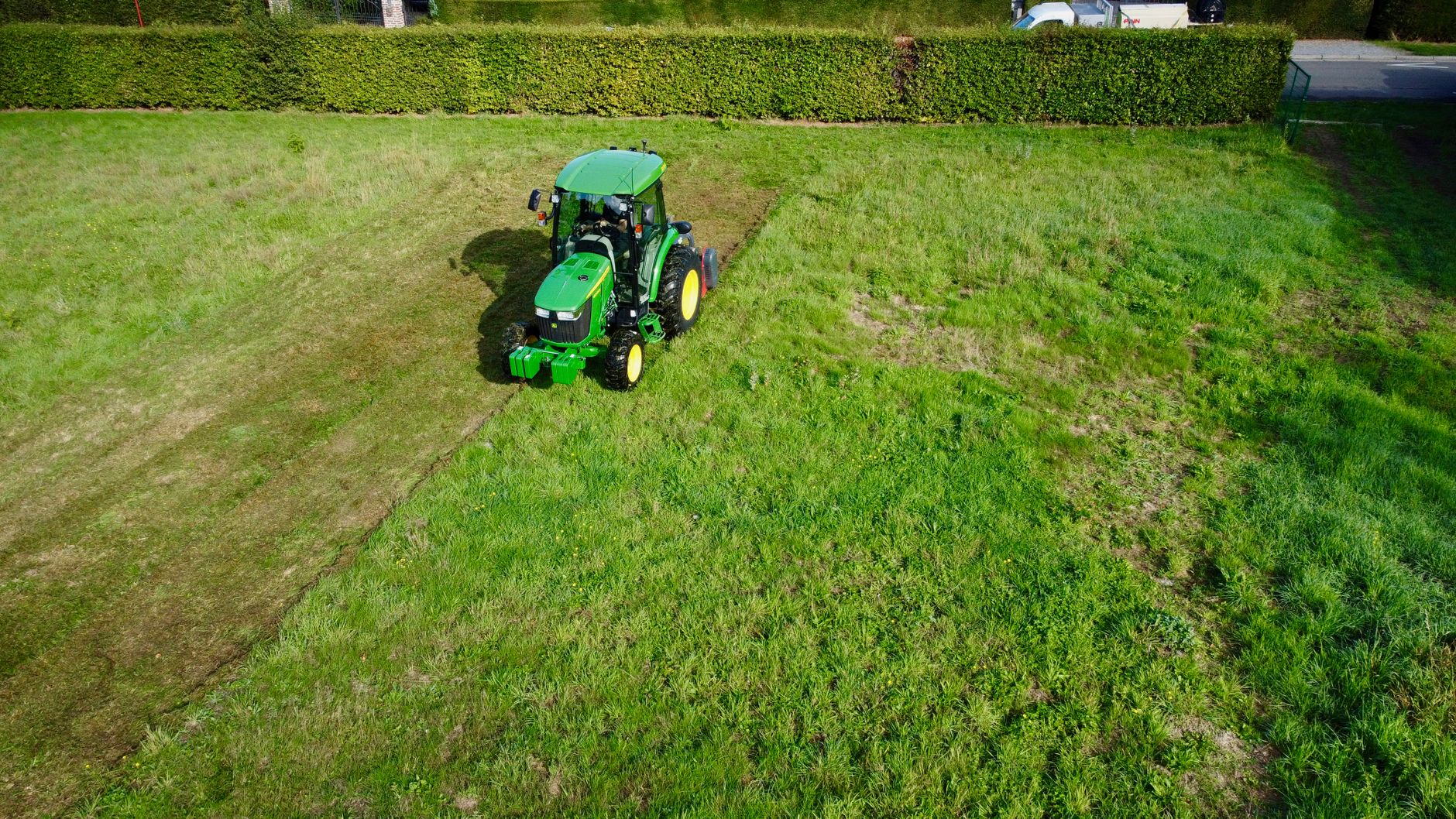
- Open-turf mowing is the task a robotic mower can repeat most easily, so it is the first set of hours to test.
- Edging, trimming, bed work and cleanup are what clients notice, so they usually stay with the crew.
- Published task splits for commercial crews are scarce, so your own log is the most useful number you have.
- Map the open turf on each route before any robot lease quote, so the site assessment starts from real minutes.
What does a route time audit show?
A route time audit is a timed log of every task a crew performs on one route, written in minutes rather than reconstructed at the end of the week. Its job is to show where the hours really sit, which is often not where the schedule assumes they sit. Most crews carry a mental picture of a mowing day, and the log replaces that picture with a record.
The split that matters separates open-turf mowing from trimming, edging, bed work, blowing, and cleanup. Open turf is usually the easiest work to hand to a robot, because it is repetitive and can be mapped. The detail work is slower and more varied, and it is what a client sees when they walk the property. Those two groups need different answers.
We looked for a published, task-by-task split for commercial mowing crews and did not find one. The pricing guides that came up were mostly residential and generic. Treat any percentage you find online with caution, and build your number from your own routes.
How should the log be set up?
Keep the codes few enough that a crew lead can fill them in during a shift, on a clipboard or a phone. Six task codes cover most routes. Add a travel code for moving between properties, because it often hides inside the mowing day and inflates the mowing figure if it goes unlabeled.
Log by property, not by day. A day averaged across three sites can hide one lawn that eats most of the detail time, and that lawn is the one the audit needs to find. Note the weather as well, since wet turf changes both mowing speed and cleanup.
- Open turf: from the first mowing pass to the last pass on the main field, excluding trimmed borders.
- Trimming: string and hand trimming around posts, fence lines, and obstacles.
- Edging: walks, curbs, and beds cut with a powered edger.
- Bed work: weeding, pruning, and mulch work inside planted areas.
- Blowing: clearing clippings from hard surfaces, with blower run time kept separate from setup.
- Cleanup: bagging, loading, and the final sweep before the crew leaves.

Which hours could a robotic mower take over?
Open turf is the first candidate. Its passes are long and repetitive, and the boundary can be mapped once and reused. Those conditions suit a robotic mower, which does not tire on repeated identical passes and can run without an operator on the seat for every pass.
Evidence on time saved comes mostly from operators and vendors, not independent studies. In a single undated blog account, Michael Mayberry describes a commercial operation that saved almost an entire day of operations-manager labor, and says the mower paid for itself in its first year. A Landscape Professionals blog post quotes an executive who projects 40 hours of labor saved per mower. That is a projection, not a measured result, so set both figures beside your own log before you rely on either.
The test is simple. Count the open-turf minutes on mapped areas with few obstacles, then check slope, drainage, and obstacle limits on the same ground. Those hours are the ones a robot can credibly take. Work that needs a hand around every obstacle stays on the crew's schedule.
Why do edging and trimming stay with the crew?

Edging and trimming are slower and more fiddly, and they are the work a client notices first when a walk looks crisp or ragged. A mower can leave an even field, but a sharp edge along a walk is still hand work for most crews. The log will usually show these minutes clustering around a property's details rather than its open lawn.
Some tools promise to shorten the detail work. Grasshopper states on its product page that its Edge-EZE edger can cut edging time by up to 75% compared with handheld string trimmers. That is the manufacturer's own figure, and we did not find an independent test, so log your edging minutes before and after any tool change.
The working rule is that a robot takes the repeatable open pass and the crew keeps the detail. Your log should show whether that split holds on each route. Schedule edging after the robot's last pass on a route, so the two never work the same walk at once.
What does the 2026 labor data say about crew time?
Labor is the reason the audit matters now. Aspire's 2026 Commercial Landscape Industry Report drew on a survey of 1,015 commercial landscaping contractors, with fieldwork from May 2 to 23, 2025, conducted by Thrive Analytics. The report was announced October 7, 2025.
On hiring, Aspire's Eli Zevin says the difficulty centers on finding quality people, not only on filling headcount. For a crew lead, that changes the arithmetic. Losing a skilled trimmer or edger hurts the detail work most, and detail work is what a robot leaves behind.
Read the survey as industry context, not as a benchmark for your routes. It describes the sector. Your minutes describe your crew.
How does the audit turn into a lease decision?
Once the log shows open-turf minutes route by route, you have a short list of mapped areas to bring to an integrator. Service Robot Co. is an OEM-neutral integrator. We pick the robot that fits each site across manufacturers, then lease it to the customer through financing, deploy and integrate it, and train the crew.
A robot lease is quoted after a site assessment. On our 3-year lease, the customer pays one fixed robot lease payment, and every unit is serviced under RoboCare, our robot maintenance service plan. The audit tells us which routes deserve the assessment in the first place, so the quote starts from real minutes.
Many operators start with one unit on the route where open-turf minutes are clearest, then compare logged hours against the first season. That comparison is the cleanest way to see whether the audit's numbers hold up on the ground.

Frequently asked questions
Want a robot working for you?
Tell us the job and the site. We will recommend the robot, quote the lease, and keep it serviced.