Key takeaways
- A robot should carry a specimen only inside a locked compartment that opens for an authorized, named person, and every opening should be logged.
- Each handoff needs a timestamped record of pickup, recipient acknowledgment and condition on receipt, not just a map position.
- Elevator and door events are custody events too, so the log has to show waits and timeouts, not only arrivals.
- Name one owner for the chain before go-live, covering delay, recall, courier backup and loss.
- Vendor reliability figures are claims until your own pilot logs confirm them.
What must a hospital require before a robot carries specimens?
A hospital should not let a robot carry a lab specimen, pharmacy order or medication until four things are in place: a locked compartment, a named recipient confirmed at delivery, a timestamped log of every handoff, and a written owner for the chain when something goes wrong. Those four controls are the floor, not the ceiling.
The most useful current reference is HCA Florida JFK Hospital in Atlantis, Florida. According to a Relay Robotics press release distributed by PR Newswire, two robots named Dash and Daisy were deployed to carry lab specimens, pharmacy orders, telemetry equipment and medications to areas not served by a pneumatic tube system. The release is dated September 30, 2026, and its performance claims are vendor-reported, so treat the deployment as a starting point for your questions rather than a benchmark.
How does the Florida deployment set the custody baseline?
The release says the robots move between floors, pass through authorized secure doorways and run alongside life-safety systems without major construction or physical tracks. Unite.ai, covering the same deployment, describes the work as integrating elevators, secure doors, fire and life-safety systems and hospital IT together. It reports that authorized users open secure lockable compartments, load an item and select a destination. Relay CEO Sultan Mehrabi said that bringing those systems together at once was not simple.
That remark is the most useful sentence in the coverage. It tells a pilot team where the difficulty sits: not in the driving, but in the handoffs between systems. A hospital's own 2022 news item describes HCA Florida JFK as a 527-bed acute care hospital accredited by The Joint Commission, which is the scale at which many specimen routes cross each other and the custody rules start to matter more than the robot model.
Why do locked compartments and badge access matter?
A locked compartment is only a custody control if the lock means something. It should open for an authenticated person and no one else, and the system should record who opened it. BayCare, which announced an expansion of Relay robots at its Winter Haven hospitals on June 3, 2026, says authorized users swipe a badge to load deliverables into high-security, lockable bins. That is a vendor-reported description, but it shows the right pattern: identity checked at loading, not only at delivery.
Relay's website also says its authentication options give pharmacists a verifiable trail for every medication delivered, and that its software shows delivery history. Ask whether the pharmacy's audit needs match that history. A trail a pharmacist can read on a screen is different from a trail the compliance office can export and defend.
What belongs in each handoff record?
CASRAI's guide to sample chain of custody in research labs lists the elements a custody record should carry: a unique sample identifier, a named custodian, a timestamp, the action taken, the condition and environment, and a signature or electronic authentication. Those fields translate directly to a robot pilot. The robot's job is to make each field capture automatic, so no technologist reconstructs it from memory at 3 a.m.
The regulatory floor is less specific. According to a secondary summary of 42 CFR 493.1242, CLIA requires labs to keep written procedures for specimen transport conditions and to document the date and time of receipt. The same summary says CLIA does not prescribe temperatures, transit windows or vehicle standards. Those limits belong in the lab's own procedures, and the pilot spec should write them down.
Location tracking is not enough by itself. A courier industry article notes that GPS records where a package was and how long the trip took, but does not on its own make a complete chain of custody. It also expects pickup confirmation, recipient acknowledgment and a single specimen identifier. A robot's position on a map is the same kind of data: useful, and still not the custody record.
Where do elevators and doors break custody?
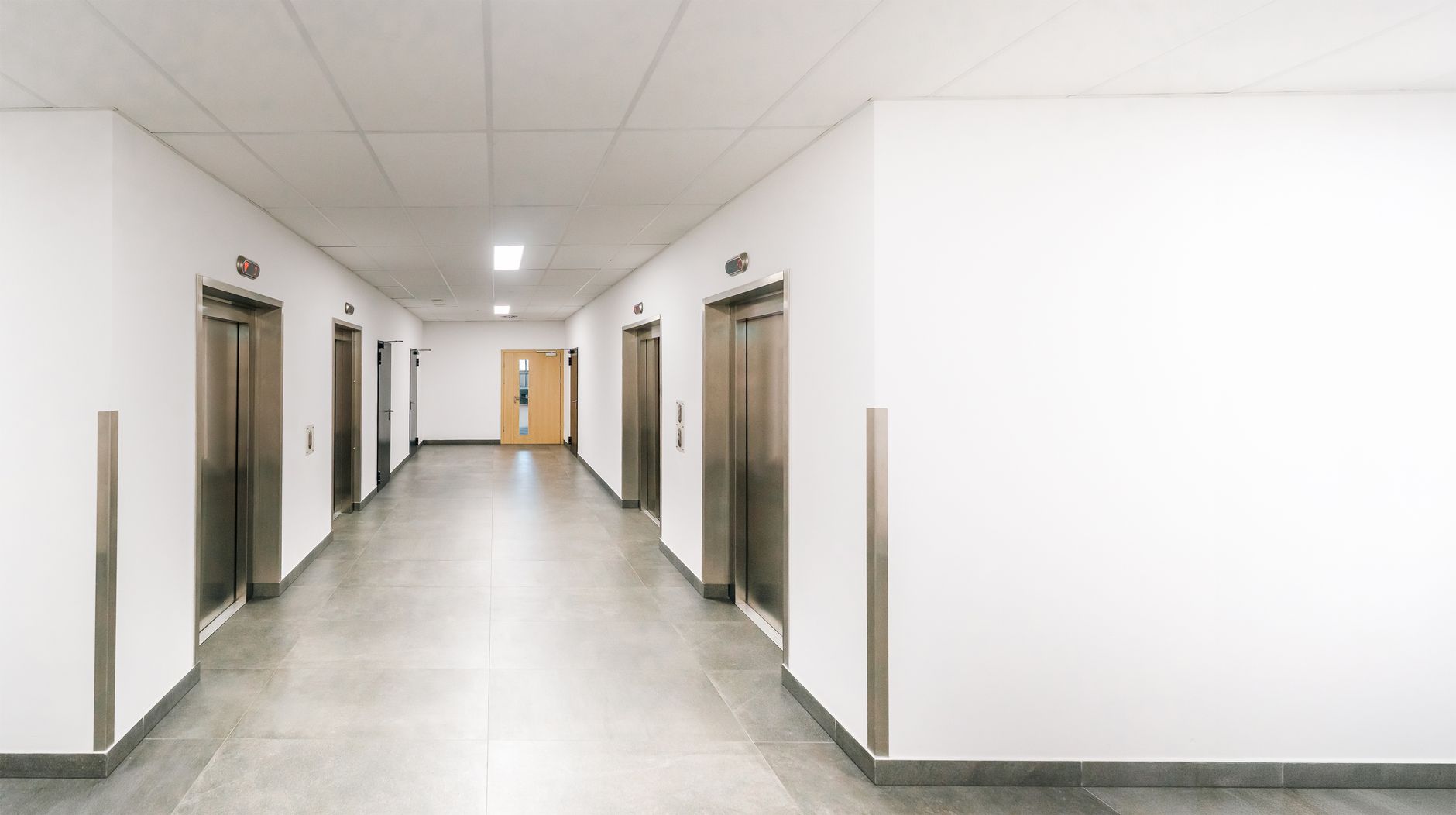
Elevators and doors are where custody is most fragile, because every lift call and door event is a transfer point. Relay's website says that during installation, elevators are configured to communicate with its robots, letting them call a car, select a floor and complete a delivery without a person pressing buttons. BayCare's 2026 release similarly says its robots interact with elevators and badge-access doors without human intervention.
That autonomy is the purpose of the deployment, and it is also the risk. If a car does not arrive, a door is held open, or a robot waits in a lobby with a specimen aboard, the log must show the wait, not only the arrival. Pilot teams should ask the vendor to confirm which events are written to the custody record: lift call, car arrival, door unlock, door close and any timeout. Gaps in those events are where a chain looks intact until an auditor pulls the file.
Who owns the chain when a specimen is delayed or lost?
The research did not find a Joint Commission or CAP standard that specifically governs recipient confirmation for robots, so the pilot spec has to fill that gap itself. CAP's transport-side expectation, as summarized in a secondary note on its checklist item GEN.40530, is a tracking system that records dispatch and receipt times and the specimen's condition on receipt. That gives an owner something concrete to answer for.
Name one owner for each segment of the route: the EVS or logistics team that runs the fleet, the laboratory that accepts the specimen, and the pharmacy that accepts a medication. Then name the person who decides when a delayed specimen is recalled, re-sent by courier or declared lost. Without that name, a late robot becomes a shared problem, and shared problems have a way of becoming nobody's problem at 2 a.m.
What should a pilot spec actually require?

Unite.ai reports Relay's claims of more than 99 percent delivery reliability and a 99.8 percent delivery success rate across more than 30 major U.S. hospitals. The same article says those figures are vendor-reported and not independently verified. Your pilot should produce its own numbers.
- Each compartment opens only for a badge or credential tied to a named, authorized person, and every open event is logged.
- Every handoff writes the specimen ID, custodian, pickup and receipt times, and condition on receipt to a log the lab can export.
- Lift calls, car arrivals, door events and timeouts are all written to the custody record, not only completed trips.
- The laboratory sets temperature and transit limits in its own procedure, since CLIA leaves those choices to the lab.
- A written escalation path names who decides on recall, courier re-send or loss declaration, and the response time for each.
- A manual courier route stays active and is tested during the pilot, so the chain never depends on the robot alone.
- Vendor reliability figures are measured against the pilot's own logs before anyone cites them.
How can a lease fit a custody pilot?
Service Robot Co. leases robots only, through financing on a lease running three years, with one fixed payment quoted after a site assessment. For a custody pilot, that assessment is the natural place to walk the elevator, door and log questions before any hardware goes in. We work across manufacturers, so the custody features of different robots can be compared against the same spec rather than against a single vendor's pitch.
Frequently asked questions
Sources
- Relay Robotics press release on HCA Florida JFK Hospital deployment (PR Newswire, Sept. 30, 2026)
- Unite.ai: Relay Robotics deploys two delivery robots at HCA Florida JFK Hospital
- BayCare expands autonomous hospital delivery with new Relay robots at Winter Haven hospitals (PR Newswire, June 3, 2026)
- Relay Robotics website
- HCA Florida JFK Hospital robotic navigation news item (South Florida Hospital News, Oct. 2022)
- Diagnostic Support Services: specimen transport summary (42 CFR 493.1242 and CAP checklist)
- CASRAI: sample chain of custody guide for research labs
- Copergrine: real-time specimen tracking for medical couriers